
Identifying an Unidentifiable LEGO Set
___
In mid-2026, I purchased a LEGO Samsonite set from eBay, unsure of what exactly it was. The seller didn't show any identifying parts of the box, I only could guess some potential candidates based on the size of the box.
However, what came surprised me, as it didn't match anything I'd guessed:
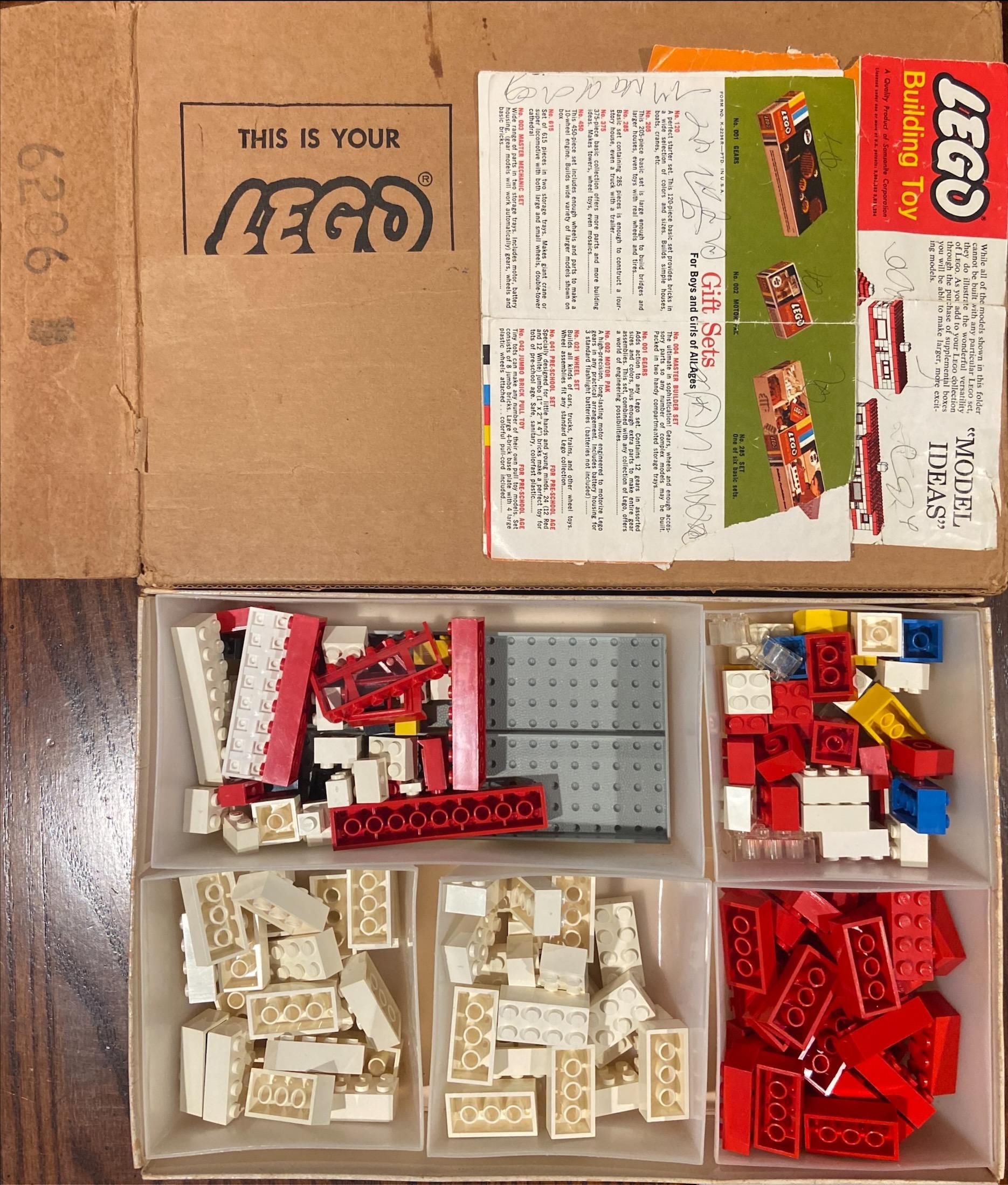
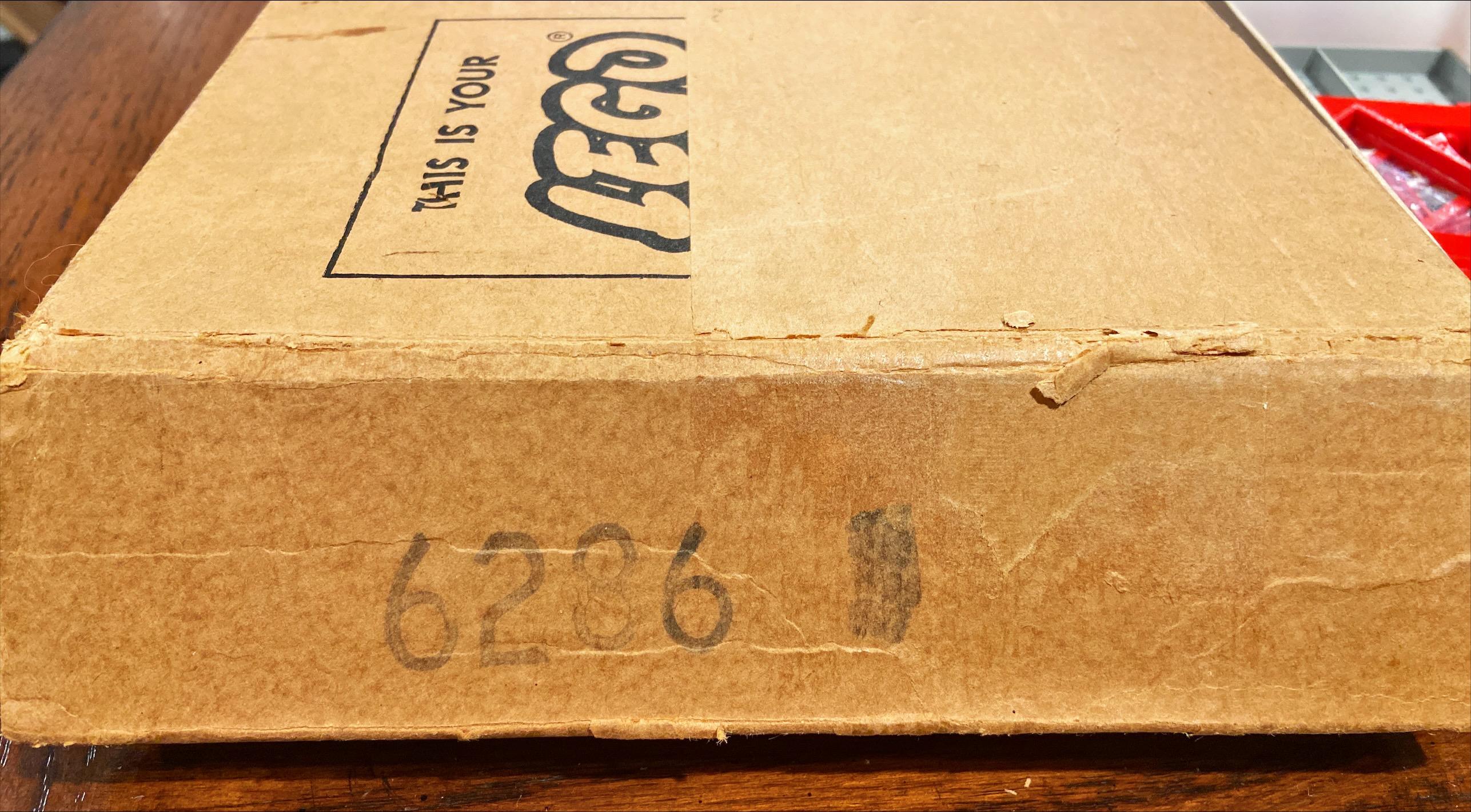
All we have to work with are two stamped identifiers on the box.
'6286':
...and 'CI 34':
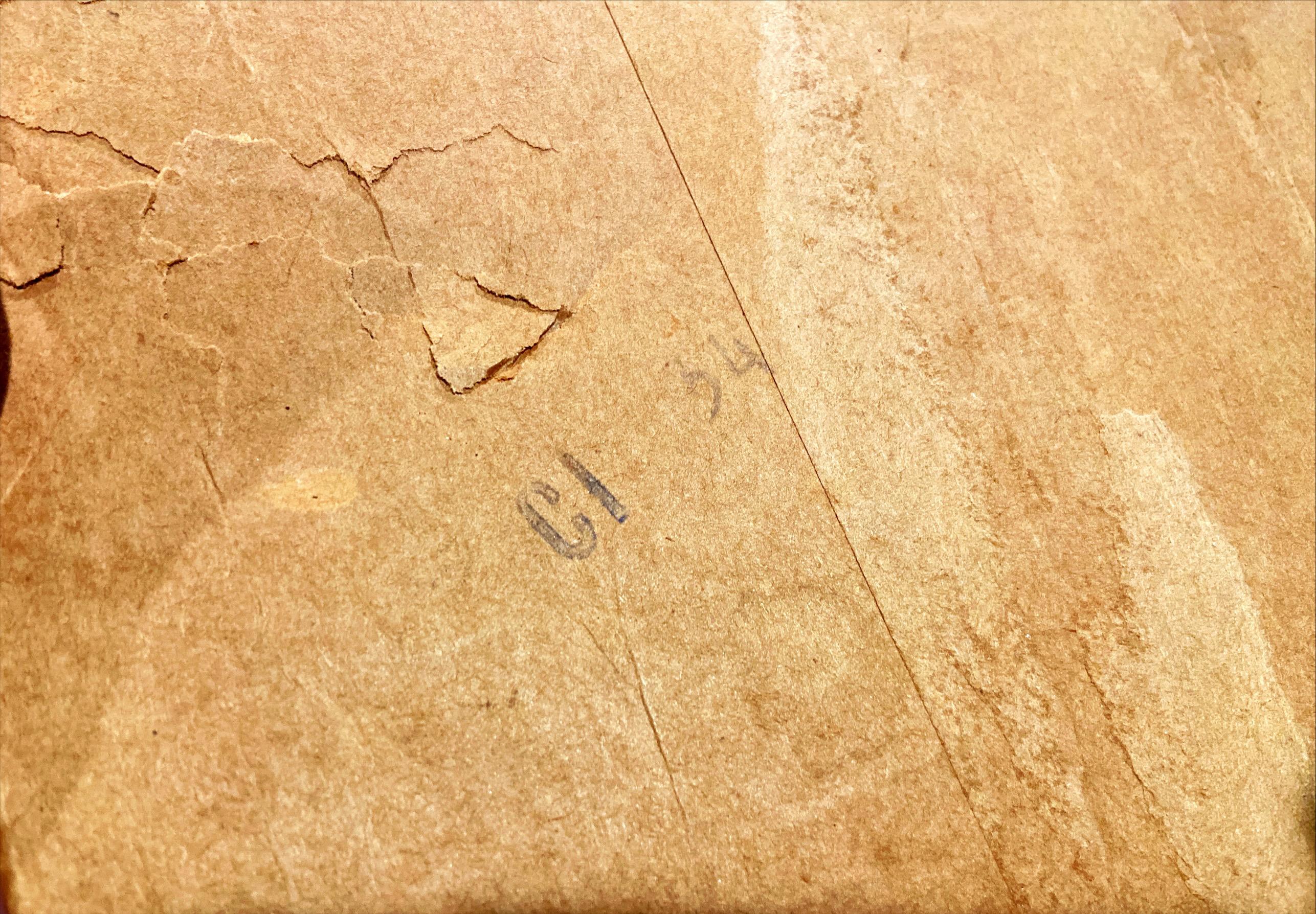
Which doesn't really tell us anything. So now here's the fun part, we need to figure out two things based on what is shown above—what is it and where was it sold through?
What is it?
The easiest way to identify what it is is to solidify the production date. Then we can speculate on the most likely identity.
The parts inside, while they can inform analysis, could potentially be contaminated by the previous owner. In this case it's probably not likely, as its contents are all Samsonite era and a reasonable amount for the box (~180 pieces), but it could still leave room for doubt. Instead, a much stronger answer is simply based on the included idea book.
The idea book found with it dates to 1967, after Samsonite removed age ranges and prices from the brochure, but before they removed the 042 Jumbo Brick Pull Toy:
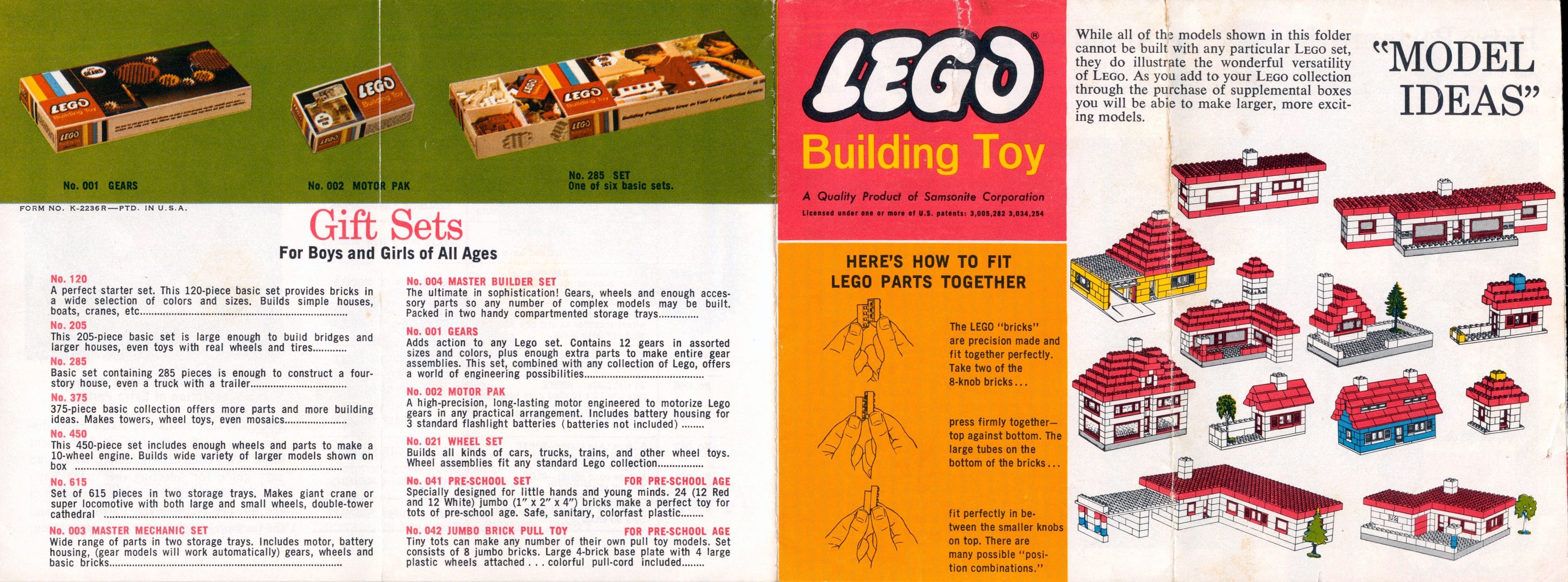
There is a possibility of 1968 production, though it is rare to see the previous season's pamphlet carried over into the next. So the set is most likely from 1967, with a slight possibility for 1968.
We know the set was some sort of catalog order set, and not a promotional. Promotional sets in brown boxes are easily identifiable via a postage stamp/address label:
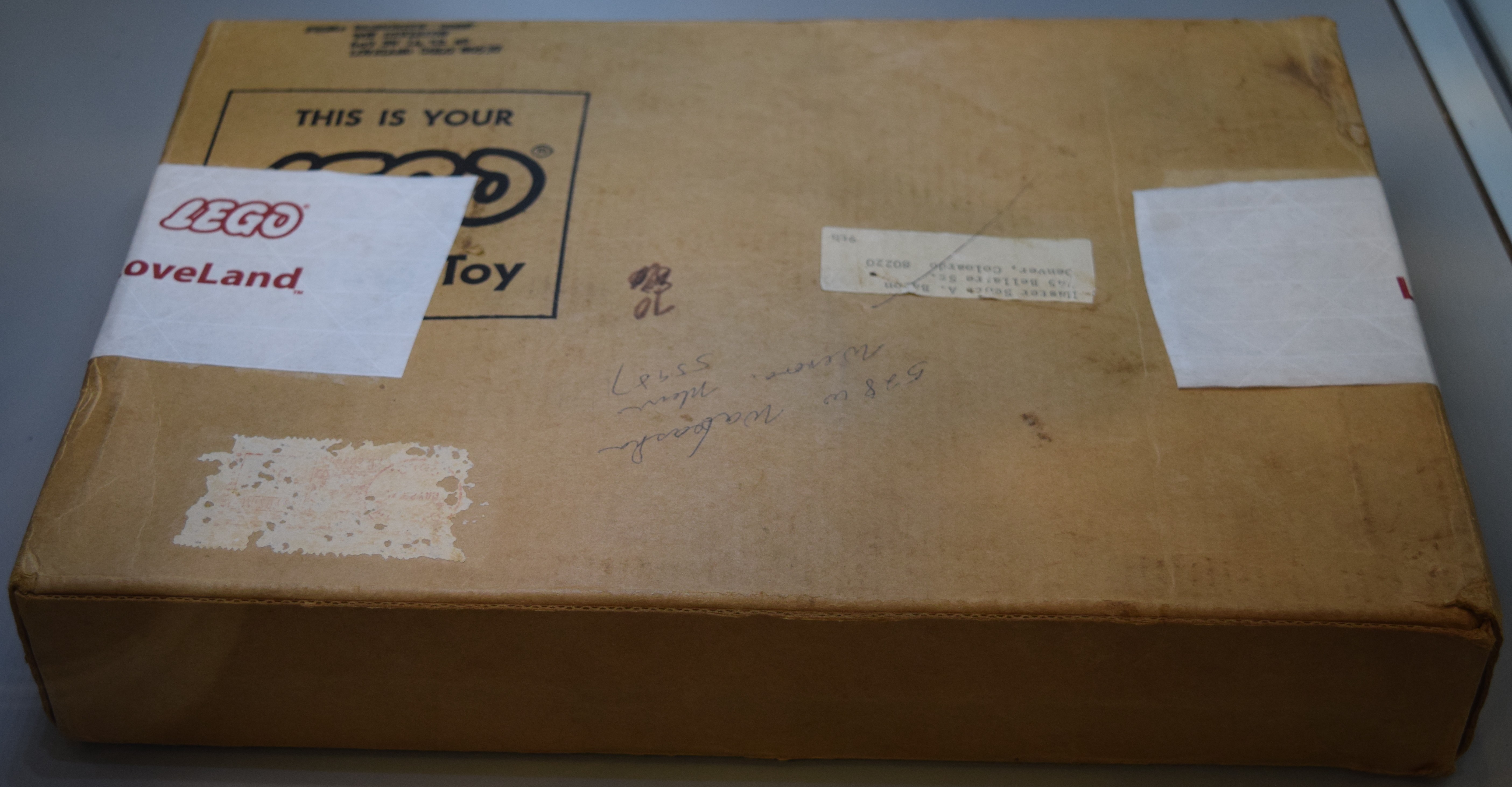
There is just no evidence of such on this box. It is more akin to Sears catalog sets, in which the box had relatively few markings besides the catalog number:
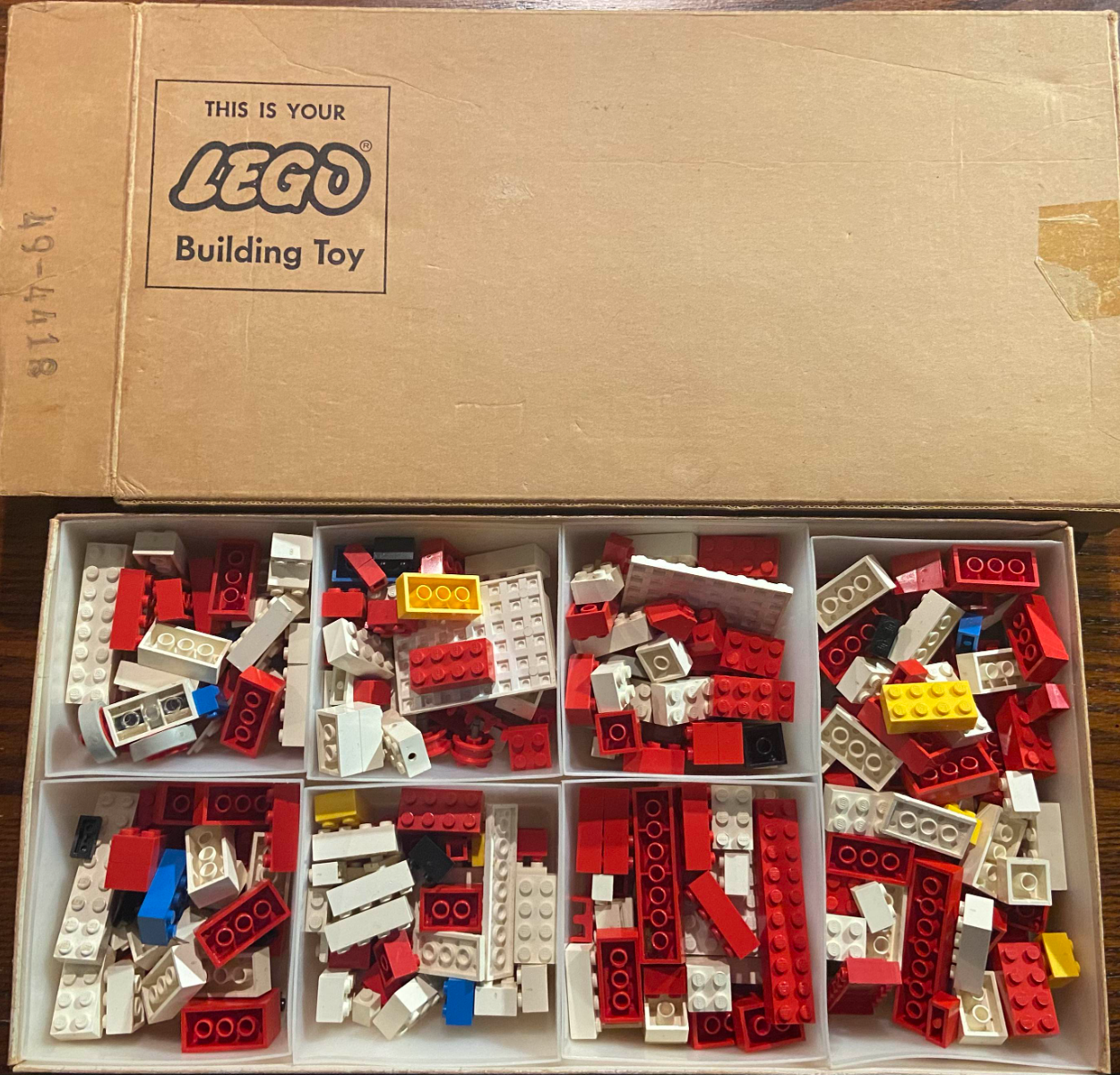
And take notice on that example in particular of the 835 Advanced Builders Set, it is not printed as catalog sets normally were (i.e. the 1966 Sears 565). Instead it is stamped on, like our mystery set.

This would actually be a big clue in corroborating our date, as for at least one season, some brown box catalog sets did not have their numbers printed on their sides, including Sears sets. Their numbers were instead stamped. It would be, at least, if there was a consensus for the date that occurred.
Regardless, let's put a pin in that for now. With the box size and that relative 1967-68 date, we are looking at several possible identifications. Some, such as the 022 Doll Furniture Set or the 301 Wheel Set I've already pruned out, as they either had already retired or were exclusive.
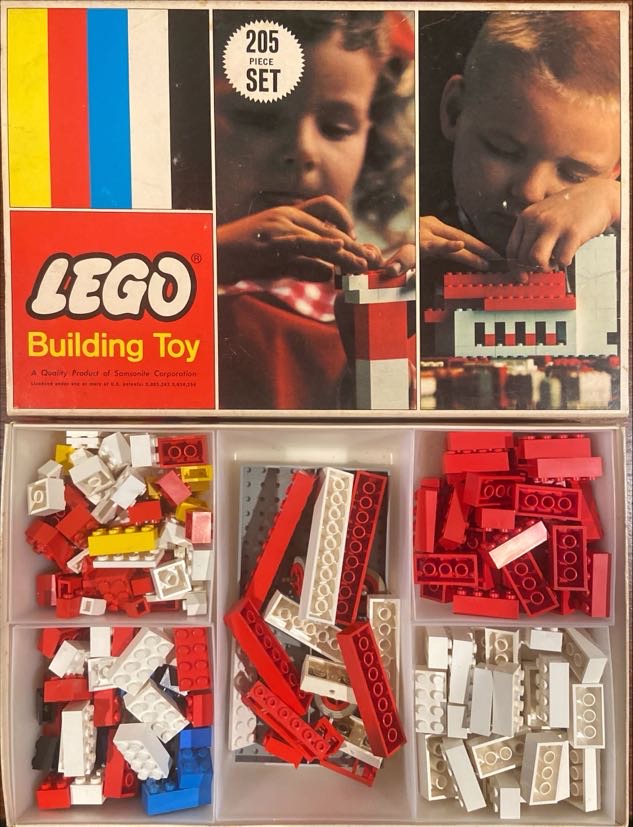
The 1965-71 205 Basic Set:

The 1965-68 021 Wheel Set:

And the 1968 298 Deluxe Wheel Set (no image for this one).
The candidate most consistent with the found contents is the 205.
One thing I do want to note, as I think it is helpful, is that the set cannot be identified via the number on the side. Typically, the rule of thumb for LEGO Samsonite four digit numbers stamped on a box, drop the last number and you'd have the set number. So for example, the JCPenney 450 Basic Set can be identified below by taking '4507' and dropping the last number:
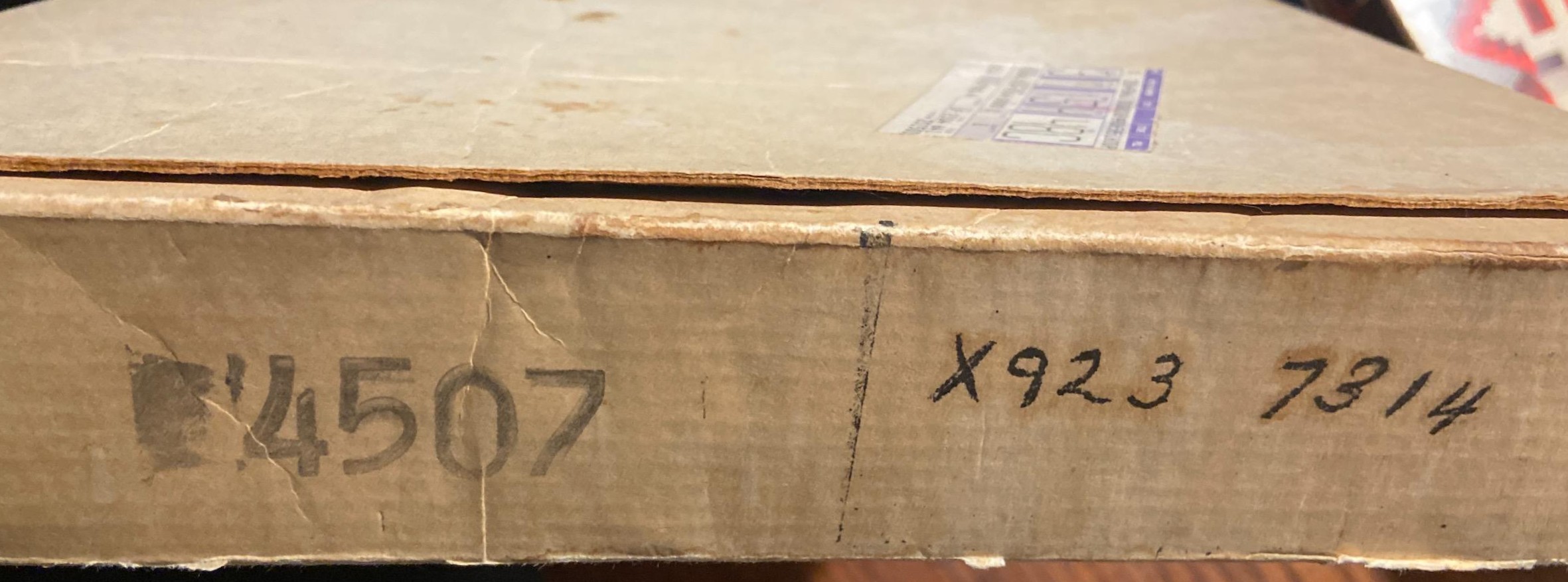
However, this is typically seen later than the 1967-68 window we're working with. It first appears sometime in or after 1969. It also doesn't really work, as if we take '6286' and drop the last number from either side, we don't have a valid assortment.
'286' is close, but it requires dropping the first number instead of the last and is a new assortment, which doesn't match previous Samsonite behavior. Most Samsonite assortments had a predecessor.
Instead, the four digit number is most likely to be a catalog number. This can easily be shown even without the identified catalog, as some Sears catalog sets are found with only four digits of their catalog number stamped on the side:
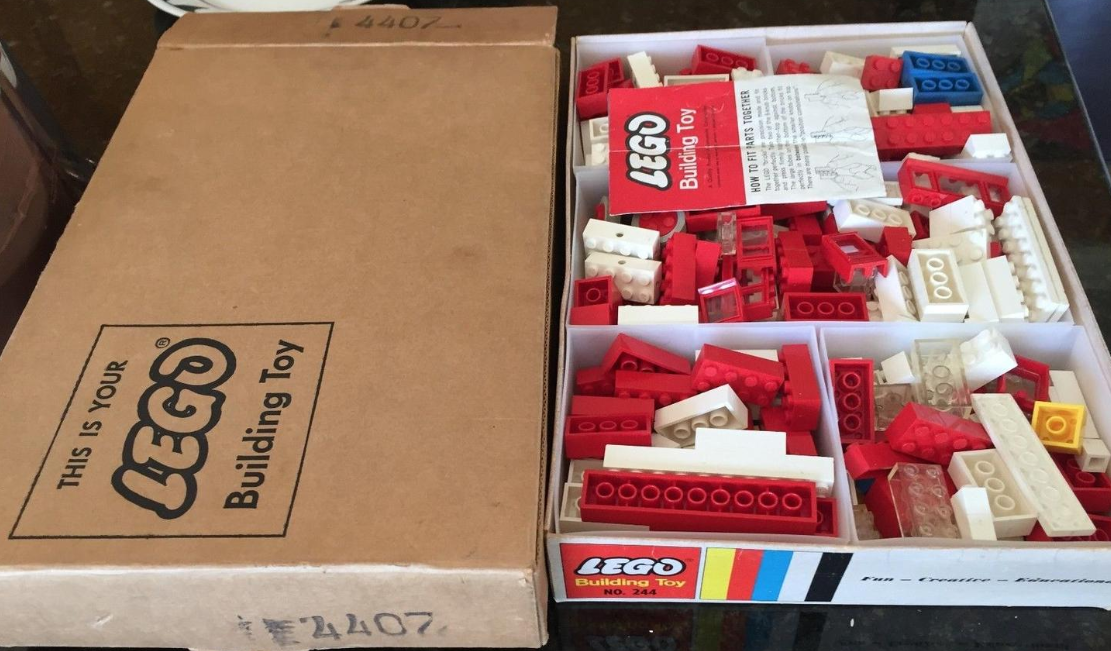
Also, I own a 705 from 1961-62 that has a very similar four digit number written on the side, '6462':
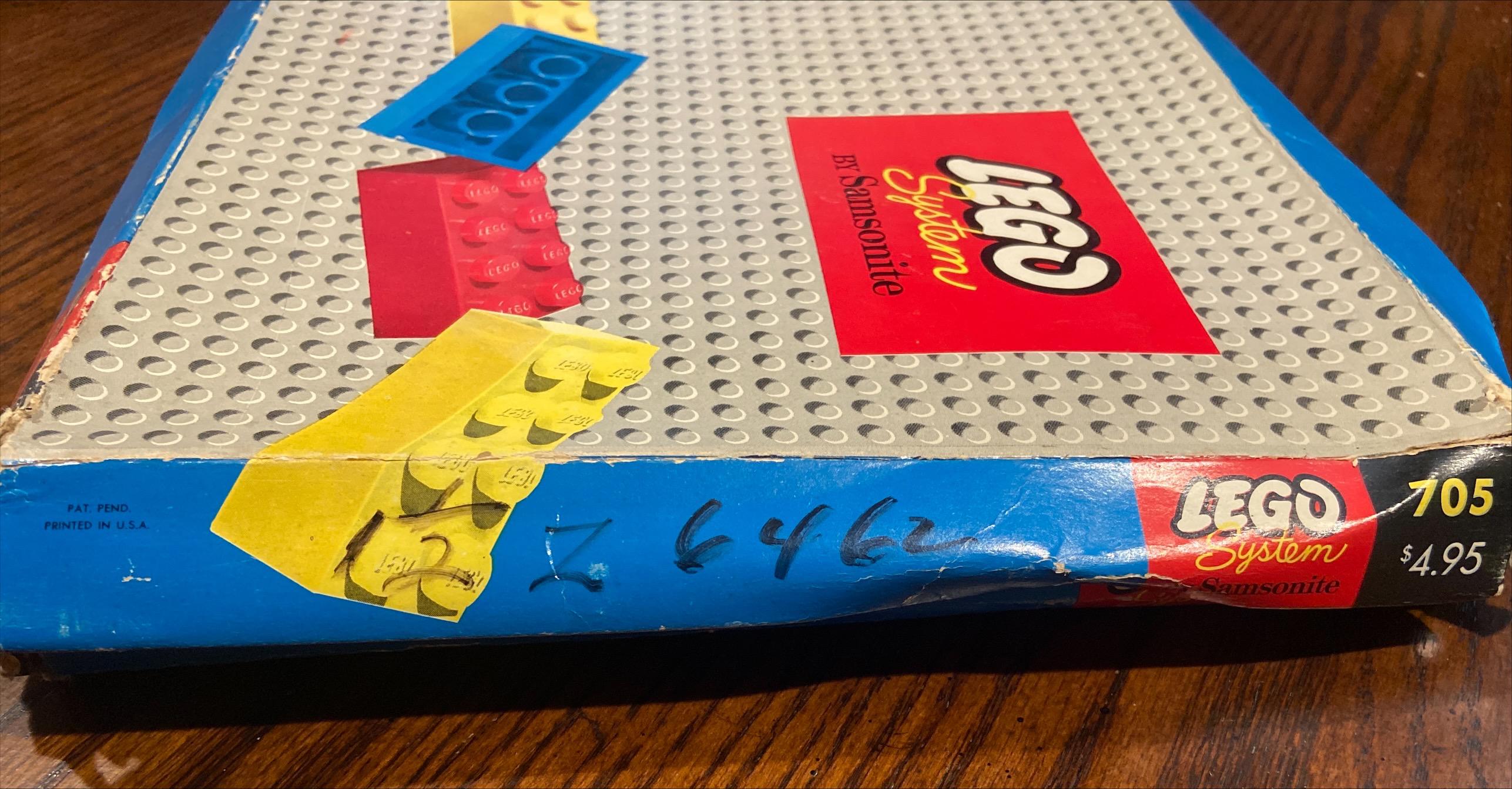
This example I feel further supports our identification of the mystery set as the 205, as the 205 Basic Set was essentially the 705 (read here for more).
Where did it come from?
Okay, so we've identified what the set most likely is, a 205, but that does nothing to help identify the source.
We've demonstrated the stamped number '6286' is most likely a catalog number of some kind. The issue is... what catalog? Thousands existed across the United States in 1967-68, very few are archived. Even in this site's vast collection of LEGO Samsonite catalog scans, we don't have a match with this four digit number. To make matters worse, it is an extremely common format across mid-century catalogs.
This is incredibly challenging, but I believe to have identified the most likely channel and even a potential retailer.
One thing to know about LEGO Samsonite is that only three retailers are known to have gotten brown box sets for catalog sales: Wards, JCPenney, and Sears. None of those retailers match this example. I also reasoned when I first began looking into this that the source likely only sold the 205 in a catalog, as otherwise you'd expect other sets to be known.
And that reminded me of something I initially overlooked, a 1963 Gold Bell catalog in which the only set being advertised was the 705:
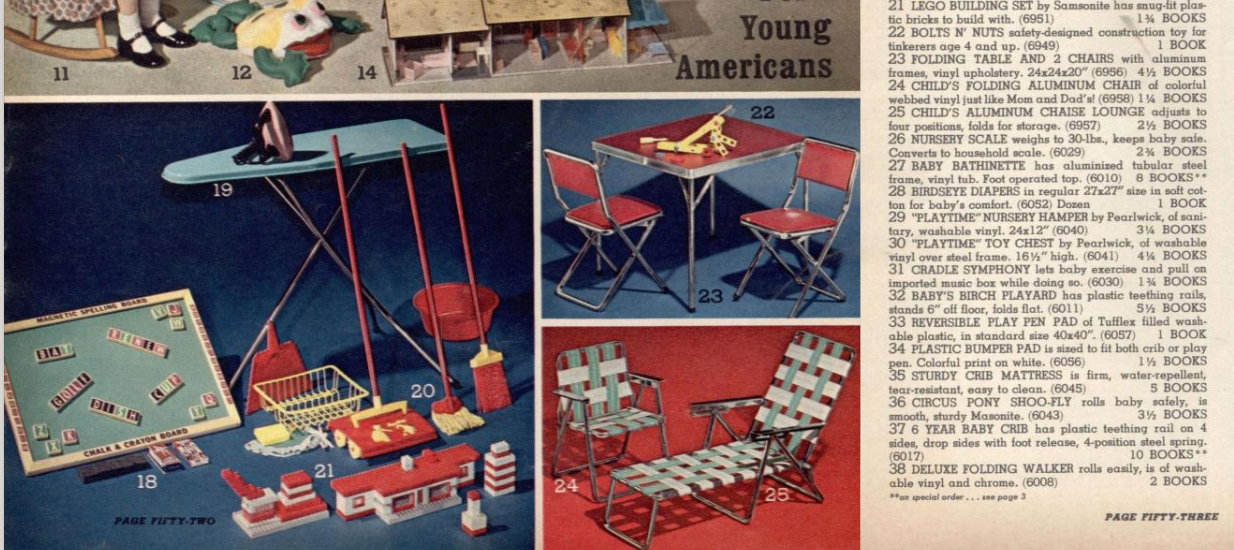
That listing has a four digit catalog number '6951', as well as a second two digit number '21'. Which would be an explanation for what 'CI 34' could mean, but that's getting ahead of ourselves. The important thing is that we have a potential avenue for the set that explains exactly why it exists: a catalog it could be ordered from, it is the only LEGO set in the catalog, and the numbers are consistent with the set.
An additional thing about Gold Bell is that their headquarters was literally across the street from Samsonite's Detroit plant in Ecrose, and Samsonite luggage appeared in the Gold Bell 1963 catalog, so it seemed a very likely candidate.
So let's source a 1967 Gold Bell catalog and test that claim. Except... there isn't one available. I was able to source the 1968 catalog, which I quickly purchased, so let's take a look at that:
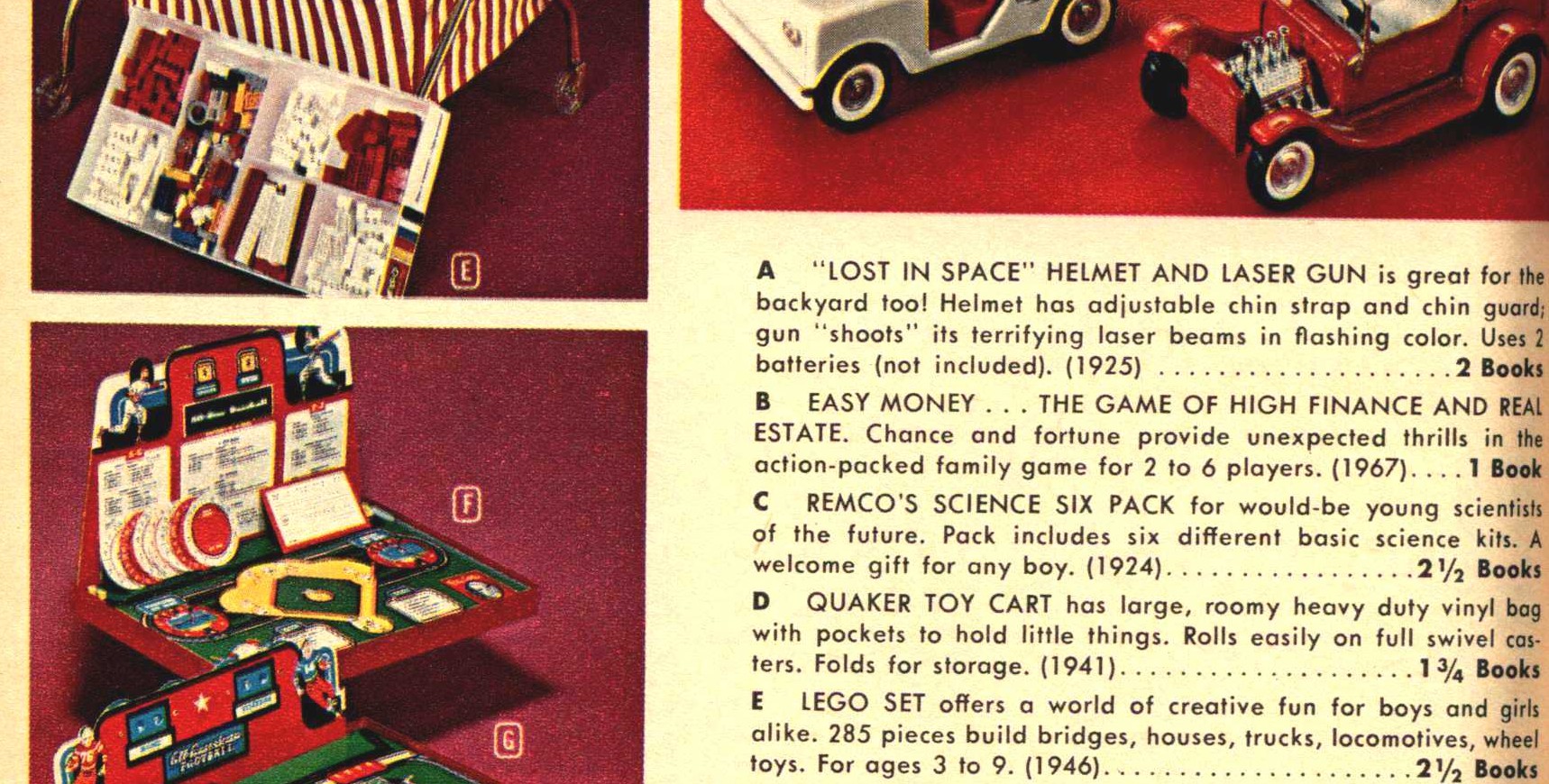
It shows a 285, which doesn't match. I did notice, however, a number of other gift stamp catalogs listing the 205 for 1967, both Ciotti's and Gold Bond. Which is very promising in terms of corroborating the 205's use as a catalog set in 1967, which also aligns with our dating of the set. Gold Bell is still a very real possibility, but one would need to source a 1967 catalog to confirm it or tell us to look elsewhere.
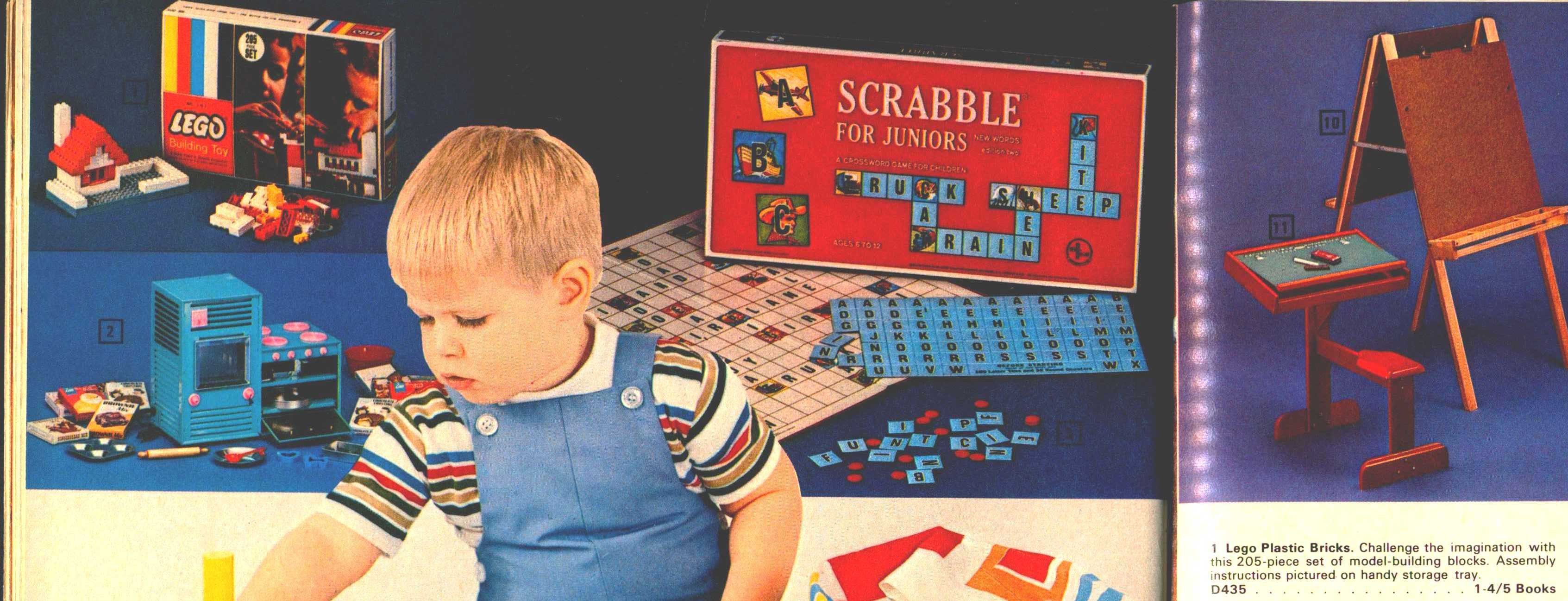
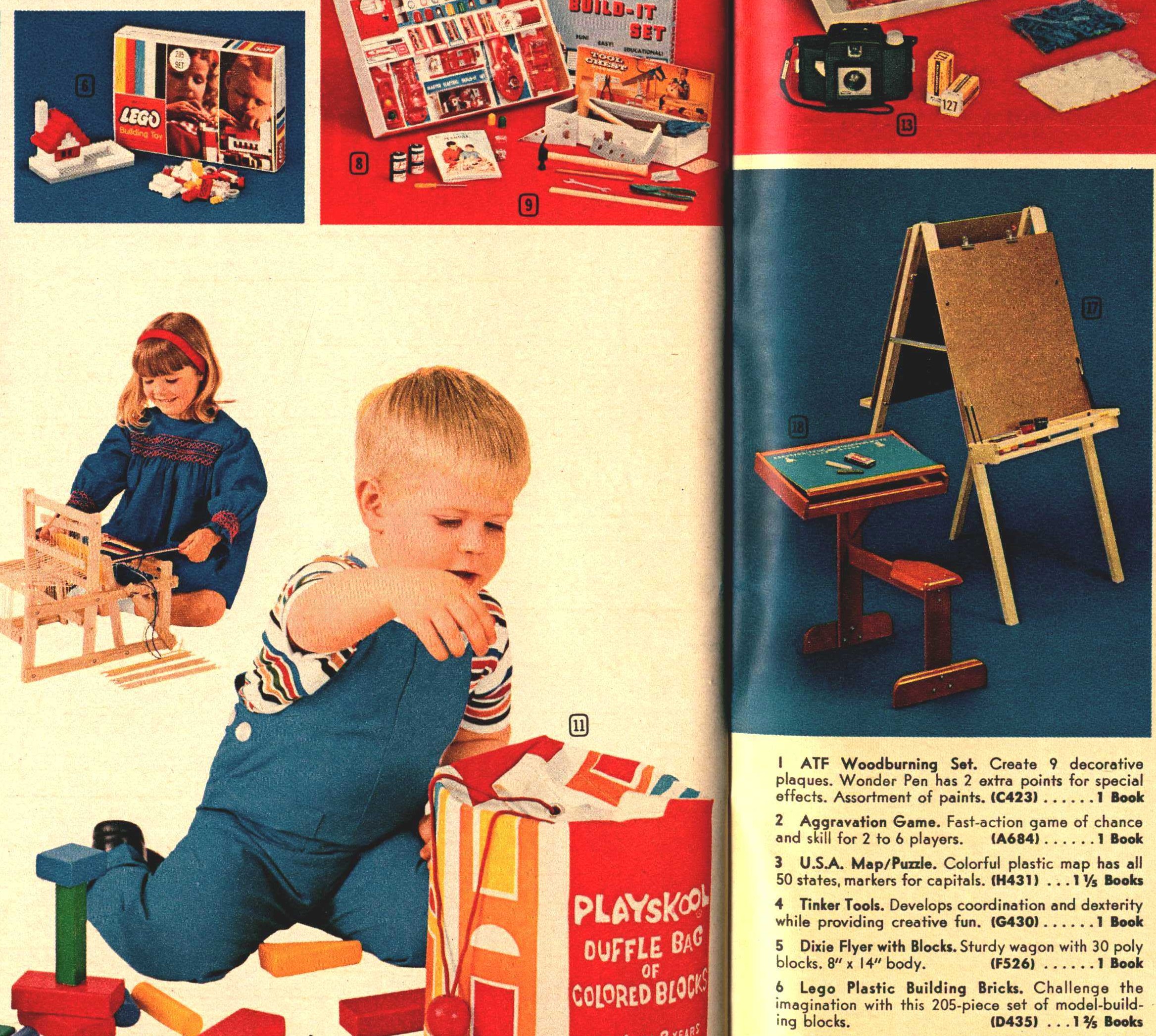
So at present, that is as far as we can go. I believe the set to have originated from a gift stamp catalog, as there'd be no reason for it to be in a mailer box if it was just readily available in whatever redemption center. And the tape on the box is important in that regard, as it means Samsonite had an expectation that the set would possibly be mailed to the consumer by the retailer, and maybe it was mailed in some cases, but Samsonite themselves didn't mail it. Catalog sets never had tape because they'd be picked up in store, so what we're working here was likely a hybrid situation, which matches how stamp redemption worked.
It's only that we haven't identified the exact one. And you may wonder why I've narrowed down to stamp redemption for the 205 so quickly, when there are plenty of other avenues. It was actually shown earlier, but the 1961-62 flat box 705 I showed has a major clue (remember structurally, the 205 replaced the 705 in 1965, both had the same price point and essentially the same part count):
Putting aside the 'Z 6462', which is also likely a catalog number, the box has '1 1/2' also written on it, which I believe would mean it cost 1.5 stamp books. Which makes sense, as the above catalog scans had similar prices of 1 2/5 or 1 4/5 books. It's just that each one had slightly different pricing.
One may also question the trustworthiness of the handwritten sharpied numbers on the 705, which fair enough. But I would doubt someone would 1. figure out the stamp catalog distribution, 2. use permanent marker to write all the information on the side of the set, and 3. do so on a very rare and highly sought after box, especially when it adds no value and it was not sold for much.
So for now, this mystery has yet to be solved.