
The 1968 Parade Magazine Promotion
___
While many sources serve as a piece of a larger puzzle, very few stand on their own and document something otherwise thought forever missing. This comes at a cost however, as it serves as yet another root for which many branches will be created.
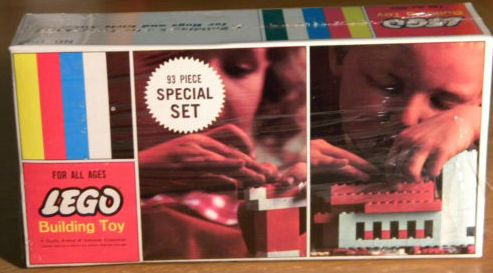
When I originally came across this clipping in a newspaper archive, I set it aside as it mentioned the fabled "93-piece set", a set that has surviving examples but no known source. Below is an image of the set's box(taken from BrickLink, note that it may not be the exact box that belongs to this promotion) and the newspaper clipping itself, from The Sunday Oregonian, September 29th, 1968:
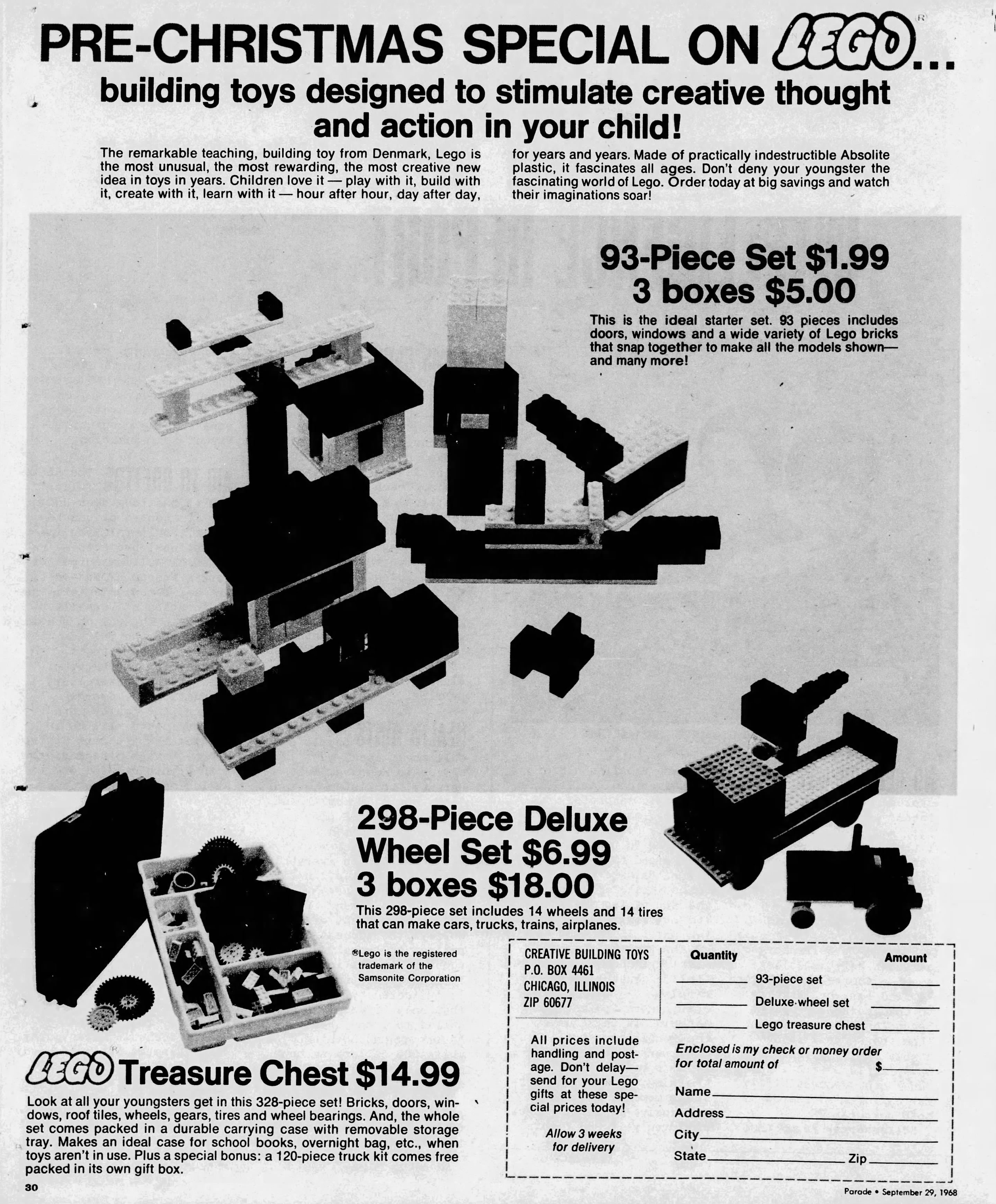
This mail-offer ad was only published in the September 29th edition of Parade Magazine, a newspaper supplement released weekly. It is sandwiched between columns on real world events and developments, including the European theater post-WWII, changes within the US Senate, and inflating costs in healthcare.
Don't think it was an unusual appearance however, as it is also among mail-order advertisements for things like Don Quixote de la Mancha or another for a selection of 8-tracks. It's a similar practice to how you'll find magazines today.
The unusual part is what these sets were. Let's start with the first two.
93-Piece Set & 298-Piece Deluxe Set
An important thing to note before we begin is that currently, this article has no one corroborating source to point to as to the origin of these sets. Instead, this magazine article is the only documented appearance of these sets currently available.
But just because it is the lone document at our disposal does not mean it is the origin or only source. Rather, we have a very interesting parallel that is too convenient to ignore.
So think about the 1961-65 line and their (US) piece counts:
702 Basic Set - ~93-94 pieces
703 Basic Set - ~126 pieces
705 Basic Set - ~200-201 pieces
708 Basic Set - ~240-244 pieces
711 Basic Set - ~373-374 pieces
605 Wheel Set - ~189-196 pieces
610 Super Wheel Set - ~296-297 pieces
905 Doll Set - ~277-278 pieces
105 Beginner's Set - 24 pieces
Now think about the sets that released in 1965. Most 1961-65 mainline sets have a corresponding pair (considering relative piece counts and price) going into 1965:
702 Basic Set - ~93-94 pieces
703 Basic Set - ~126 pieces | 120 Basic Set - 120 pieces
705 Basic Set - ~200-201 pieces | 205 Basic Set - 205 pieces
708 Basic Set - ~240-244 pieces | 285 Basic Set - 285 pieces
711 Basic Set - ~373-374 pieces | 375 Basic Set - 375 pieces
605 Wheel Set - ~189-196 pieces | 021 Wheel Toy - Unknown(online estimates are around 180-195)
610 Super Wheel Set - ~296-297 pieces
905 Doll Set - ~277-278 pieces | 022 Doll Furniture - Unknown (my copy has 269 pieces)
105 Beginner's Set - 24 pieces | 041 Beginner's Set - 24 pieces
These next two are the odd ones out in the 1965 line as they do not match price/theme, but interesting in that they are roughly similar.
450 Basic Set | 717 Junior Constructor - 490-520 pieces
615 Basic Set | 725 Town Plan - 690-710 pieces
So from the above, we have two 1961-65 sets unaccounted for:
702 Basic Set - ~93-94 pieces
610 Super Wheel Set - ~296-297 pieces
And wouldn't you know it, the newspaper ad above advertises a 93-piece set and a 298-piece Deluxe Wheel Set(which also matches the evolution of "Wheel Toy" -> "Wheel Set").
Which was an amazing discovery for me, as it makes a ton of sense. Samsonite of Canada kept the 610 in production at least into the late 60s, and when the 702 retired in 1966(again, for Canada), they released the 99 Basic Set as a direct replacement. I'd never realized this pattern until I begin looking into the 022 Doll Furniture Set, and just happened to be writing this article around the same time.
But the question then becomes... why were these sets distributed this way? Why were they made at all?
In short, I have no idea for the Deluxe Wheel Set. But I do not believe this promotion to be the origin of the sets, and we have evidence to back this up. I'm pretty confident I've identified the origin of the 93-piece set, all the way back in 1965.
I will get to the Deluxe Wheel Set later, but we at least have the 93-piece set's box:
It has a detail that makes it impossible to originate in 1968: two patents instead of eight. All sets that released in 1965-67 got two patents, while all sets released in 1968 had eight. Even sets such as the 329 Antique Car, who had a development in between those two seasons received a box with eight patents. This box, however, has "FOR ALL AGES", which places its production in 1967(when age ranges were removed from idea books). Why is that?
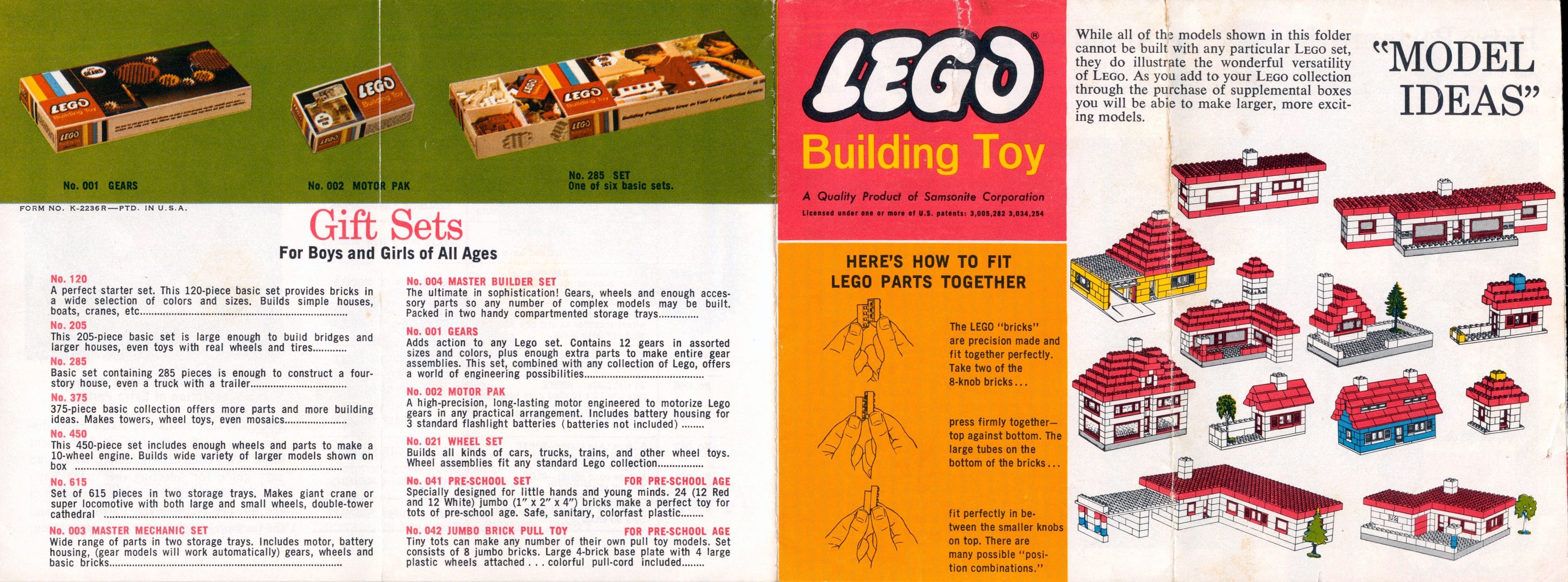
It appears to have been the same box used in 1967's 110 Chevron Station, which is another can of worms. Just note that just because that is an earlier appearance does not mean it is the origin.
Instead, there is a paper trail dating the 093 all the way back to 1965, but in a non-retail capacity. What do I mean?
Mysterious Pamphlets
Years ago I purchased a massive lot of LEGO Samsonite from an original owner, sets specifically dating to 1967-68. Within it was nearly twenty of these pamphlets:
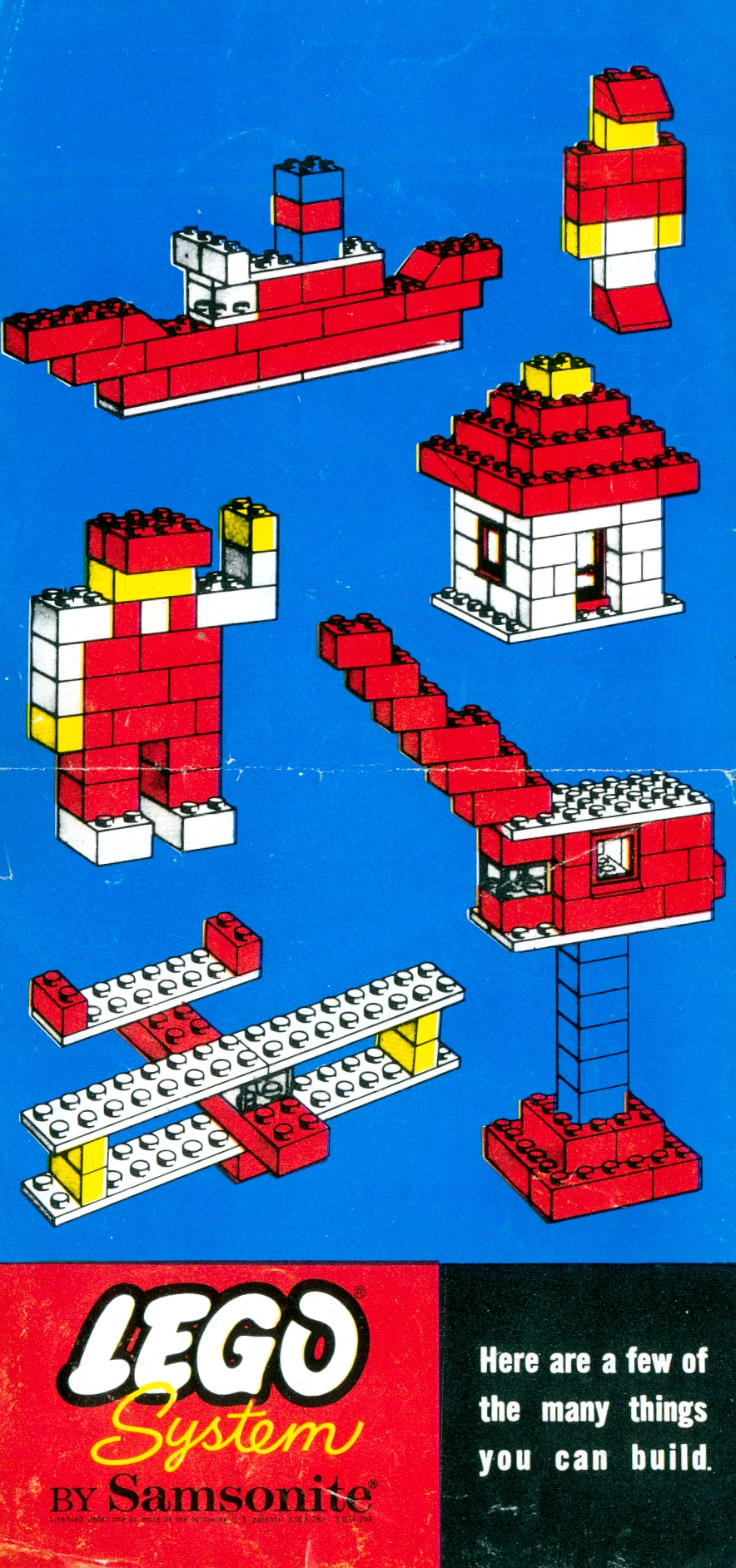
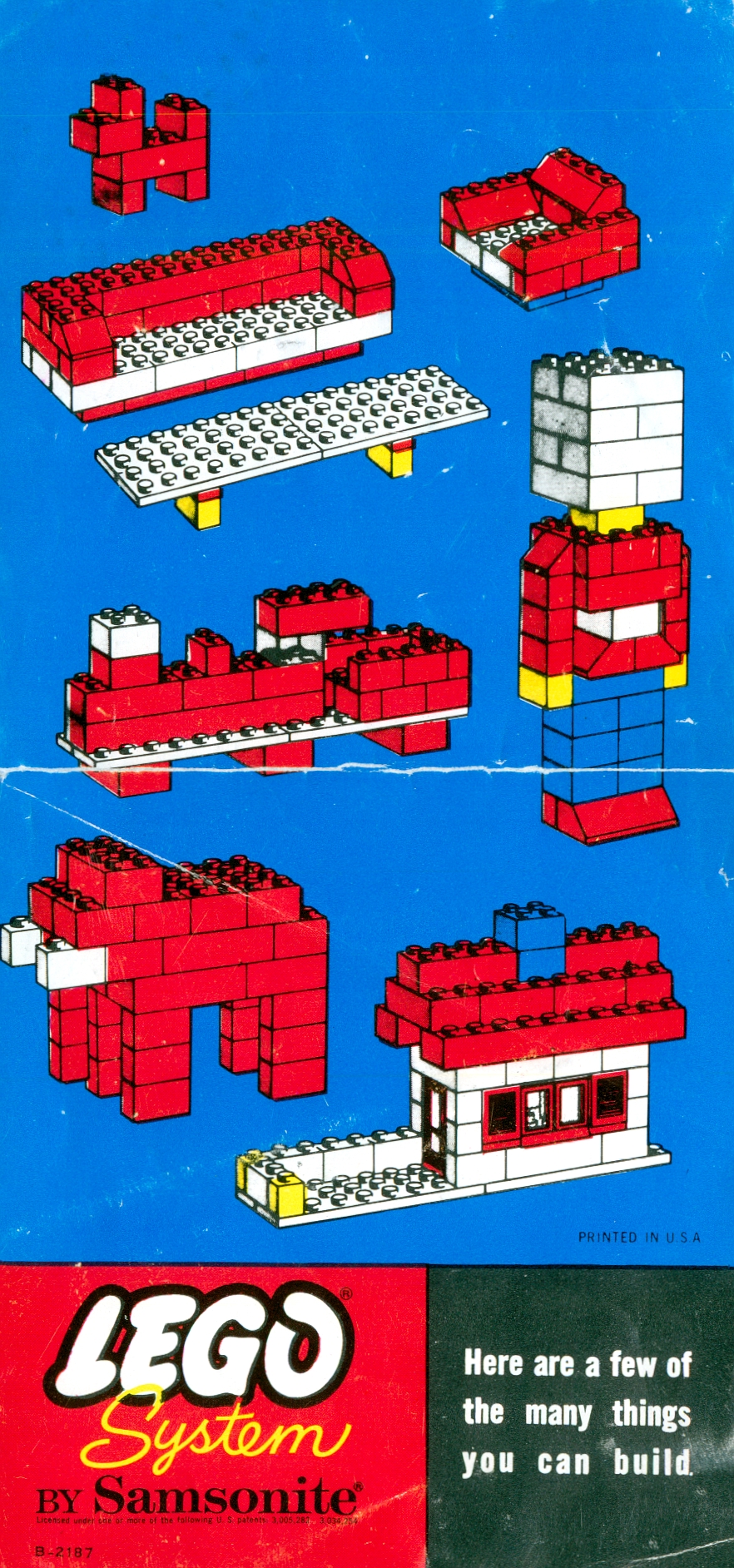
Notice how they are exactly the back of the 702 Basic Set from 1961-65(as well as the exact same models in the Parade magazine above)?
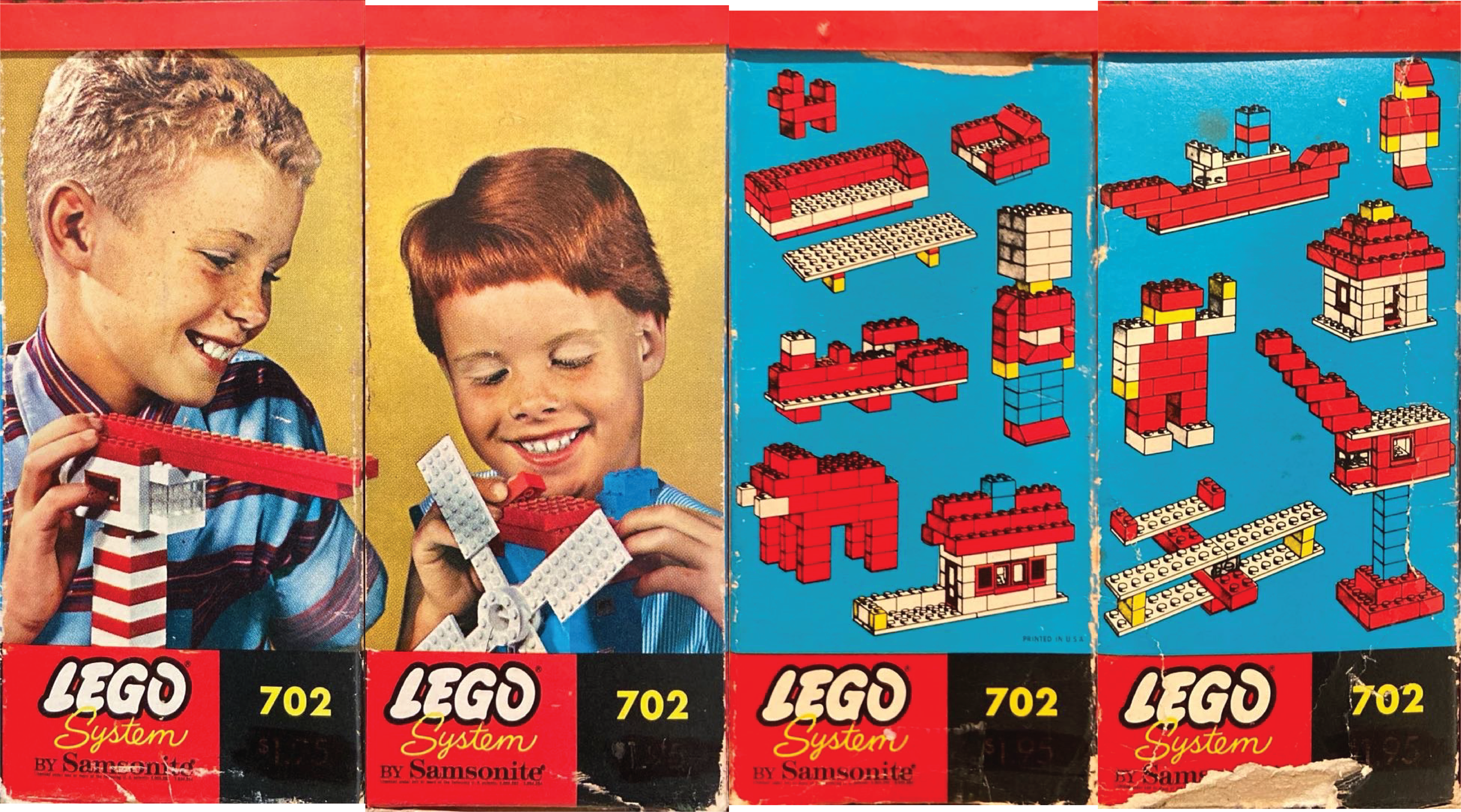
Their form number (B-2187) dates them to late 1965, after the 702's retirement but also well before the appearance of the 1968 Parade Magazine ad. Also, why is this manual is the only 1965 document to not have switched over to "Building Toy"?
And another thing: the 'B' designation was also being used for the 1965 dealer catalog B-2181. It is not used for regular set instructions or pamphlets(which typically used 'H') or idea books (which used 'K'). It can be found with dealer catalogs, institutional pamphlets, or the later Kraft promotional sets.
But let's think a moment, was the 702 used for promotional purposes? Yes!
Remember the 702 Special Introductory Set? The one offered either through magazines or in store? Now we have historical precedence for what I believe the story for this set is.
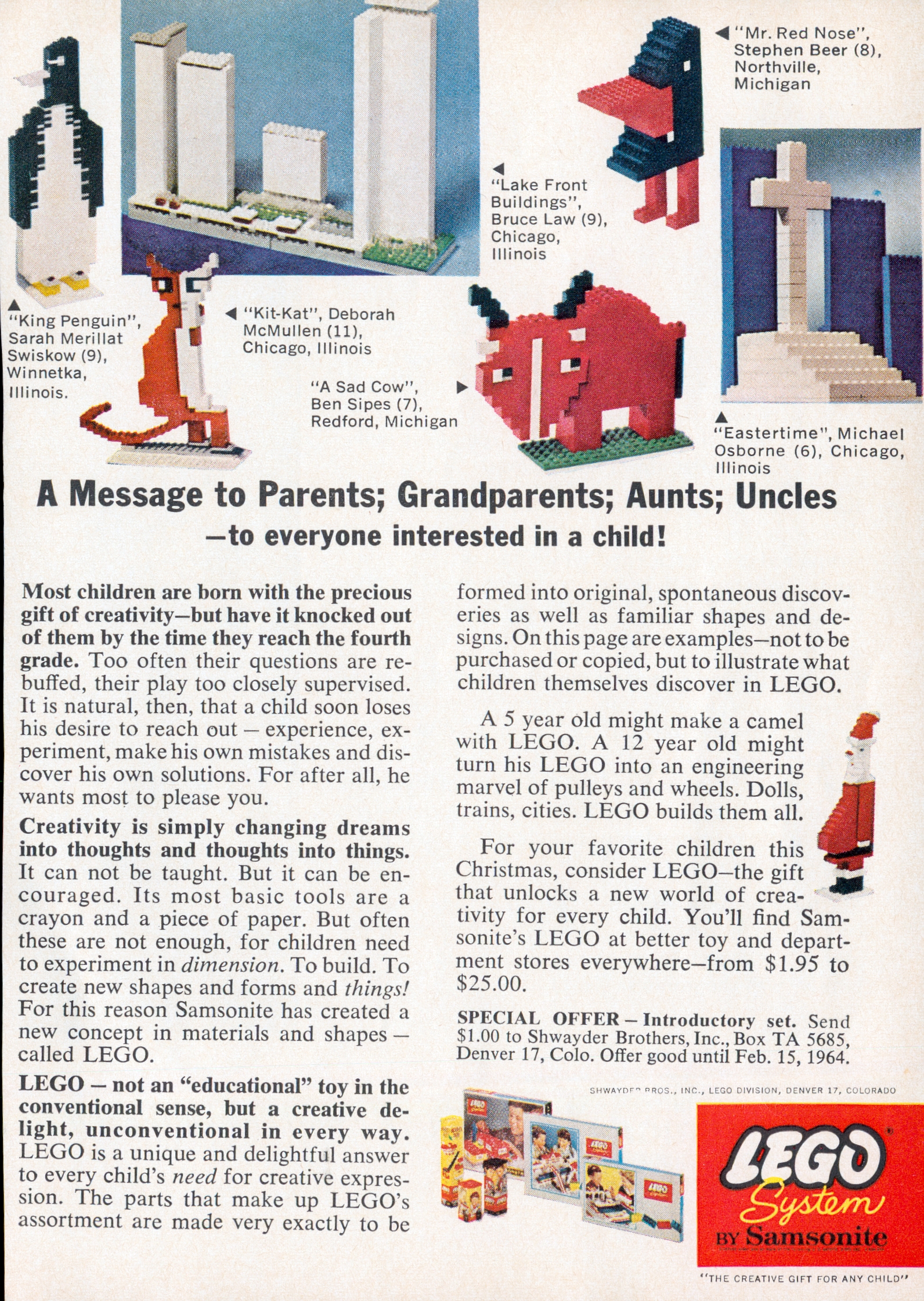
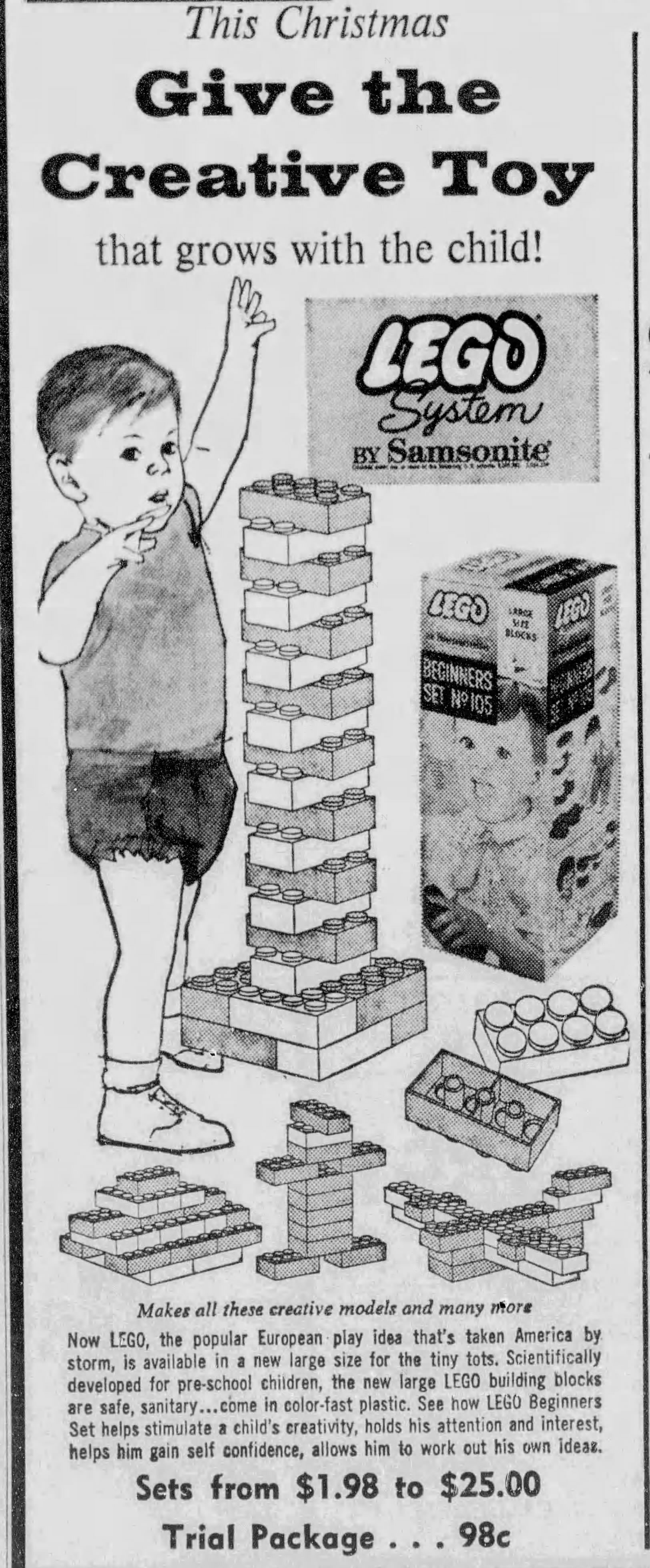
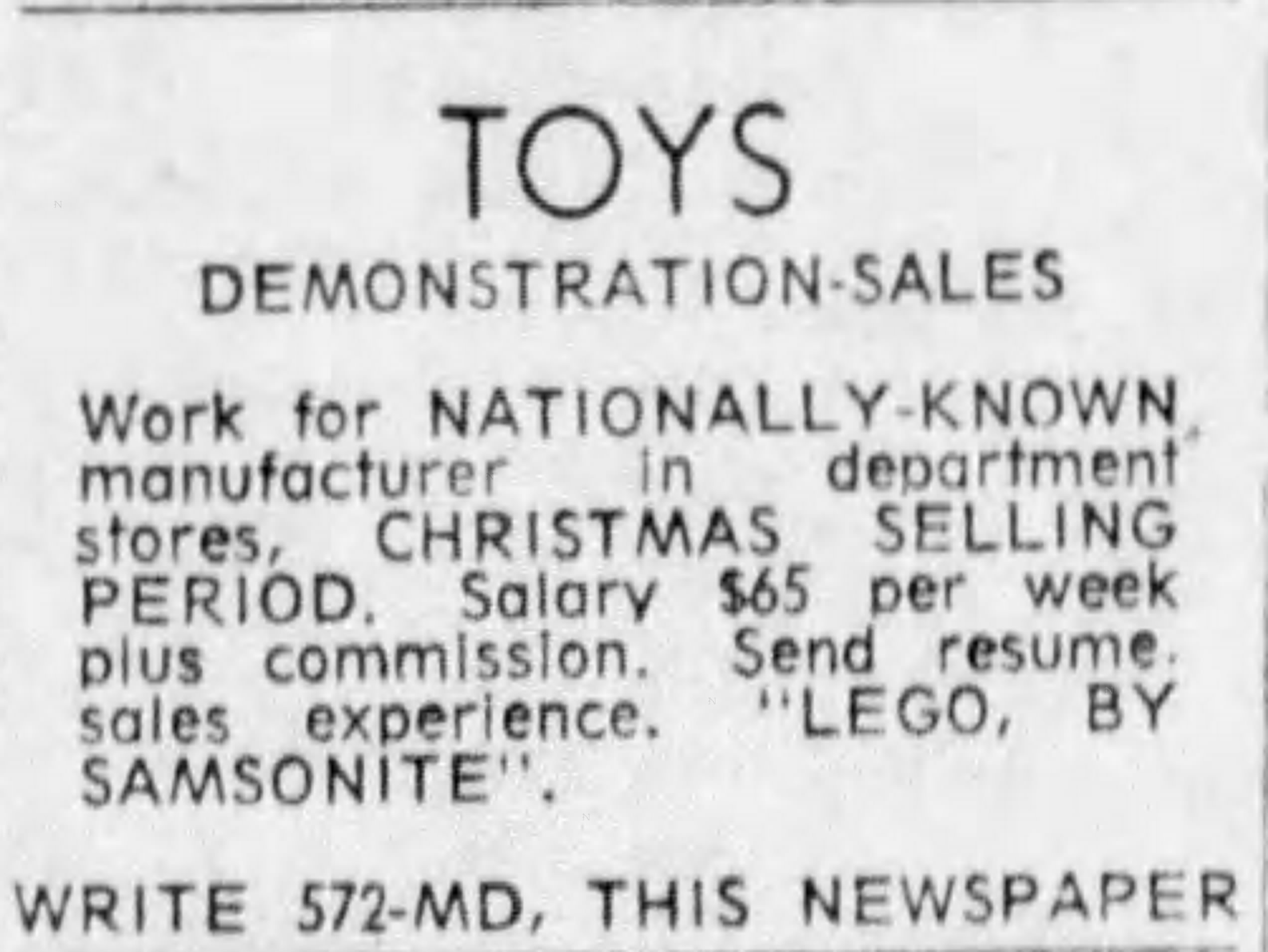
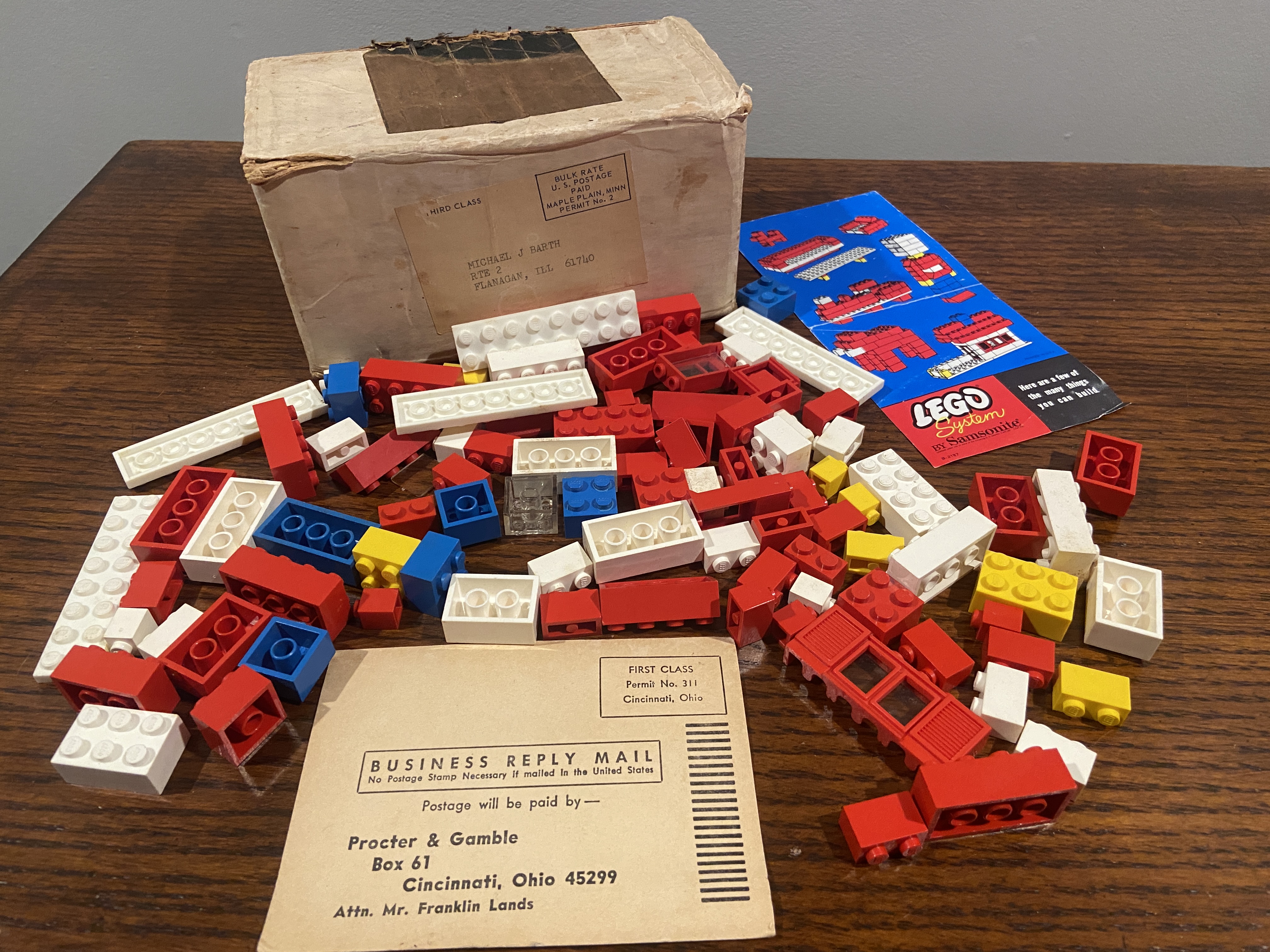
Given all that we've found above, at some point in early 1965 during development of the 1965 line, it was decided to cut the 93-piece set from the regular retail line and instead make it a dedicated introductory set used by dealers or for promotional purposes(or both), as was the case with the 702 Special Introductory Set. Toy demonstrations were common in the 1960s, the example linked is a 1964 job listing from Samsonite for a LEGO demonstrator. The set itself could've been as simple as a clear bag of bricks with the above pamphlet in it. It also could've had a box, we just don't know as evidently nothing has survived pre-1967. Or at least when I originally wrote this article there wasn't anything, as I've since identified a Procter and Gamble promotional use of the 93-piece set circa 1966, confirming all the above work:
But at some point by 1968, this practice was brought to an end and they needed a channel by which to eliminate stock of these sets. Hence the appearance of a one time Parade promotion that has no reason to exist.
This explanation does not do well to account for the 298 Deluxe Wheel Set, mainly because I have contradictory references in that case beyond its strong correlation with the 610, which we will cover later on. The inventory clearance theory does, however, match something in the Treasure Chest Set:
LEGO Treasure Chest
So the "Treasure Chest" set is a 328-piece set advertised to have included bricks, roof tiles, wheels, gears, tires, and wheel bearings. It shows the attaché Samsonite case; I'm not sure which color but that's not too important of a detail. The major inclusion is the "120-piece truck kit comes free packed in its own gift box".
This is another discovery that Daan helped me with (who also pointed out key details about the E-054 Three Worlds Carrying Case Set). I was not aware of the truck kit nor its provenance, but he is very experienced in this regard.
He reported that the B-2347 truck model instructions were always found in Samsonite case sets, but only certain ones. We have our case identified above, but I don't believe this 1968 promotion to be the origin of the truck set.
Below are scans of the truck's instructions from brickfetish:
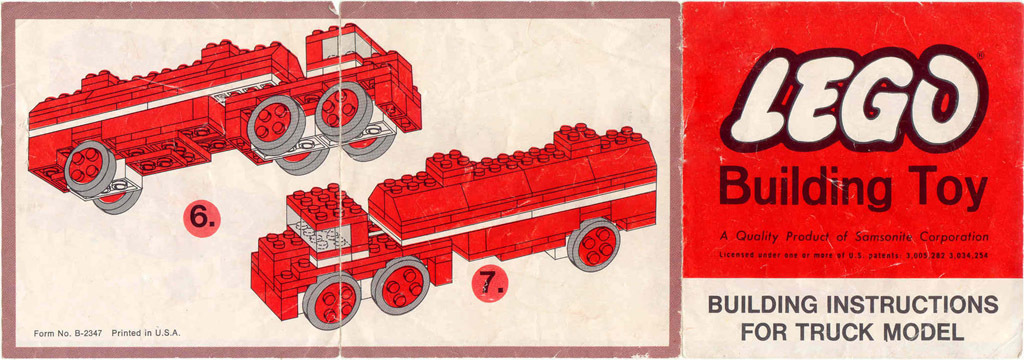
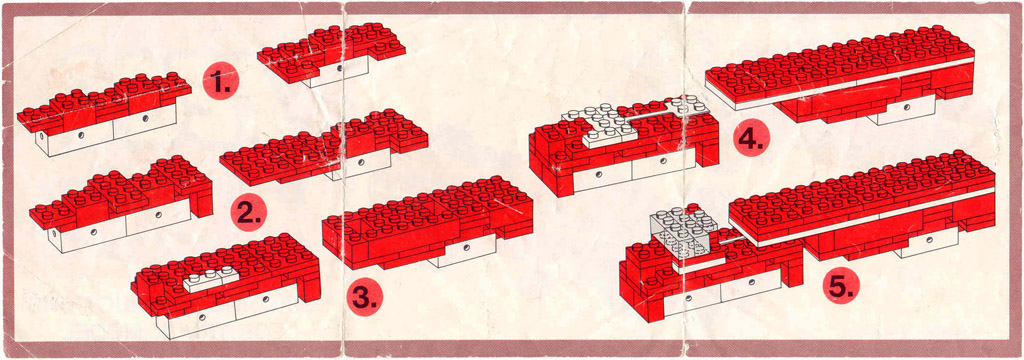
A few things. One, two patents again, which would typically mean this pre-dates 1968. However, the set's form number (B-2347) places its production to just after 1967's 113 Motorized Train (2337) but before 1968's 329 Antique Car (H-2350). The design of the instructions confirms this placement, as it is in an intermediate style. So we have a preparation at some time around late 1967 and early 1968. Also notice the return of 'B' in the form number, indicating that these were not intended to be instructions for a released set.
What would've been going on at the time that could prompt Samsonite to make a promotional truck set?
There are several exciting (and impossible to confirm) possibilities. A gift for employees, something for visiting LEGO reps, something for toy dealers to demonstrate or giveaway, etc. The early 1968 timing also matches with when the International Toy Fair took place (typically in March).
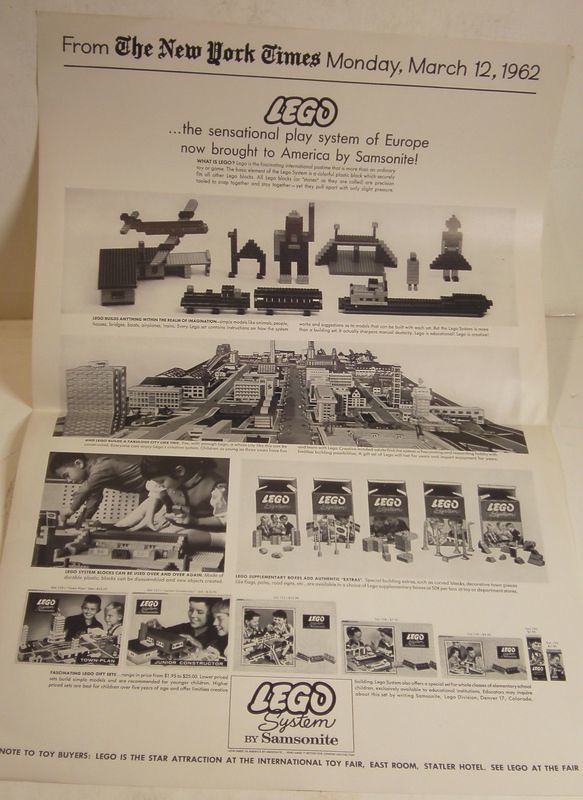
So there are several avenues as to what the origin/intended purpose of the truck model was. It was very clearly for promotional purposes, just what exactly the original channel was is a little unclear. The "gift box" used for the set could've been a plain box, as I can see how most children who received this set as a gift would've tossed the box and kept the truck's parts/instructions in the "Treasure Chest".
As to where the 328-piece Treasure Chest came from, I'm not too sure. Kraft promotions didn't begin until late 1968(the closest match was the Kraft 321-piece set), which appears to have been the Treasure Chest just without the gears. But since that took place at the same time as the 1968 Parade promotion, is that the source?
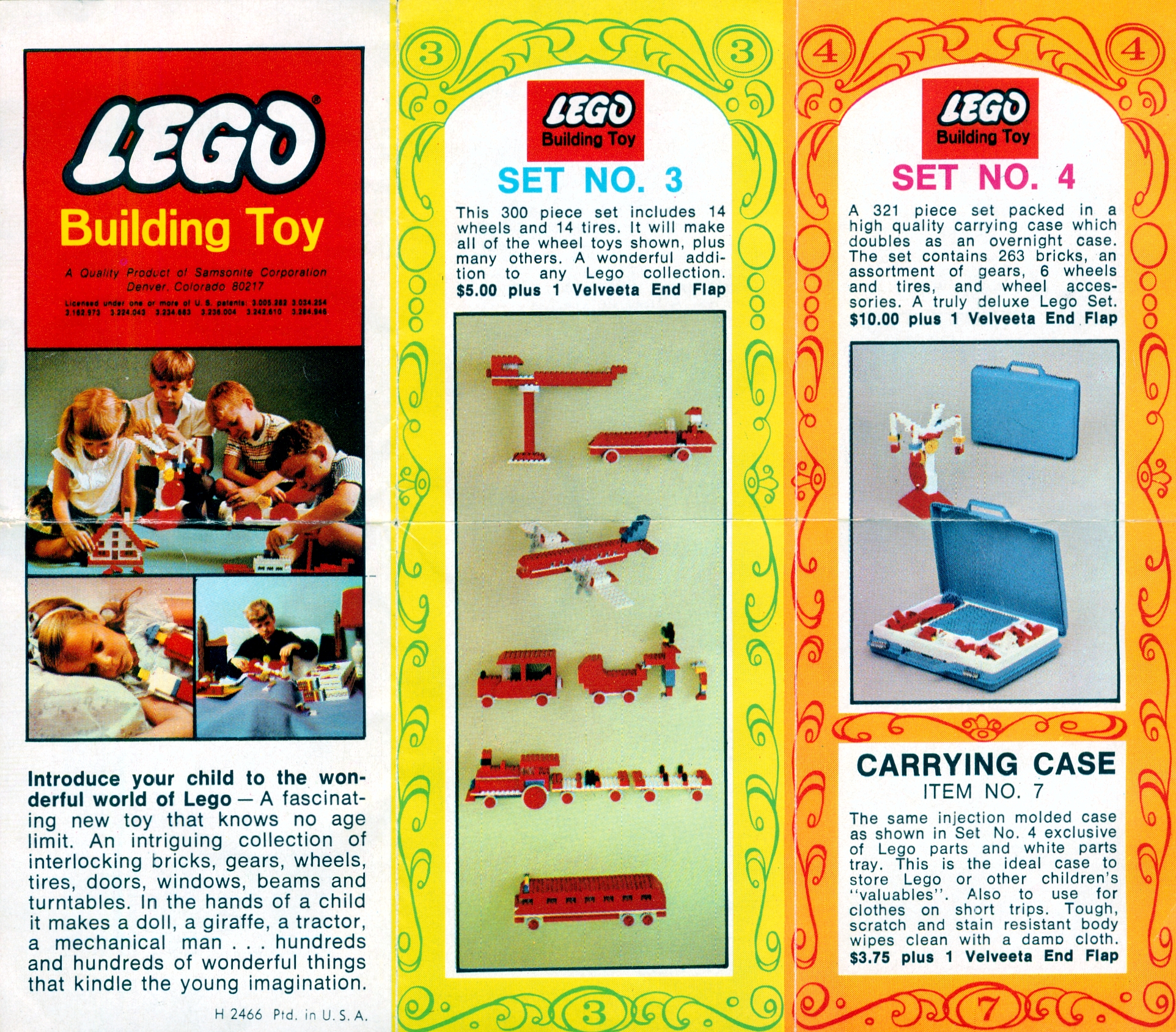
Could it have been a 301 Wheel Toy Set? After all, Sears was advertising a similar set in the same attaché case in 1968(and the set did not return for 1969):
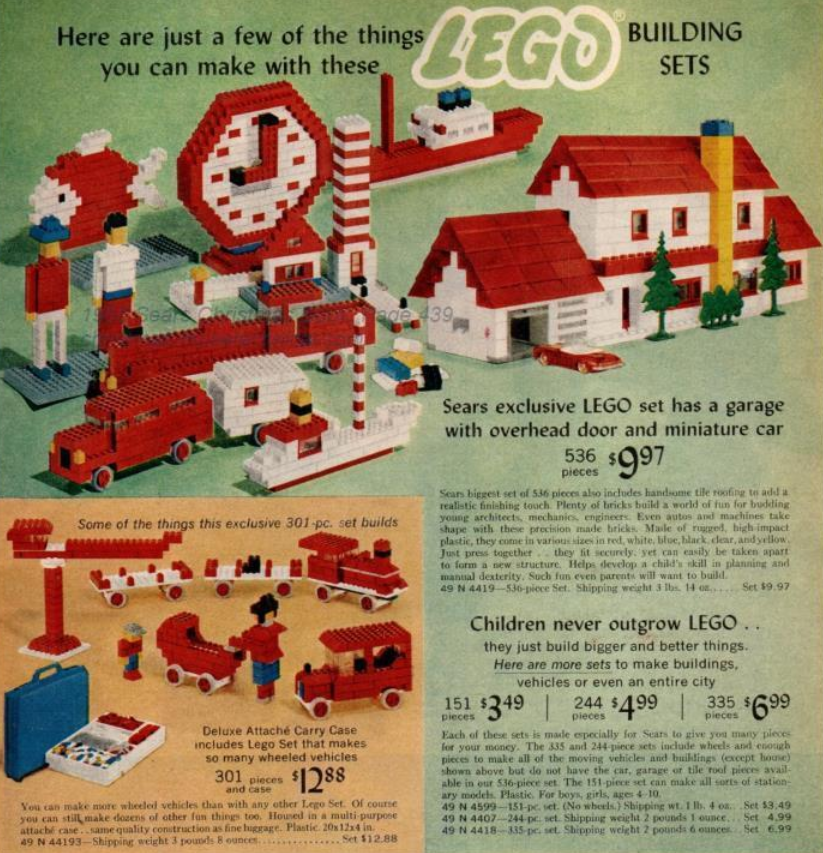
It's always possible, but the part counts do not line up as succinctly as I'd like. Instead, we've circled back to the 298 Deluxe Wheel Set.
298 Deluxe Wheel Set
I know, I know. This article is already long and dense, but this is a very complex topic and I'd rather cover it all in one go than to split it up and cause potential confusion.
So I lied a little bit earlier, the 610 technically does have an existing companion set in 1965+, but the 610 is a bit more complicated than the rest of the 1961-65 sets.
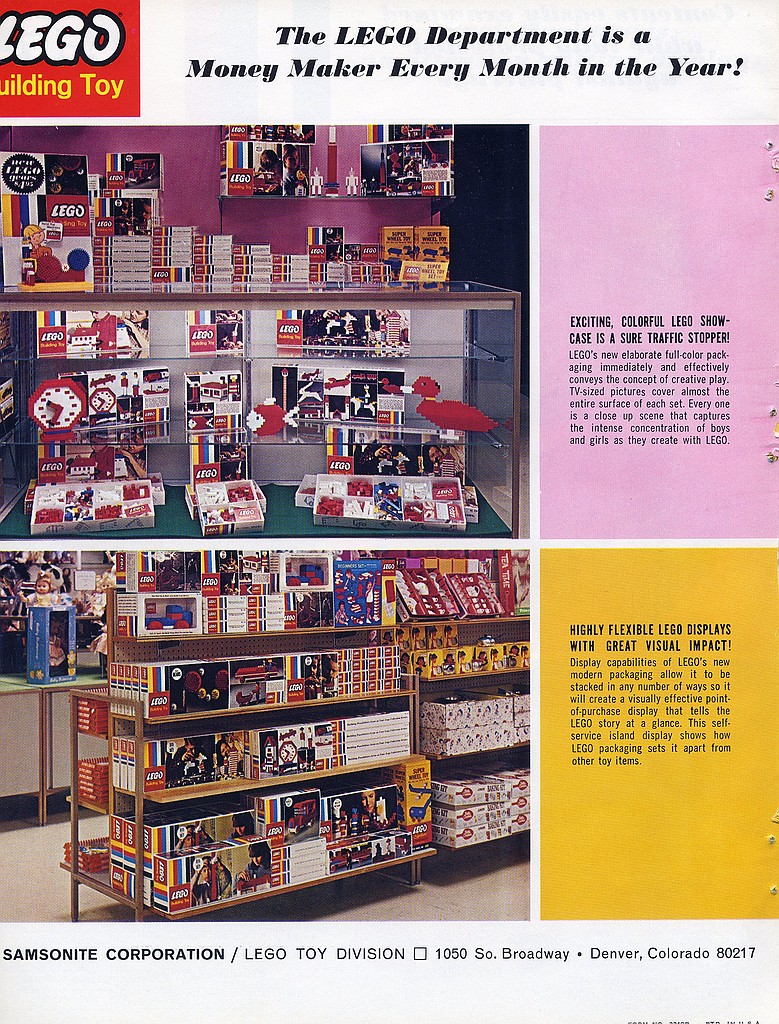
As the 610 Super Wheel Toy released in 1964, it stayed in (US) production into 1965. It was the only surviving set pictured among 1965 sets throughout 1965:
Even the 1965 dealer catalog lists the 610:
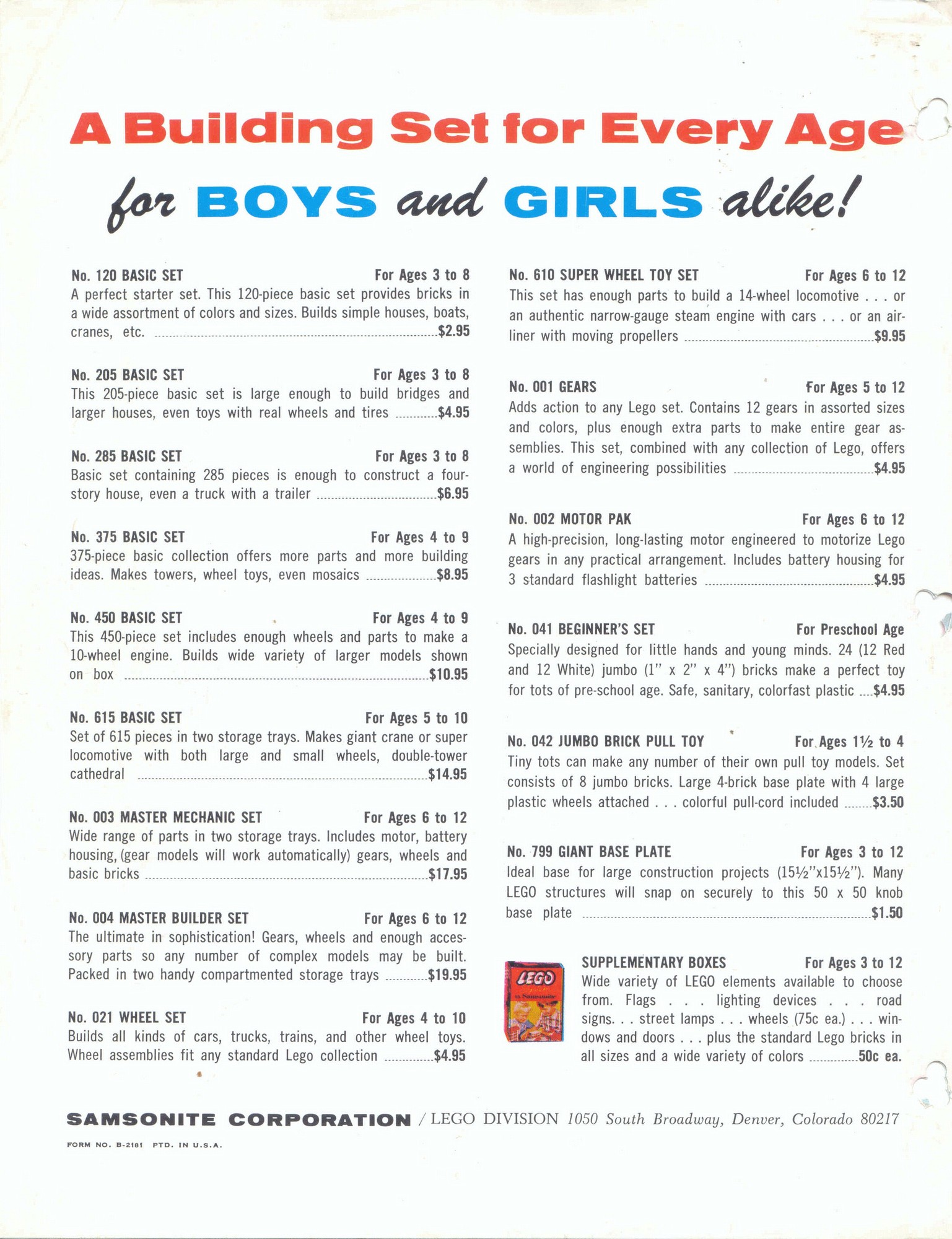
And there's an important set that appeared in 1966: the 301 Wheel Toy Set. It has a very similar piece count the 610, but carries over the original naming convention instead of something like the above "Deluxe Wheel Set". Though to be completely clear, that name may be something Sears assigned themselves. The 301 appeared in a plain box starting in 1966-67 and its final appearance was in 1968 in the attaché case all from Sears.
So we have two potential successors to the 610, there are two conflicting sets here. The 301 fills that void nicely(other Sears exclusive sets can be correlated as well, which I do so in a dedicated article), but we also have a different 298-piece "Deluxe Wheel Set" which more closely matches the original 610 Super Wheel Set.
The Deluxe Wheel Set featured in the Parade promo above is a set we have nothing to track, so there's a lot of ground to still be investigated.
Distribution
It is also important to clarify that the Parade offer was not available nationwide. I've not yet taken the time to determine exactly where we see the offer in archived newspapers (which would not likely be a good demonstration of the full scope of the promo anyway), but I did purchase the exact Parade magazine the promo appeared in to scan it in color but the promotion was not in there. Thus, the sets within are even more rare as not only were they limited to this single promotion, but also that the availability of the promo was limited regionally in some regard.
Wrapping Up
Overall, while this was way more longwinded than I expected, a lot of pieces have either now fallen into place or are set up and ready for its match to be found.
To review, the Parade promotion, only ever appearing once in 1968, was obviously a bit of a clean-up effort by Samsonite offloading old/retired materials that were not used in general retail.