
Everything About Samsonite Form Numbers
___
While I've remarked in the past that LEGO Samsonite is a mystery that was never made to be solved, one inconspicuous element challenges that very notion: form numbers.
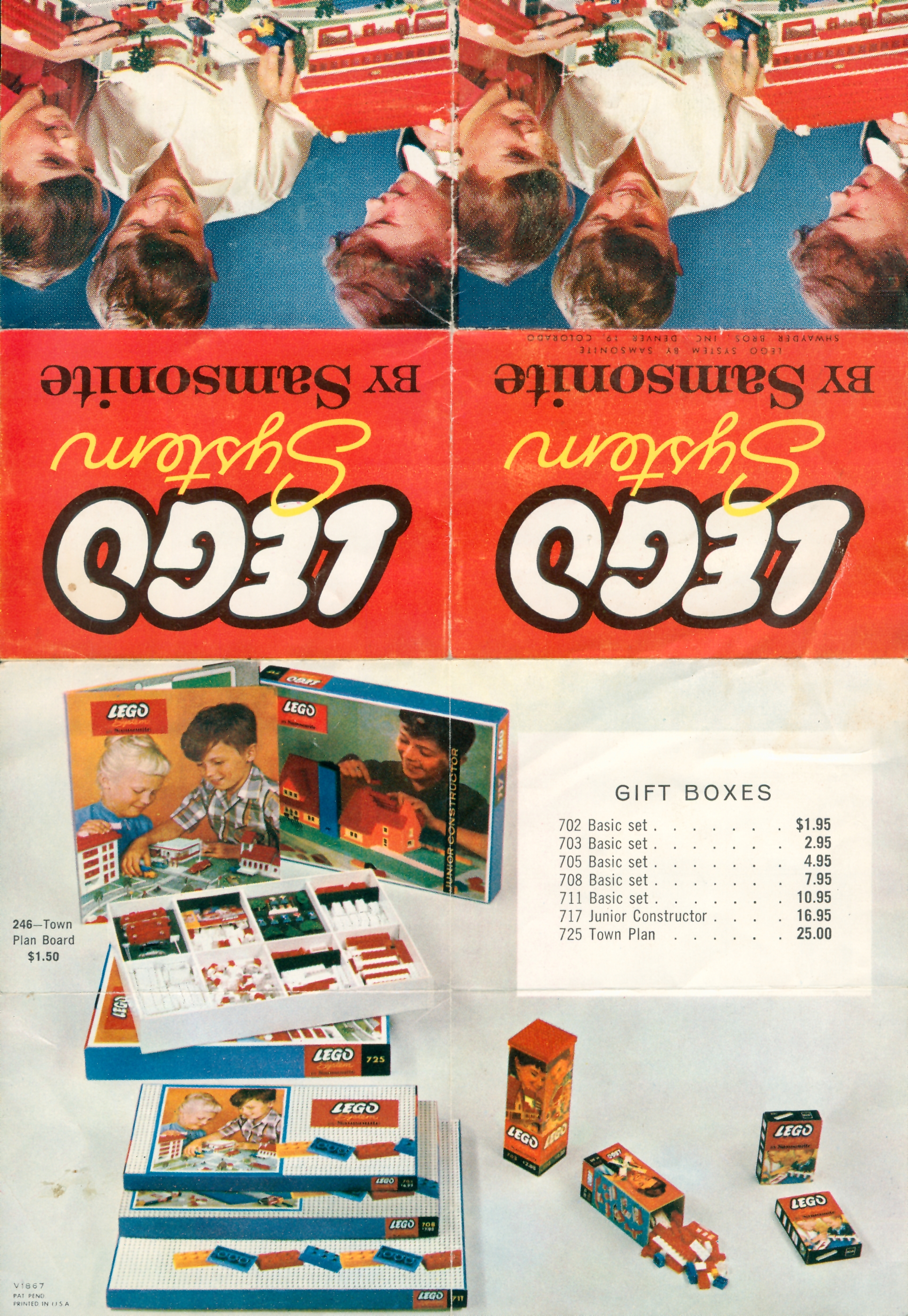
They're relatively common on mid-century ephemera, but in case you're unfamiliar, look at the bottom left corner of this instruction sheet. In very small text, you will see "V1867":
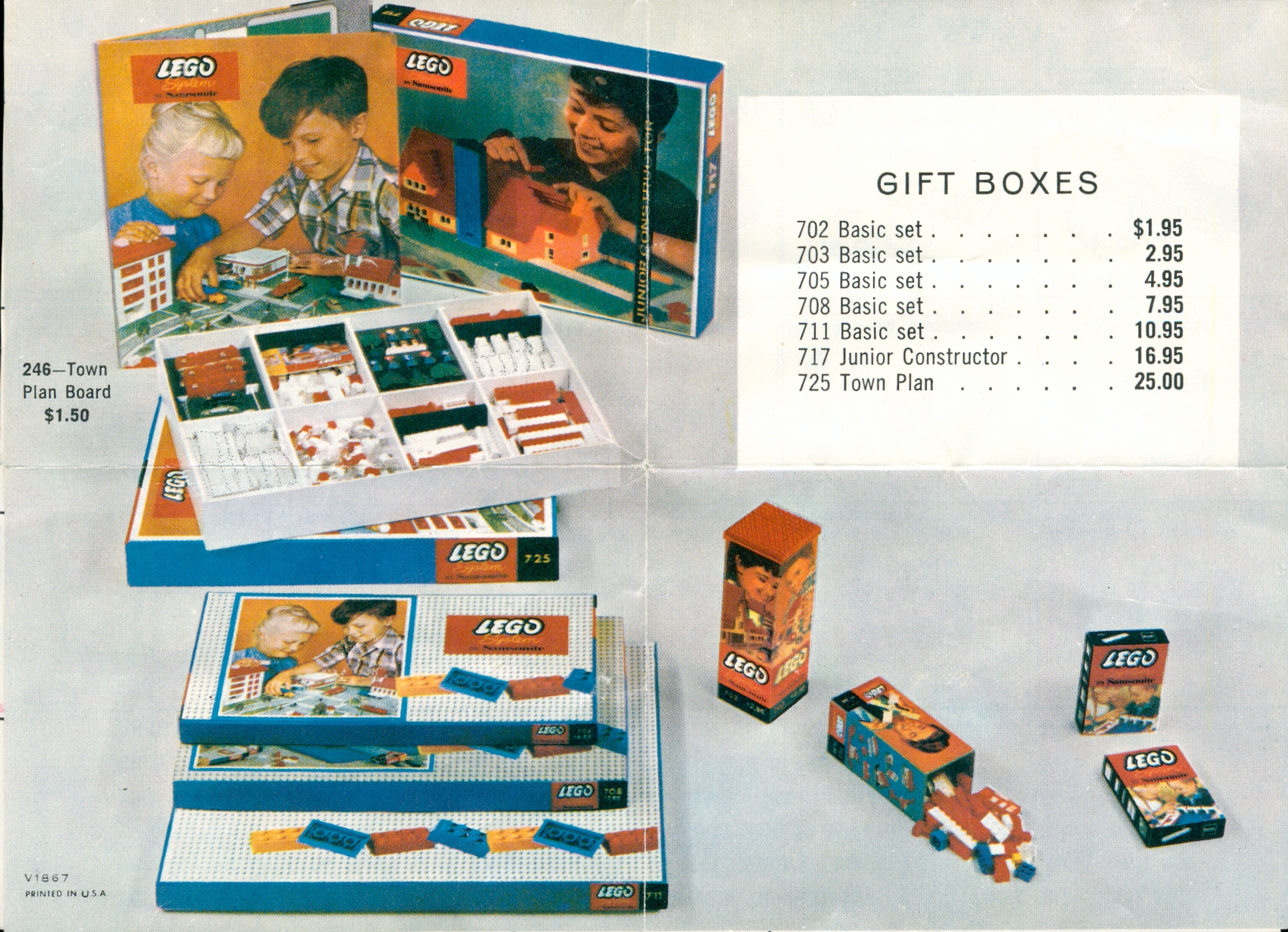
The vast majority of LEGO Samsonite ephemera include a unique form number. Across its decades long use by Samsonite, the shared system was incremented by one for each document chronologically, meaning that the system can be used to reliably confirm dates of materials.
Say you're trying to date the release of a particular set. You can point to newspapers and catalogs all day to make a case for a particular year, and we've already discussed reliable methods for Dating Samsonite Boxes. But even the most diligent triangulations leave room for error.
However, when we look at the form number on the set's instructions, it gives us the opportunity to check our work and solidify our analysis. It is extremely consistent and reliable, even when working with very little. This is how I was able to conclusively date the 93-Piece Set to 1965 before I'd found the P&G promotion. Of course that example was paired with rigorous analysis of the entire Samsonite line, but it demonstrates the usefulness of form numbers very well, as otherwise in that case we'd still be stuck at maybe 1965.
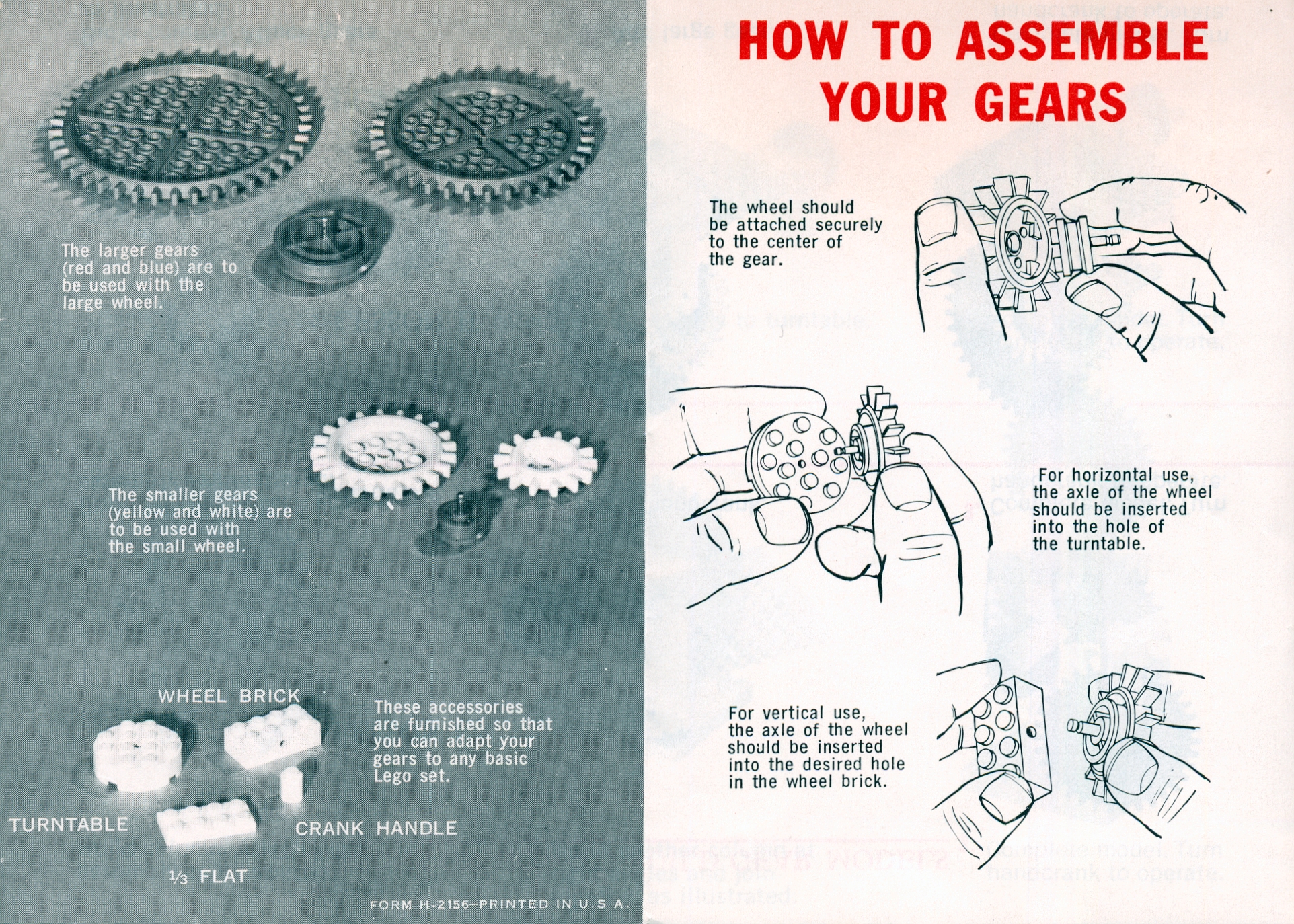
Take the 001 Gears and 002 Motor Pak for example, two sets that we have a plethora of evidence placing their release in 1965. Their form numbers are H-2156:
And H-2157:
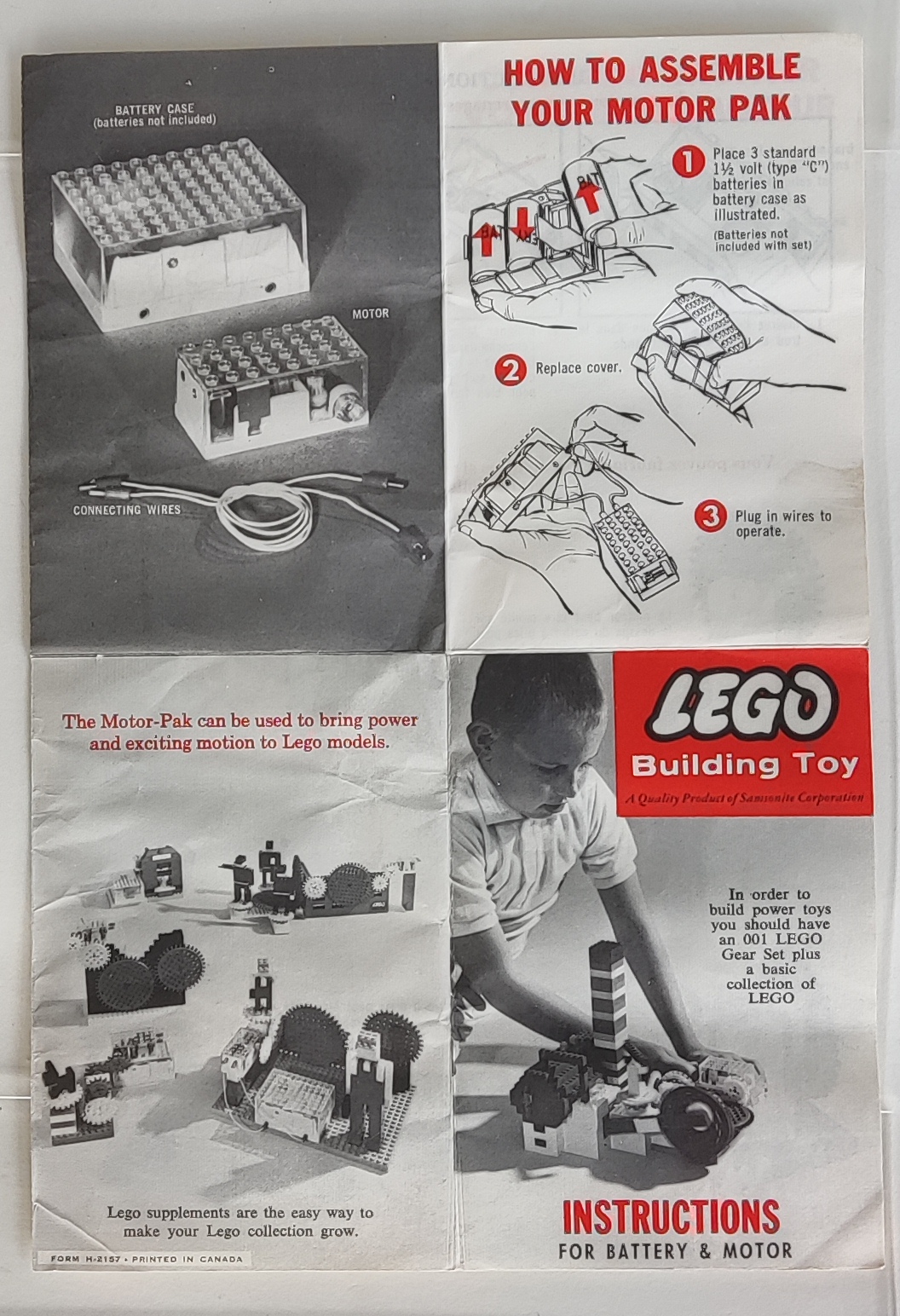
Which aligns with what we see in reality: the 001 and 002 sets were planned together and belong to 1965 (as 215X is bookended by other 1965 materials).
Also important to note, they have their country of origin printed with the form number. So "Printed in the U.S.A." and "Printed in Canada" will denote which market they belonged to, as we see in the two examples above.
As outlined above, these are the most valuable tool we have at our disposal. If they were not present, we wouldn't have nearly the same amount of confidence for LEGO Samsonite as we do. It even applies to all Samsonite products outside of LEGO: furniture, luggage, and even their board games from the 1970s, which also further help confirm dates as absolute. But before you go running off trusting it implicitly, proper use requires careful consideration for exactly what they were and how Samsonite produced their products.
So what exactly does the form number tell us? How can it be used, and what are the limitations, and what are the exceptions?
First, we must cover something very important: context.
Why are there form numbers at all?
Do not consider this a full history of Samsonite's unique identifier systems—we're only covering the history of specific systems eventually used for LEGO Samsonite. I'll cover the Samsonite side of things more in depth in its dedicated section.
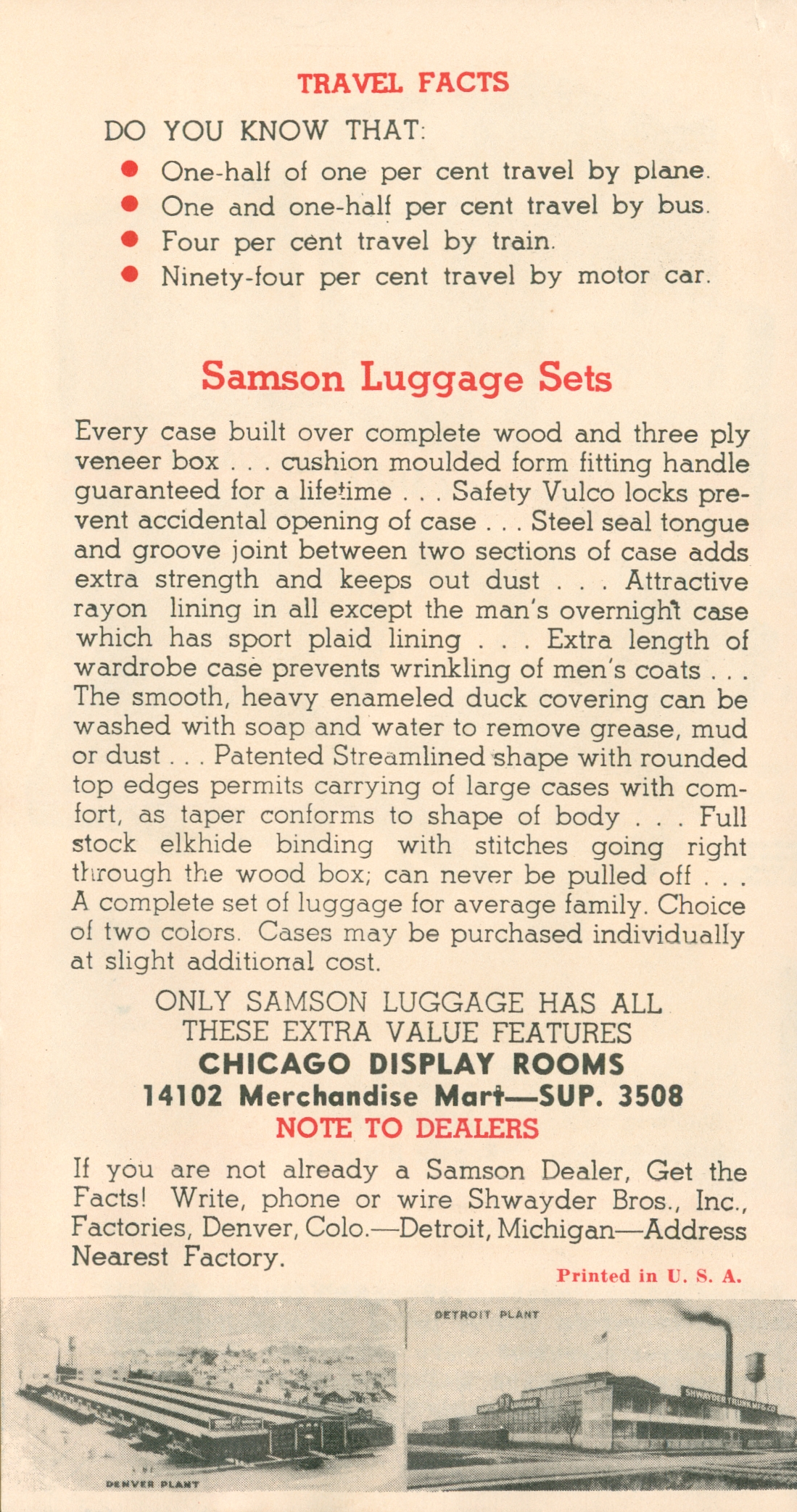
The earliest Samsonite materials do not include form numbers or any number distinction, they just simply exist. Take for example this 1940 auto dealer pamphlet, missing any form number but does has "Printed in U.S.A.". The country of origin began to be included sometime during 1930-40, likely an indirect result of WWII.
A primitive form of the numbering system began in 1941, as this Samson two-suiter packing guide shows:
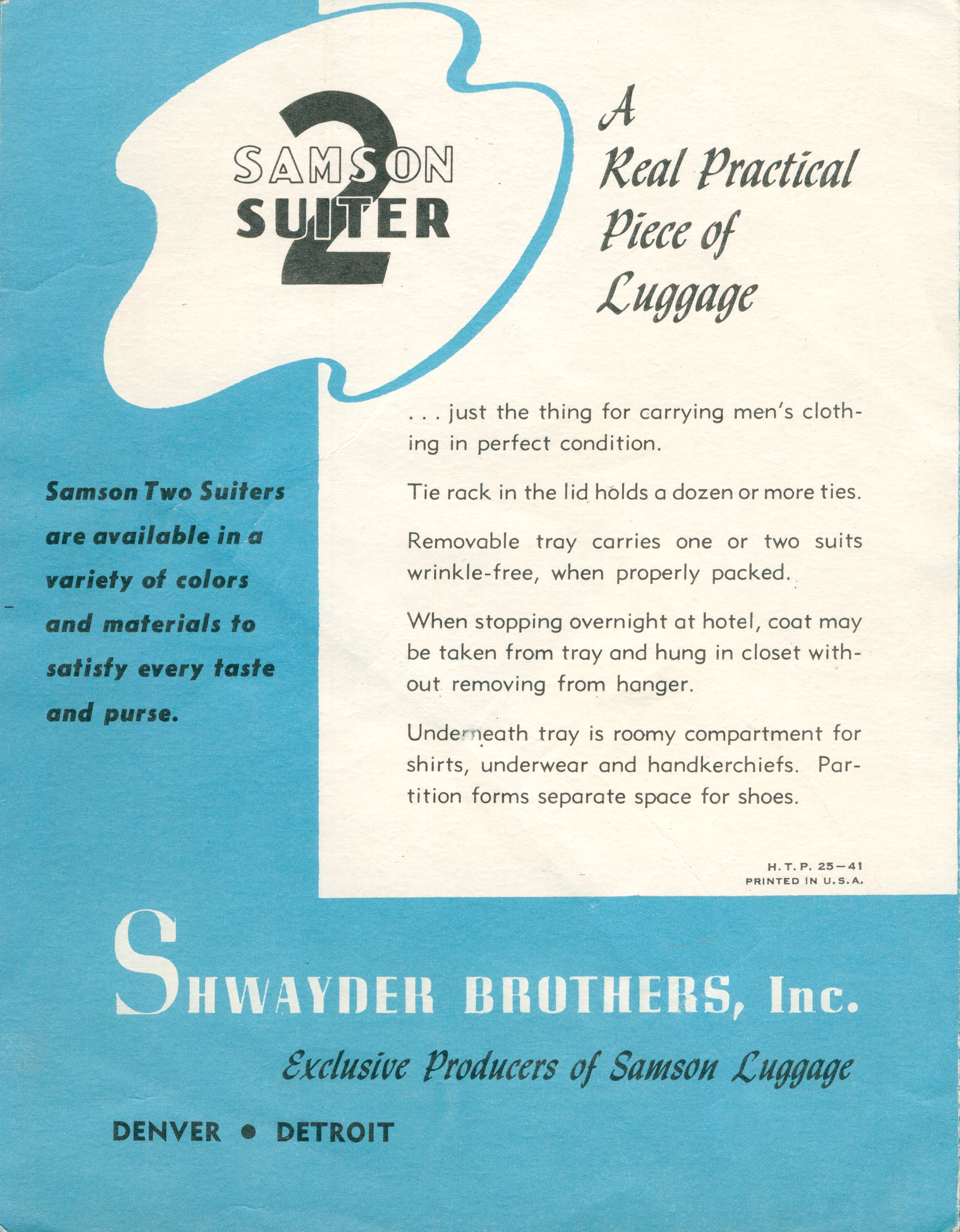
So as of 1941, we have "H.T.P. 25-41". While we do not know the meaning of HTP (possibly the initials of the preparer, the printer, a third party, etc.), it is likely that 25-41 is meant to communicate "the 25th paper of 1941". Of course, important to note, this is speculative until more materials are found and scanned.
But if anything, this is definitely an early effort to began counting ephemera, whether or not they continued counting from there. It's possible, just not yet evident.
The next form number we have in sequence is 483: the printed inner label of a Samsonite Initialgrams case circa 1948:
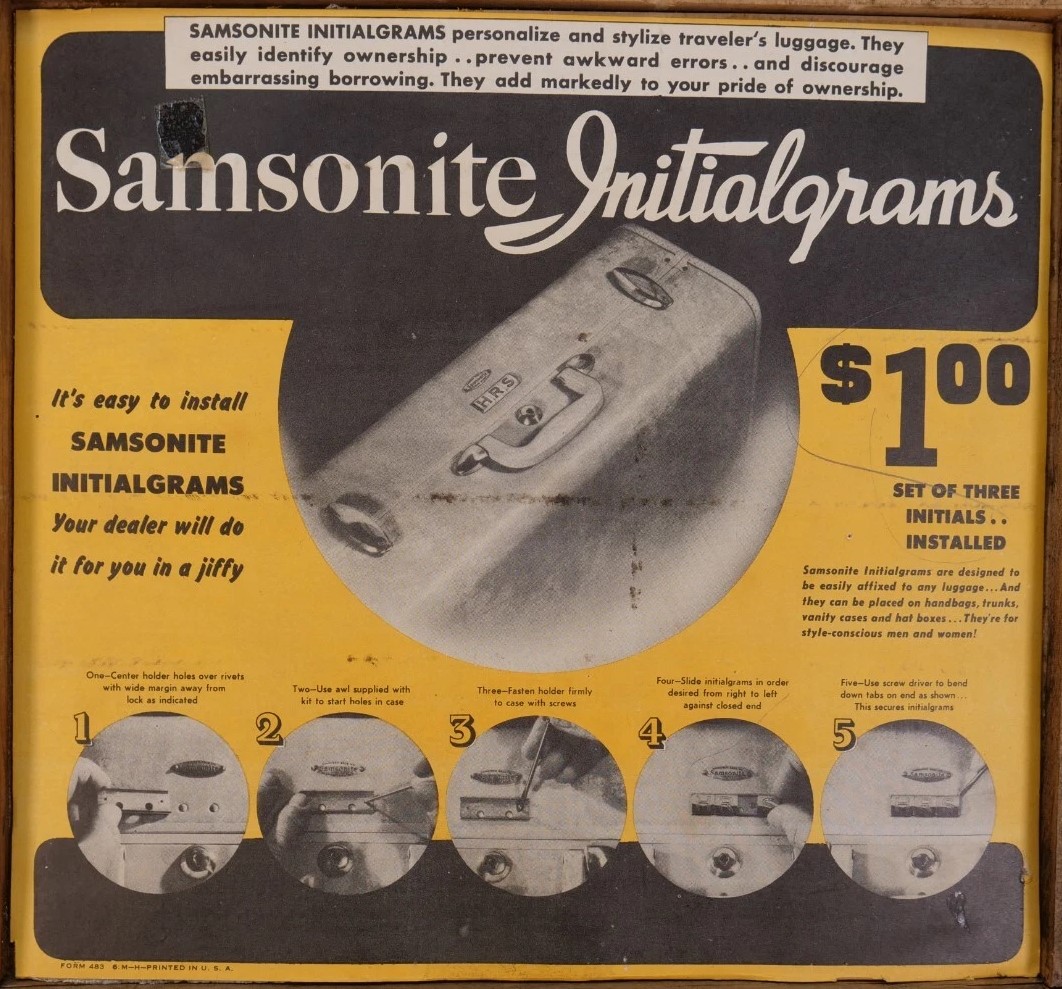
And this is how they continue for some time, now writing "Form No. XXX", incrementing chronologically. The first (known) formatting change happened at 950C, introducing the trailing letter.
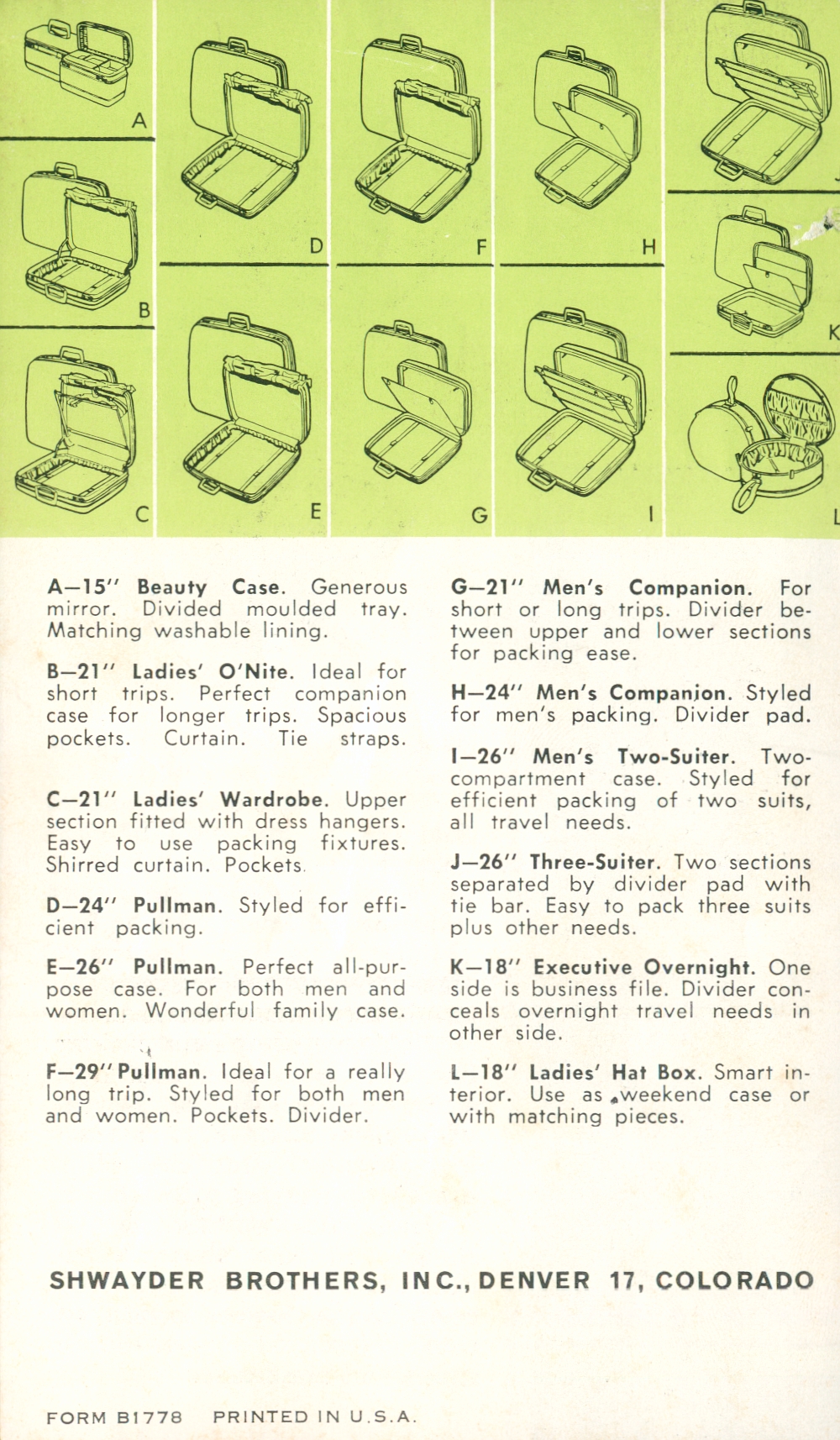
As late as 1960, they also introduced a beginning letter (i.e. V1867, with the earliest known being B1778 from 1960).
And now we can get into the meat and potatoes of it all.
What exactly does the form number tell us?
On its own, it is almost meaningless. But within a system, with 100+ examples, we can build a very detailed set of rules. I do not want to leave any detail to the wayside, so the following will go very far in depth.
We've already outlined the very reliable chronological aspect. For example, check the Books page and uncheck Canadian Samsonite (as they borrowed form numbers from the US). Notice how as the form number increases, the evolution of the documents is consistent. Notice how ordering from the number alone follows known releases of sets very well. But number analysis is only useful with comparison; a lone number without a close relative is not very reliable.
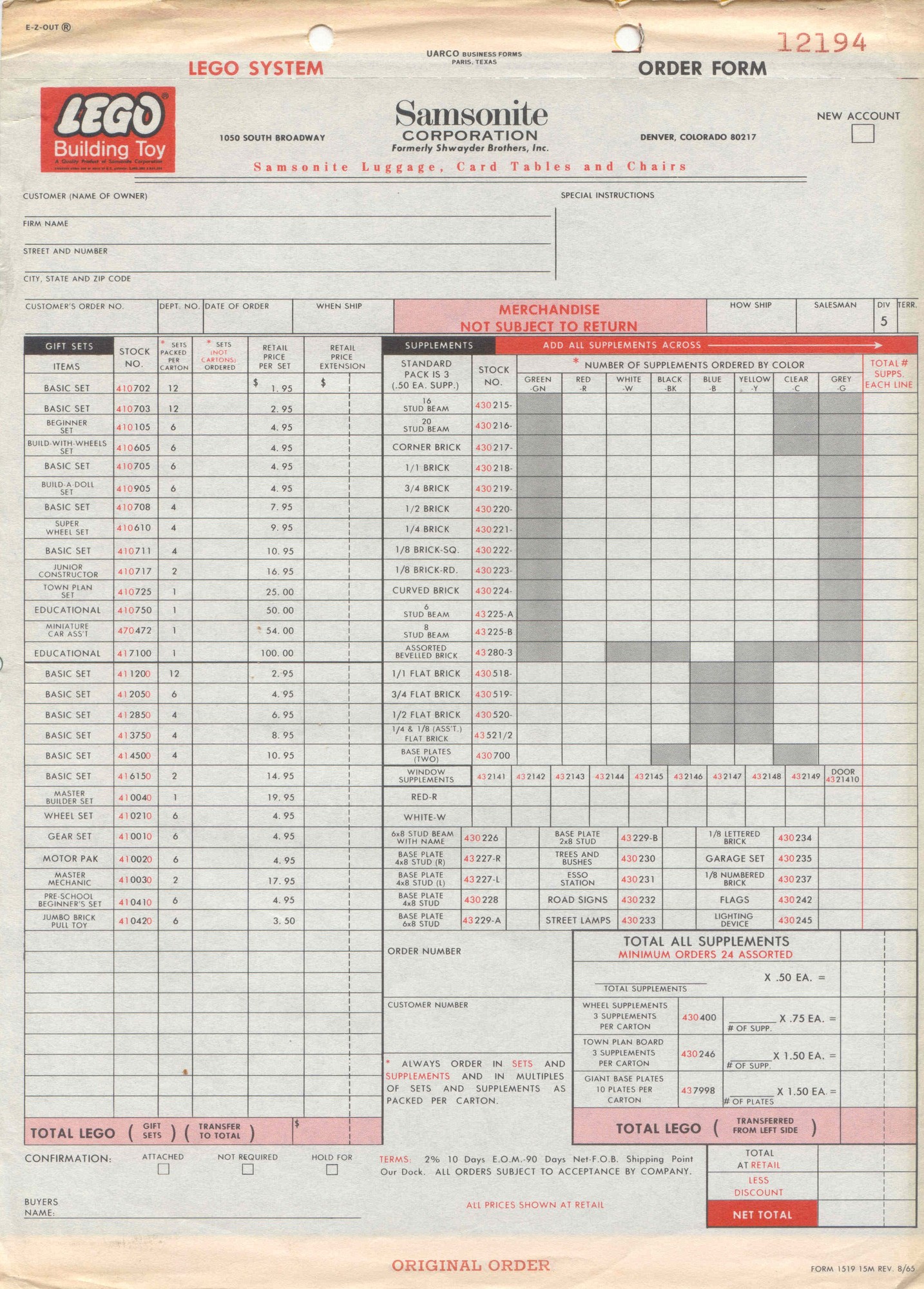
Also notice that some documents seem incorrectly placed, i.e. 1519R in 1965. We'll cover exactly what the trailing 'R' means in a moment, as well as why other documents are either missing a number or are special exceptions.
The preceding letters (i.e. 'B', 'K', 'H', etc.) appear on very specific documents, with enough consistency between examples that they likely are meant to denote a document's purpose. We'll cover those first, touching on each as they appear (for LEGO materials only) chronologically.
Important to note: the first few have exceptions for 1961 only, as 1961 seemed to be a transitional year into the mature form numbering system we see used for 1962-69 ephemera.
V
1961 only.
Seems to have been for brochures/pamphlets, this is the only use I'm aware of.
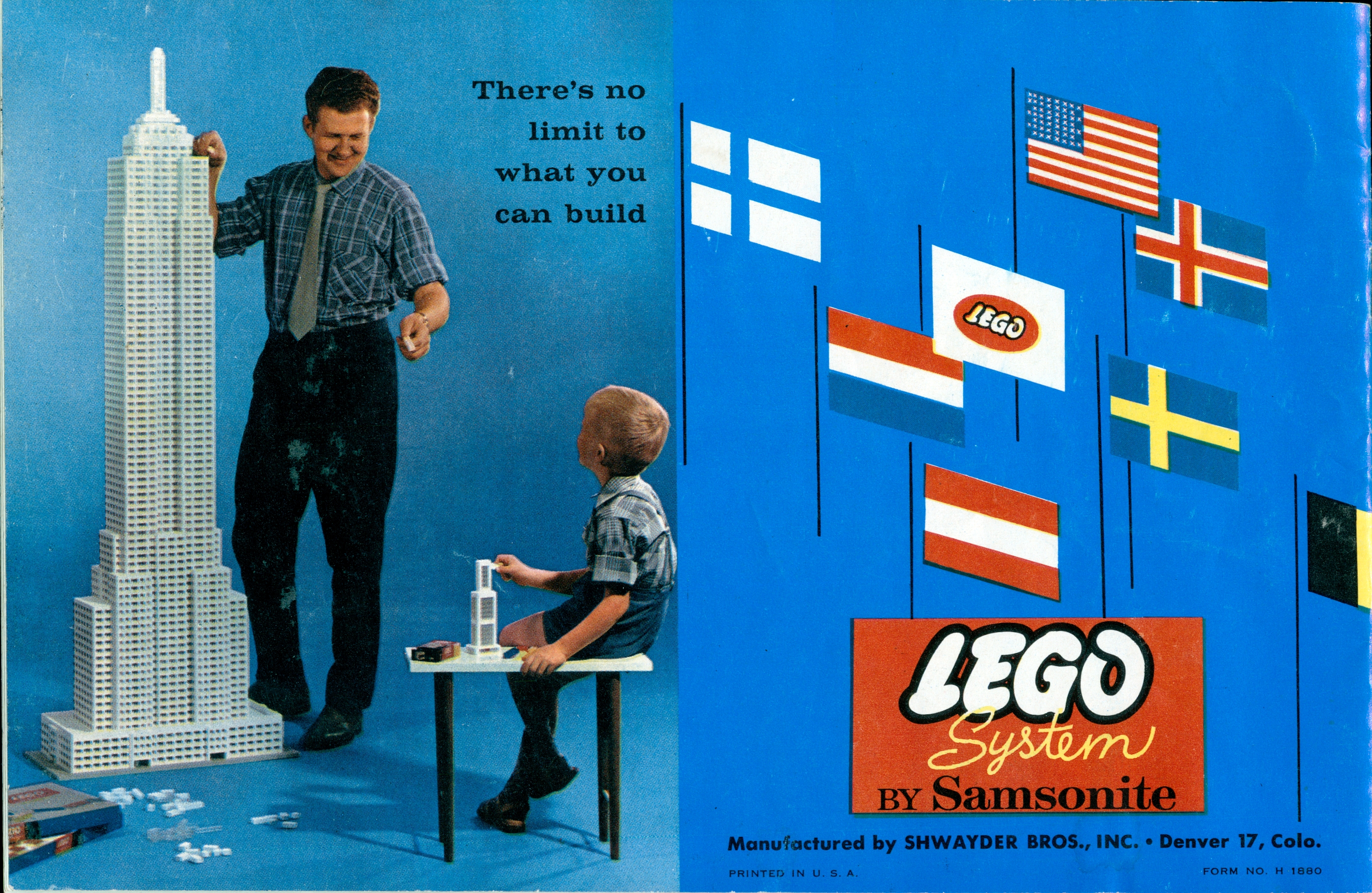
H
First used in 1961 for the idea book (again, only for 1961 is 'H' used for an idea book):
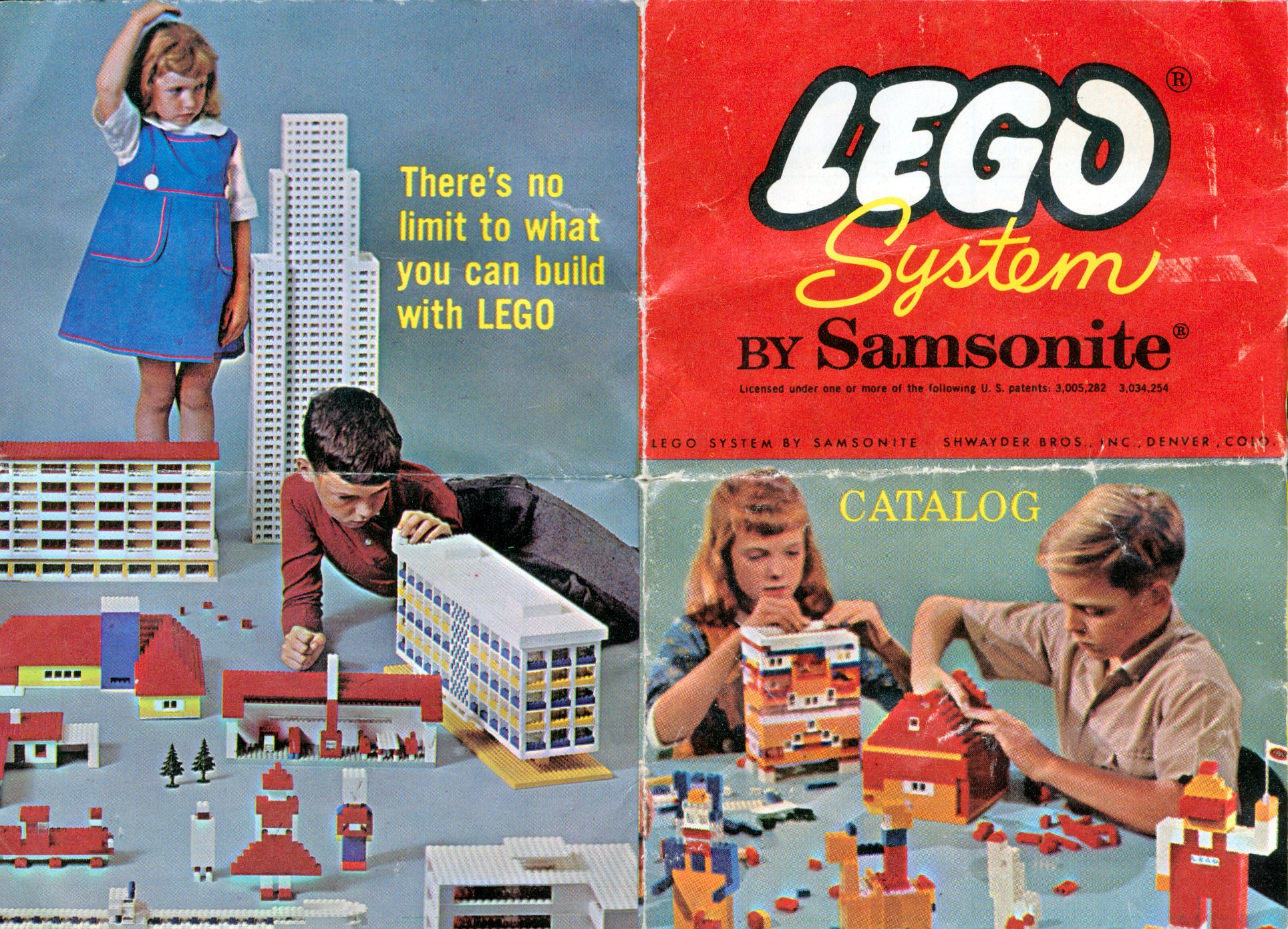
'H' was then redefined, first used in 1963 for H-1931, a LEGO brochure:
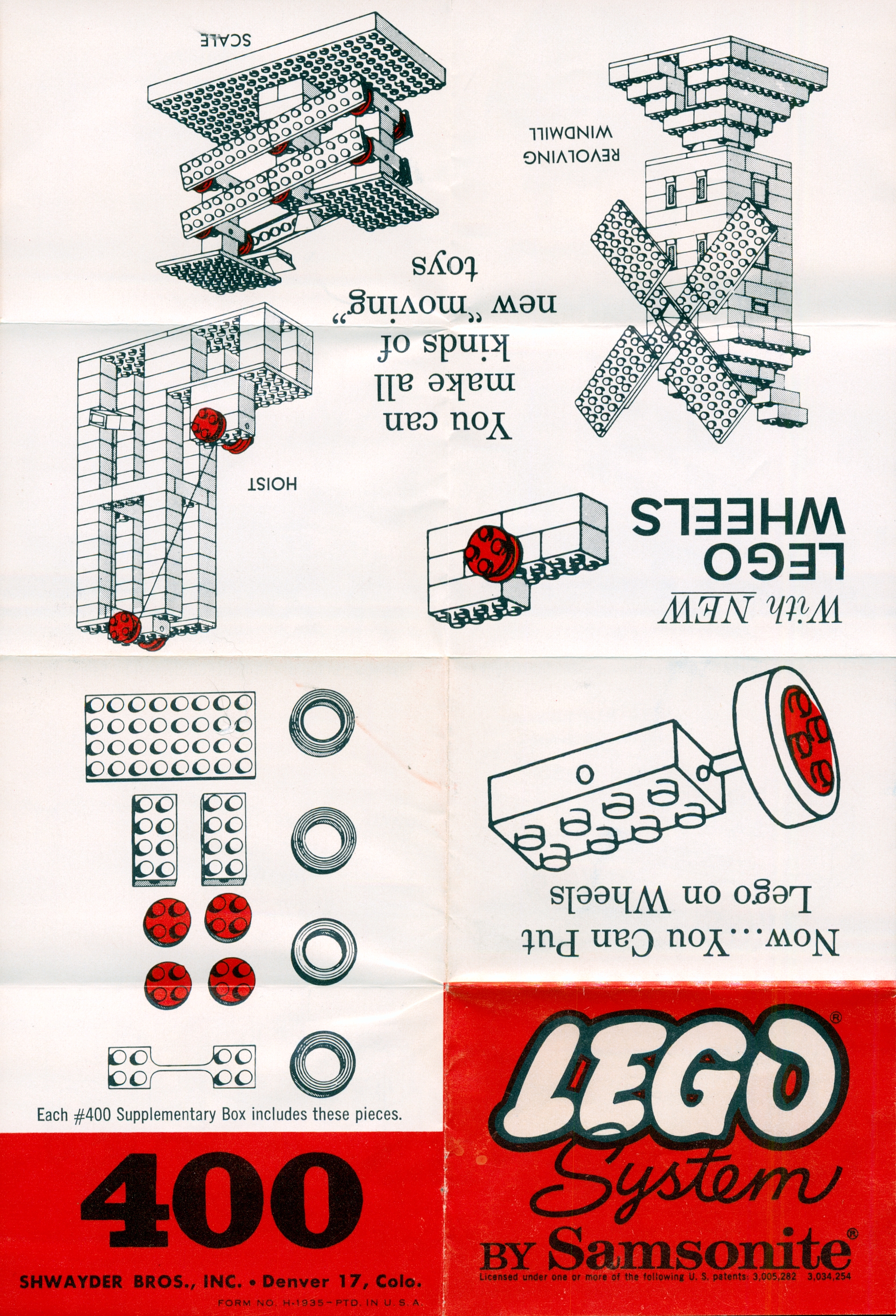
As well as the pack-in ad for the 400 Wheel Supplement:
And even set instructions, such as the 605/905 sets in 1963:
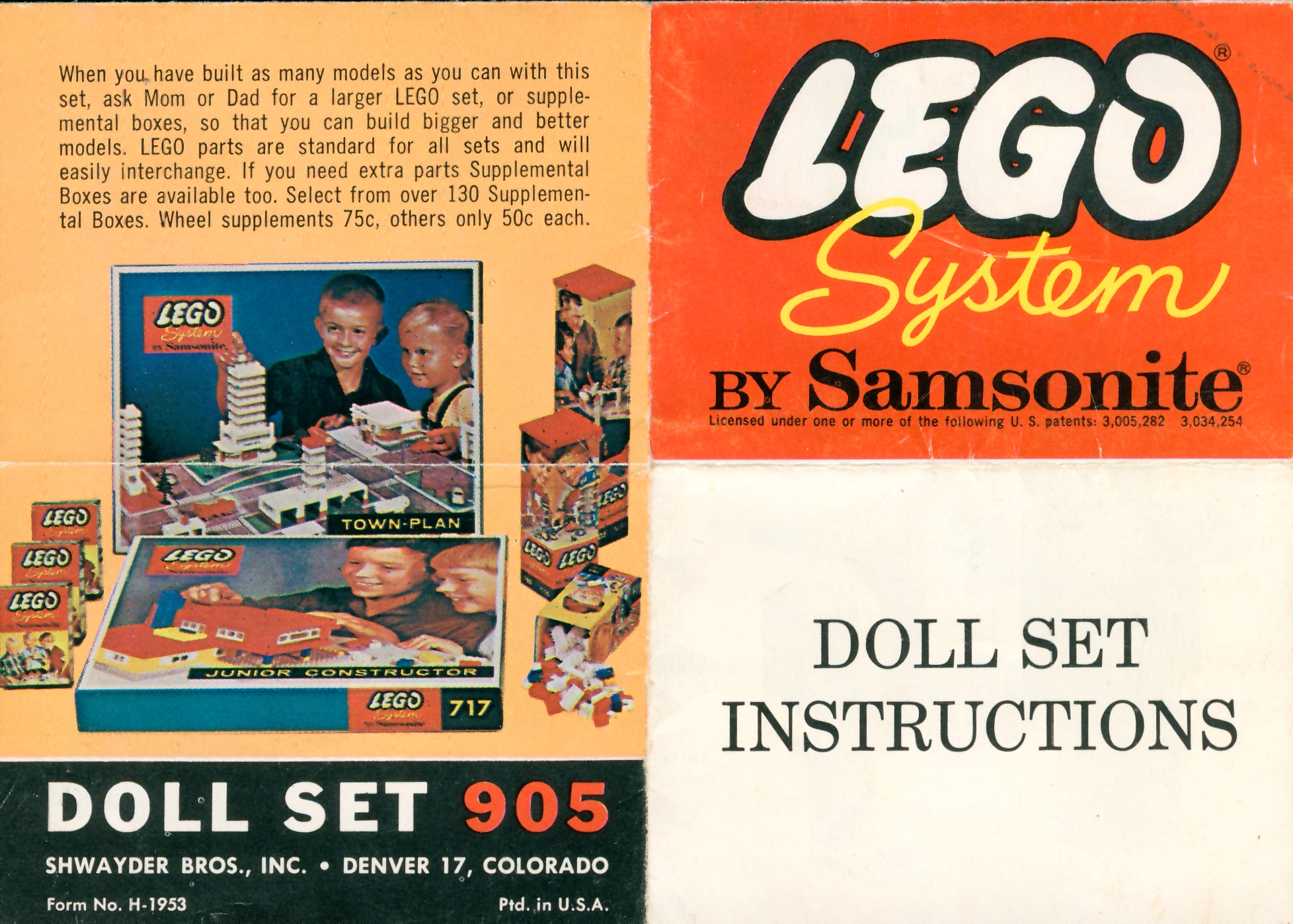
Its use for instructions includes the Sears exclusive sets' instructions, such as the 324/335/835 set:
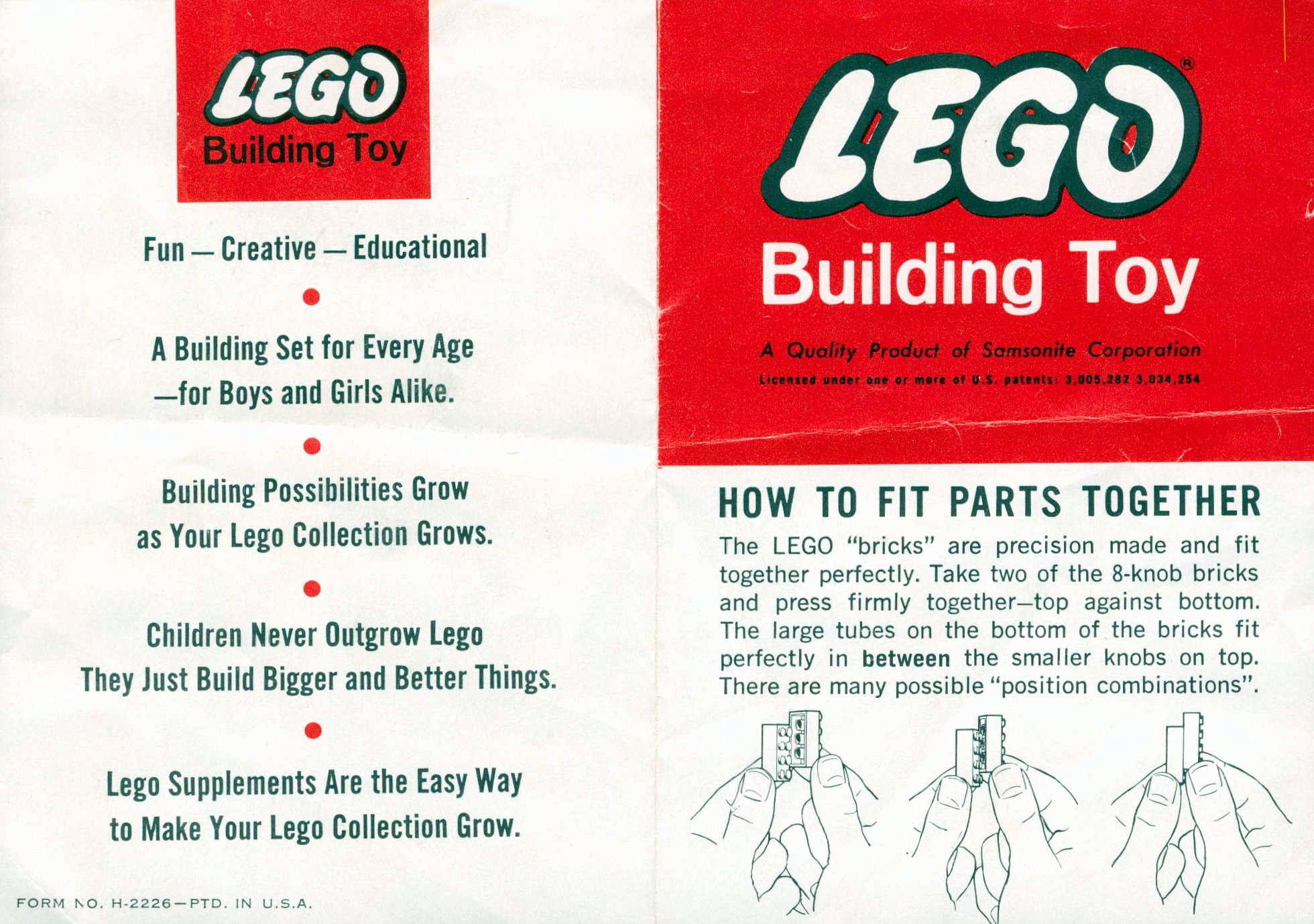
Two of the three Oxydol Sampler Brochure/Instructions uses 'H' (we'll talk more about the exception later):
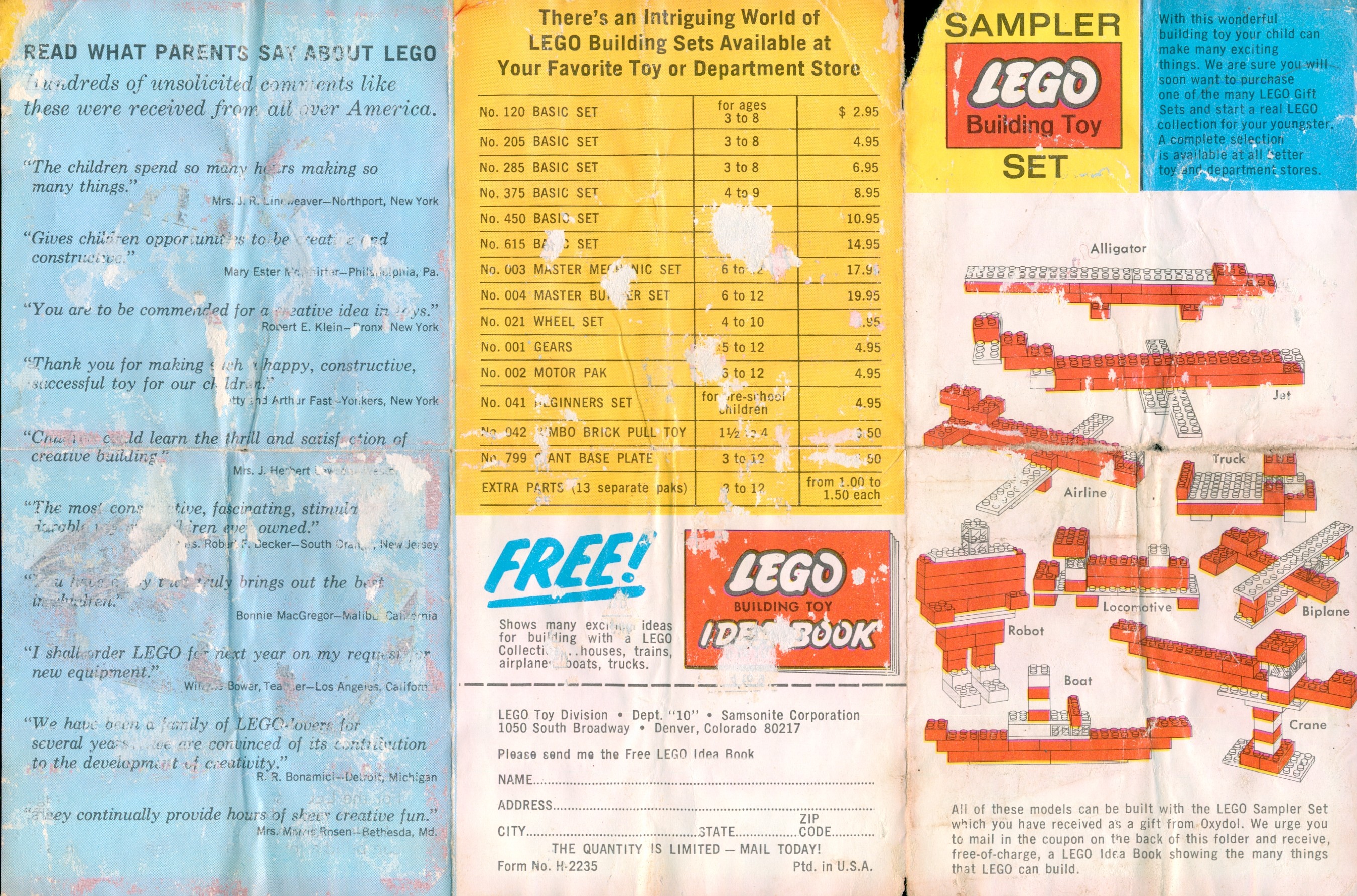
And 'H' is also used for Kraft brochures, such as this one from late 1968:
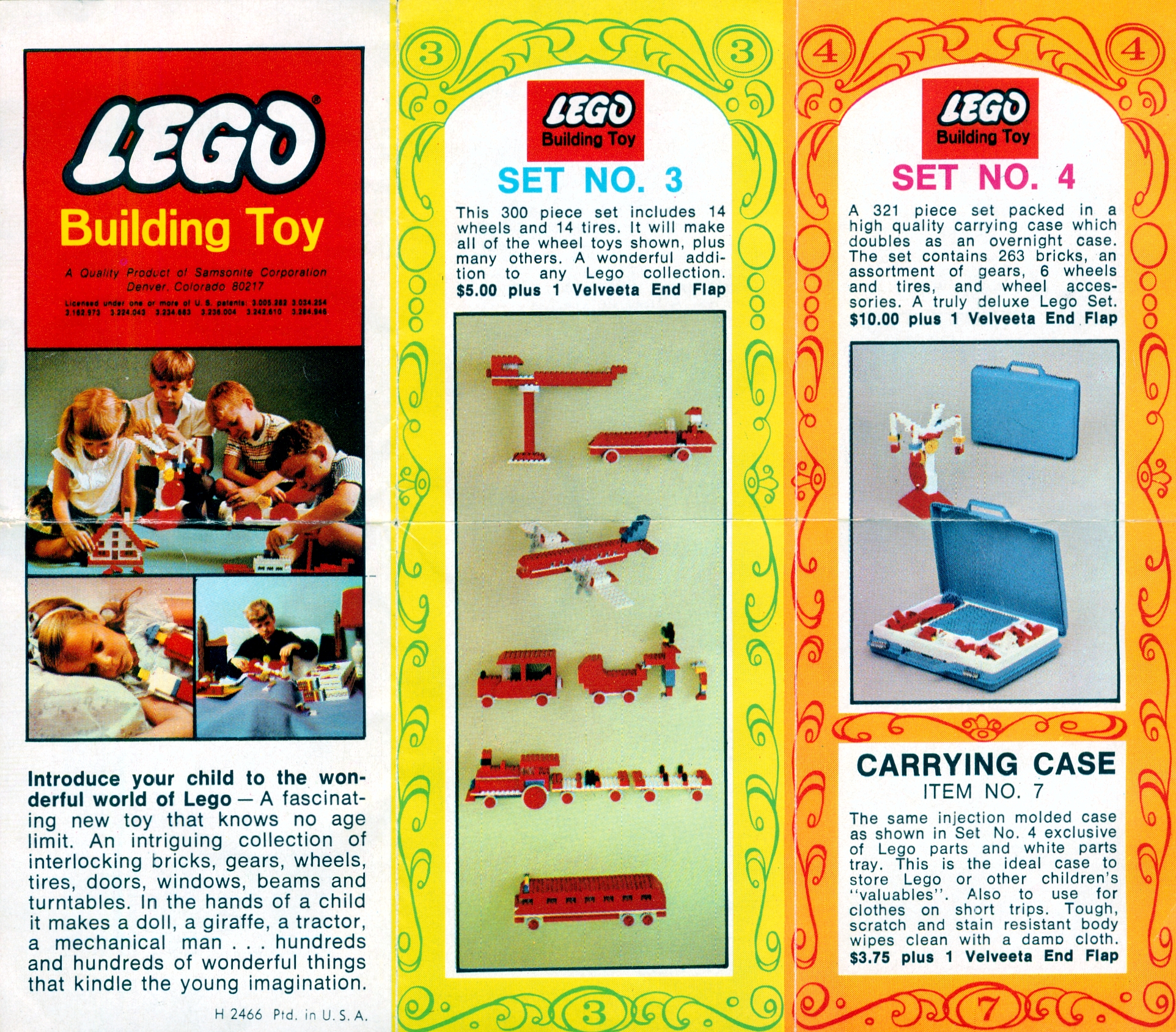
And finally the Wonderful Birthday Club in 1969:
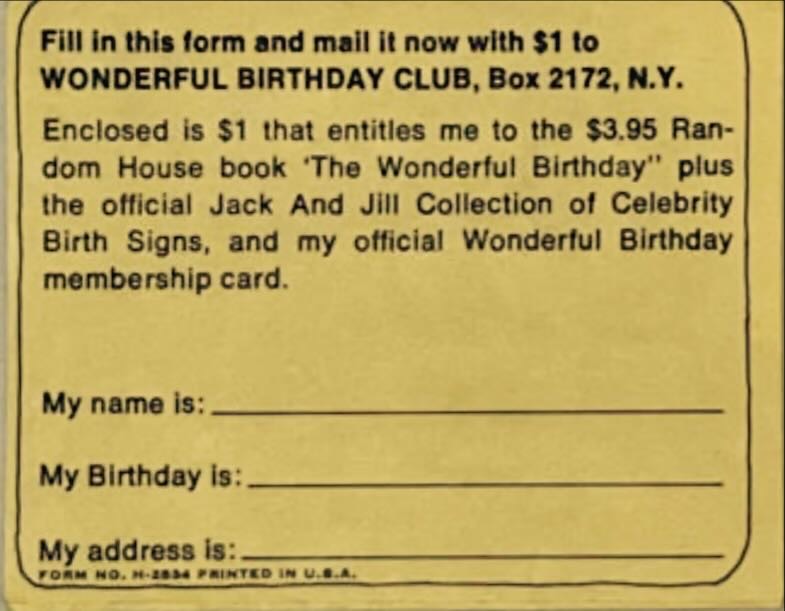
So 'H' was a primary catch all for instructions and pamphlets/brochures, aside from the unique 1961 deviations.
F
'F' is first used in 1961 for the supplemental lighting kit's instructions:

Then for some bizarre reason, it was dusted off again in 1968 for the 107 Reversible Motor Set. I suppose that could be argued to be a supplement as well, even though it was treated as and advertised as a normal LEGO set:
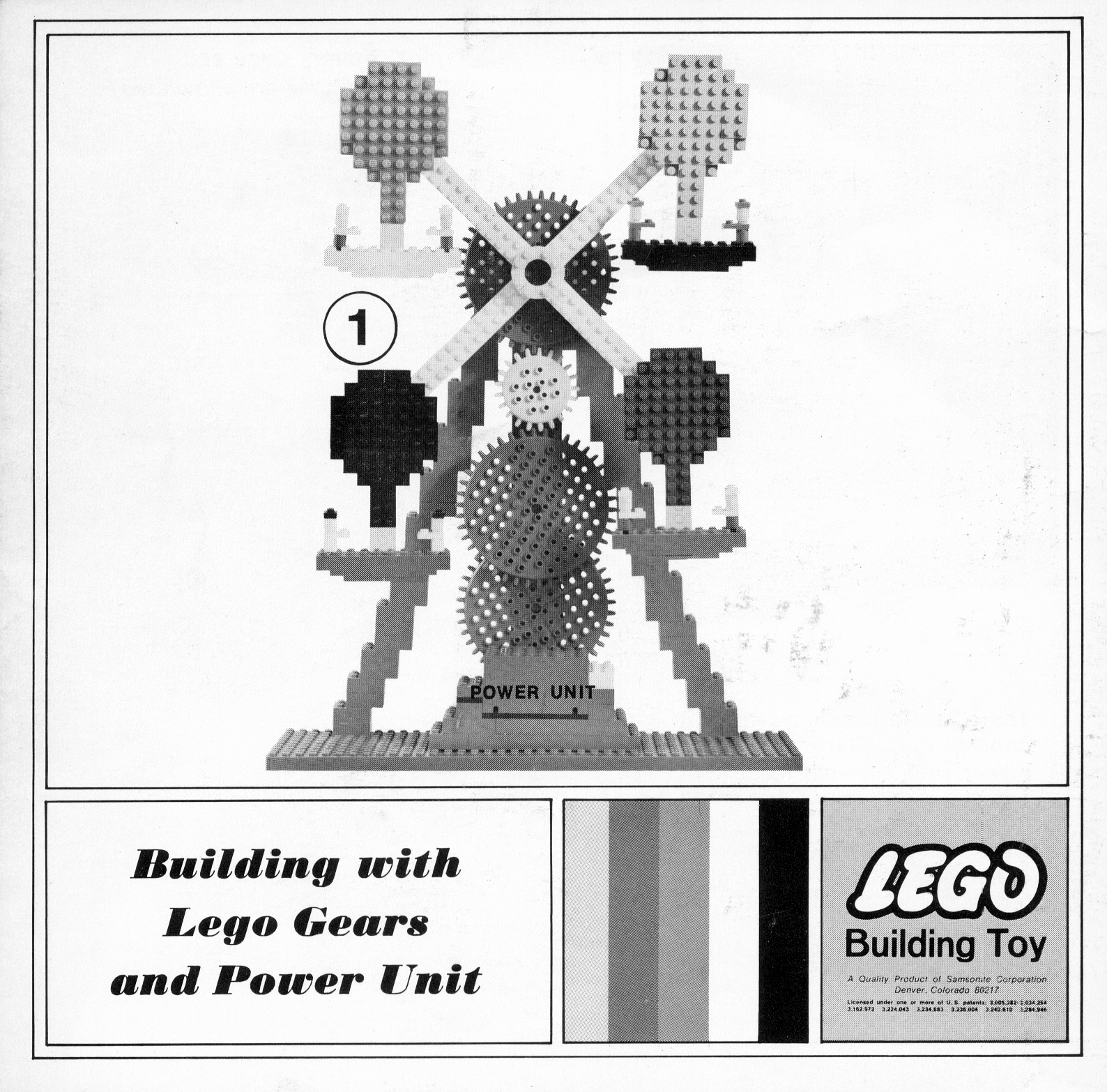
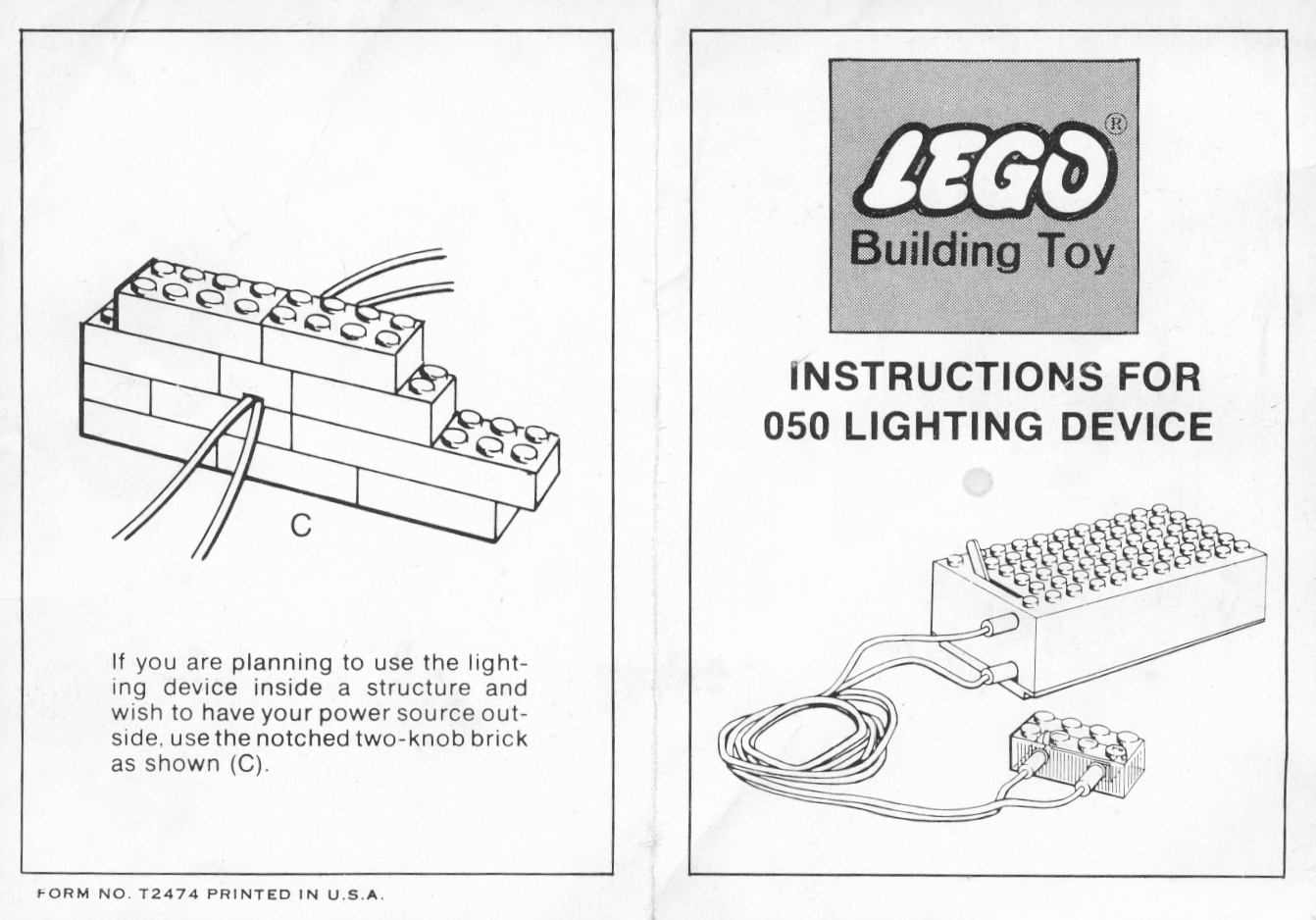
The 001 Gears and 002 Motor Pak correctly use 'H', and in 1969, the 050 Lighting Device uses 'F', so this choice earns its "bizarre" description. I think this is an indication of the meaning arbitrarily changing meaning overtime, as we will go over later.
K
K was used starting in 1964 for idea books, such as this 1964-65 idea book:
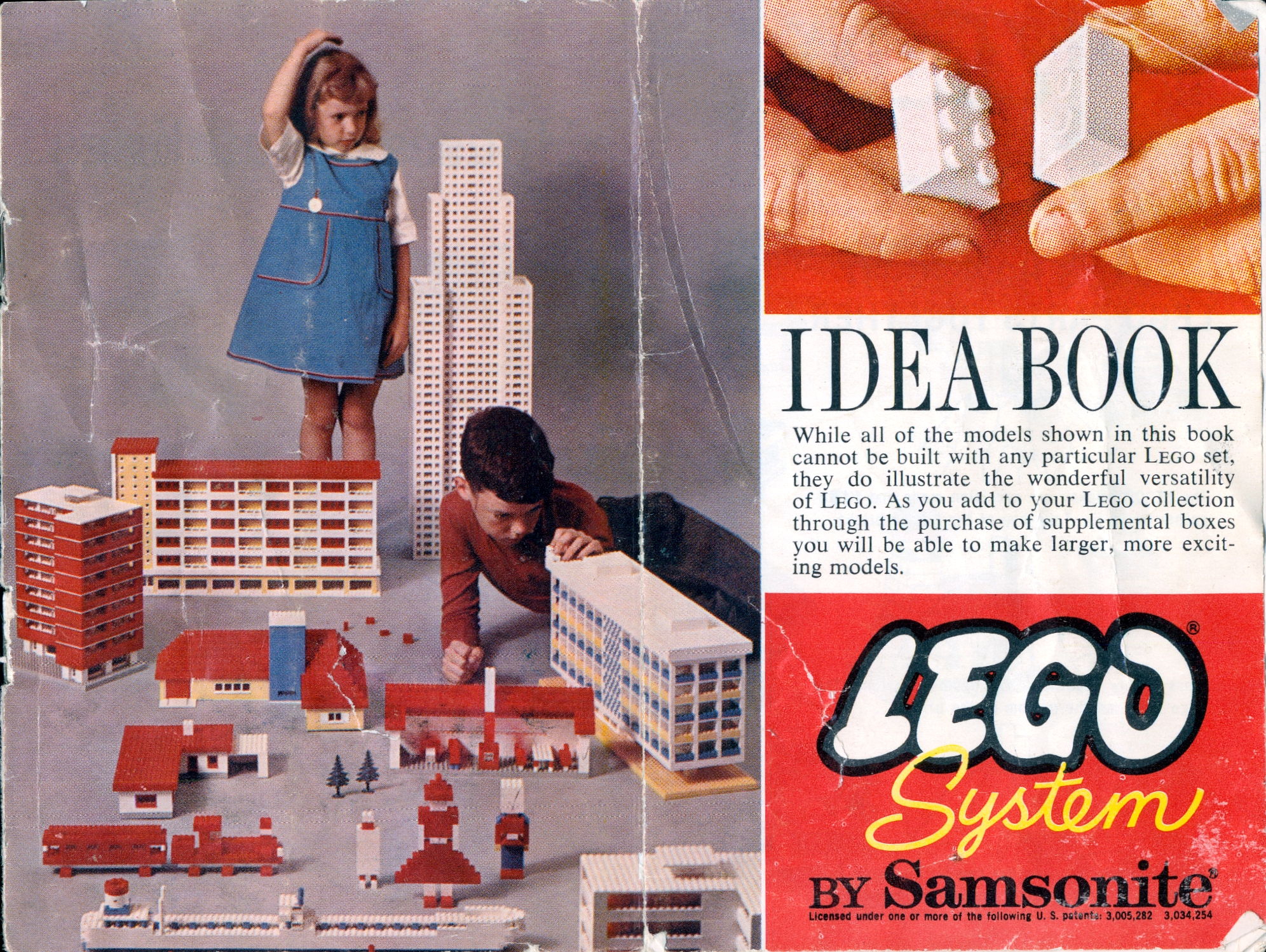
And it continues with the 1966-68 idea books:
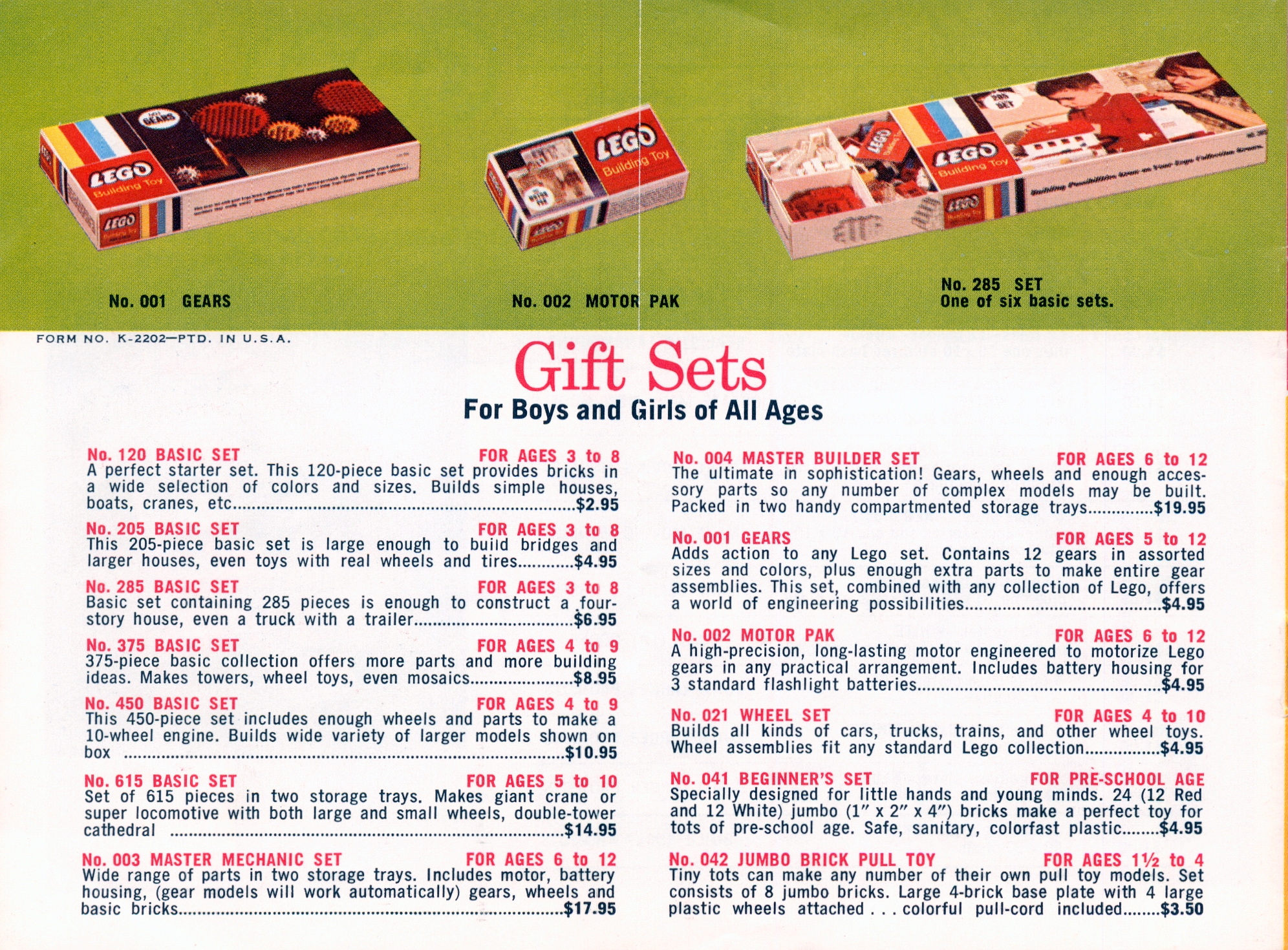
It is not used for 1969-71 idea books as Samsonite kept LEGO's assigned form numbers in those cases.
B
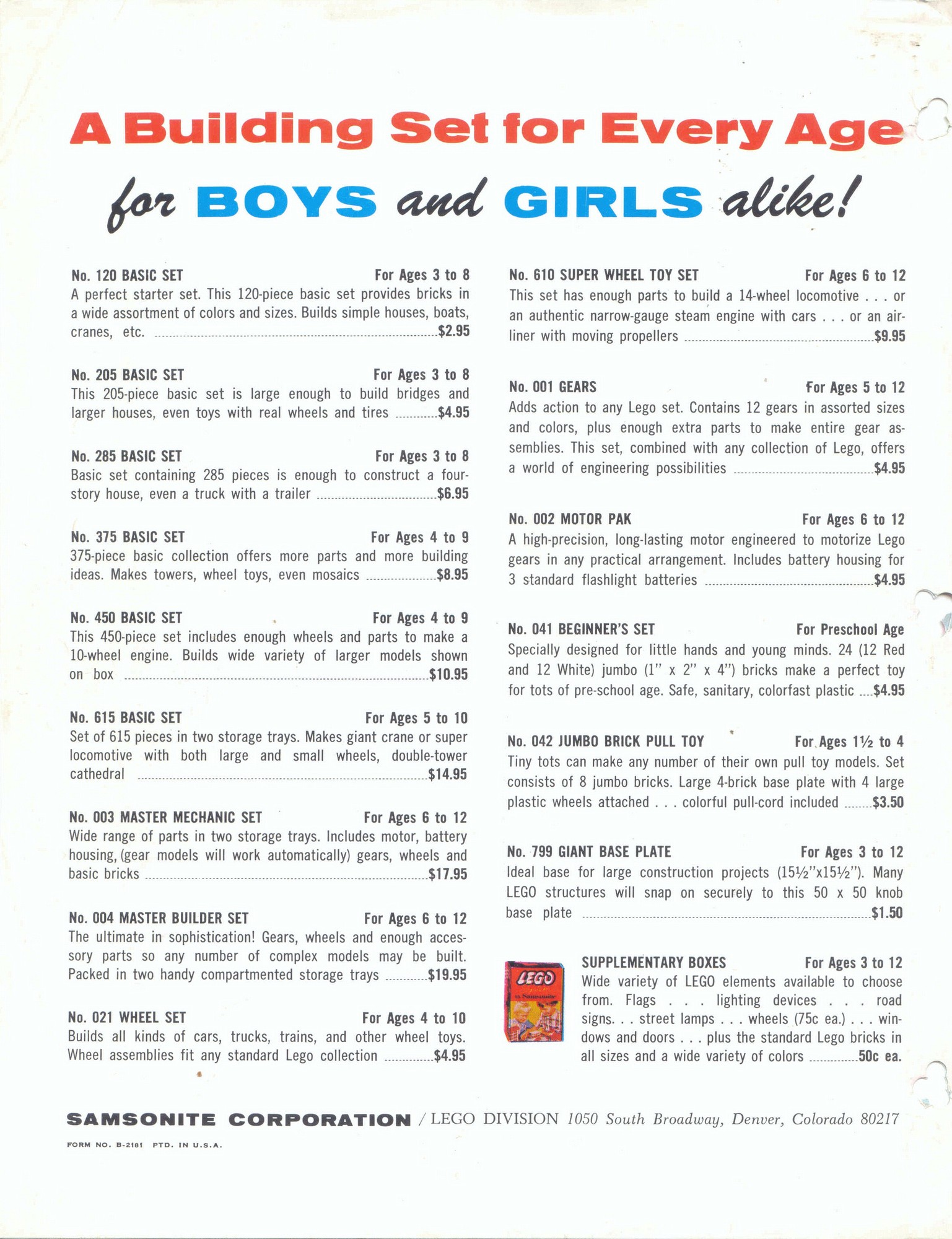
Only in 1965, 'B' was used to denote the dealer catalog (after which they dropped the letter entirely for dealer catalogs specifically), such as the one below:
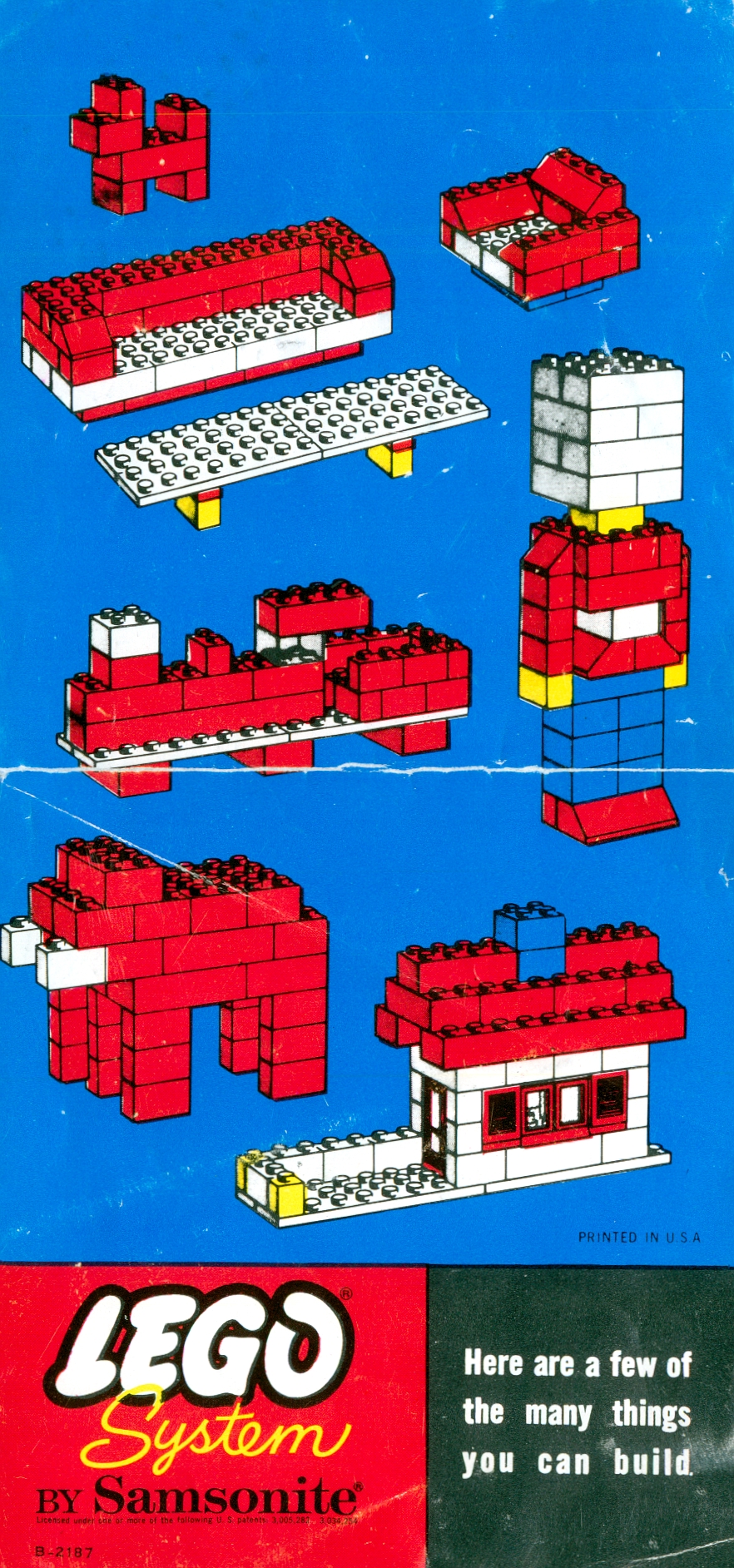
It was more consistently used for promotional sets from 1965-69, such as the infamous B-2187 that belonged to the 093:
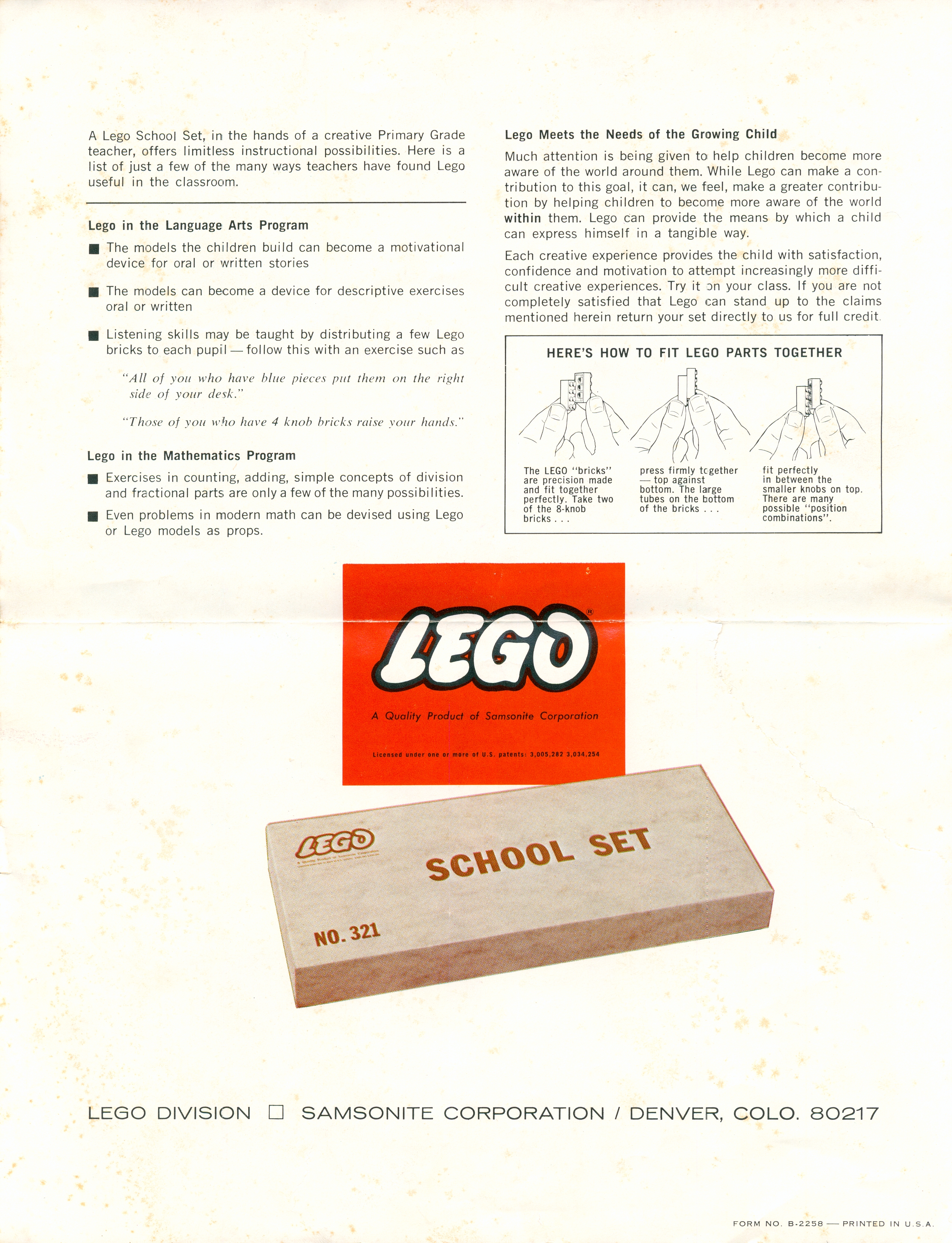
Or educational sets starting in 1967, such as the 321 School Set:
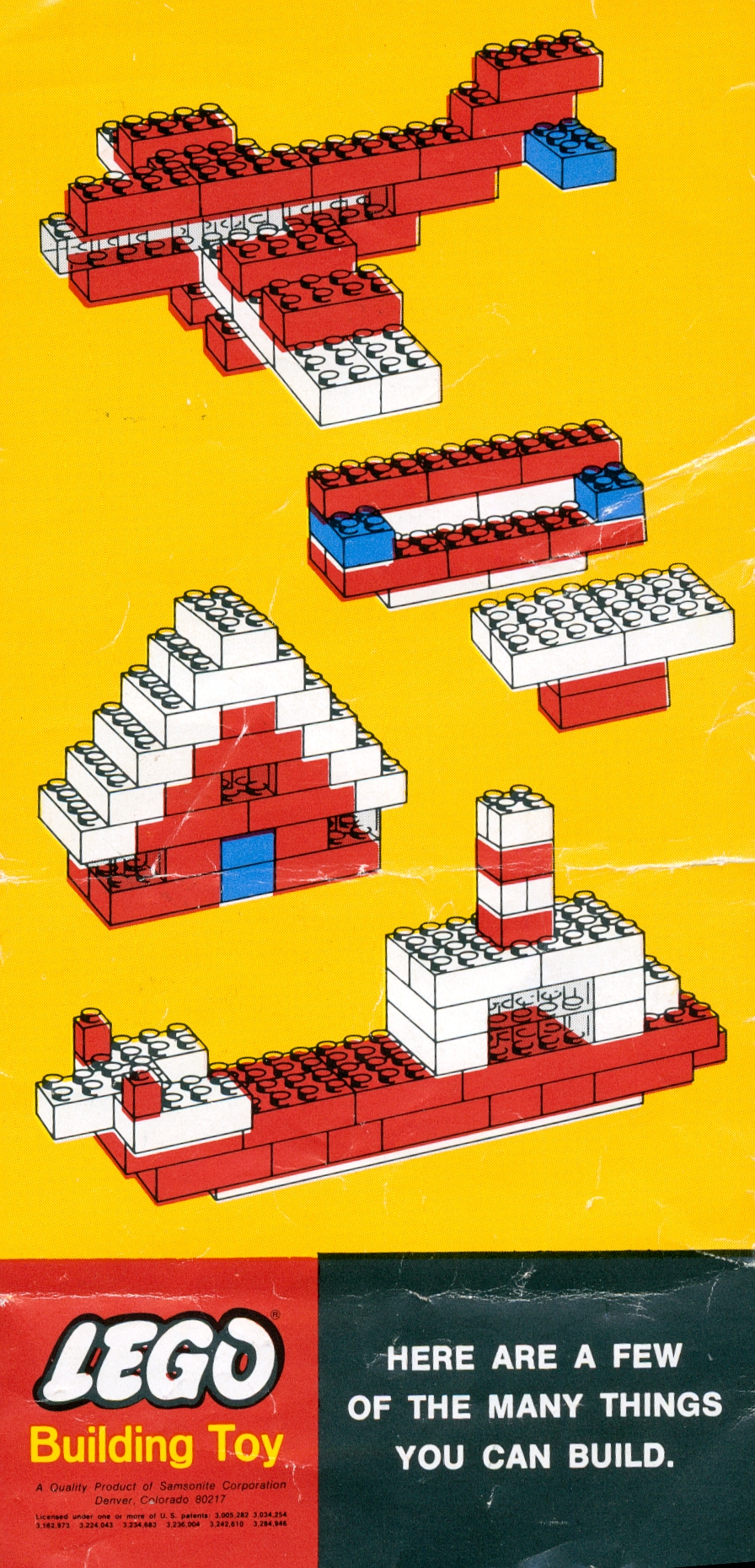
Or 1968-69 Kraft promotional set idea cards:
T
'T' was used starting in 1965 for dealer catalog inserts, separate pages advertising additional displays, new LEGO products, etc.
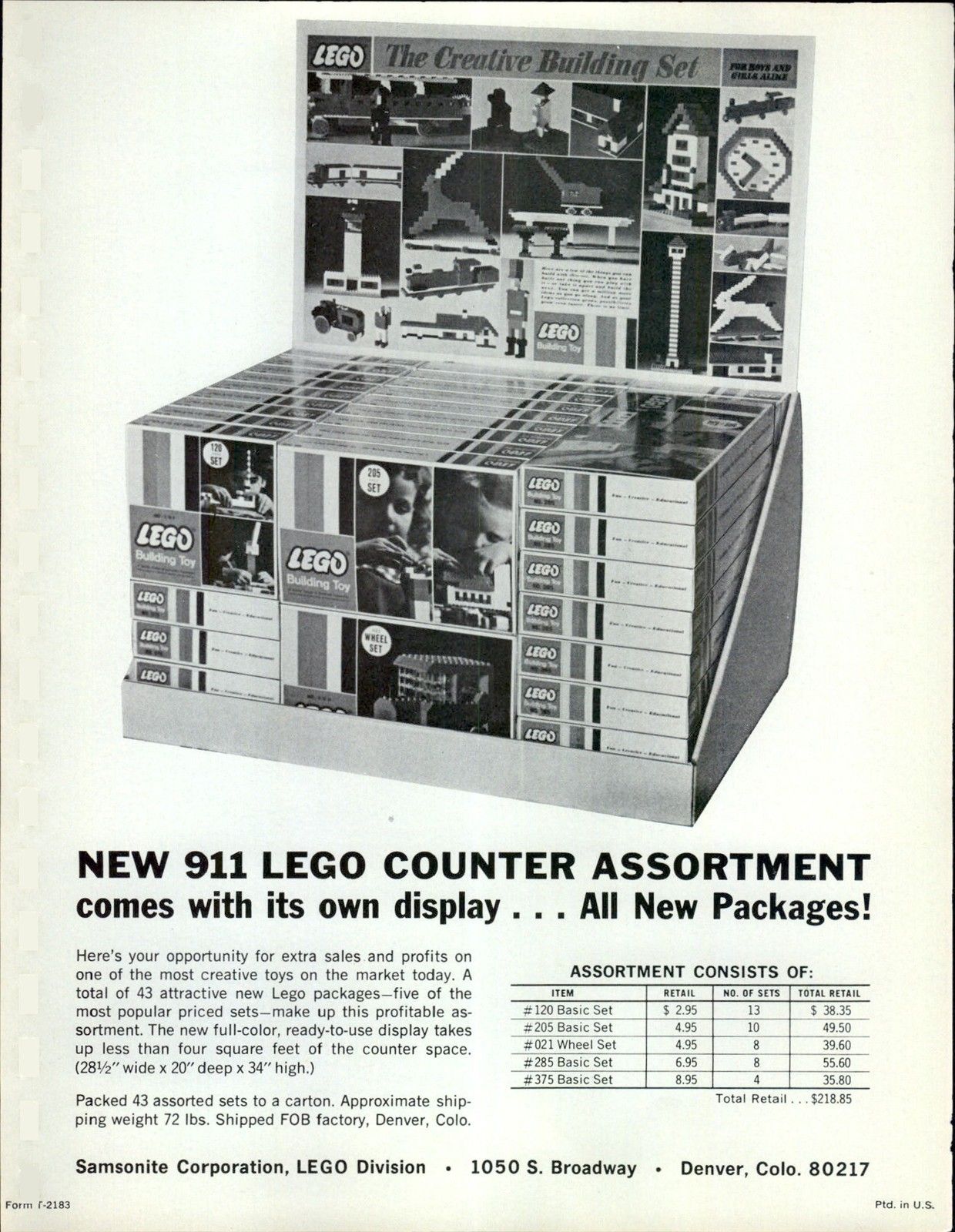
For some reason, in 1969, 'T' also included the instructions for the 050 Lighting Device Supplement:
Trailing Letters
Trailing letters can have several different intentions, the most important of which is the indication of a revision using 'R', i.e. K-2085R, a K-2085 with a modified front cover:
Revisions kept the original number and added 'R' to the end. Note that this was not true for 1961-62, as the 1962 version of V1867 does not include 'R' or any other indication it is a different version.
The trailing letter could possibly indicate a series, i.e. XXXA, XXXB, etc., but I believe it to be a precursor to using 'R' to denote revisions.
Below, for 950C, 'C' was likely used to denote a variation, as Samsonite prepared packing guides for each individual case they sold, and rather than make an entirely new one when the line changed, they likely just added/incremented the letter. I just don't know yet, as I have not found enough to say anything more:
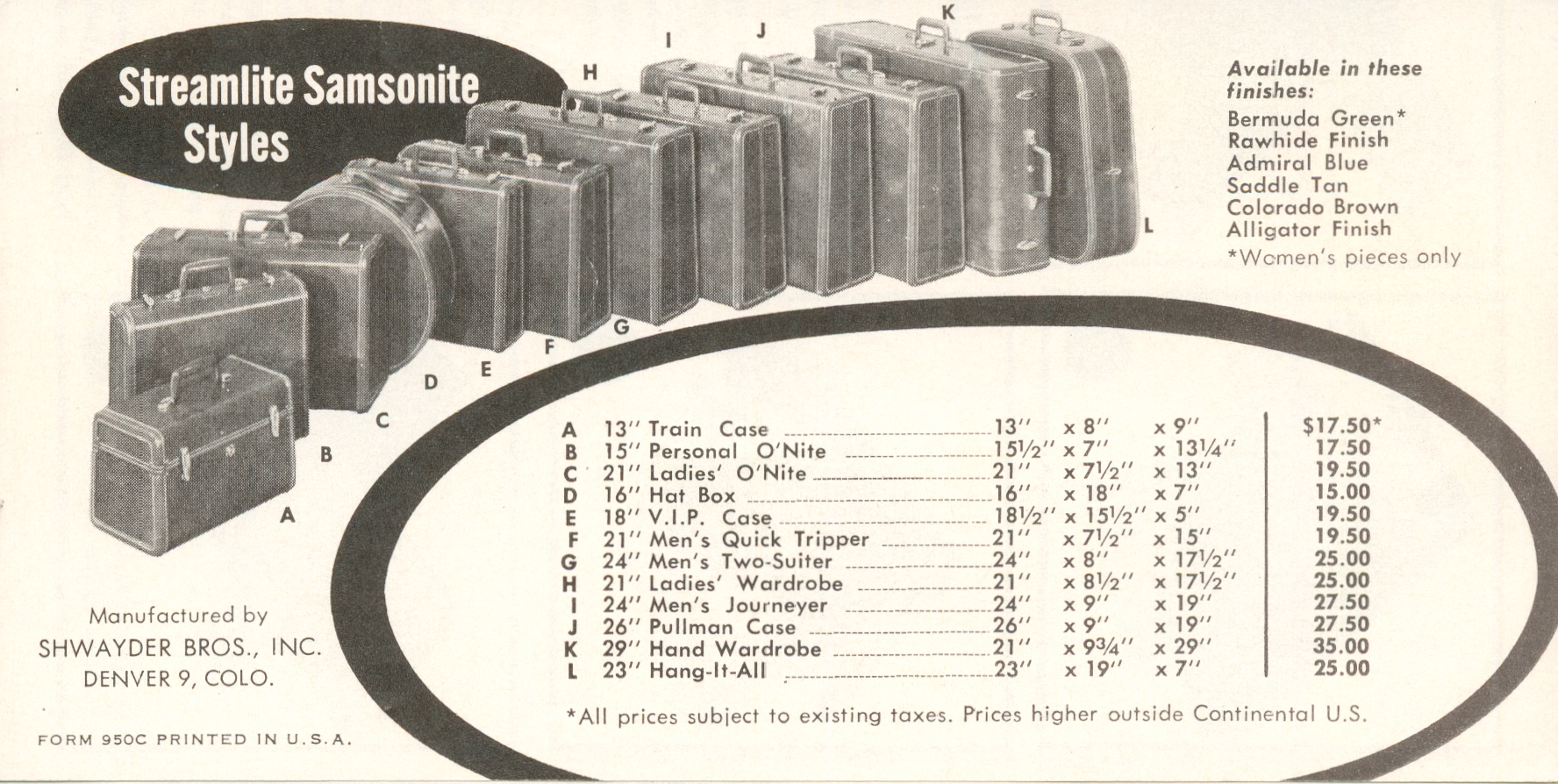
This was the early to mid-1950s, however, so later uses cannot be implicitly assumed to be part of the same system. It was just very rarely used for LEGO documents.
As an example, in 1963, we have H-1931A:
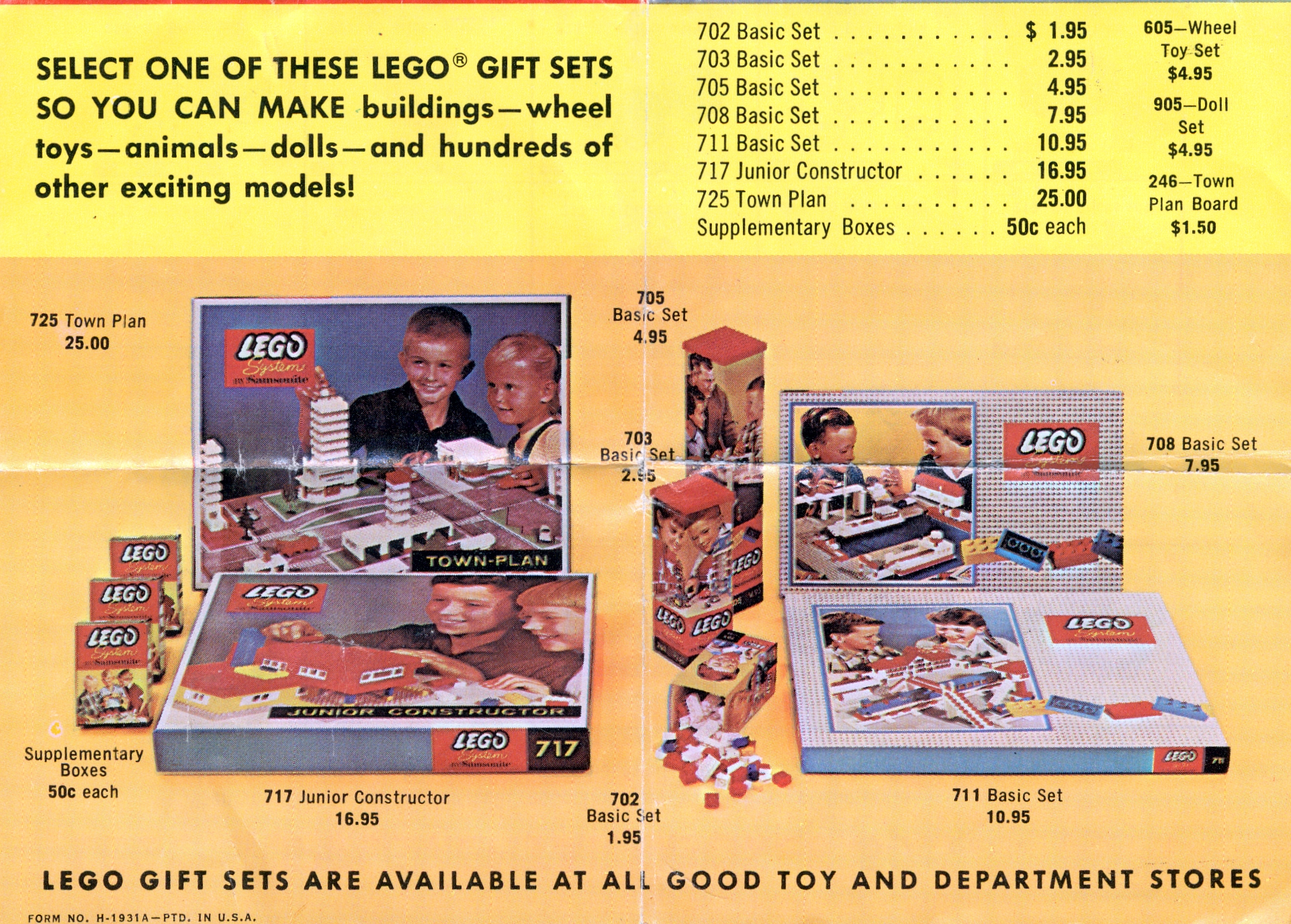
Which is a modified H-1931 to include the 605/905:
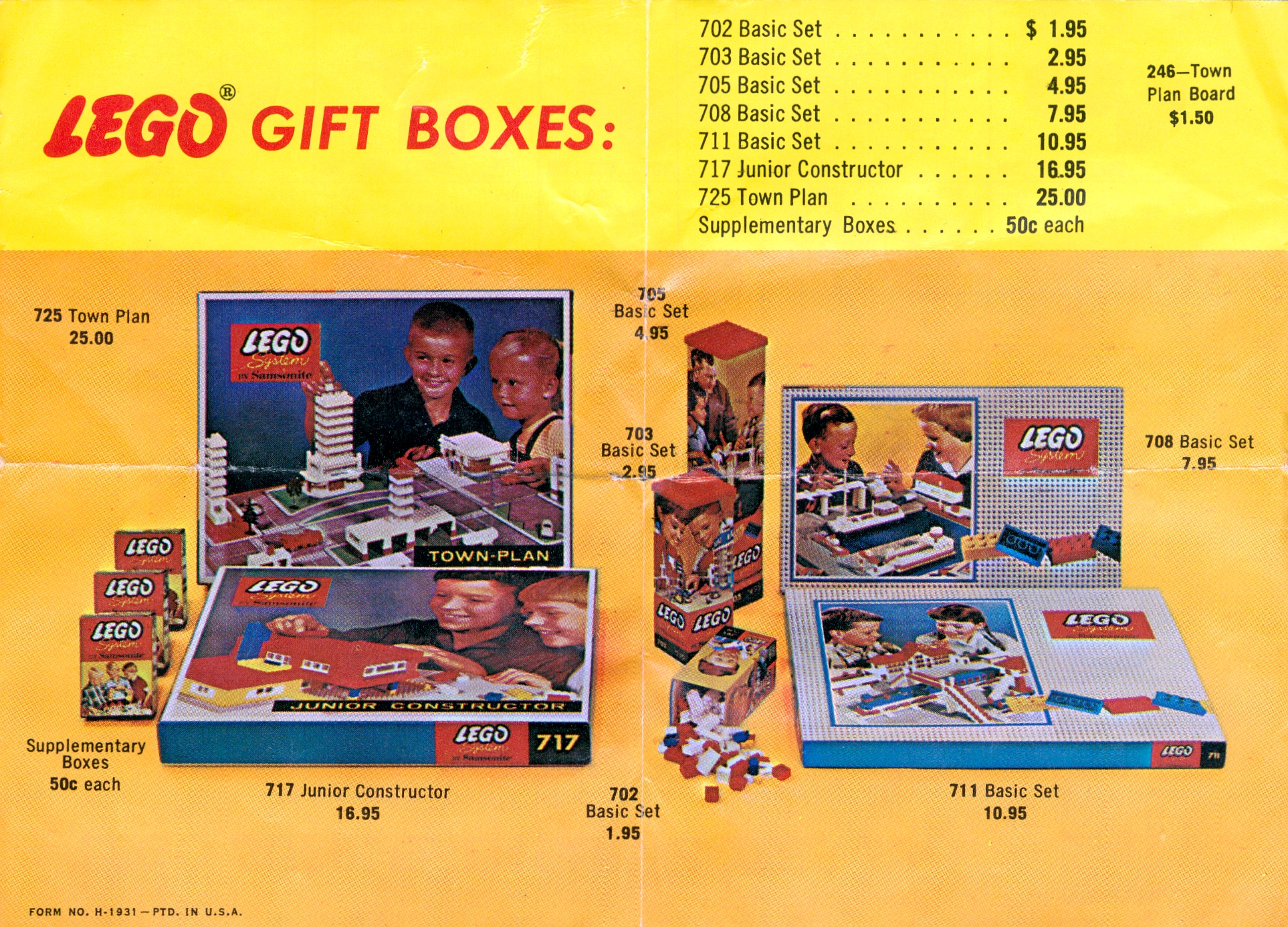
Given what is currently available to us, H-1931A is simply a revision of H-1931 without any special purpose. Remember that 'R' was first used in 1964 to denote revisions, suggesting that from the late 1950s to 1963, trailing letters were in series and never used 'R'. These dates, of course, could change as more form numbers are found.
1970-72
For 1970-72, Samsonite streamlined the form numbers. 1970 is the last time we see the beginning letter, with H-5115 being the last that I know of:

They then switched over to a rather bizarre system, one that I believe more examples will allow us to definitively crack. Most 1970 documents for Samsonite toys are 5XXX, but the Kraft Mini-Wheel sets uniquely use 700X, even though they are known to belong to 1970 via the work we did in Kraft Promotion Dates (1968-1972):
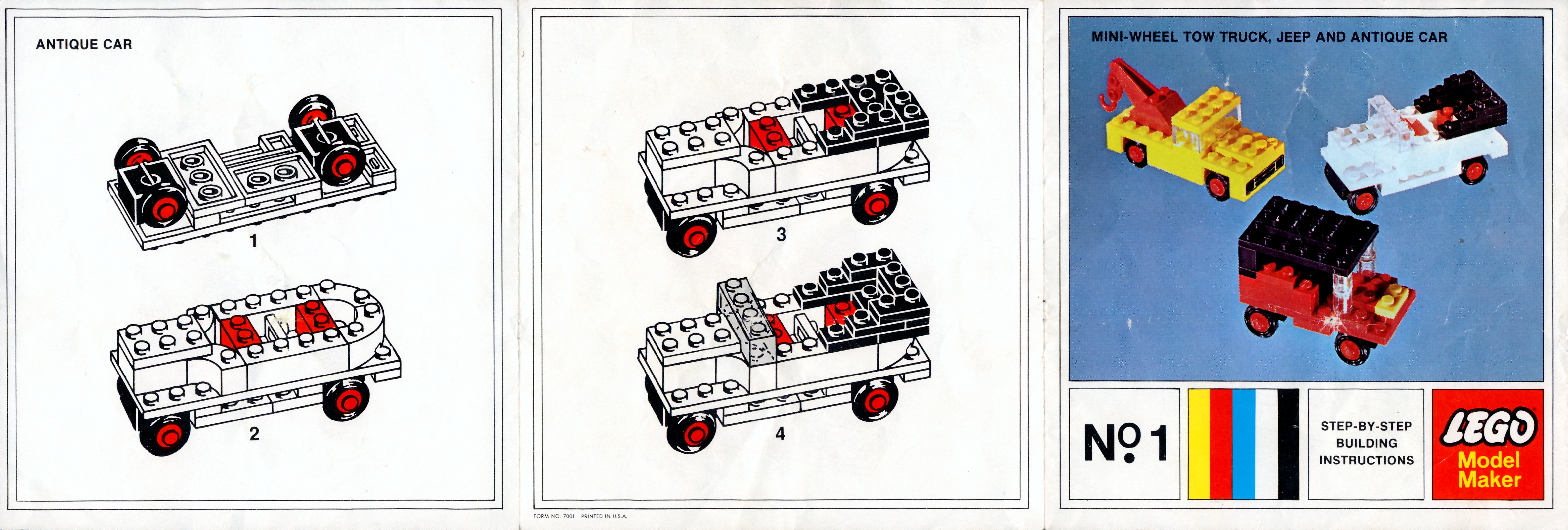
This confusion is why all of the Kraft Mini-Wheels are incorrectly attributed to 1971.
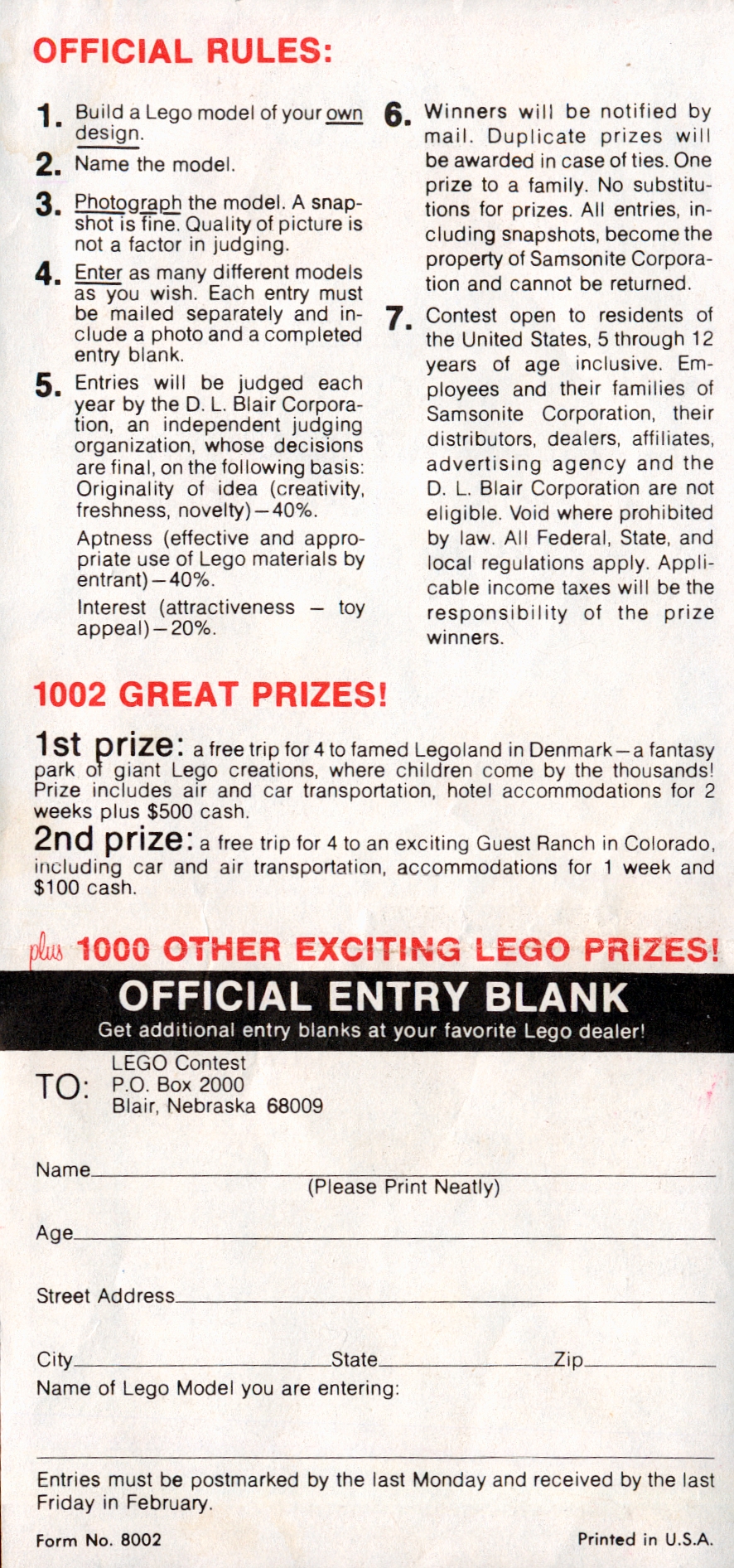
For 1971-72, LEGO documents used 80XX, with the first in the sequence (that I have) being a 1971 contest entry blank for the 1972 Make-a-Model contest:
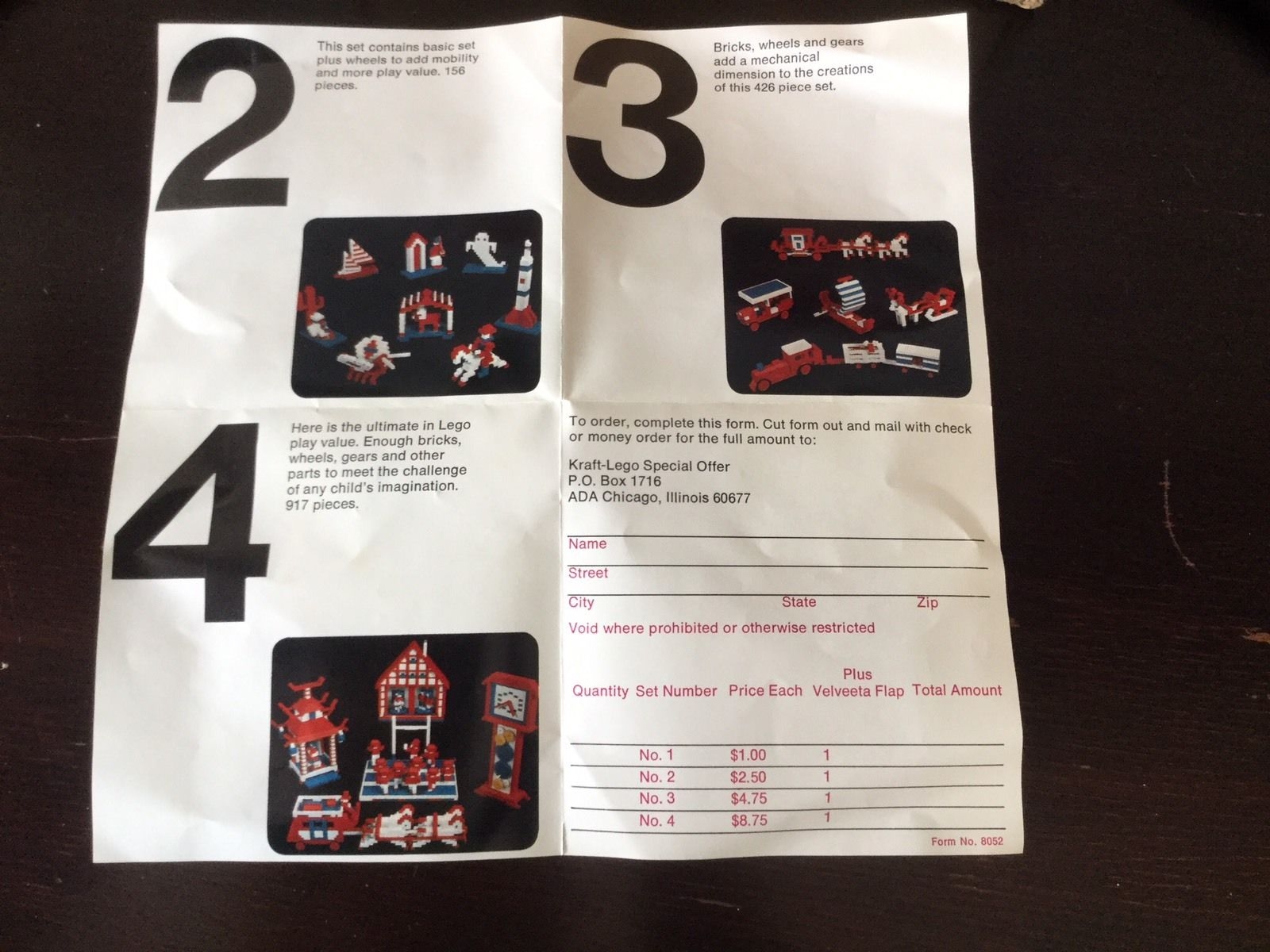
And the final in the sequence being the pamphlet from the late 1972 Kraft promotion:
The original numbering system was completely abandoned in 1973 in favor of a new system taking the format of XXXX-XXX-XXX. It continued use into at least the 2000s.
What are the limitations?
The main limitation is as above, in that while there is implicit meaning as to what the above designations mean, much of it was abstracted away as the system evolved. After all, it is difficult to create a rigid categorization system for extremely variable materials, hence why we saw it change.
I've experienced it myself while assembling this archive. Is this a pamphlet or a brochure? Is this an idea book or an instruction sheet? Clear divisions may exist in your mind, and usually the line is fairly obvious, but there exists a gradient, that which makes it difficult to arbitrarily derive the original intention. I suspect Samsonite had similar problems.
What compounds the issue is that there evidently existed multiple systems for multiple facets of the company simultaneously, such as ad mats deceptively using L-44X in the mid-1950s. That system is entirely disconnected from the above system we've just outlined.
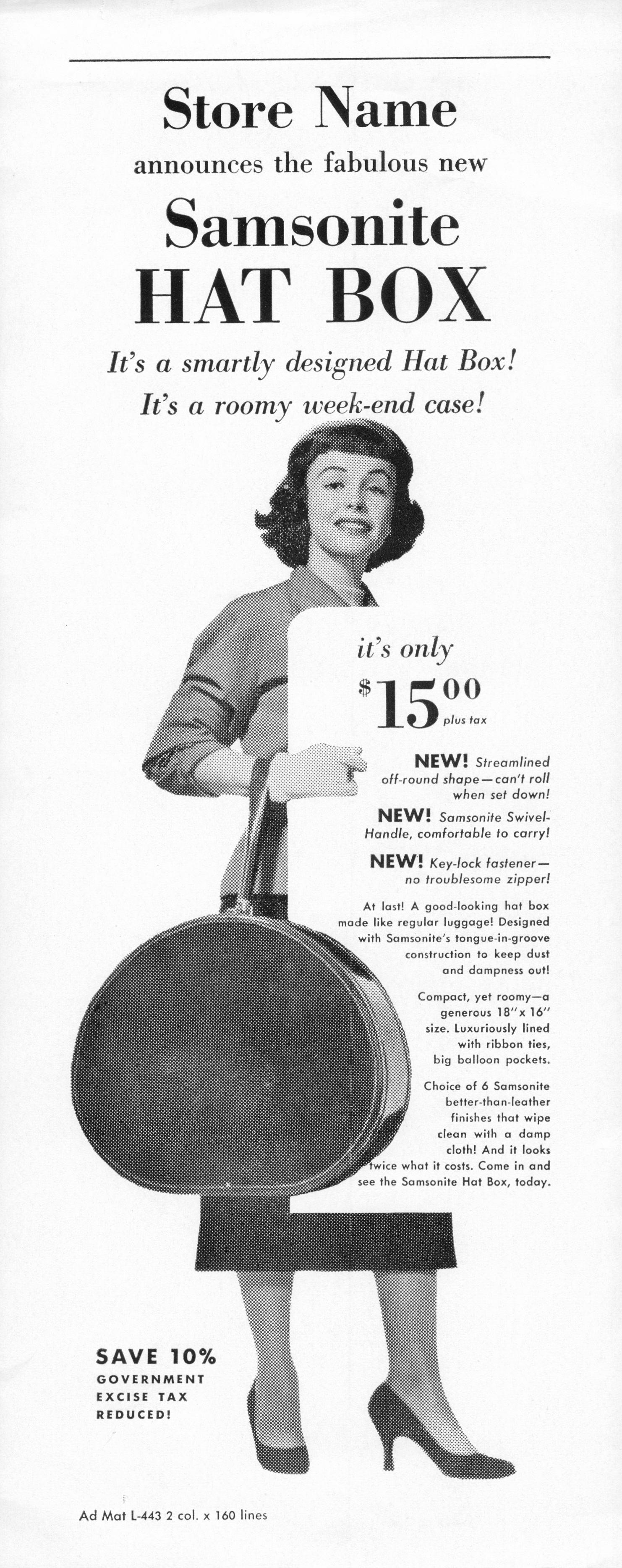
That brings me to the one special exception I want to call your attention to, as originally, this confused me. But to bring you through it as I found out would be even more confusing, so we're just going to dryly explain it.
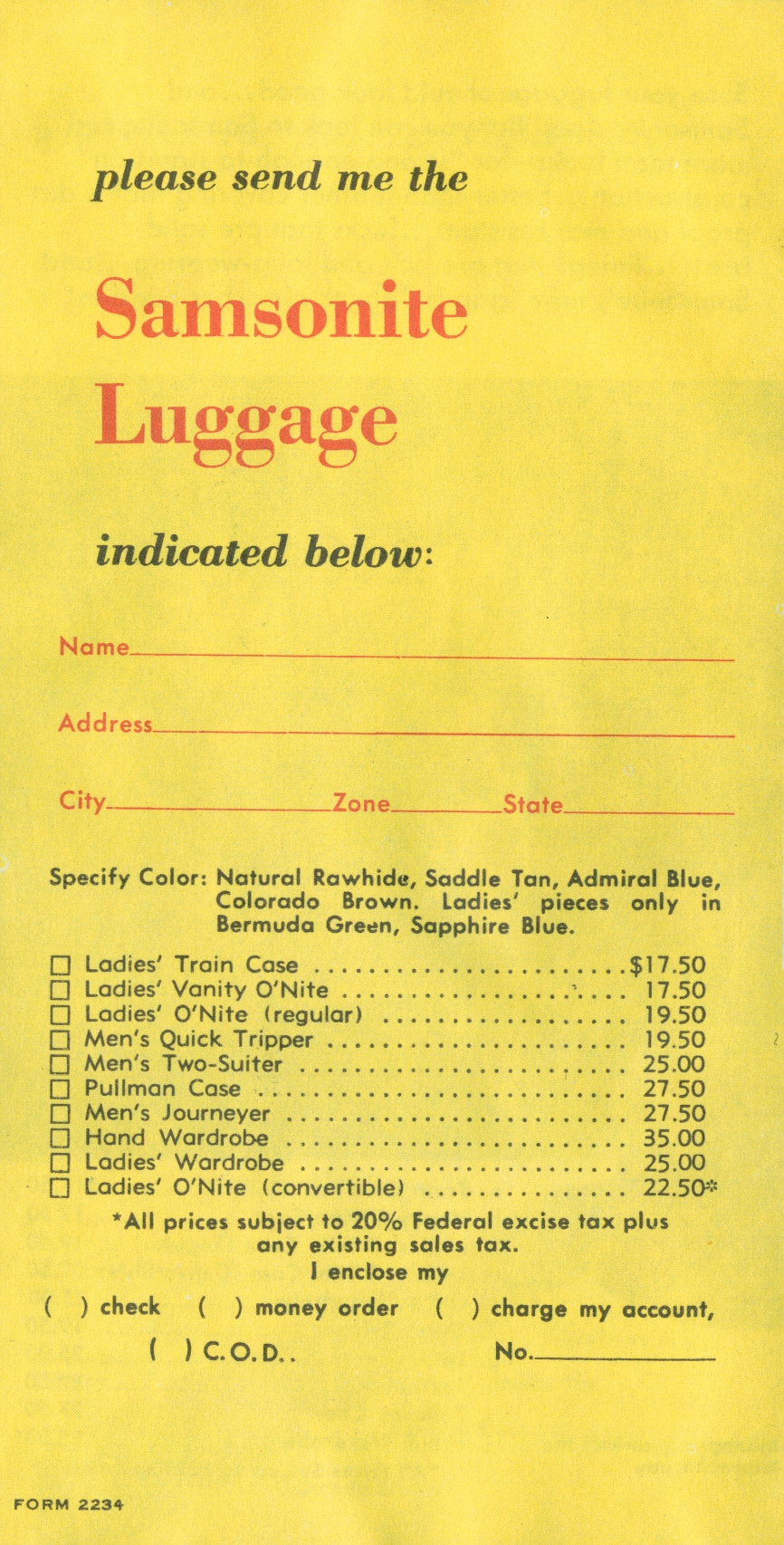
Samsonite in the 1950s and 1960s distributed pamphlets for retailers to use in their store. Presumably, instead of a retailer stocking whatever item was being advertised, they would collect these and send them to the manufacturer, serving as a supplier for the consumer. There were so many styles and colors Samsonite cases were produced in, it would've been difficult for even the largest retailers to have a full, stocked inventory. Thus, let the consumer decide what to order.
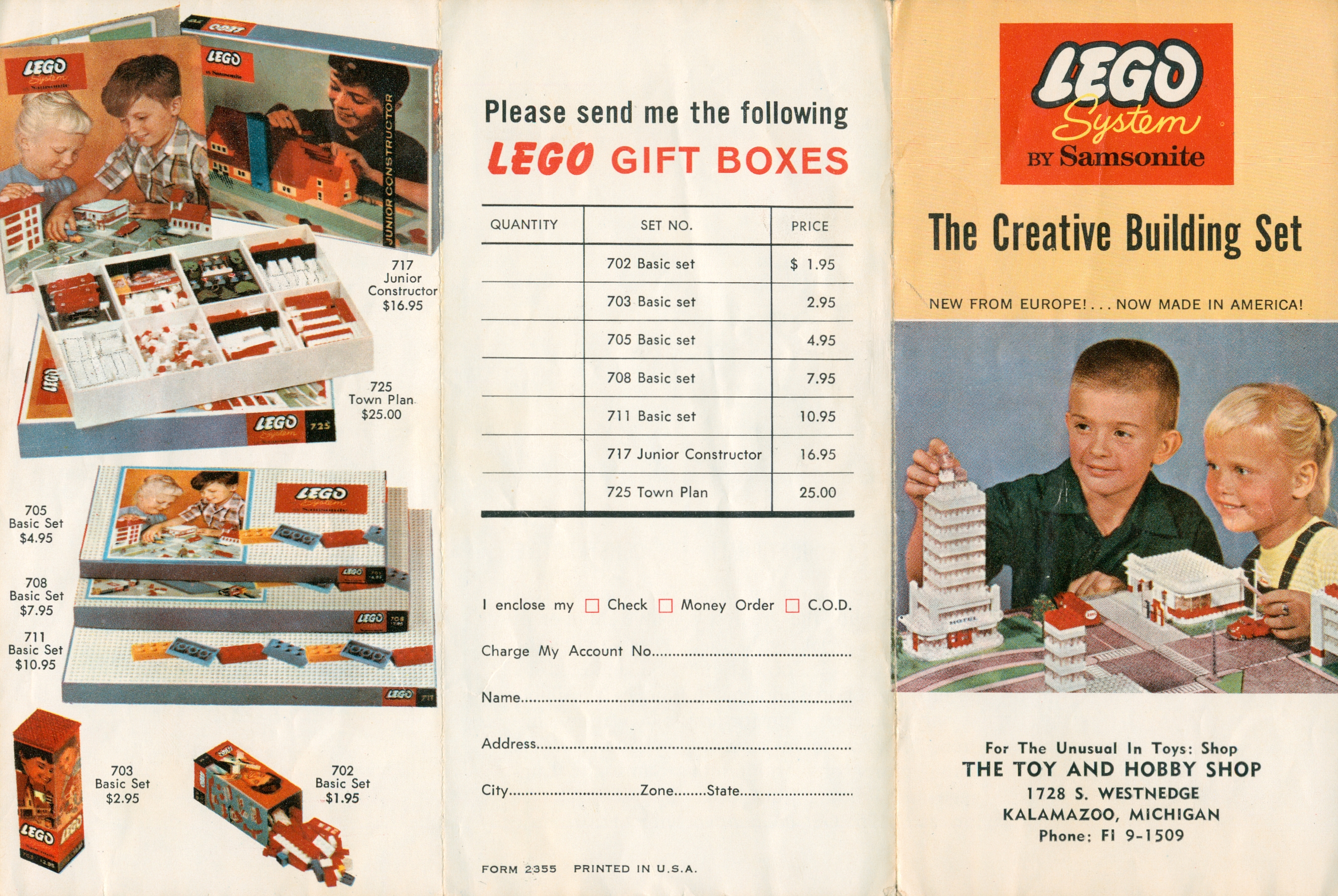
Typically, one has a store name (and possibly address/phone number) stamped on the front, an order blank, and a form number without any letters in the 22XX-24XX range, though its possible ones exist beyond those limits. It follows a similar chronological increment rule as outlined above, but clearly belongs to a different system entirely.
The earliest I've found, from some time in the early 1950s, is 2234:
The earliest LEGO one is 2355. Again, note that the store name is not printed but stamped manually, so all stores share the same form number instead of needing a billion unique form numbers. This one is from 1961 as it omits patent information, something that all new-for-1962 materials have:
We then have 2369. It is likely from 1963, but I don't know for certain yet:

Then 2385 for 1964. Notice how slowly the number increments over several years, which further indicates this numbering system was exclusive to these retailer documents:
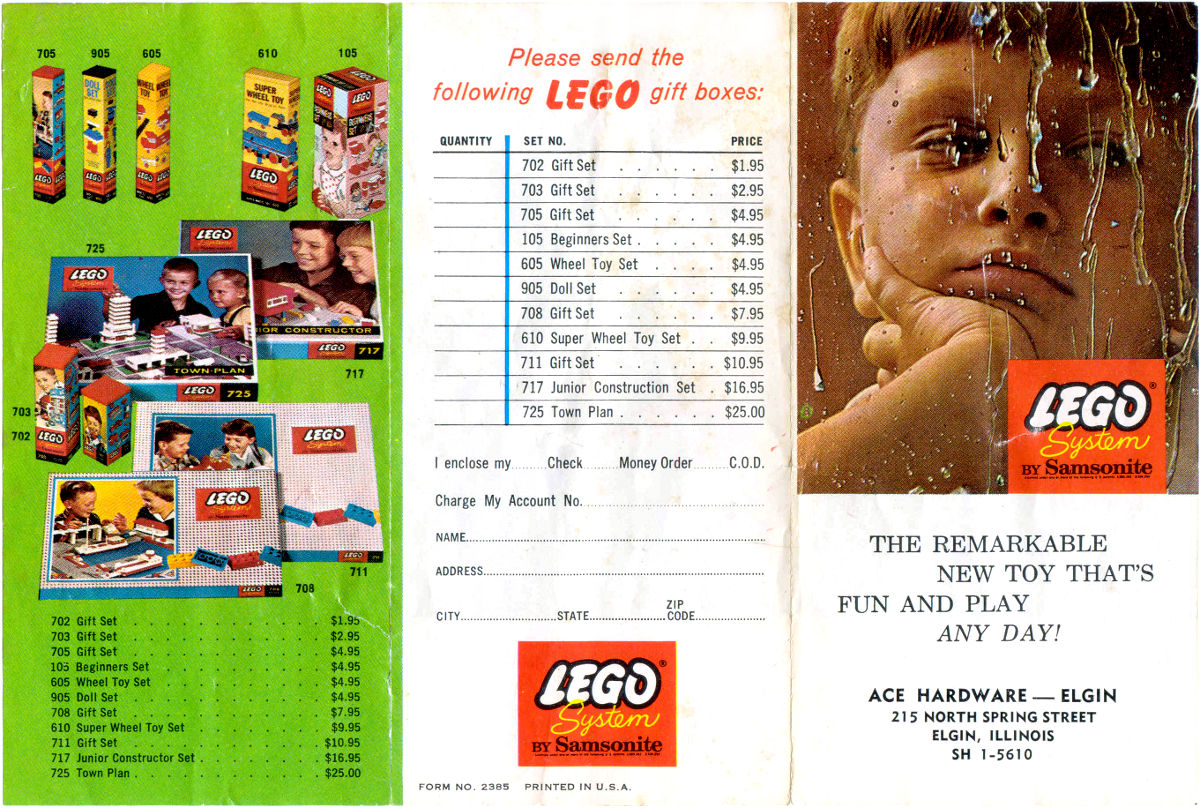
And finally, the reason I consider this separate system a limitation, we have 2407. Instead of being distributed to retailers, it was used in the 1965 695 Bulk Assortment Set, a set used to offload inventory of 1961-64 supplements:
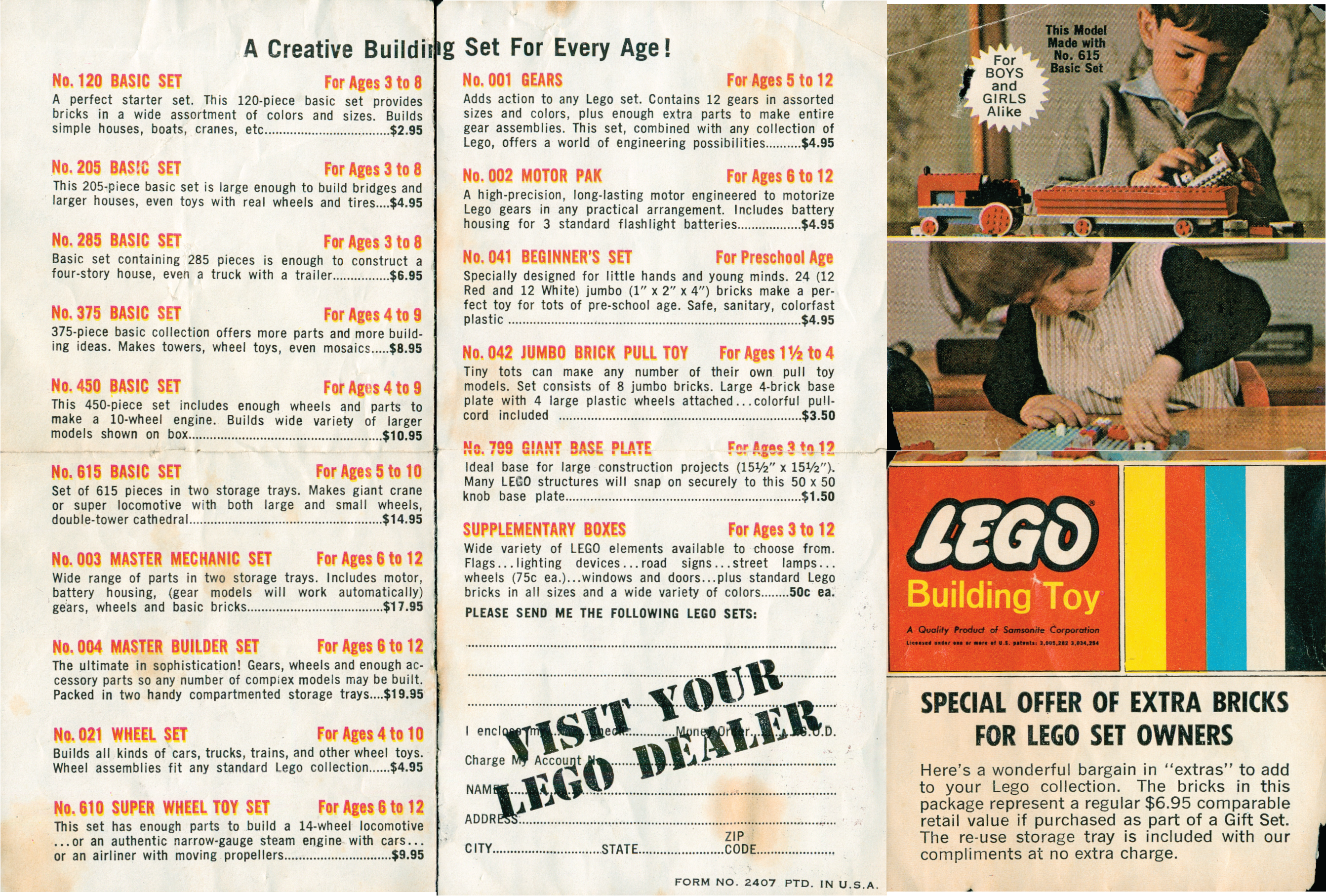
When I first started organizing Samsonite ephemera, I didn't have all the in-store brochures, so I wrongly tried to fit it within the main system, which made the most sense to me at the time. After all, it would've been bizarre to have a single document reflect a completely different system, right?
What I'd reasoned was that the form number was a typo, intended to be 2107 instead of 2407. It placed it a little earlier in the timeline than most 1965 materials, but given the prototype line pictured, that was seen as consistent. It also made sense as a slip of the finger, in that on numpads '4' is above '1', and they both look similar at a glance.
In actuality, it is a case study to prove why the work this article does is so important. Knowing how Samsonite handled their internal systems like this help solidify analysis and allows us to understand documents better than before.
So, given we have a clear line of these in-store brochures from the 1950s to 1964, and we see the 695's instructions shares the same design features such as an order form, only this time stamped with "VISIT YOUR LEGO DEALER" instead. We can now reason that the 695's dedicated sheet is actually a quiet offload of these dealer documents. Which is telling as to the discontinuation of them by 1965, which makes sense as the launch of the 1965 wave of sets was a mess, with the line being shipped out very late in the year.
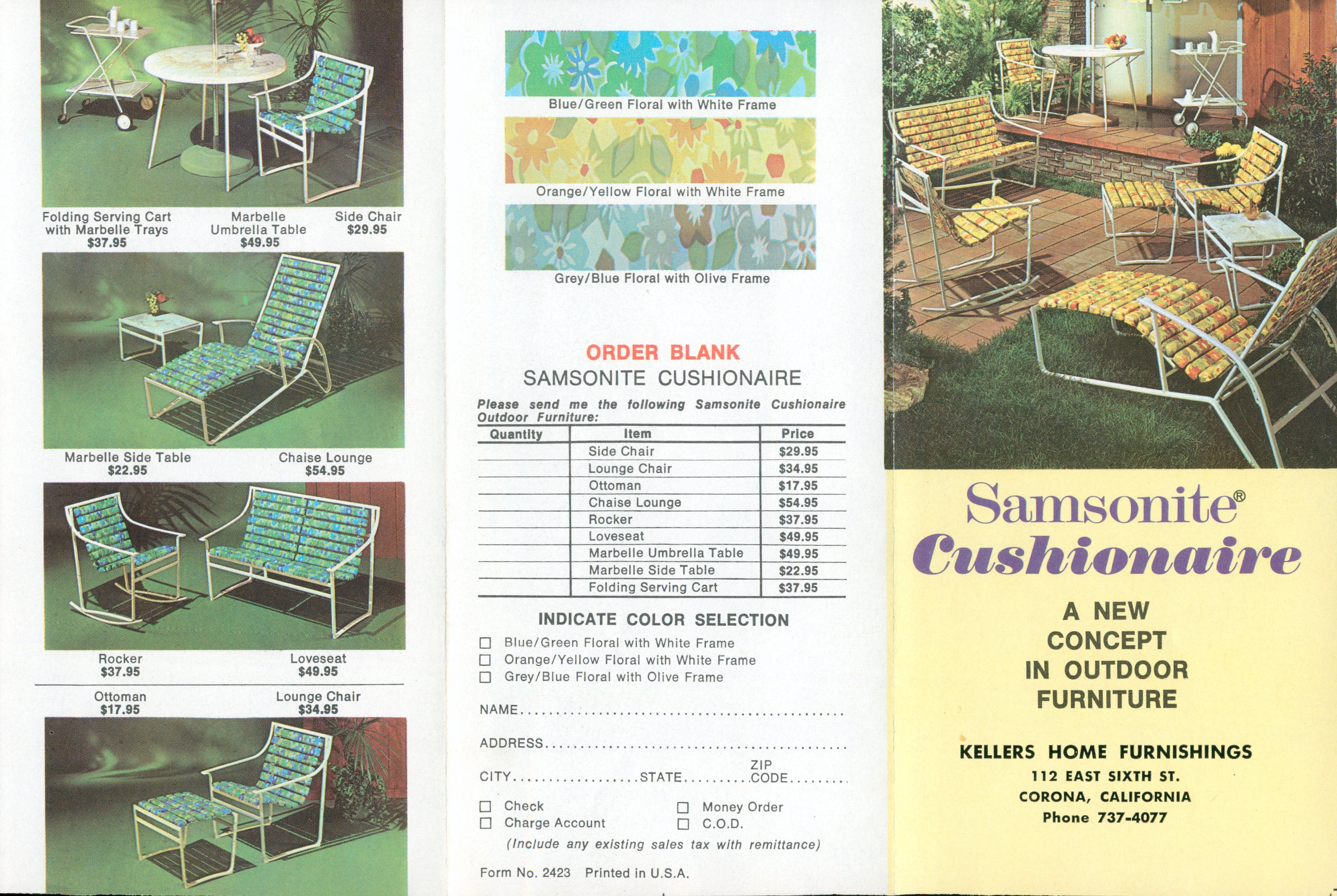
That doesn't mean that 1965 was the end of these pamphlets altogether, just for LEGO Samsonite. They continued to be distributed for other Samsonite products, reaching numbers as high as 2423 with this circa 1967 pamphlet:
Why are some Samsonite documents missing the form number?
I know, I know, the article is long enough. But it's useful to address.
All documents belonging to Imaginations Inc. (you can learn more about it in Imaginations Inc. Sets) will lack a form number, such as the back of this 1966 II catalog:
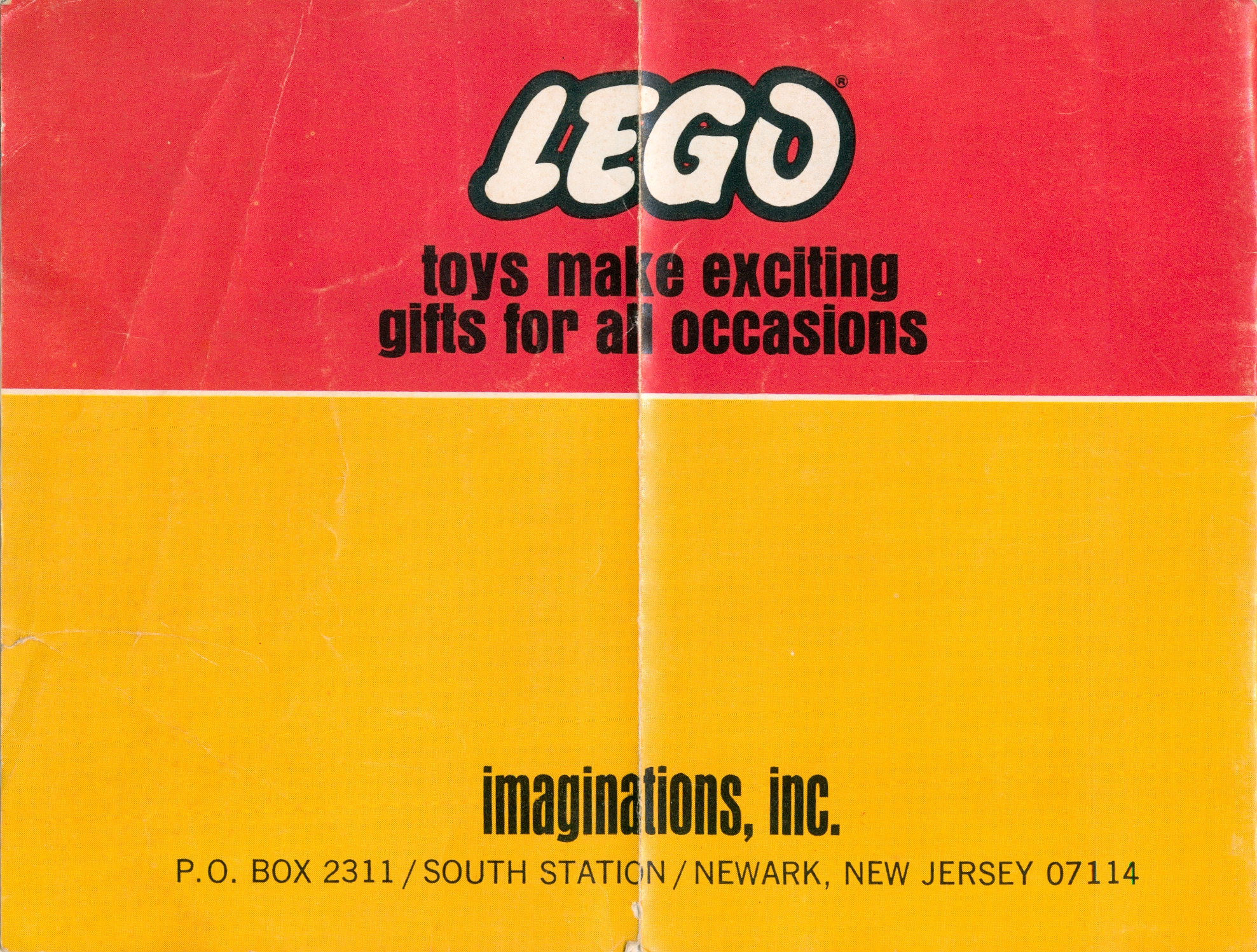
That kind of includes all 1965-67 II brochures for the 005 and 704 (those uniquely have their own system based on categorization rather than order of compilation):
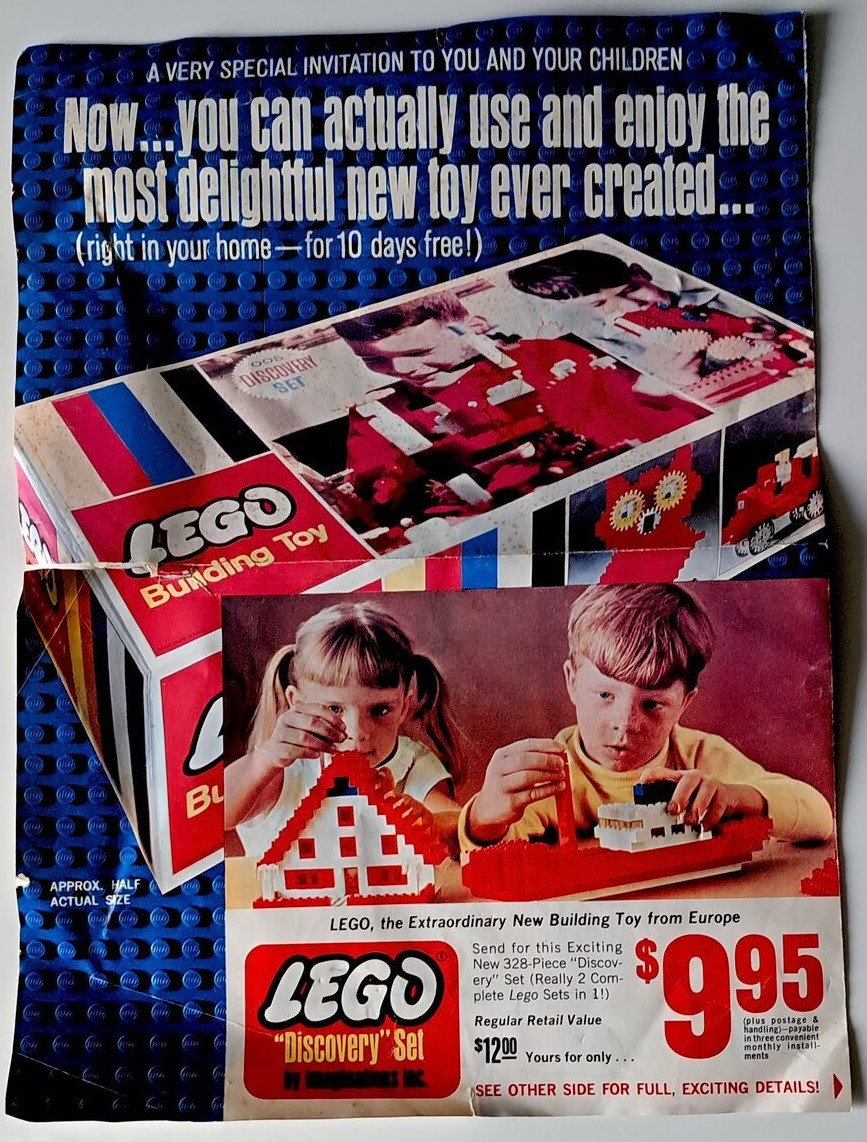
Canadian documents are wholly also exempt from form number ordering, as Samsonite of Canada had no system in place to track documents.
Several non-LEGO Samsonite documents also lack a form number, such as all Samsonite Modulex documents, or the pamphlet for the 1965 Samsonite electric kitchen knife:
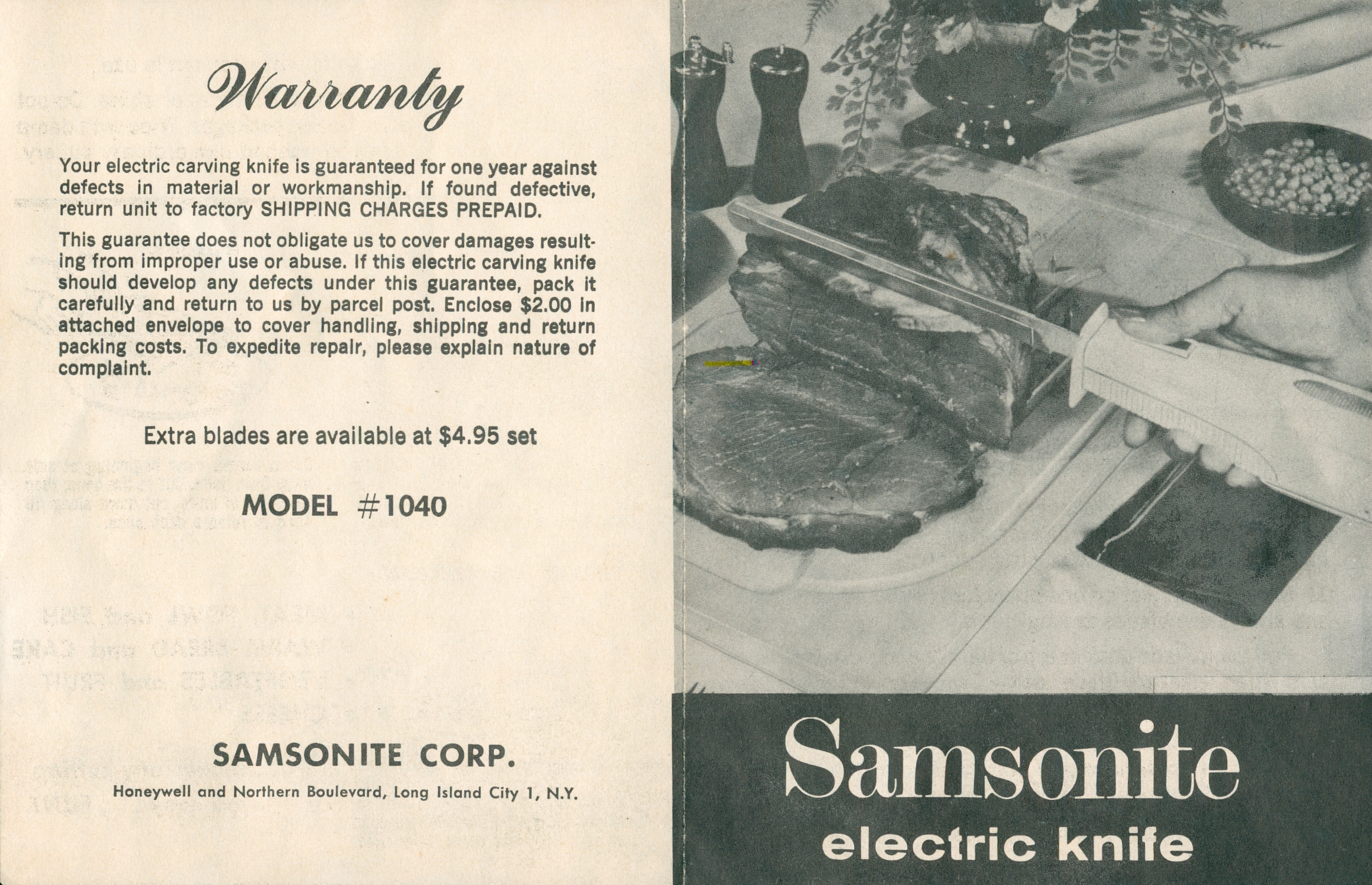
Presumably, anything not prepared internally by Samsonite (outsourced beyond the company's established divisions, such as the ad mats we noted earlier) will lack a form number.
Then there are things we wouldn't expect to have ever been assigned a form number (i.e. mundane company records, warranty cards, etc.).
Why is it so inconsistent?
Beyond the bonus in-store pamphlet system, I want to address exactly why the main system is so difficult to conclusively cover.
What you're likely seeing for 1961-69 is Samsonite refining their method. It isn't that they had the system entirely planned out from the beginning, as we've seen, they first implemented a primitive categorization system and adjusted it as it made sense. Remember the document from 1941, in which the form number wasn't what it developed to be. Also remember they had a crazy number of divisions through the 1950s and expanded even further during the 1960s, manufacturing extremely diverse products like folding furniture, institutional equipment, LEGO, and of course their staple luggage.
Hence why 1961 is an outlier, with 'V' and 'F' never seen again. Why only in the late 50s to 1961, there is no dash between the first letter and the form number. Why we saw 'B' be used for the 1965 Dealer Catalog, only to never be used in that context again.
And keep in mind that I'm not saying we have this all figured out. Only that it isn't impossible to draw realistic assumptions from these form numbers, to not necessarily peek behind the curtain but instead have a good approximation. That way, if by some miracle the curtain opened, there wouldn't be any surprises.