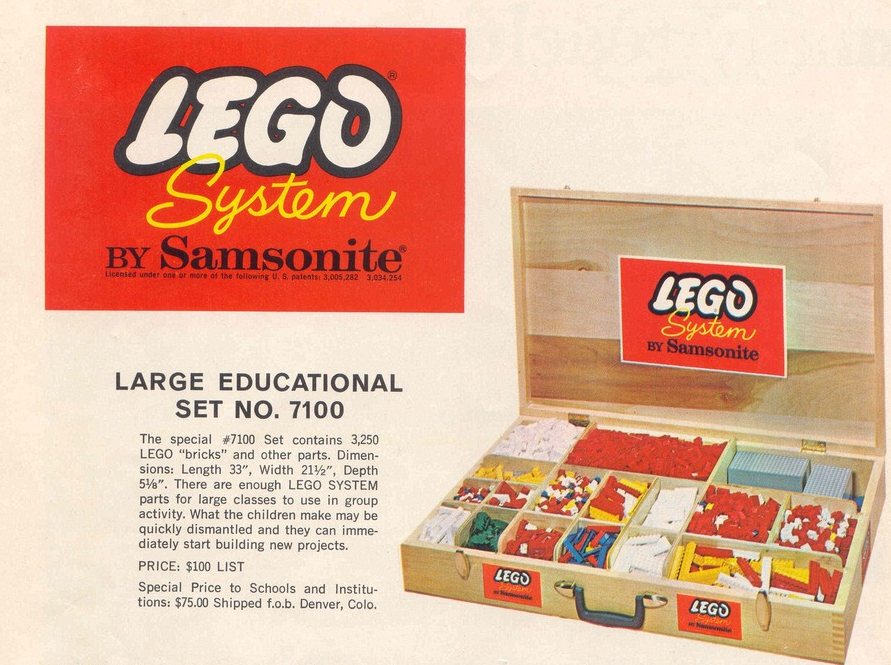
7100 Educational Set
General Information
The following information has been collected from original newspapers, catalogs, and magazines, some of which are freely available for reference below. The rest can be found in the site’s gallery. No aggregate catalogs (BrickLink, Brickset, etc.) were used.
Instructions: H-1996 (purpose built brochure, included classroom instructions, examples, etc.)
Advertised Part Count(s): 3,250 pieces
First Year Confirmed Available: 1963 (USA / Canada)
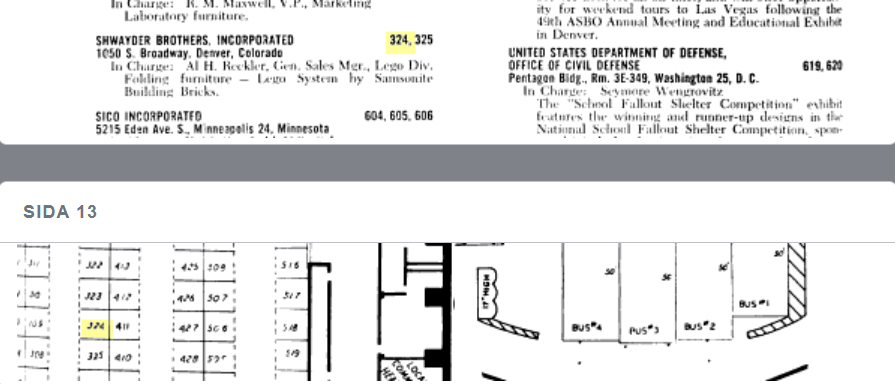
I’ve written an article about the 7100's release date. Essentially, Shwayder Bros first attended the education focused ASBO conference in early 1963. This, combined with the 1963 compilation date of the H-1996 brochure (based on the form number), the 7100 released in 1963.
I currently have no documents to corroborate when the set released in Canada, but as all sets up to 1964 (even the 750 Educational Set in 1964) released in both countries at the same time, it is very likely the 7100 released in 1963 in Canada as well. There is no reason to assume dissonance in this case, as both companies shared the same factory for LEGO during this time.
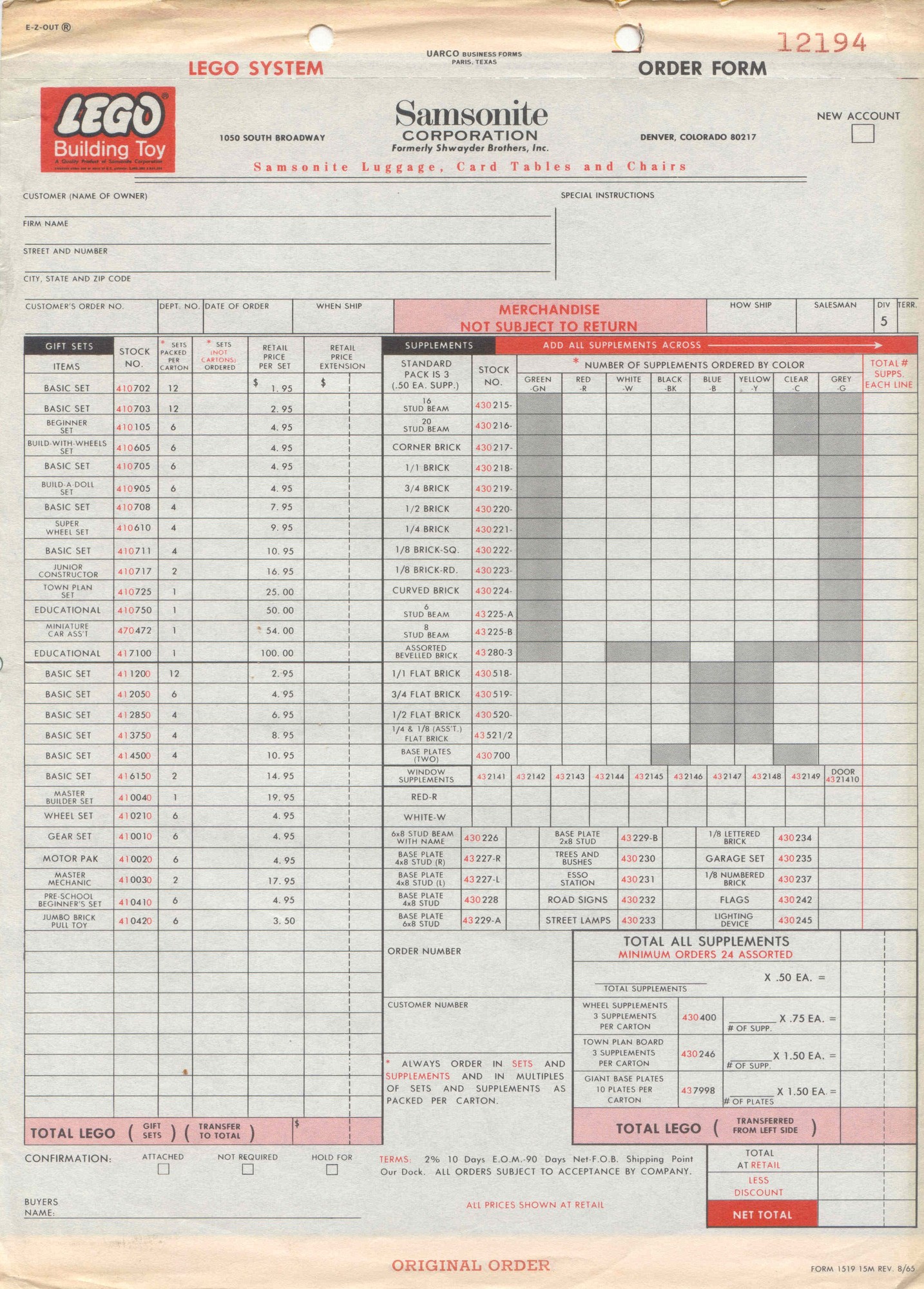
Most Likely Retirement Date: 1965 (USA/Canada)
Appears in brickfetish's mid-1965 dealer order form.
While a case could be made, there is no succinct evidence Canada continued production of the 7100 Educational Set beyond 1965.
Last Year Seen Available: 1965
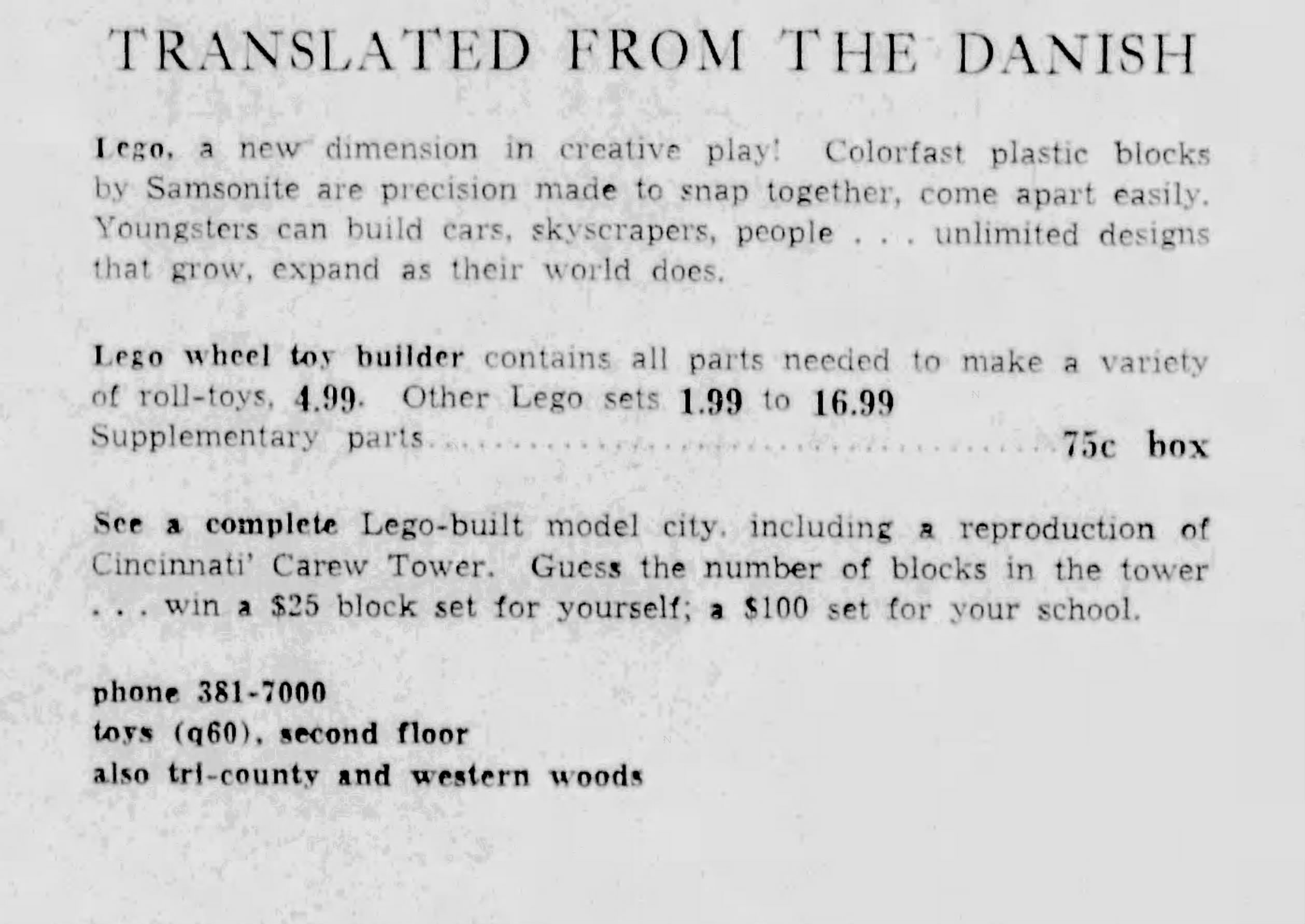
It's not directly listed for sale, instead it appears to be a maybe a contest prize?: Edmonton Journal, October 30th, 1965
Aliases: Large Educational Set No. 7100
Retail Price(s): $75 (for schools) - $100 (USA)
Note: While Canadian prices are not listed, the 7100 would have been sold for ~$125 (going off the Canadian 750's retail at $62.50).
Rarity Score (Rarity Index): 6/7
Known Box/Packing Variants
At least two sizes of the 7100's wood case existed. It is not to be confused with the 750's much smaller case, the easiest way to tell them apart is to check the inner dividers. The 750 will have eight sections while the 7100 has many more.
There also may be different versions of the handle, clasps, and hinges. These parts were reused from existing Samsonite suitcases (i.e. the front clasps were originally Streamlite clasps).
Box/Overview
Samsonite was no stranger to the institutional market. In the late-1940s to mid-1950s, Samsonite sold folding chairs en masse via their institutional seating division. In 1958, Samsonite introduced a line of classroom furniture, which continued production into the 1960s.
Given their previous experience, it only seems right that Samsonite brought LEGO to institutions as well. And at the 1963 ASBO (Association of School Business Officals) conference, LEGO was first presented to schools with a brand new set in the line.
The 7100, numbered based on its $100 US value, was created as Samsonite's first foray into education oriented sets for LEGO. To my knowledge, the 7100 is among the first dedicated institutional sets for LEGO altogether, if not the first.
Beyond that, the 7100 was the first of its kind in North America in many regards. For one, while wooden box LEGO sets had been available for over a decade in Europe with a dizzying number of variety, the 7100 and the later 750 were the only wooden box sets Samsonite ever produced, strangely so.
The wooden boxes were absolutely filled with parts, which we'll go over shortly. It was one of the largest sets in North America until the 2000s:
The hinges and labels on the box are usually found in poor condition. Most examples will require some restoration.
Contents
The set contained a plethora of parts in most colors produced by Samsonite at the time, totaling 3,250 pieces. Unfortunately most found examples are wildly incomplete, mixed with modern parts, or completely empty.
The original inventory is expected to have contained ~10 VW Beetles and multiples of 1:87 town plan accessories like gas pumps and Esso signposts.
Historical Examples
It's also worthy to note that, like its younger brother the 750 Educational Set, the 7100 was also used as a contest prize. It didn't happen nearly as often as the 750, nor was it always the same circumstance.
Rather, this competition gave a 725 Town Plan to the contest winner and a 7100 Educational Set to the winner's school: