
Known Box/Packing Variants
Like all other sets that released in 1961, there are two versions of the 717:
One which was likely only produced in 1961-62. It will omit the patent text and registered trademark 'R's:
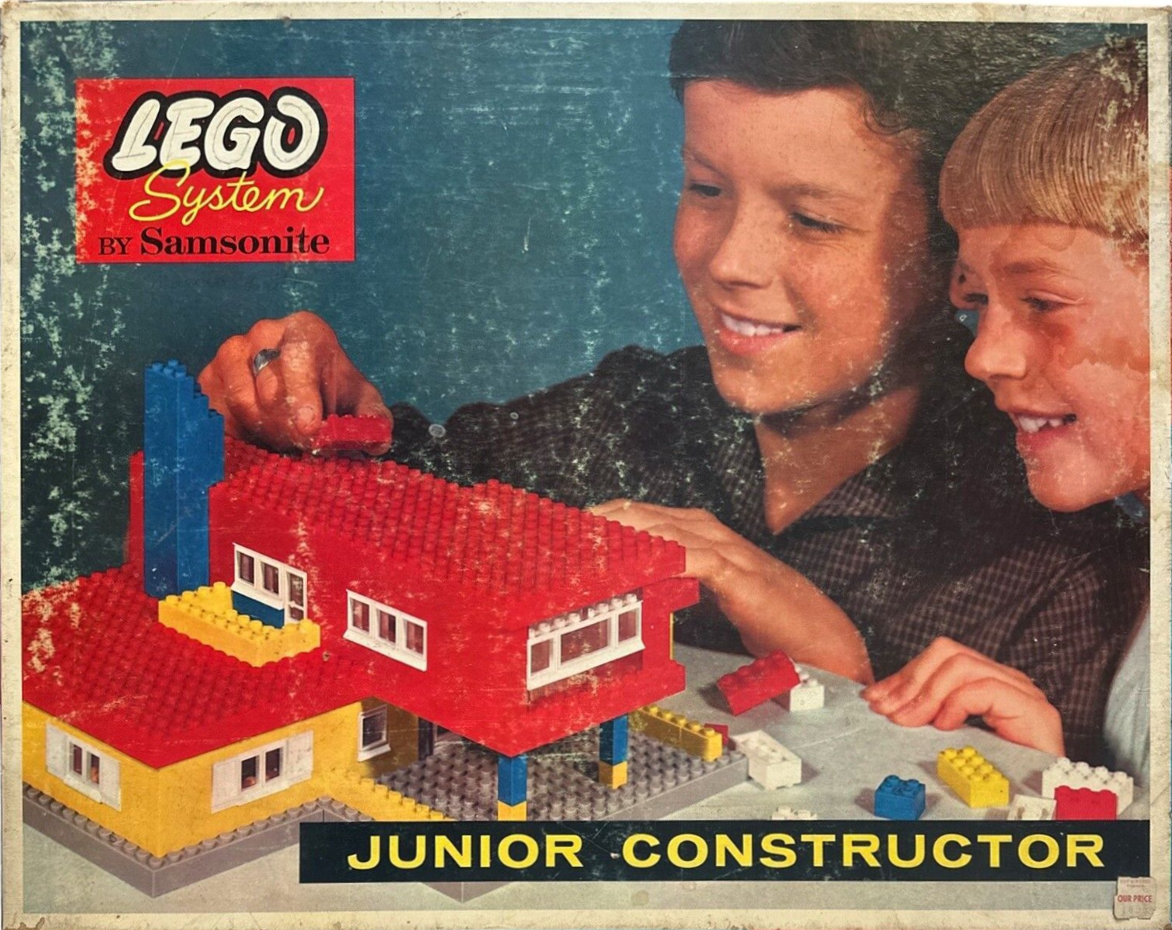
And one 1962-63+ with the patent text and Rs (it's a small difference, but its a difference):

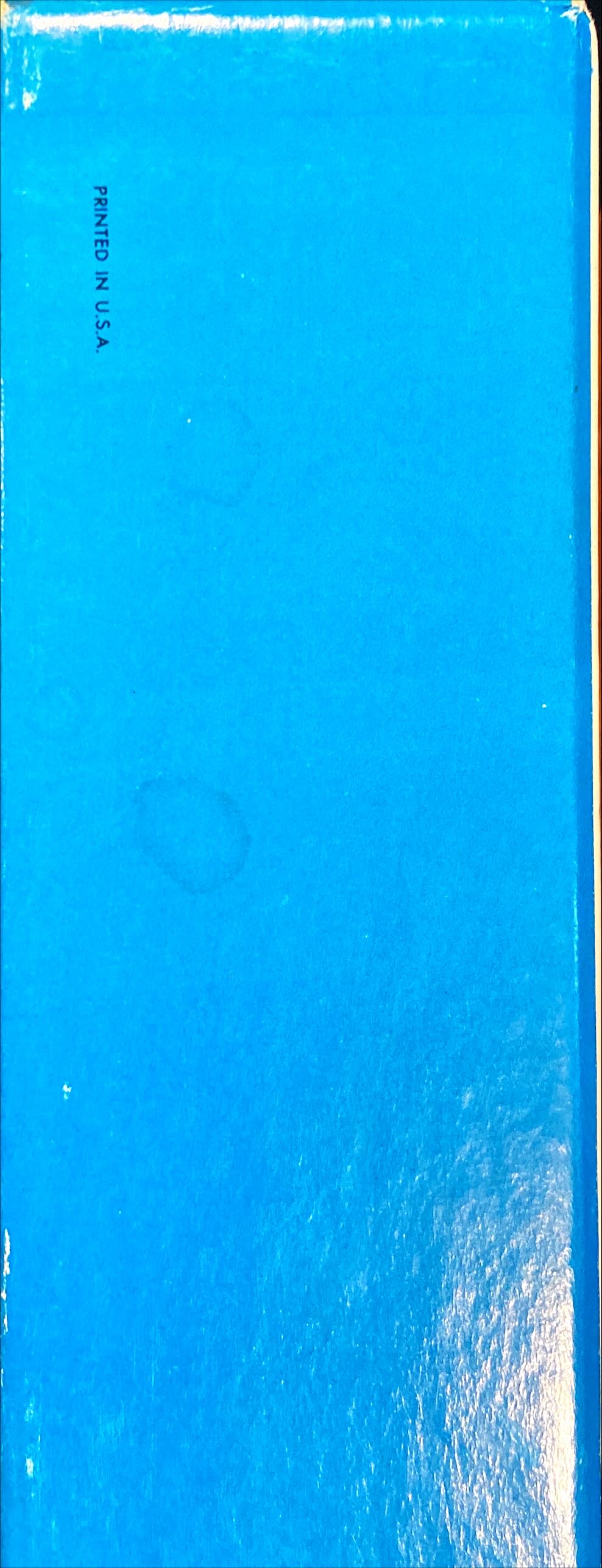
And if you really want to get deep into the details, there is technically one more version of the 717, displaying "Printed in Canada" instead of "Printed in the U.S.A.":
Box/Overview
The 717 Junior Constructor released in 1961, the second largest set of Samsonite's initial wave. Its intended model is a cantilevered modern home painted in garish colors. The colors are the unique element of this set, as it was the largest single source of yellow bricks in North America until the 1970s.
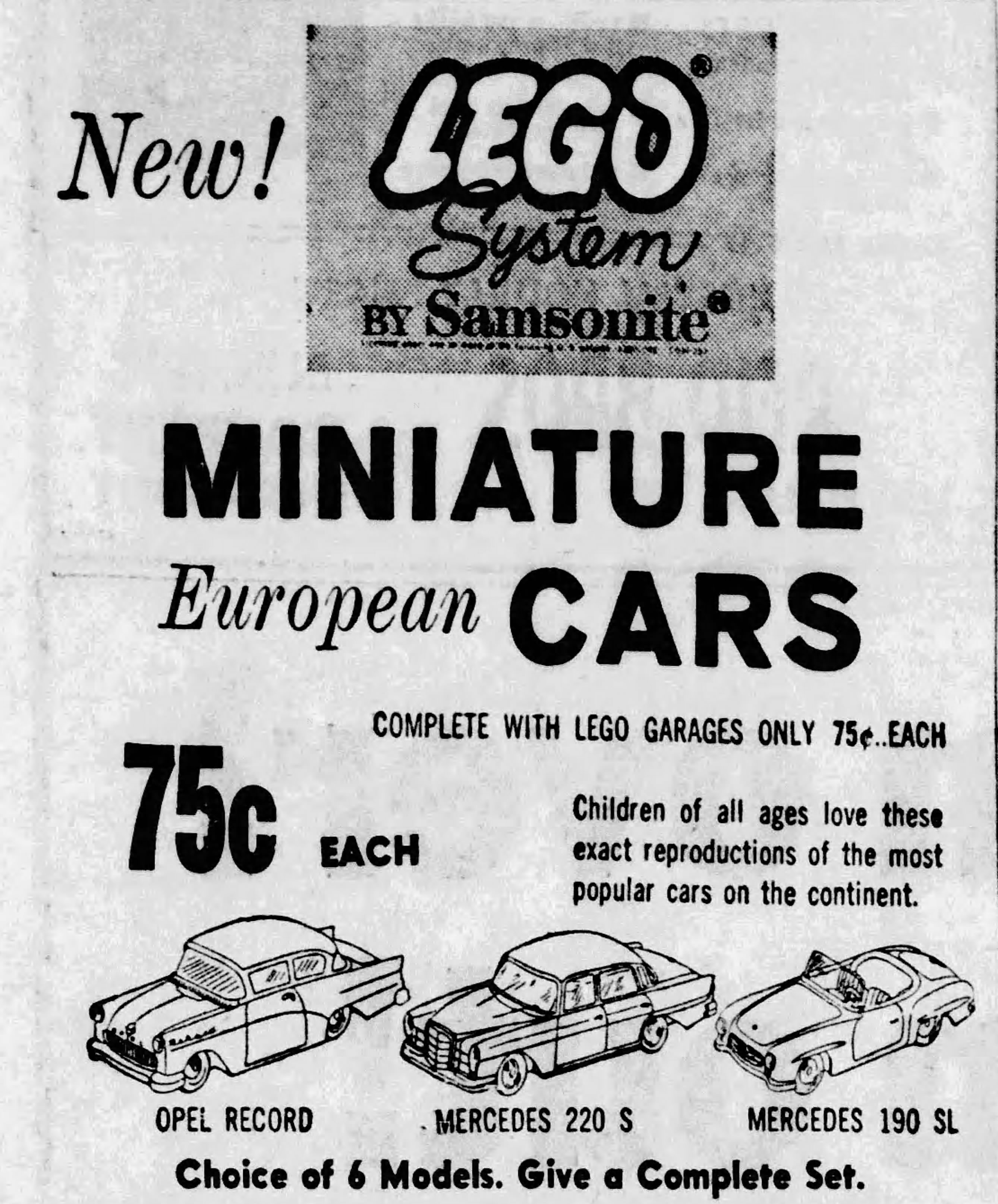
Throughout over a thousand newspapers from 1961-65, the 717 was a common set to find on sale from 1963 onward. For sake of practicality (and my sanity), I was not able to collect every advert, but the above discounted price examples serve to give you a very good idea of what I mean. It doesn't quite rival the 905 Doll Set's difficulty selling at full retail price, as most of the initial 1961 sets only started to dip below full price in 1963. Still, the 717 certainly didn't seem to be the most attractive LEGO set available.
Its released form doesn't have too much else to offer in terms of insight, its "prototype" is much more interesting.
For now, we'll look at the released version. This is the front of my box. One thing I'd like to note about the 1961 line that is especially prominent on these larger sets is that every set pictures both a boy and a girl on the front:
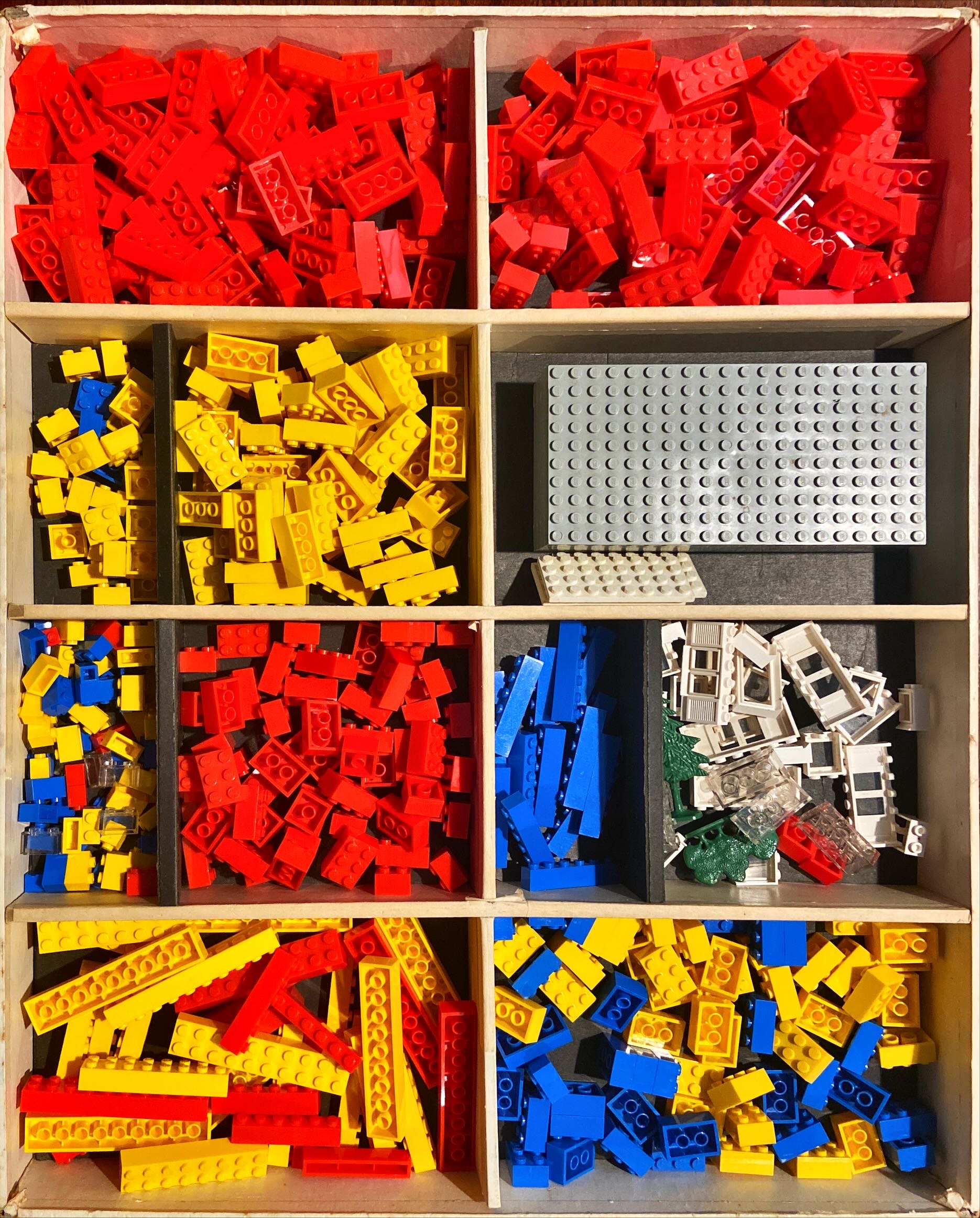
When opened, this is what my copy contains. It's missing parts, but has enough to kind of complete the original model:
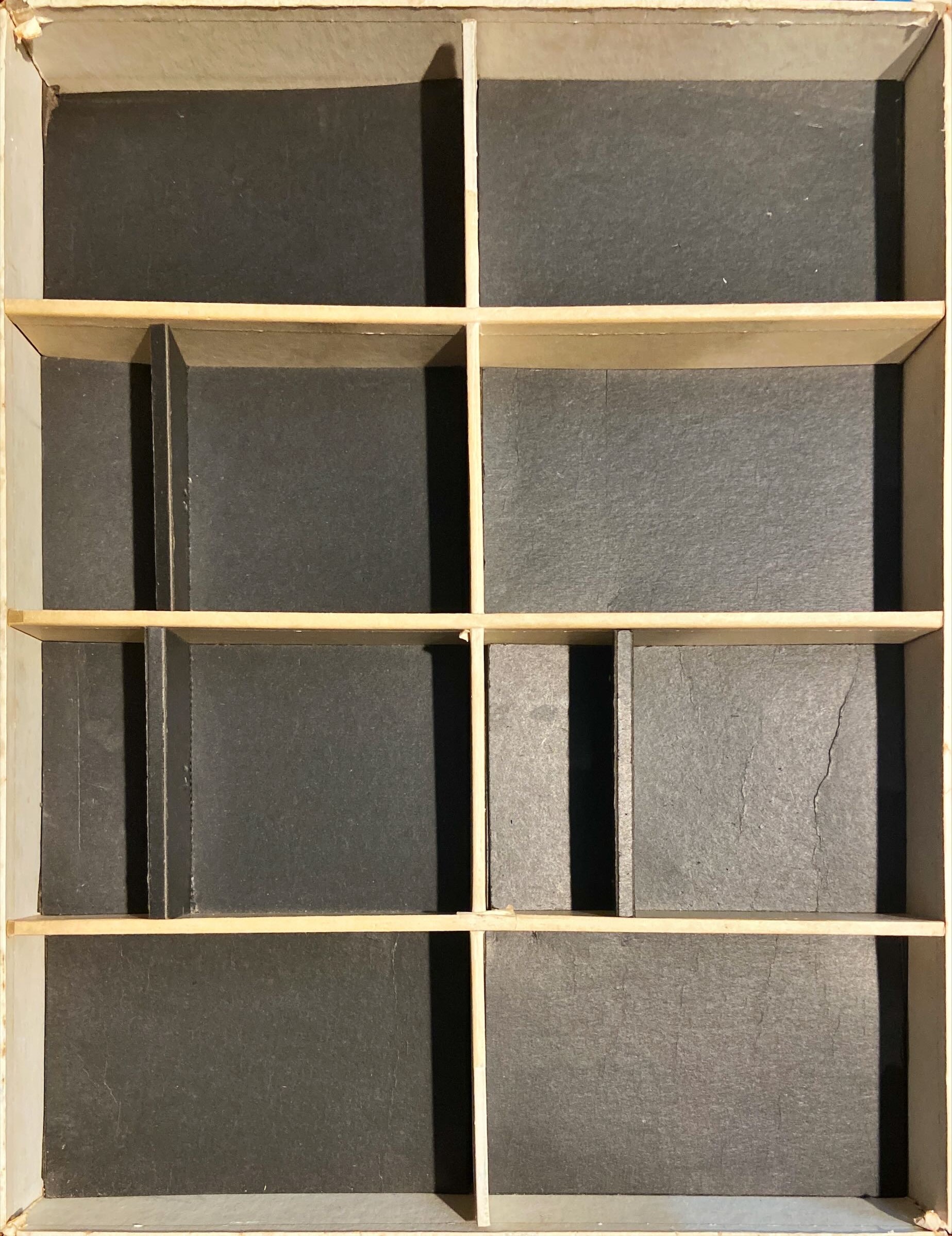
When all parts are removed, it looks very much like the 725 Town Plan. The only real difference is that the 717's box is shallower, but uses the same exact white dividers. The 725 Town Plan is only taller to account for the town plan board, hence how they are able to use the same dividers for the 717 Junior Constructor:
The inside of the box contains the detailed instructions, which contain quadruple the number of steps that the 725 Town Plan used:
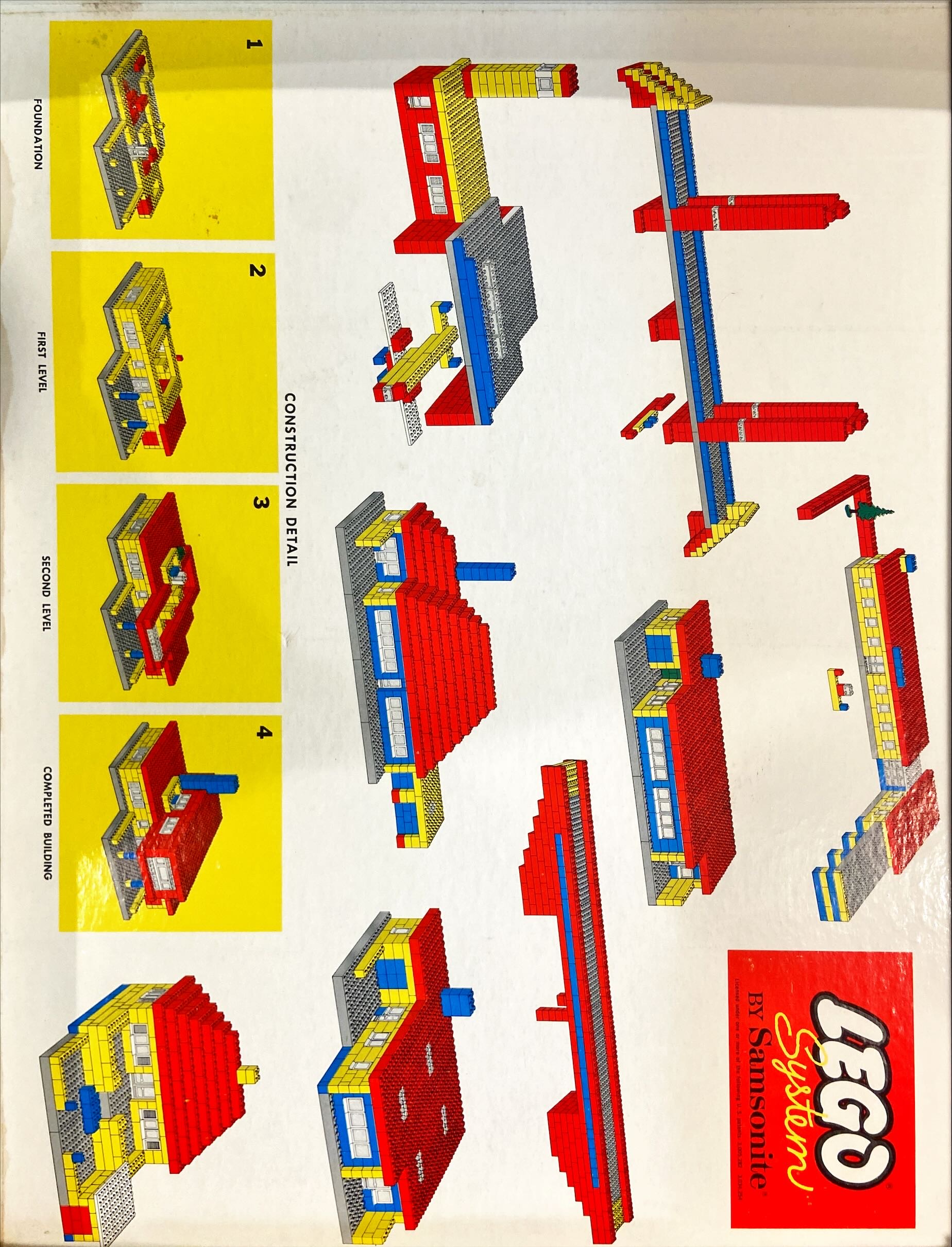
Here's a closer look. Sometimes the chimney appears as green on the box which I believe is a product of trying to print blue on yellow:

Contents
My box contains entirely cellulose acetate bricks, only the windows are ABS plastic.
There were a mix of logos as is usual for 1961 sets, and the only real interesting inclusion is the unpainted bush along with the unpainted tree. I'd never seen the bush with surviving sets, but it could've simply been a later addition by a collector. The same goes for the two 2x2 45 roof slopes, no idea why they're included.
I'd date mine to be a later set, but I wouldn't be able to give an absolute year. Because of the majority cellulose for the parts, I'd place it at about 1963, but who knows.
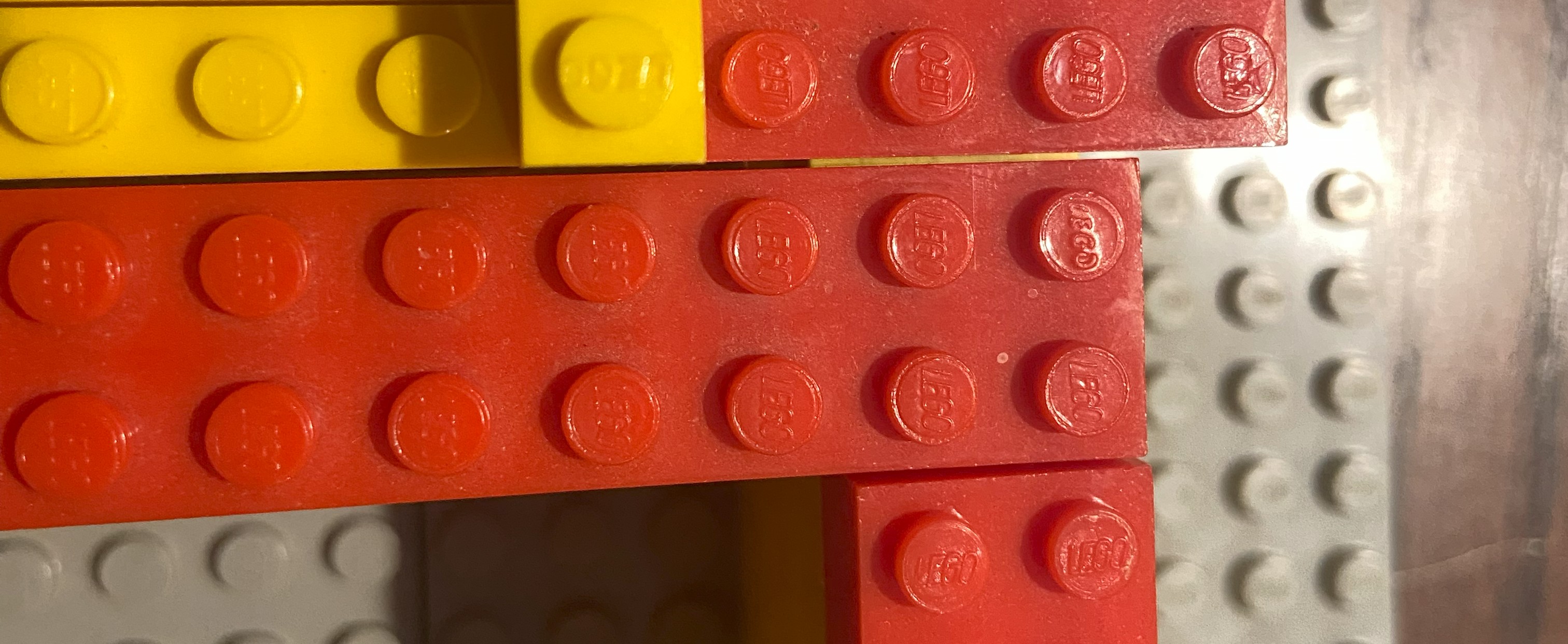
While constructing the model I noticed at least one of the larger beams had a mismatched logo on the stud. This is common for later hollow bottom 1x6s and 1x8s, but much less known to have happened on 2xX bricks:
It's also worthy of note that the advertised part count varied between 497 and 520, which could have a number of explanations. Unavailable larger parts being substituted for several smaller ones, poor quality control leading to more parts than necessary, more parts being included to have more left over, regional discrepancies (I don't know why that would be as 1961-64 used the same plant for LEGO in both countries), etc.
Who knows.
Historical Examples
This is the set this section was made for, as this set's "prototype" is infamous. It featured prominently in advertisements from 1961, though was much rarer in newspapers (specifically regarding the "prototype" box, the actual released version of 717's front image did in fact appear in a late 1961 newspaper).
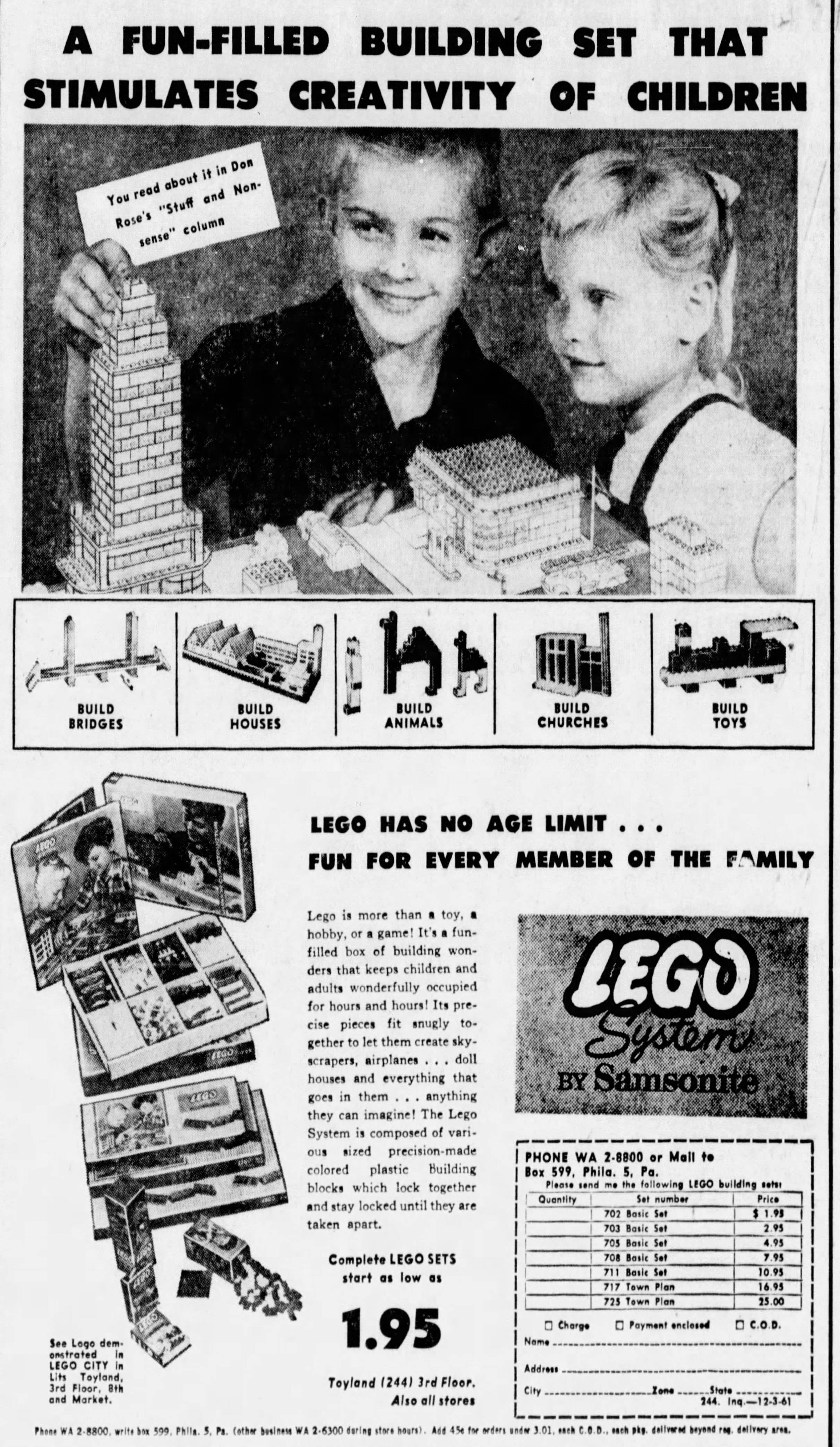
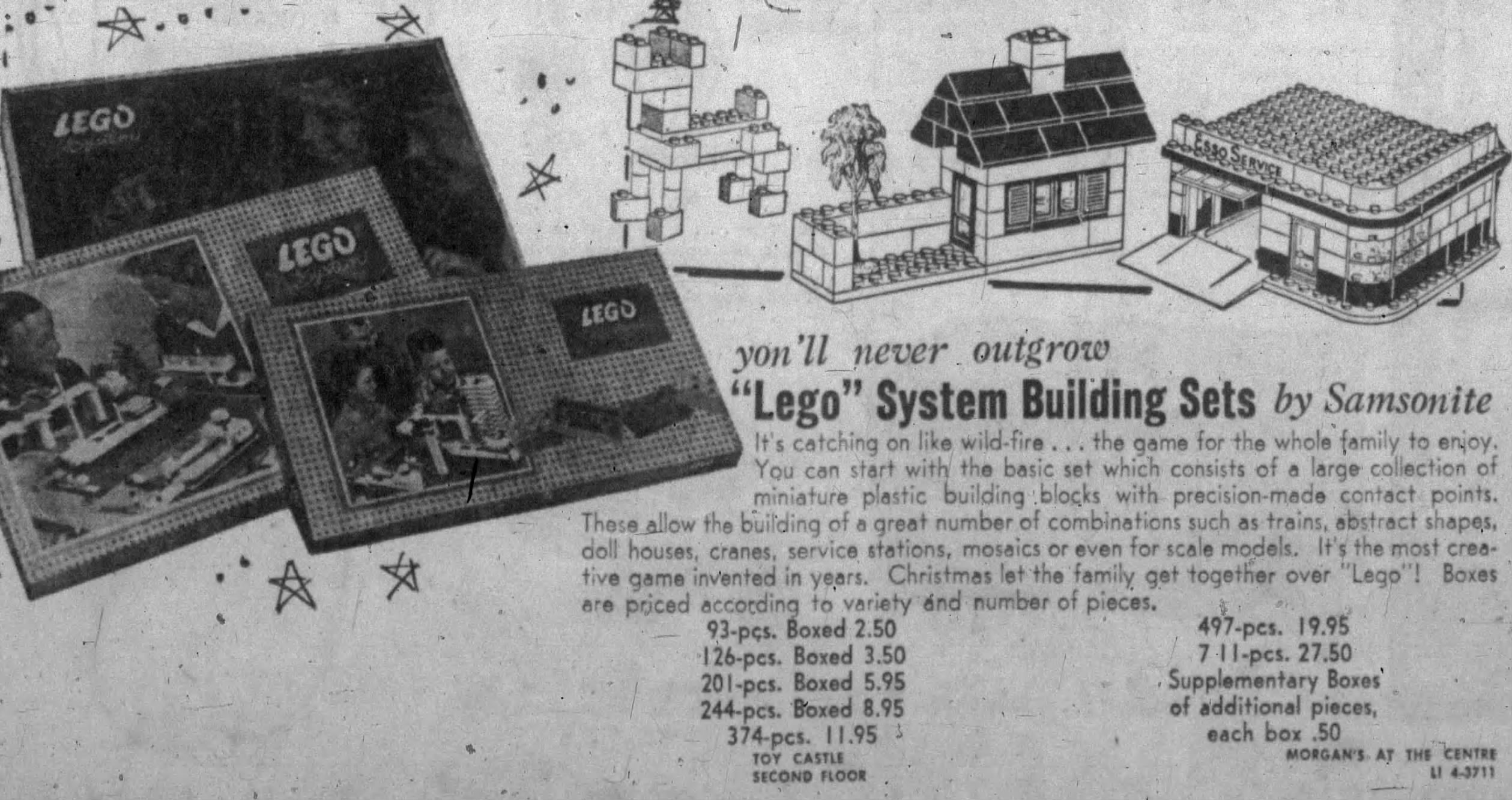
And I need to be careful with my use of the word prototype, as its meaning has changed in the LEGO meta over the last few years. This model specifically isn't likely a prototype but instead a mockup, prepared using existing materials to represent the final model. To stand in, not to be.
Here is one occurrence of the set's prototype box:
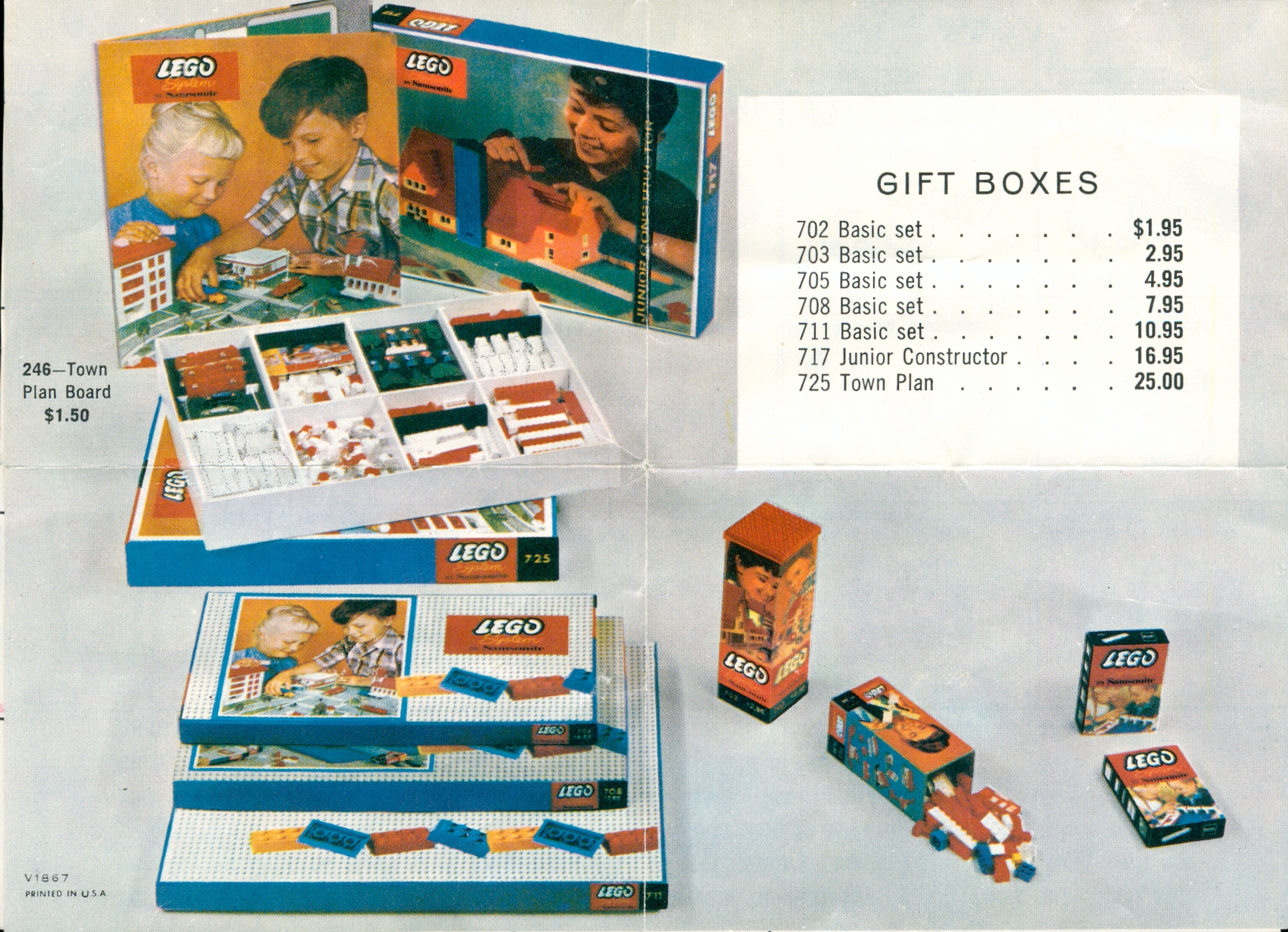
It's a much, much larger model than the released one. Collector circles say that the 717's box is too small to contain all the parts needed to build the prototype model (mostly due to the number of baseplates required), which is likely true and it appears the box in the mockup is much larger than the finished 717.
Other than that, the reason behind the discrepancy is largely a mystery. My theory, based on everything I've seen from Samsonite, is simply that it was never intended as the set's model. Instead, as that house existed prior to 1961 as a retailer model, it was simply used as the closest suitable placeholder until the set could be developed.
The larger model would've been way too expensive (I would guess $30 bare minimum), as it would've contained far more elements than the 717's final release eventually came with. Many explanations are not mutually exclusive, though I still don't understand why they entirely abandoned the style of the mockup, turning a charming ranch home into a mid-century cantilevered home.
Granted, I wasn't alive in the 1960s, so I don't know how much I can really speak on this. I'm very aware that the housing boom was taking place in the previous decade, along with urban renewal's attempt to "modernize" the old, but I've not really identified why they chose the design they did conclusively.
The real reason is probably simpler than I'm making it, as a flat roof requires less parts.
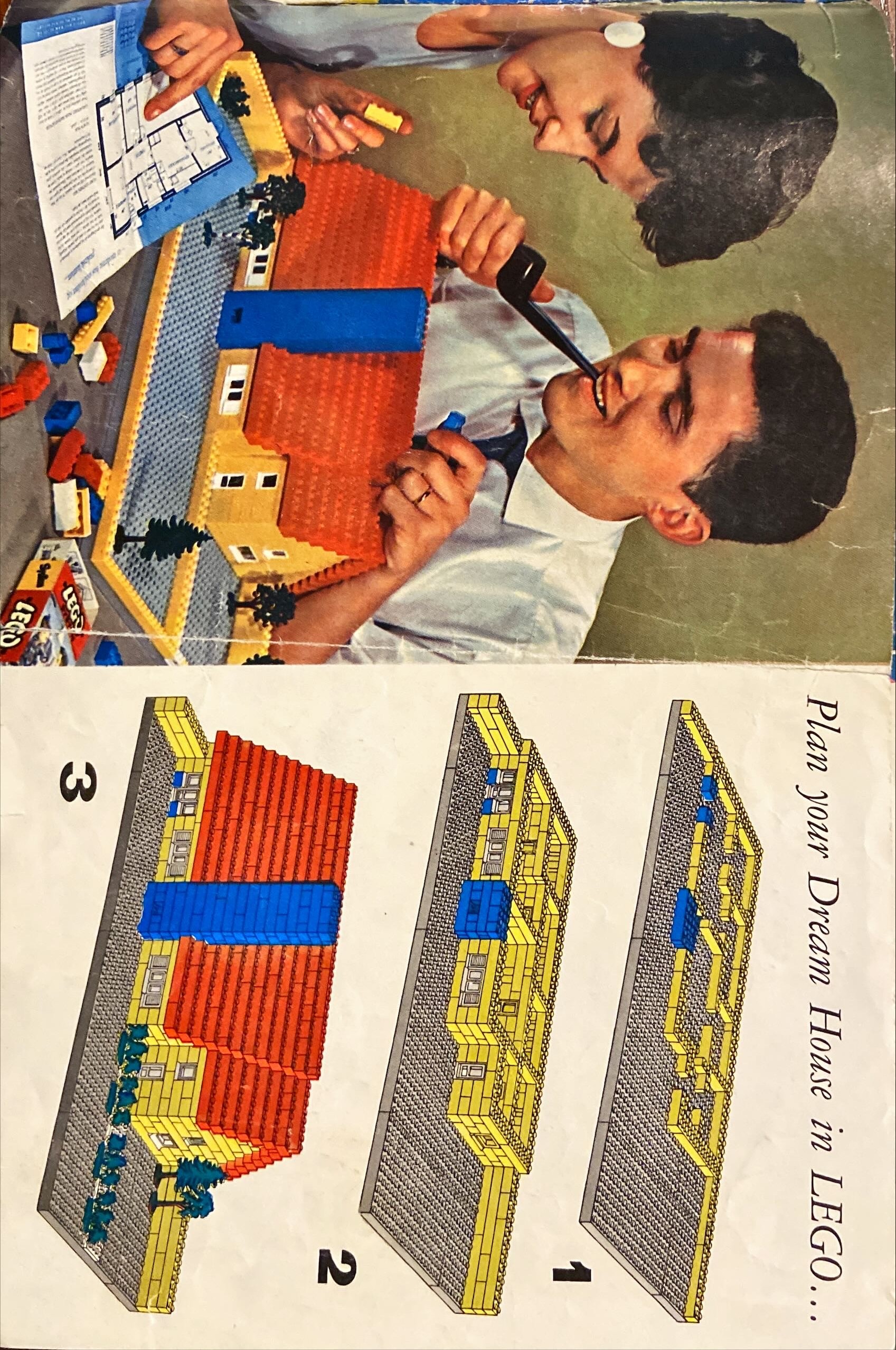
The above instructions are also deceptive, as I'm fairly certain they predate Samsonite LEGO (as the idea book they're in is derived from an earlier version from Europe). So just because the instructions exist here does not mean the house was planned in any capacity.
There are a few details that may speak against that, however. For one, the 717's box is a little oversized for the finalized set, but that is very easy to handwave away. Its size allows the reuse of inserts between the 717 and 725, cutting down production logistics/cost. More interestingly, however, copies of the 717 come with a number of 1x6 bricks in blue even though the modern home model doesn't use them. The prototype home, however, needs that exact amount for the chimney.
And not only do we have late 1961 images of the 717's finalized outer box image, but also what I believe to be an early packing variation of the 717's inner box:
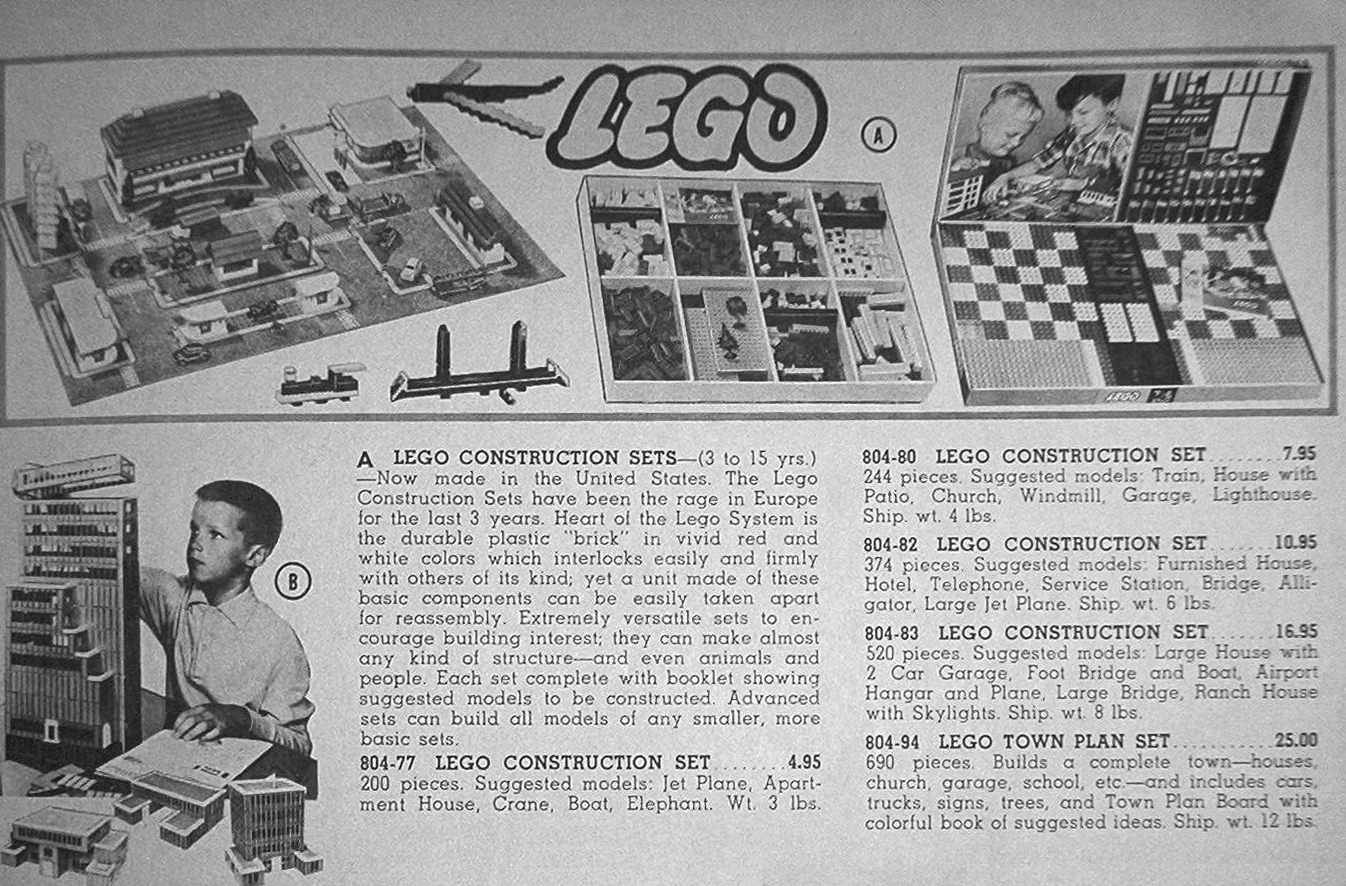
From the above, its very interesting that the box has a ton more parts than mine does, though F.A.O. Schwarz had the highest reported part count of all the sources I could compile. And of course I could simply be missing a ton of pieces, that's always possible.
The home model features prominently in Samsonite advertising beyond 1961, even appearing in a partially assembled state:
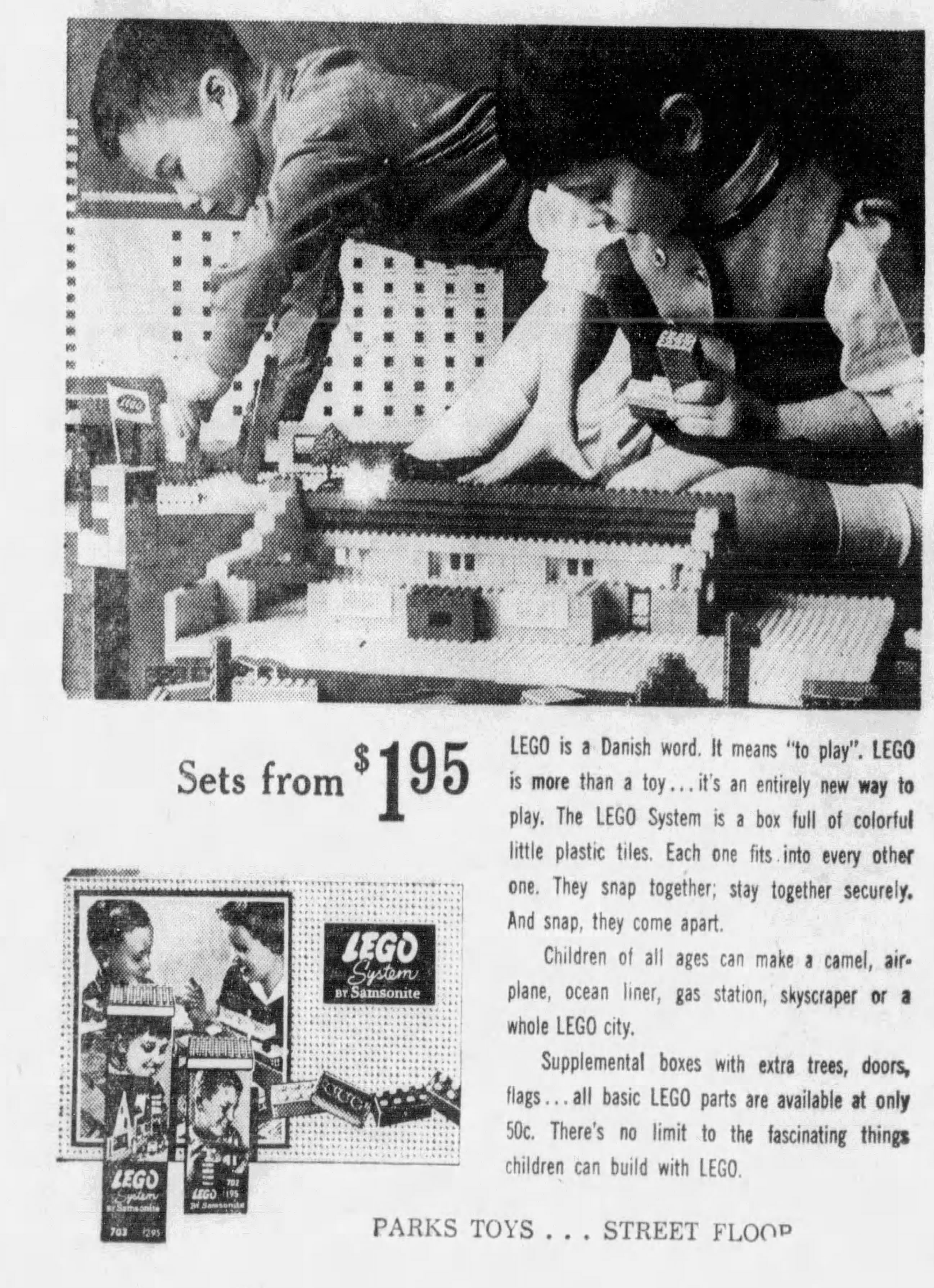
I find it interesting that this version of the model omits the inner walls, but I share this here just as a representation that the house model led a life of its own in the USA.
Regardless, those are all the images we have, so we've gone as far as we can.
LEGO Samsonite always has those quirks.
Suggested Model
Remember how I said that I enjoyed my time with the 725 Town Plan, despite having no instructions? I did not have a fun time this time around.
I'm not sure if it's something due to the yellow parts in particular or what, but it was incredibly difficult to snap some parts in place while others collapsed regardless of how you built the house.
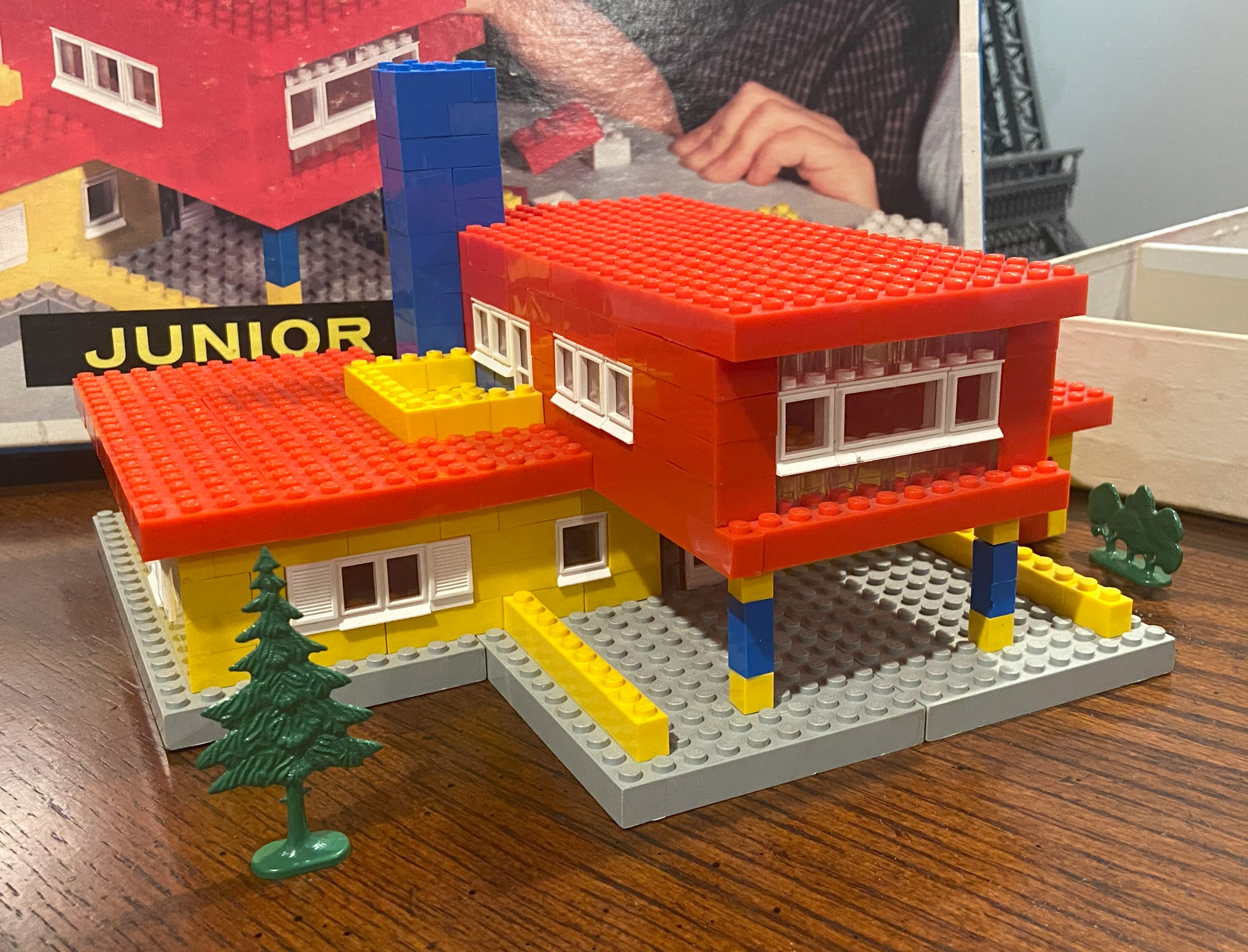
It's a better model in person, better than it appears on any material. Even so, I'm still not very fond of the colors/design.
This model used a brick-built garage as the 1:87 car garages were not introduced to North America until 1964:
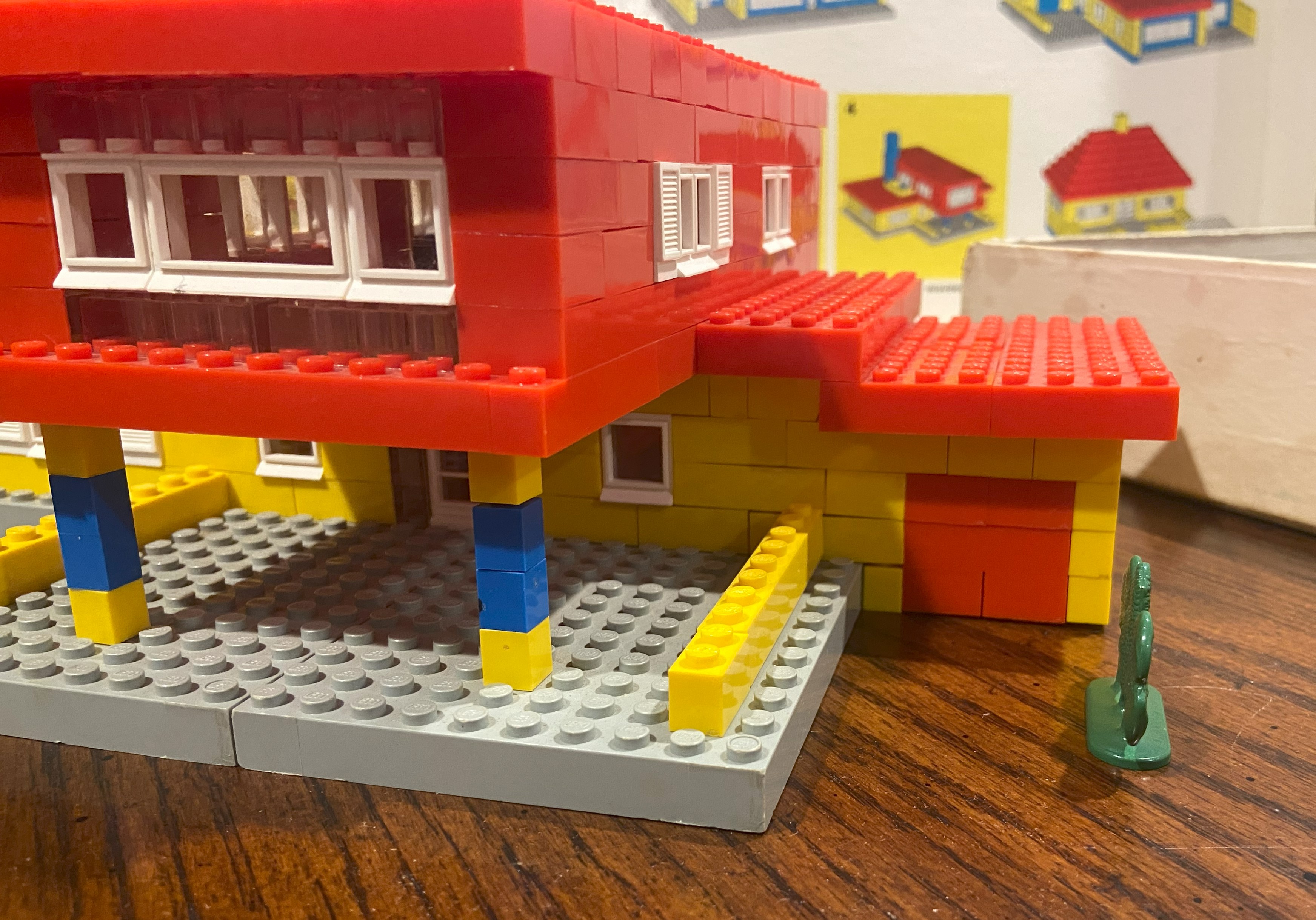
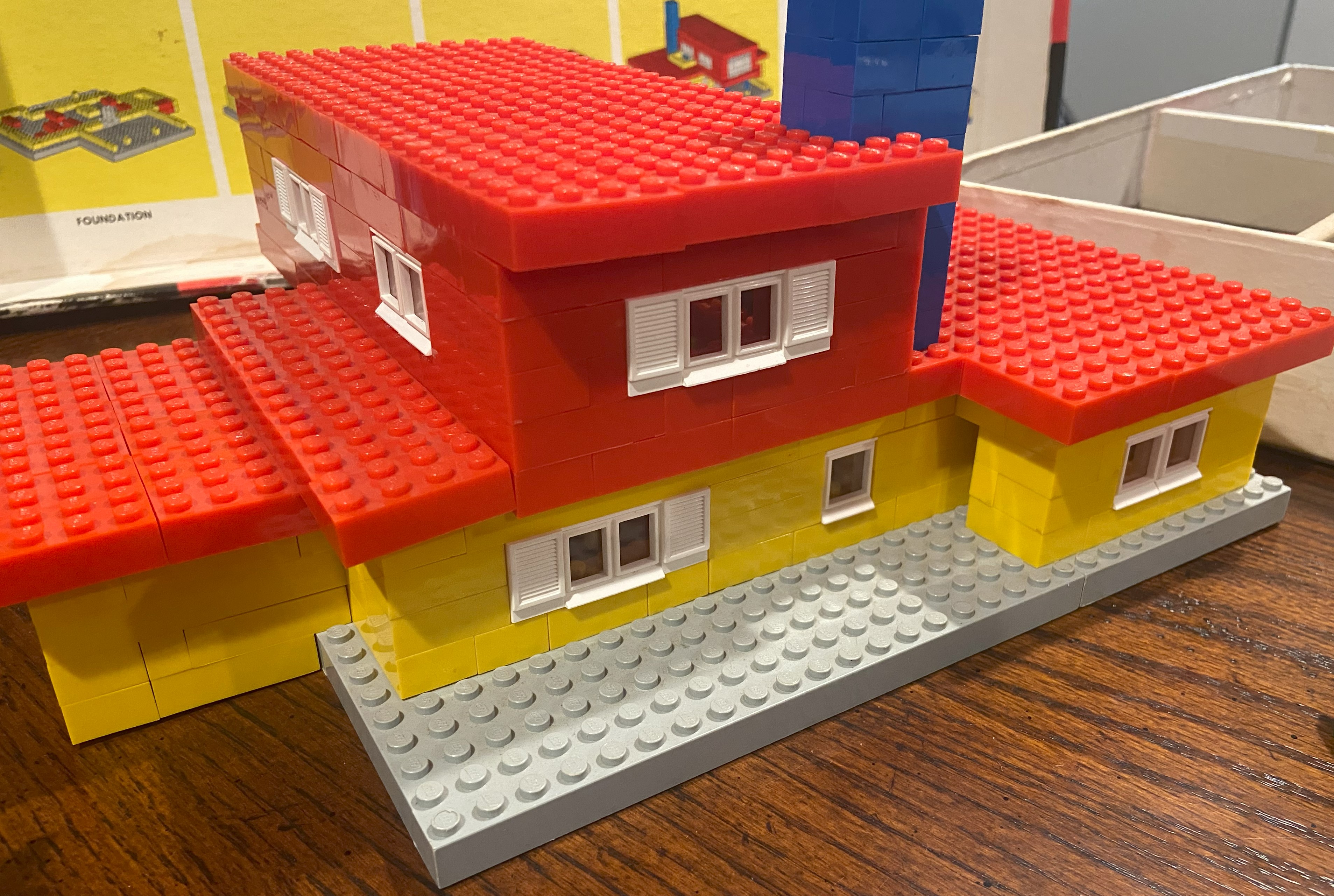
I had to cheat on the back as I was short on parts. The chimney should extend down to the first floor and the back should overhang similar to the front, but I did not have the parts to accomplish that:
The most fragile part of the model was the front. There was no easy way to build this due to the degradation of the cellulose parts. I'd had similar problems with the 725 Town Plan, but as most of the models were small and robust, I could build them upside down and not have to worry about much. That approach didn't work with this set:
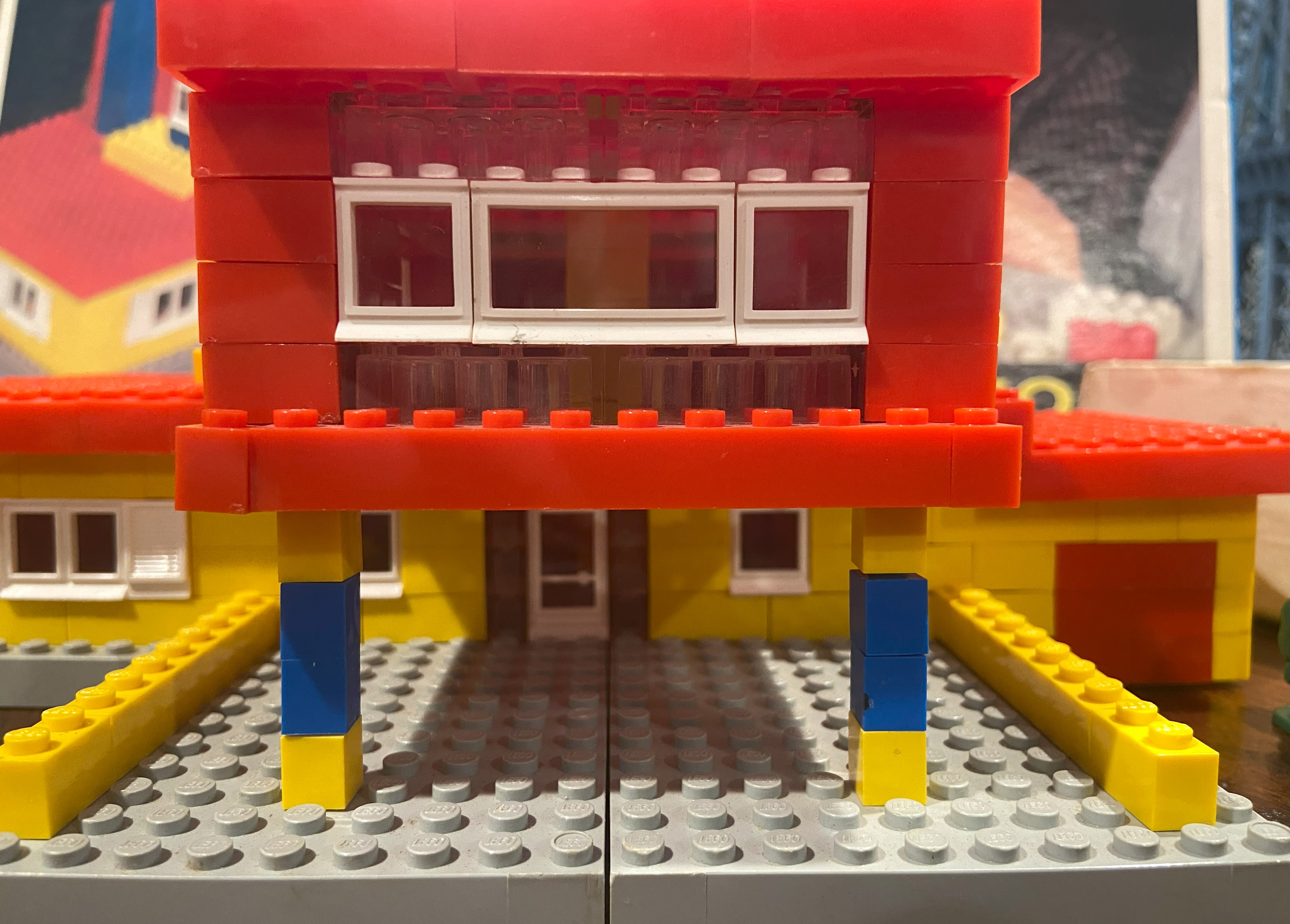
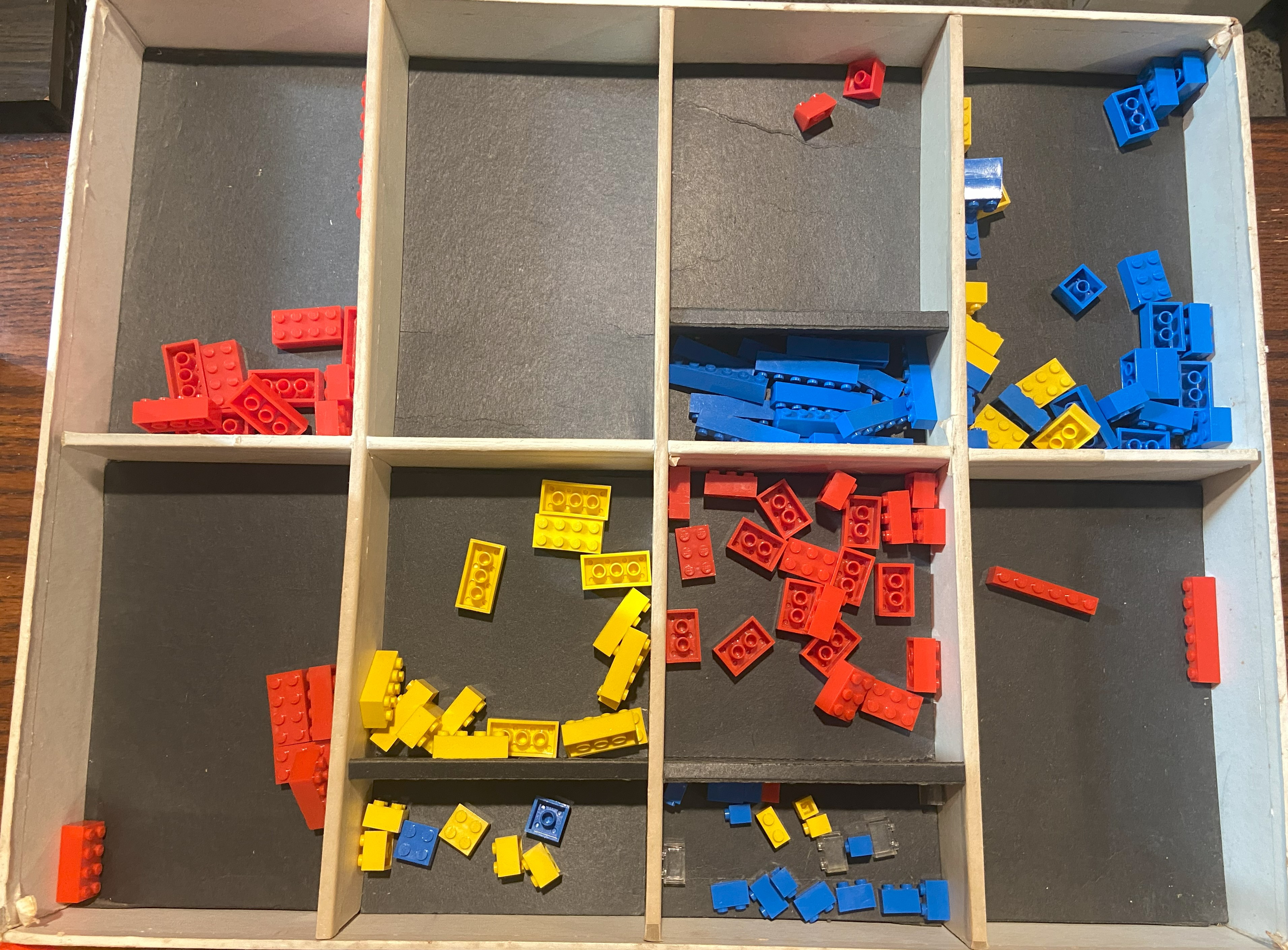
My set didn't have very many parts left over, though again its very likely some parts have gone missing in the last sixty years:
Also worthy of note that I cut myself terribly while trying to take the completed model apart. The edges of these bricks and their clutch power is sometimes unforgiving.
Should I collect this set?
To be fair to the 717, I did enjoy some parts of the build process, wherein I had to think about the model as it is, what I had to work with, and what I can do to complete the model. I think in some regards that was the goal, as following very detailed instructions isn't exactly creative. LEGO was supposed to be the creative toy.
But with the shrinkage of pieces and difficulty to align warped parts properly, it's more frustrating than anything. It's obviously not representative of the original experience, but why else are you collecting something, for it to sit on a shelf?
What's interesting is that I vividly remember being really, really excited to get this set. It took me quite a while, I'm talking several years, as I wanted to make sure I got one in good condition and complete. Paid probably $300 for it after shipping on BrickLink, way too much imo.
But upon arrival, I wasn't impressed with it. It just doesn't scratch that itch like the 725 Town Plan or even a classic 605 Wheel Toy does.
Ultimately, I wouldn't recommend it, at least not in its original form.
The fortunate thing is that most copies you'll find run pretty cheap, below $100 even in box. So if you get a few less-than-ideal copies, you'd be able to build the mockup model with all original pieces and you'd have something that's much, much cooler and has a story to tell.