
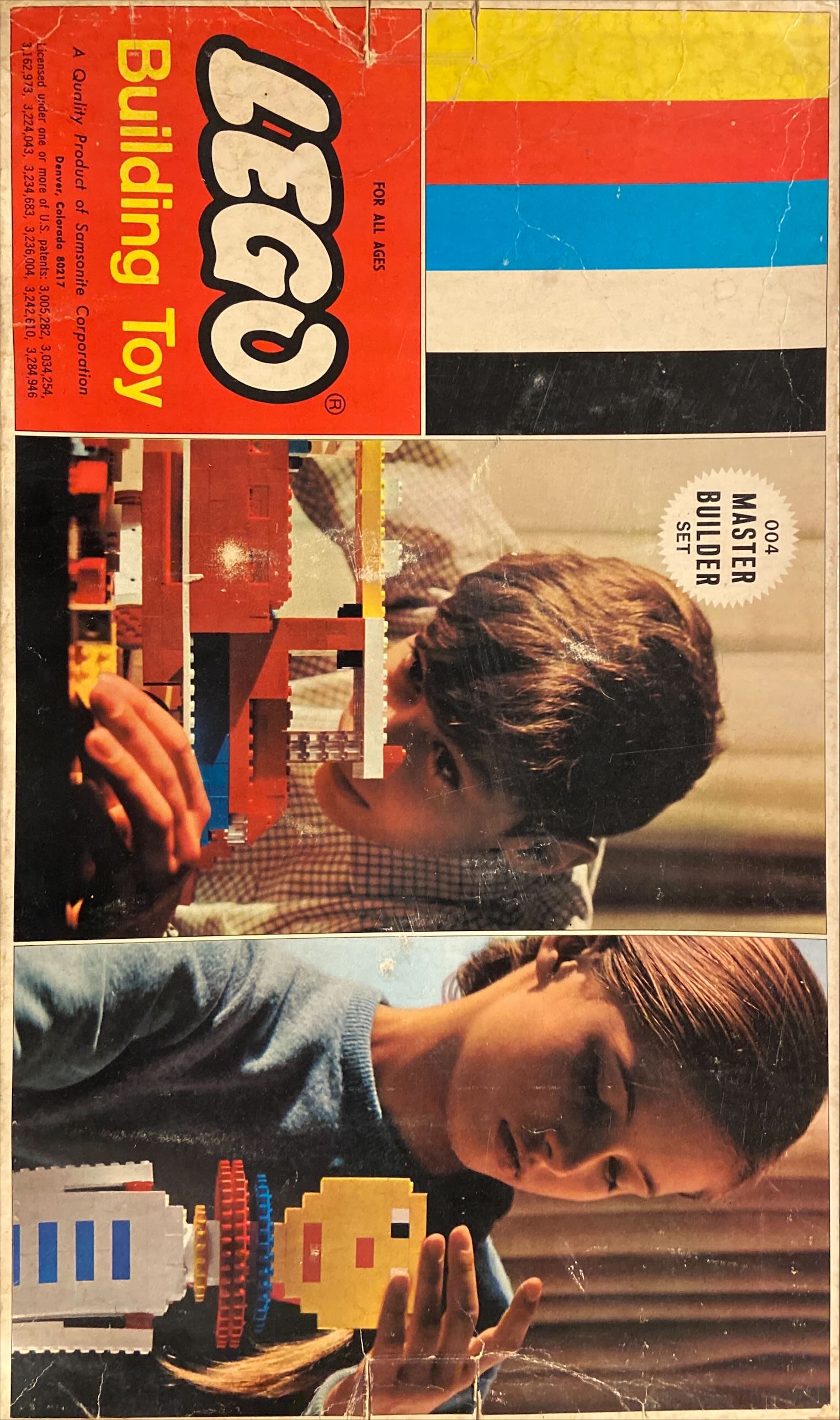
004 Master Builder Set
General Information
The following information has been collected from original newspapers, catalogs, and magazines, some of which are freely available for reference below. The rest can be found in the site’s gallery. No aggregate catalogs (BrickLink, Brickset, etc.) were used.
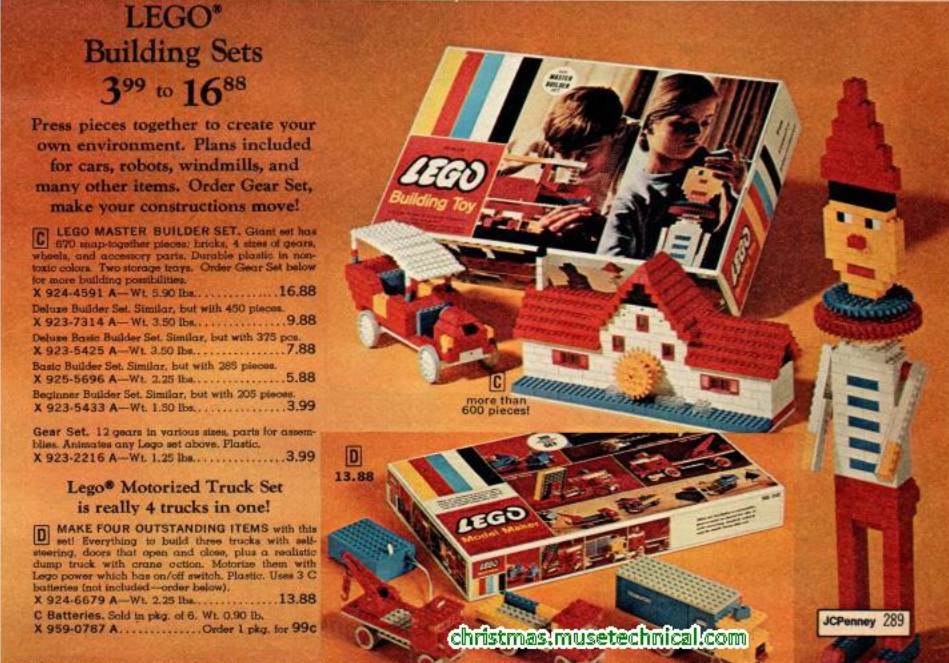
Advertised Part Count(s): 670 pieces, 671 pieces
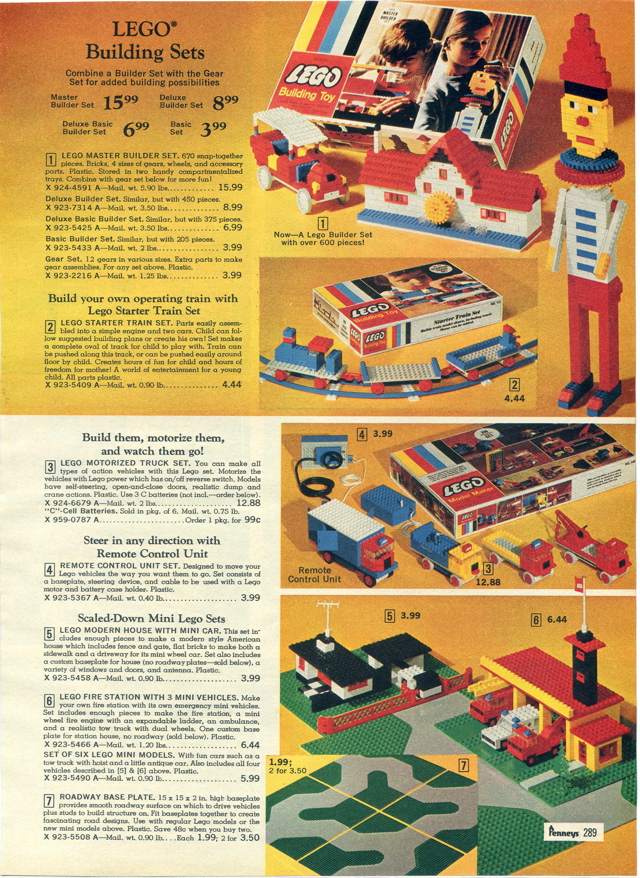
1971 JCPenney Christmas Catalog
1966 Marshall Fields Christmas Catalog
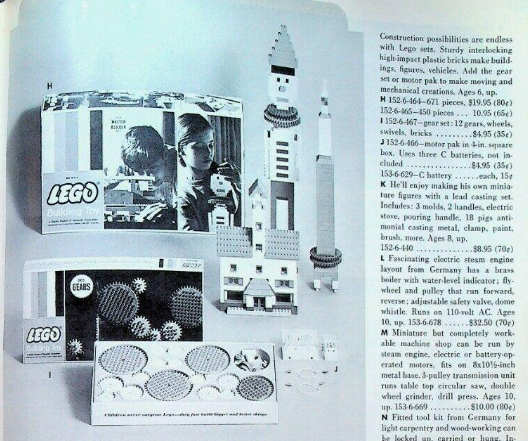
First Year Confirmed Available: 1965 (USA)
I’ve written an extensive article about the 1965 wave in particular.
1970 (Canada)
It seems 1970 was a pivotal year for the Canadian Samsonite 004, as the 004 first appears then in 1970 newspapers and catalogs. The set may have had an earlier release as several 1970 appearances are on sale (and there are a lot of 1970 appearances), but no source pre-1970 is currently available.
Most Likely Retirement Date: 1971 (USA)
Makes its final USA appearance in 1971 Marshall Fields and JCPenney catalogs. All Samsonite sets stopped production in 1971.
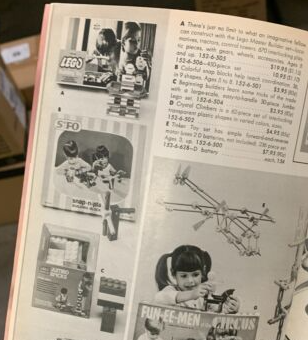
1972 (Canada): Makes its final appearance in the 1972 Canadian catalog.
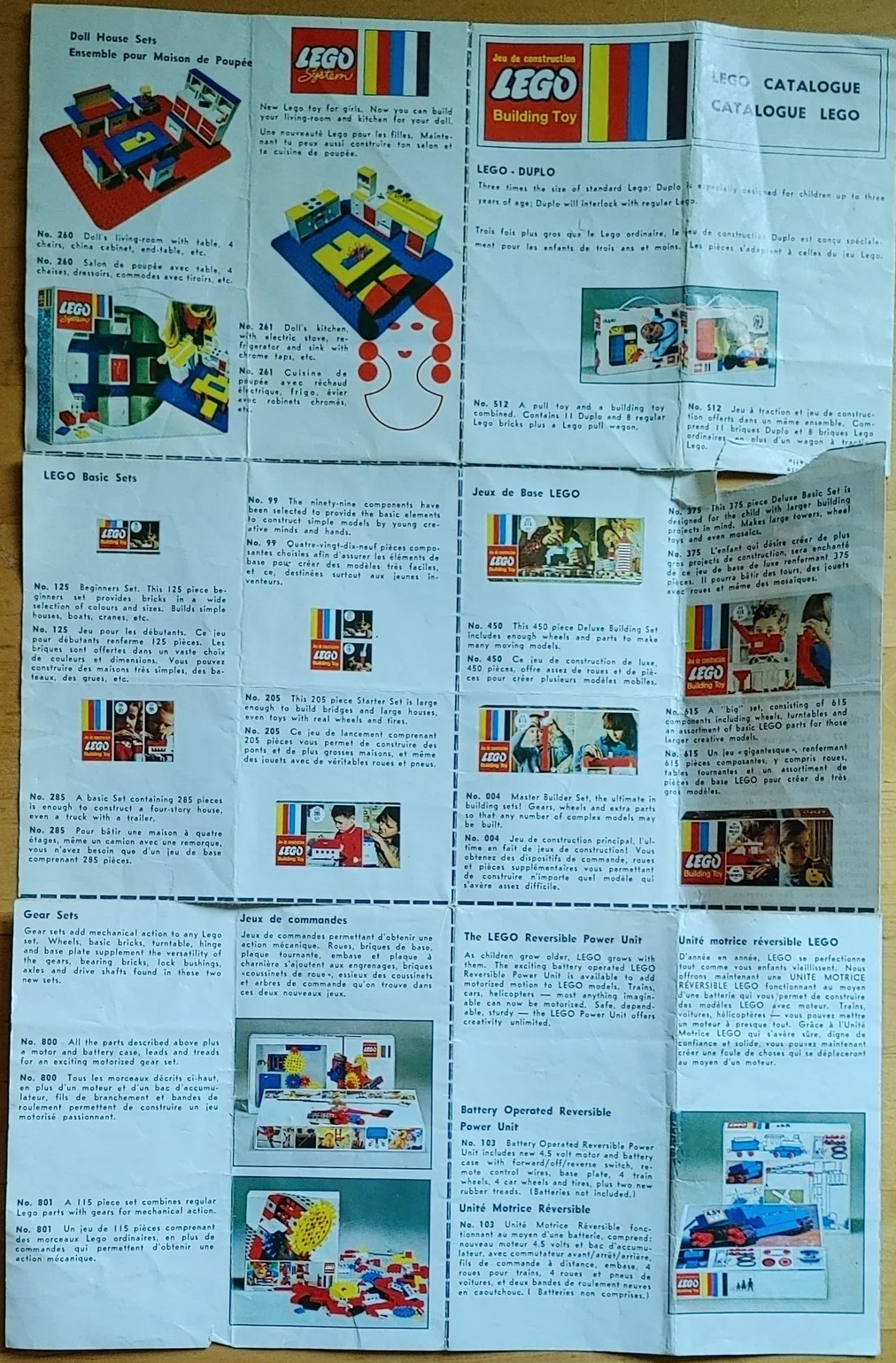
Last Year Seen Available: 1972
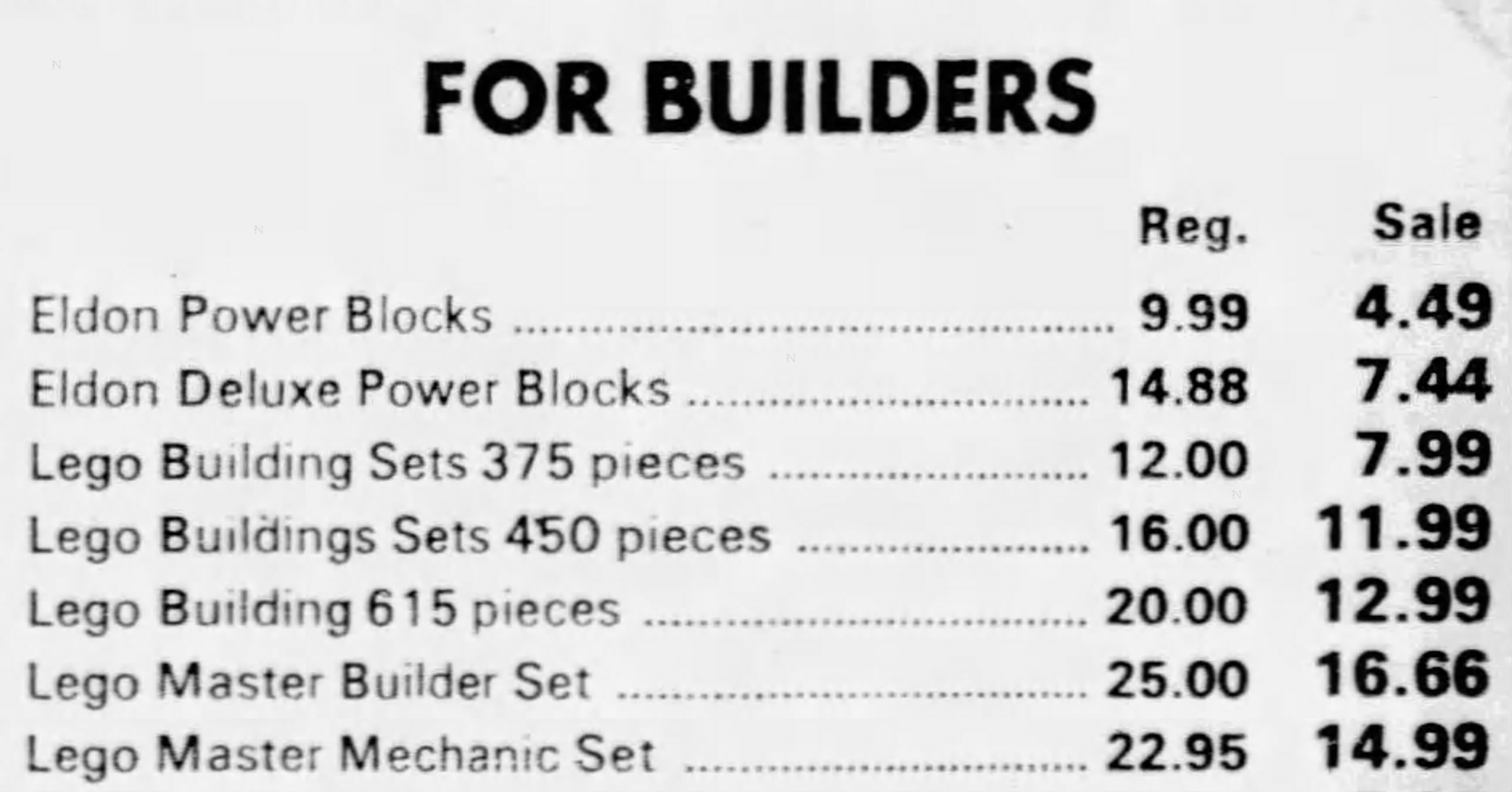
Anchorage Times, November 9th, 1972
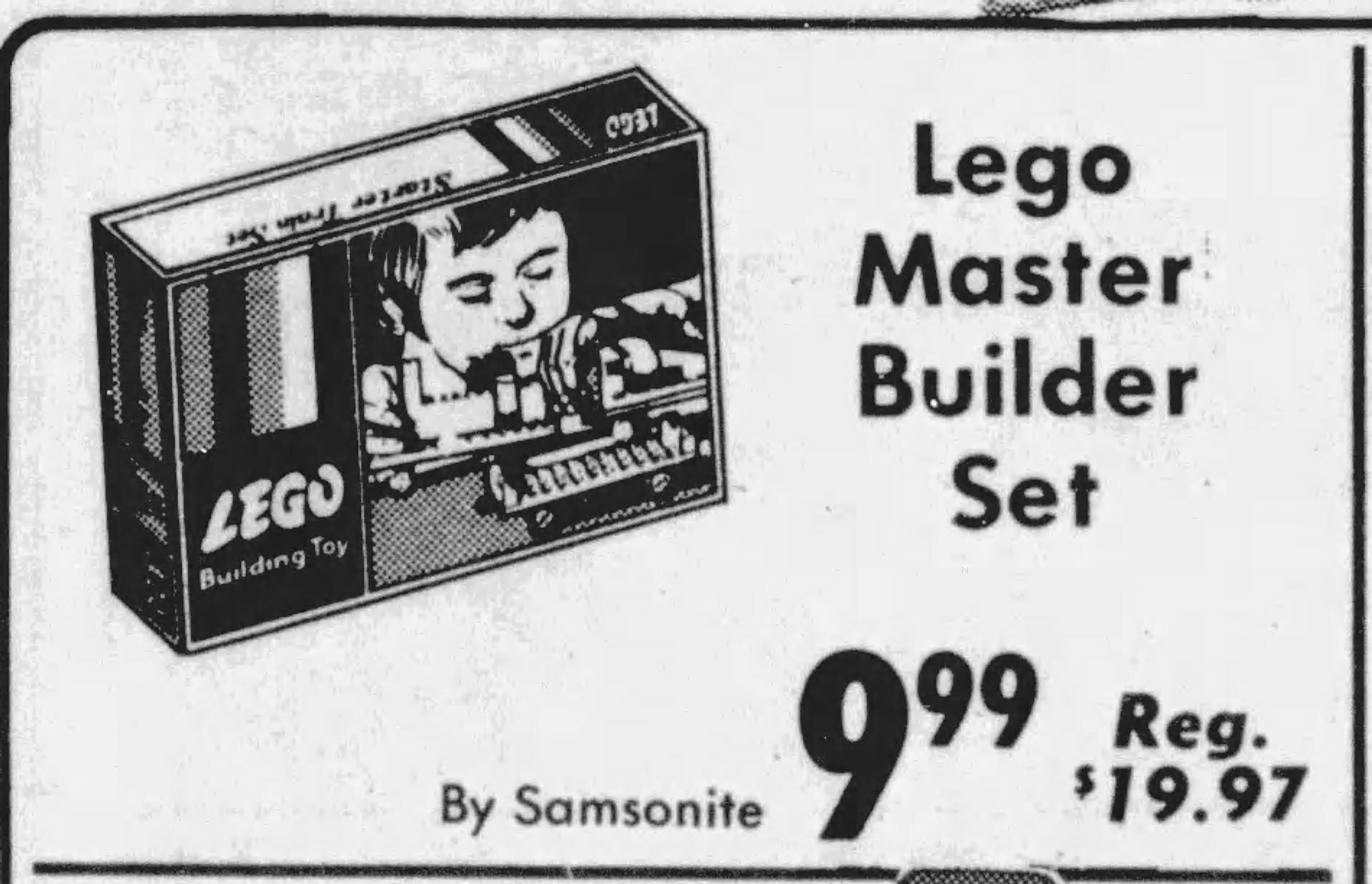
Aliases: Master Builder Set
Retail Price(s): $19.95 (USA)
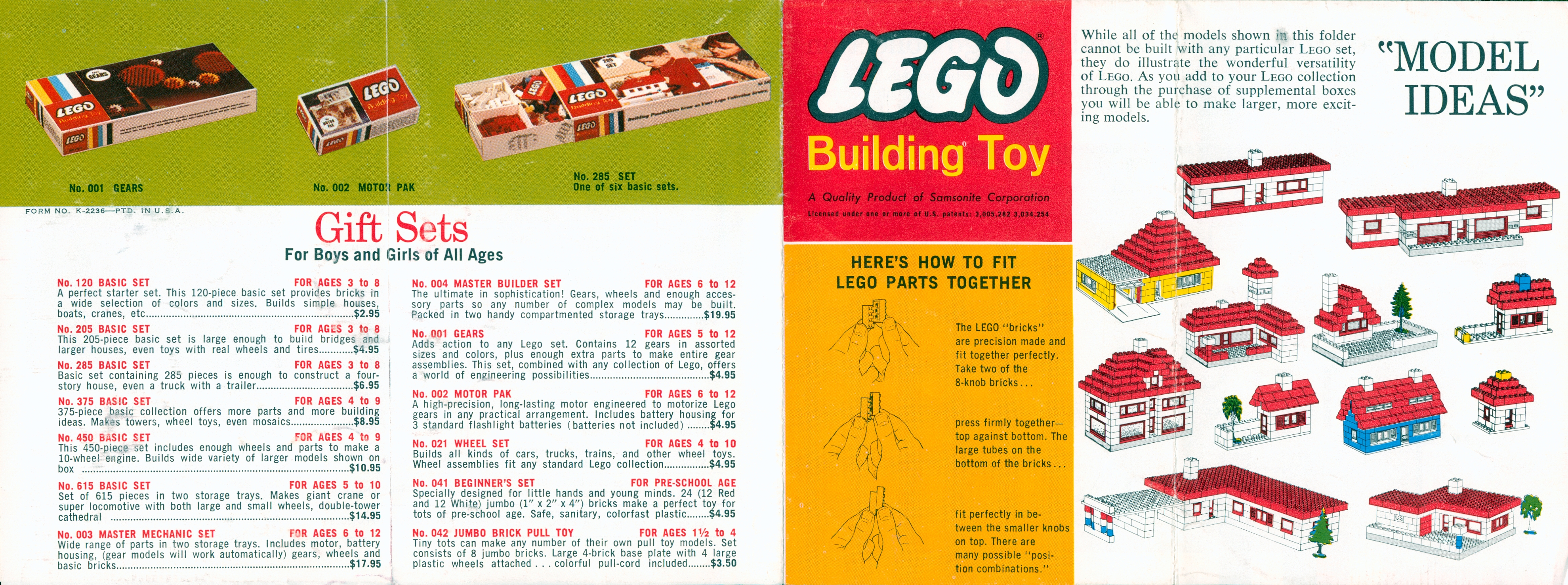
Discounted Example(s): $15.99 (1970), $9.99 (1972)
Rarity Score (Rarity Index): 2/7
Known Box/Packing Variants
As the 004 was produced continuously from 1965 into the 1970s in two countries, the set has many currently known box variants.
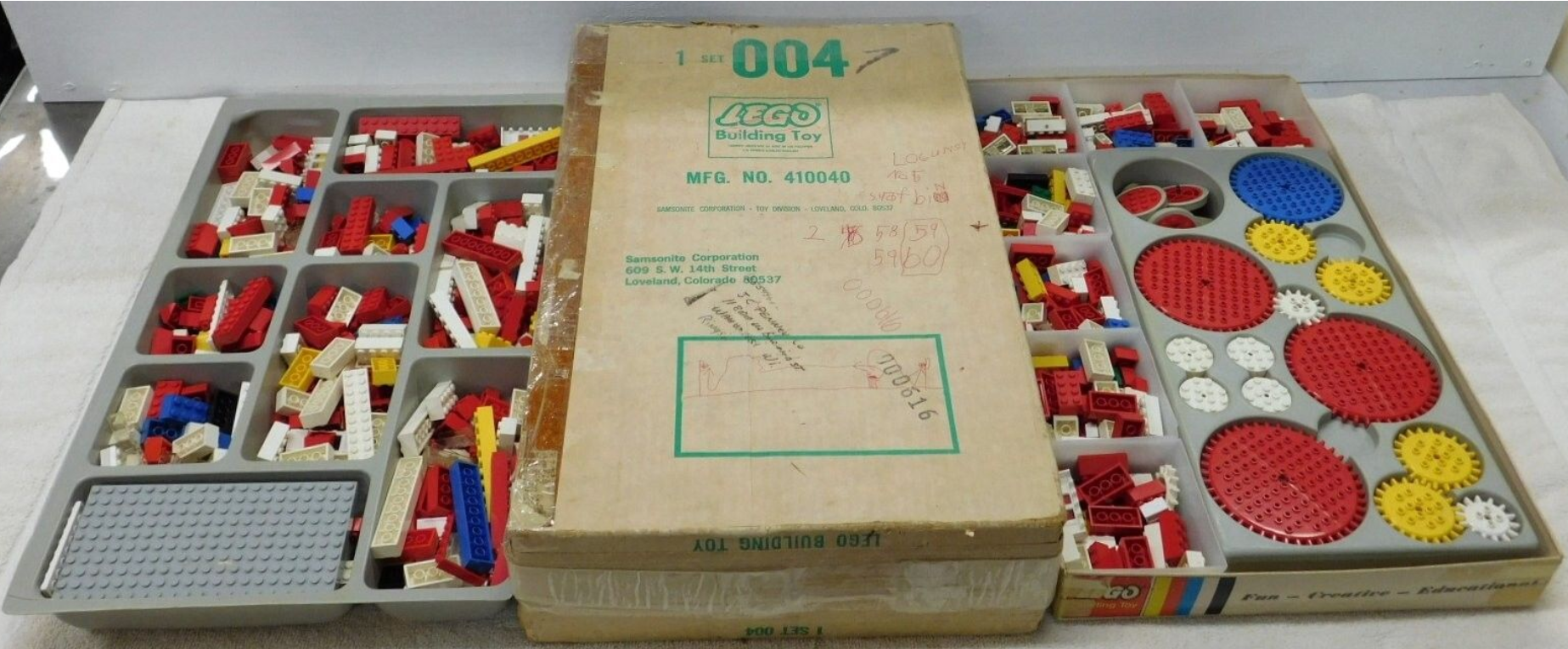
The most obvious is the brown mailer box. There are at least two versions of that for Sears (which should be Mfg. no. 460041) and JCPenney (Mfg. no. 410040). Shown below is the JCPenney version:
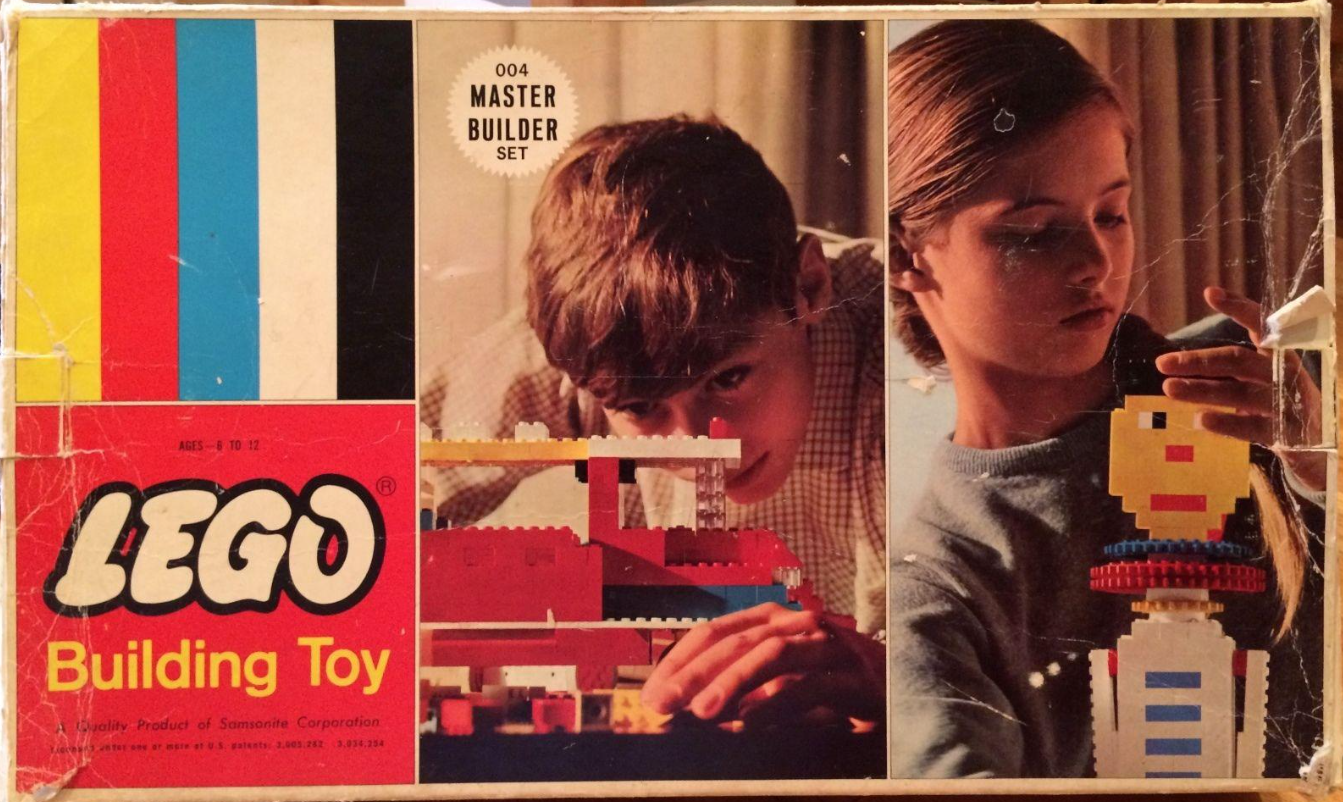
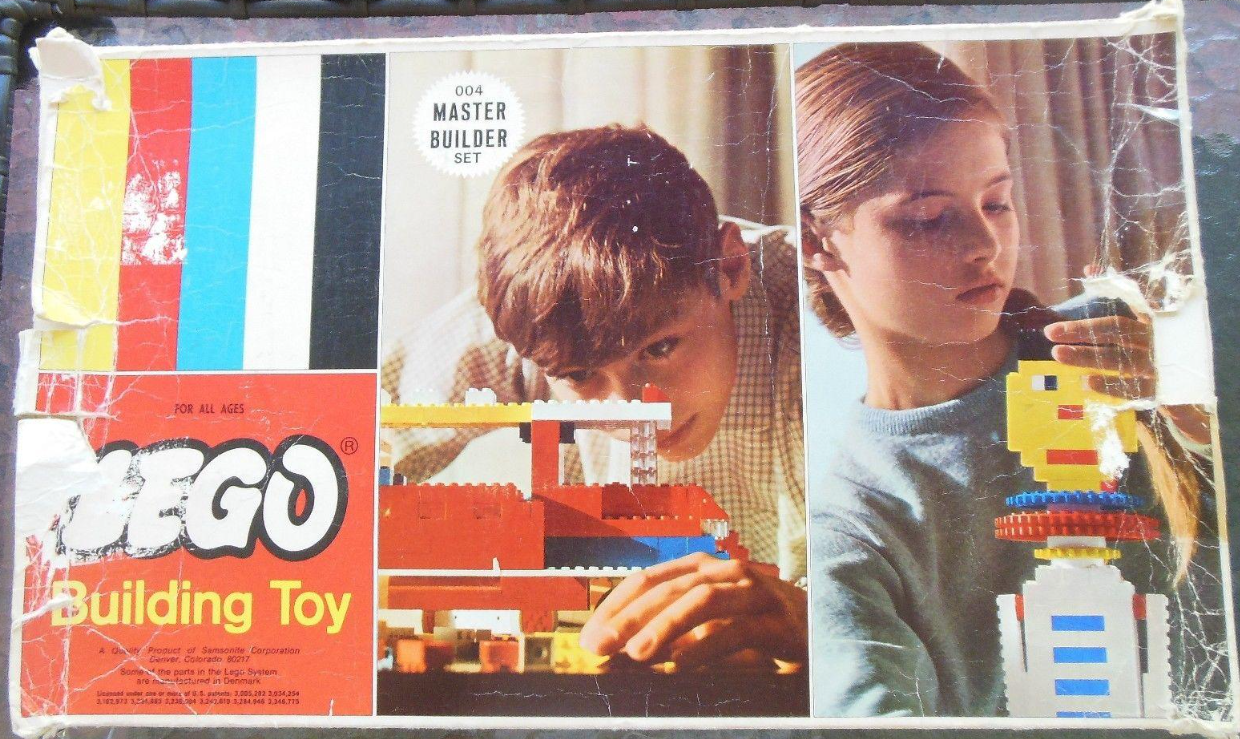
There are also at least four versions of the USA colorful box.
The earliest will have two patents and "AGES 6 – 12"(1965-1966).
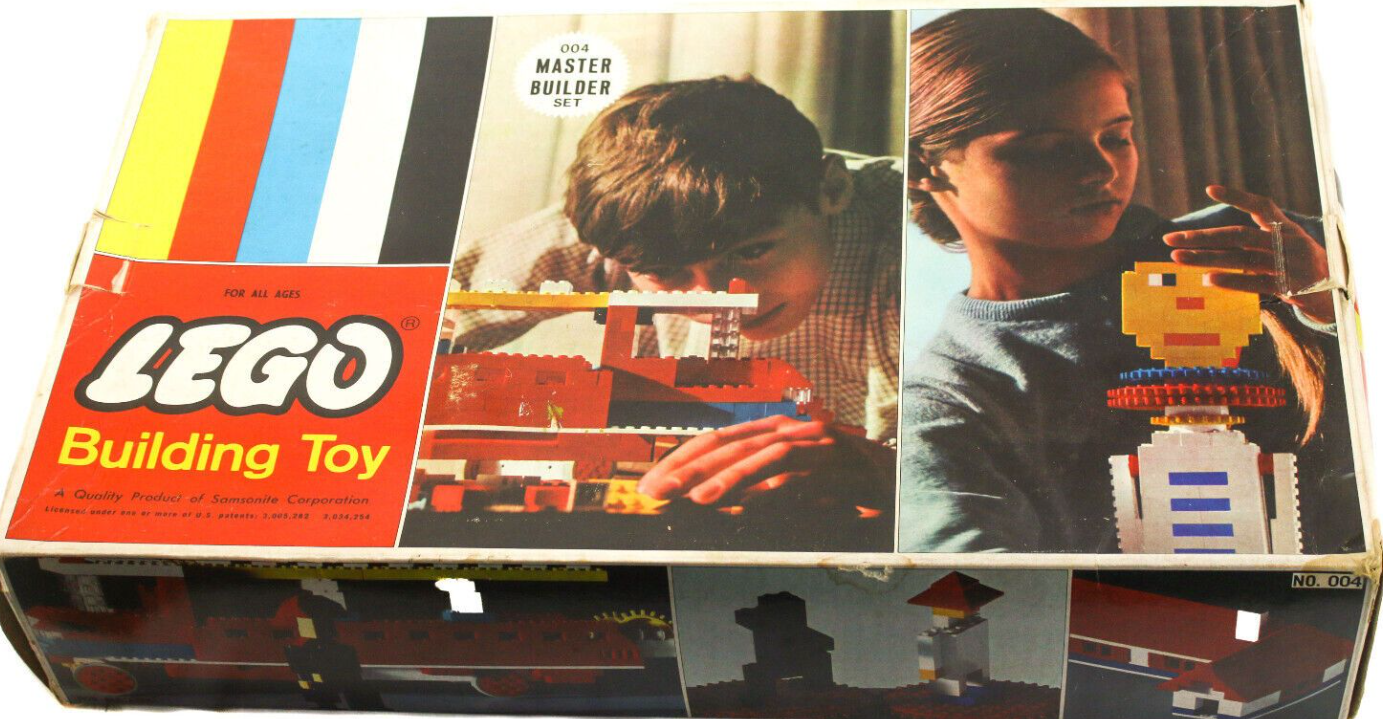
The second has two patents and "FOR ALL AGES"(~1967-1968):
The third has eight patents and "FOR ALL AGES"(~1968-1969).
Then for ~1970-1971 it will have eight patents, "FOR ALL AGES", and "Some parts...manufactured in Denmark" printed on the front. 1970 examples will have a "Some parts...manufactured in Denmark" sticker if it does not have the disclaimer printed directly on the box.
The inner containers also changed. Generally, the single piece gray tray/paper containers began appearing around 1969-70, though this set has a theorized variant that is discussed in Unidentifiable Sets/Variants.
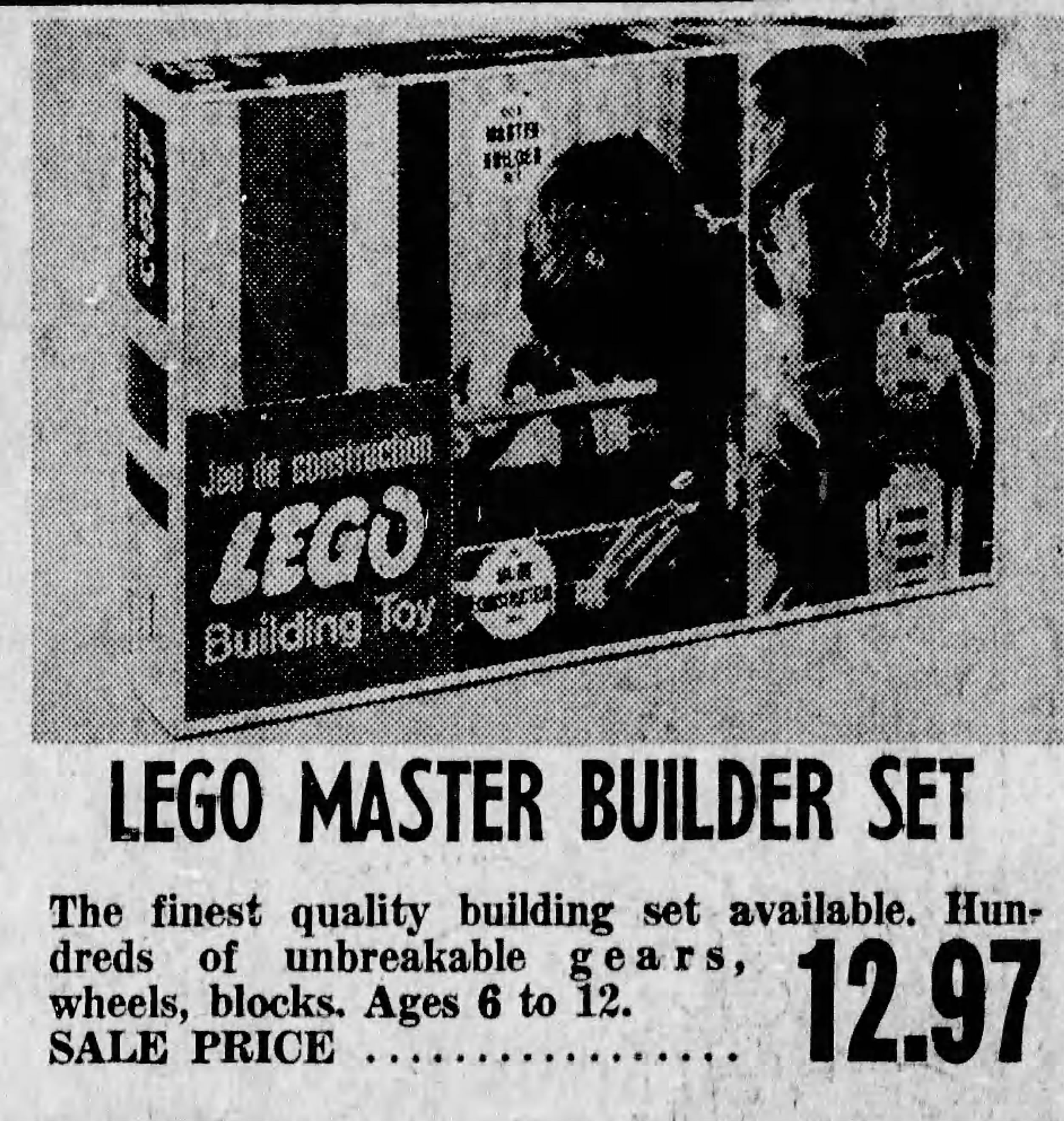
There also was at least one Canadian variant:
Box/Overview
The 004 Master Builder was the largest set among the fifteen new sets released in 1965. That is not to say it was the largest set Samsonite had made up to that point, as examples such as the 725 Town Plan or the education sets existed beforehand.
Regardless, the 004 came in a massive double-stacked box, the size of two 450 Basic Set boxes. The box shown here is a later version, but they both share most of the same details:
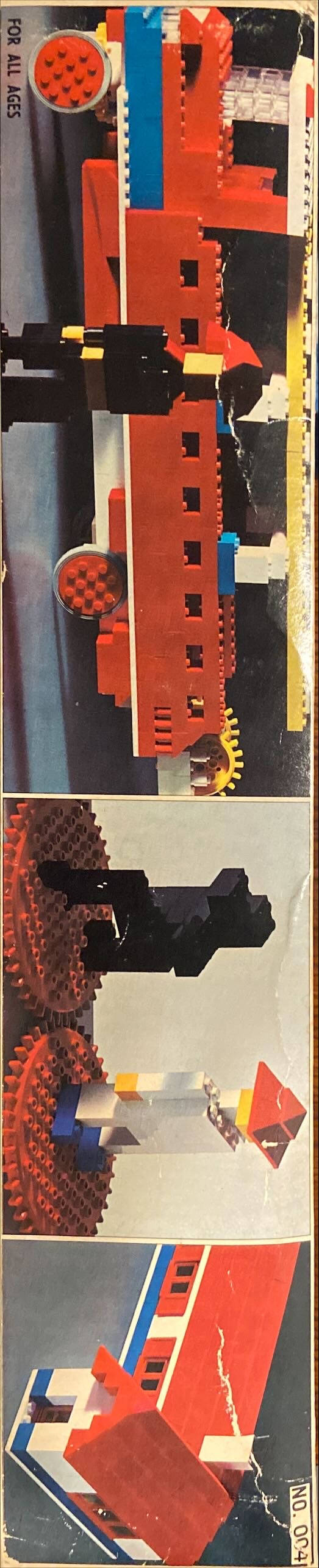
The side of my box has also been left in the sun for too long, hence the washed out colors in this next image:


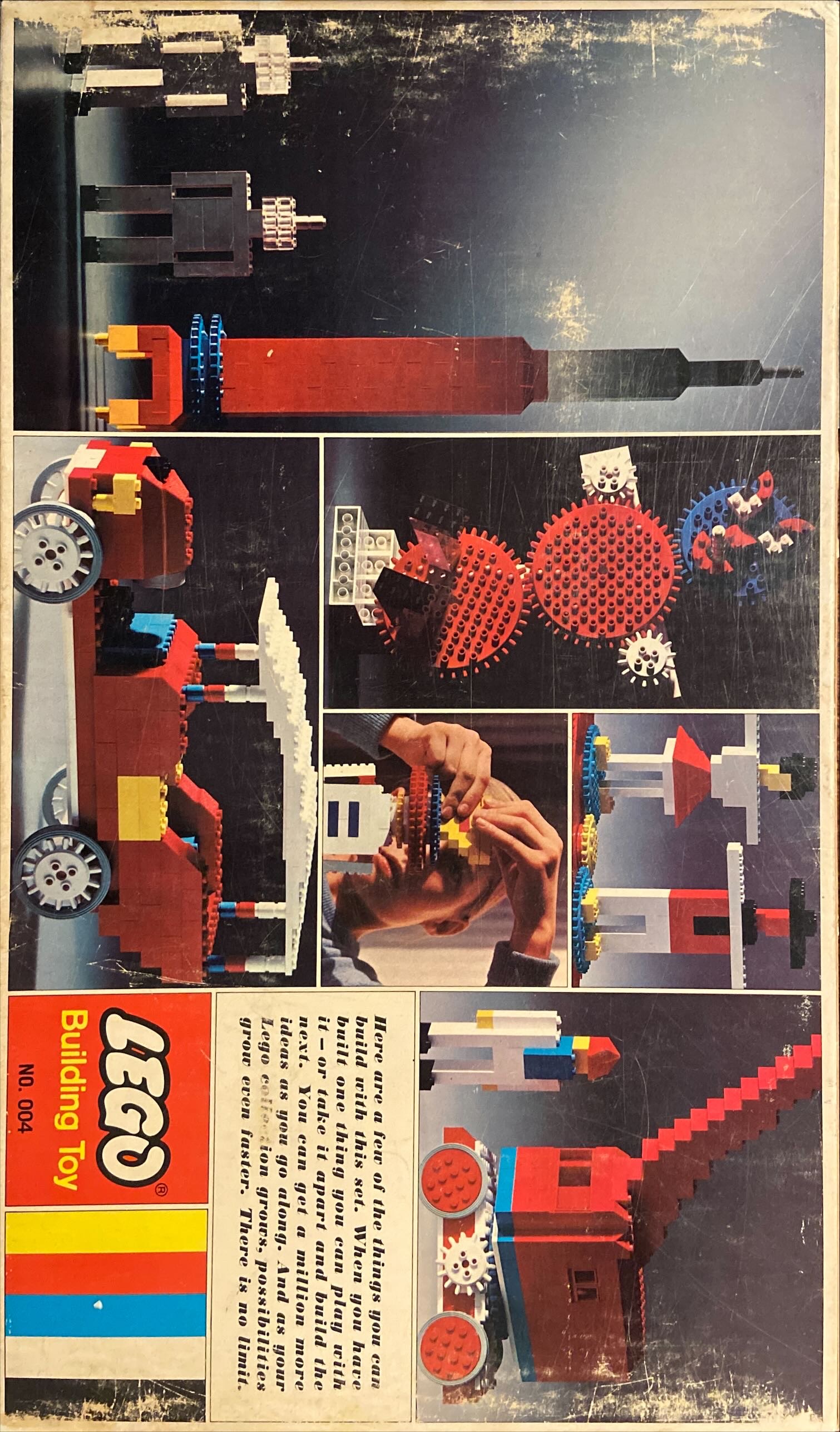
As usual with 1965 sets, many unique models are featured on the back of the box. The most fascinating of which for me is the car, what with its unique (and probably illegal) wheels:
In 1968, the 004's box was reused in the production of the 704 Master Discovery Set, the Macy's exclusive 671-piece set (which I've theorized is just a 704's assortment in an 004's box, just without the 33 bonus accessories, so it would be nearly impossible to tell from a regular 004) and possibly the mystery 550 set discussed in Unidentifiable Sets/Variants. There is no difference between the two boxes besides the set name/number.
Contents
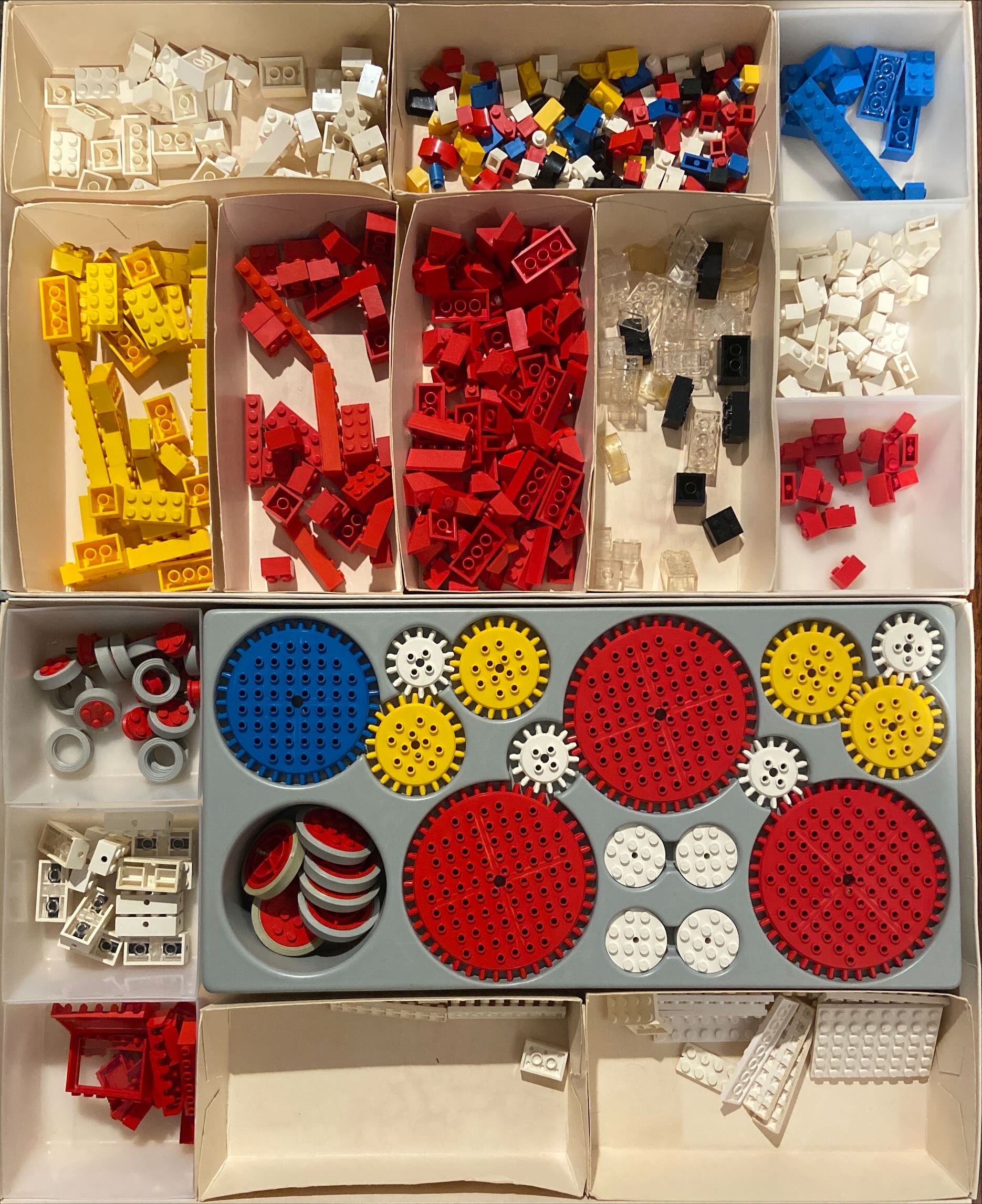
The set included a general assortment of parts typical of 1965, along with many roof and round bricks.
Important of note is that the assortment shown below is not only from a later set, but also that the vast majority of 004s do not have this many large trays. Most will have 3-4 maximum. Which makes me weary that this is even a good example of an 004, as I've only ever seen one other like it.
Instead, here's a better example of what you typically see:
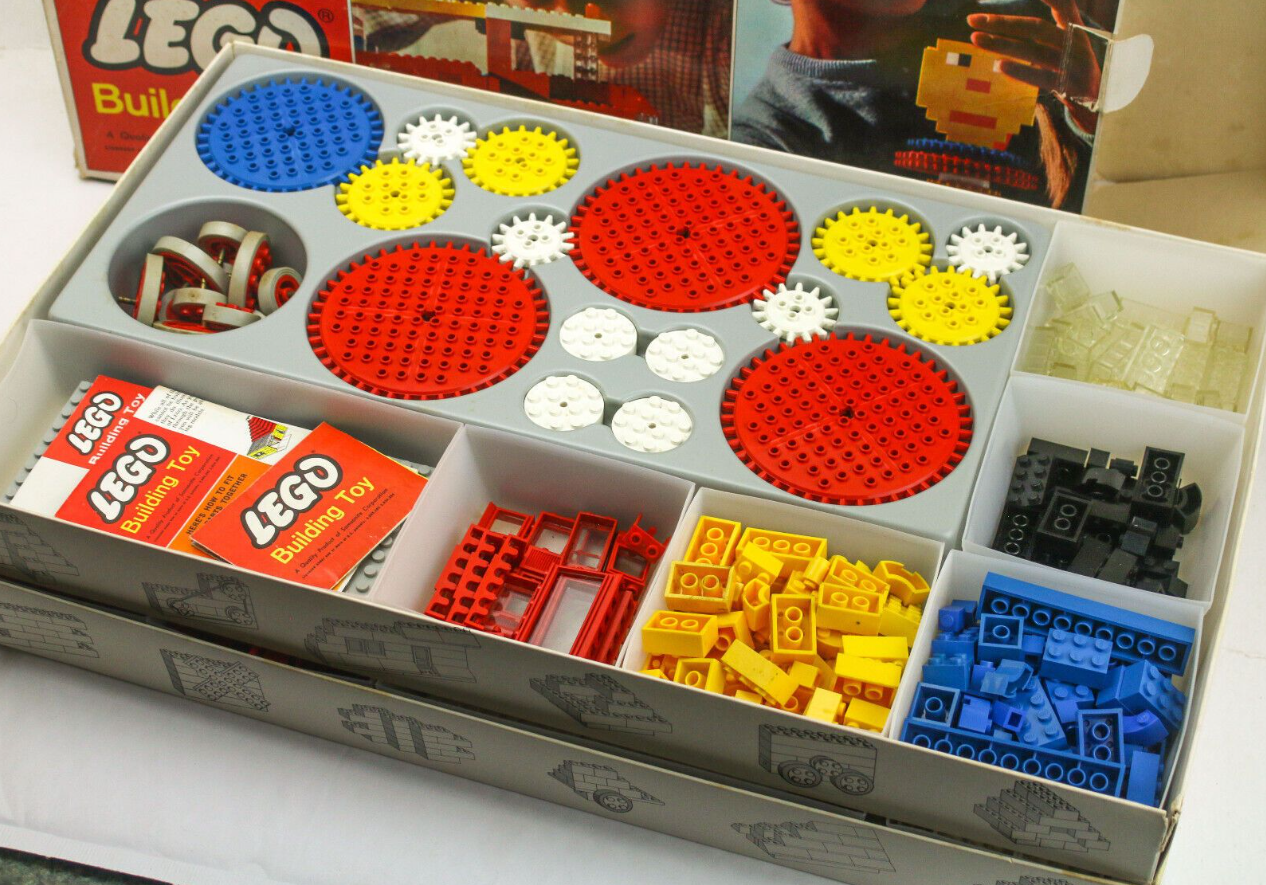
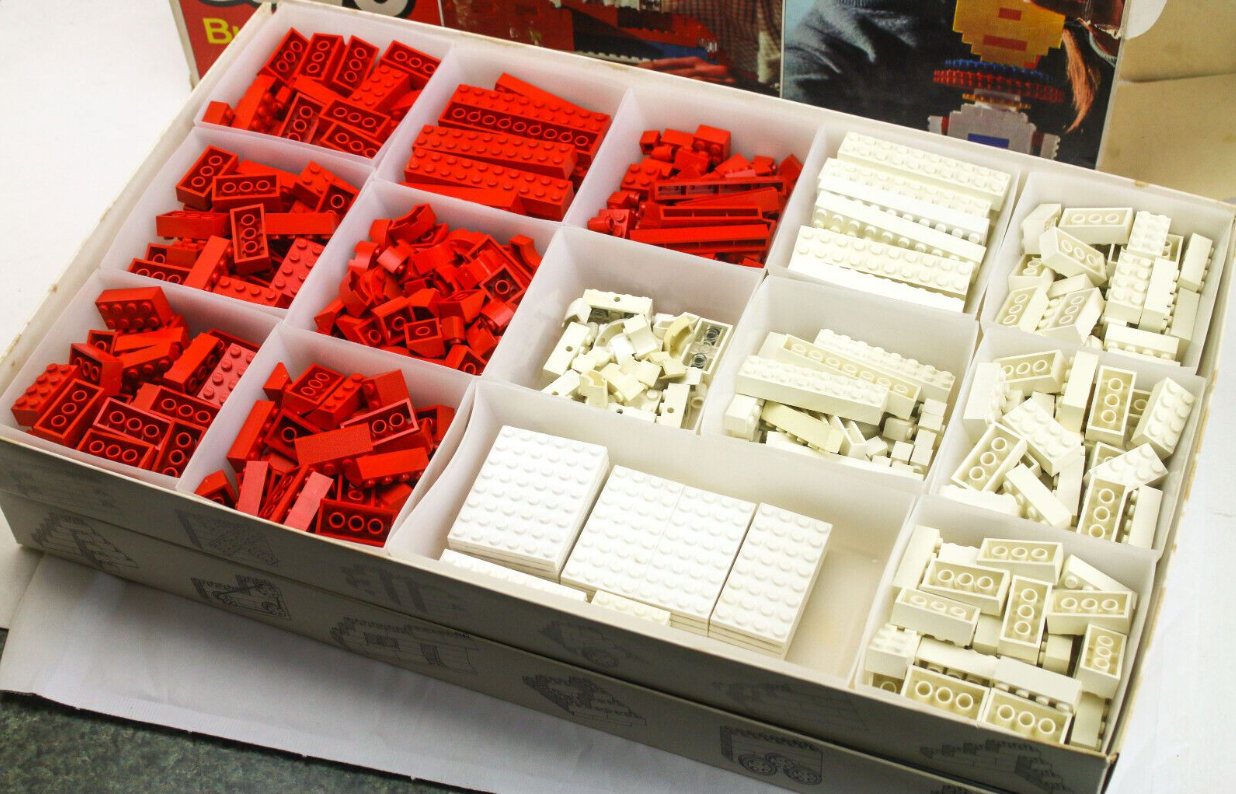
While the piece count for sets became a lot more consistent after 1965 (as set numbers were now based on piece counts), that does not imply the same counts of specific parts were used across all copies across all six years of production.