605 & 1605 Wheel Toy
General Information
The following information has been collected from original newspapers, catalogs, and magazines, some of which are freely available for reference below. The rest can be found in the site’s gallery. No aggregate catalogs (BrickLink, Brickset, etc.) were used.
Instructions
Advertised Part Count(s): 196 pieces, 189 pieces, 190 pieces, 196 pieces (1966+)
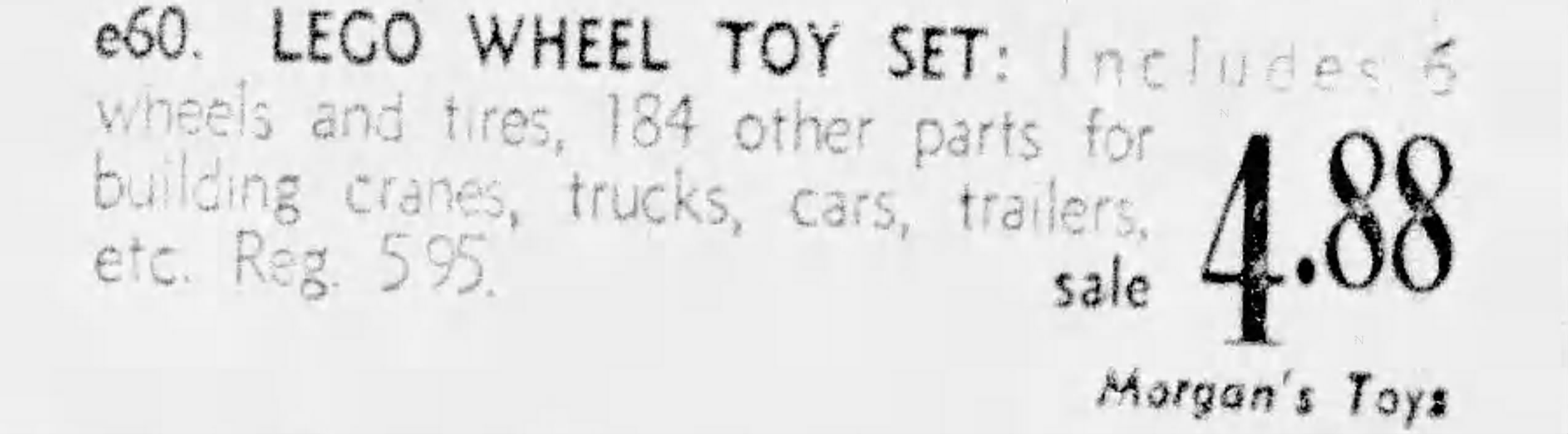
The Toronto Star, November 16th, 1966
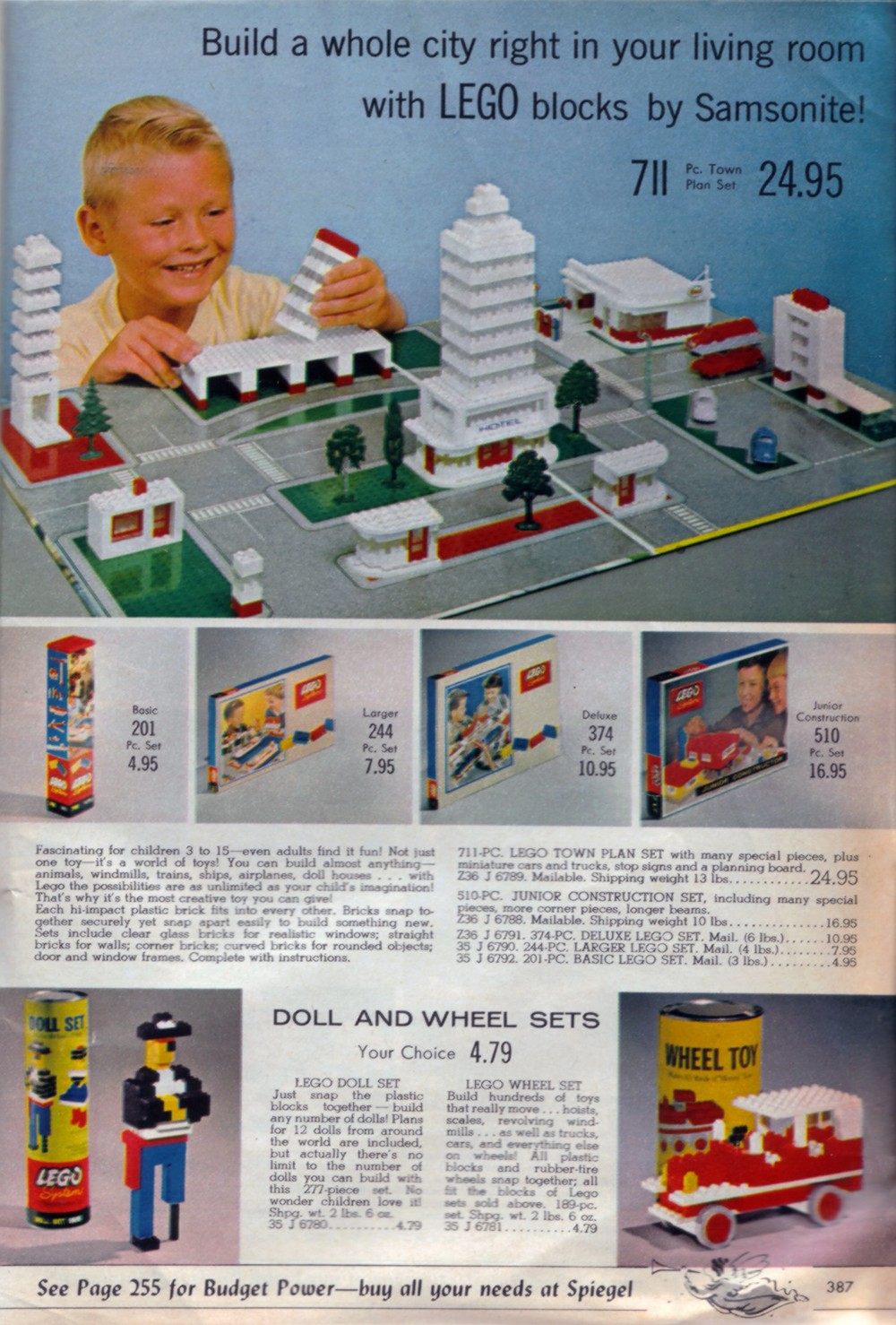
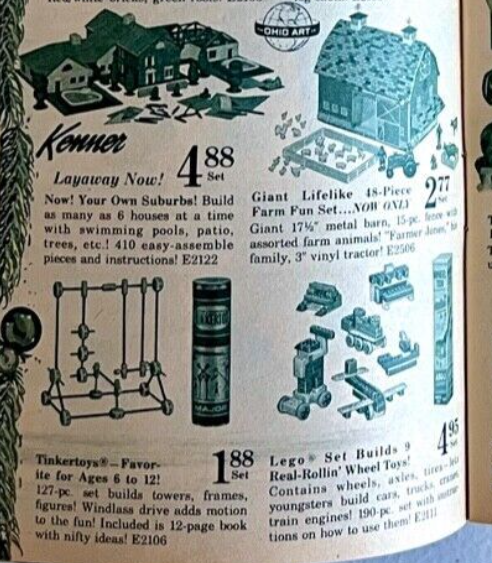
1963 Spiegel Christmas Catalog
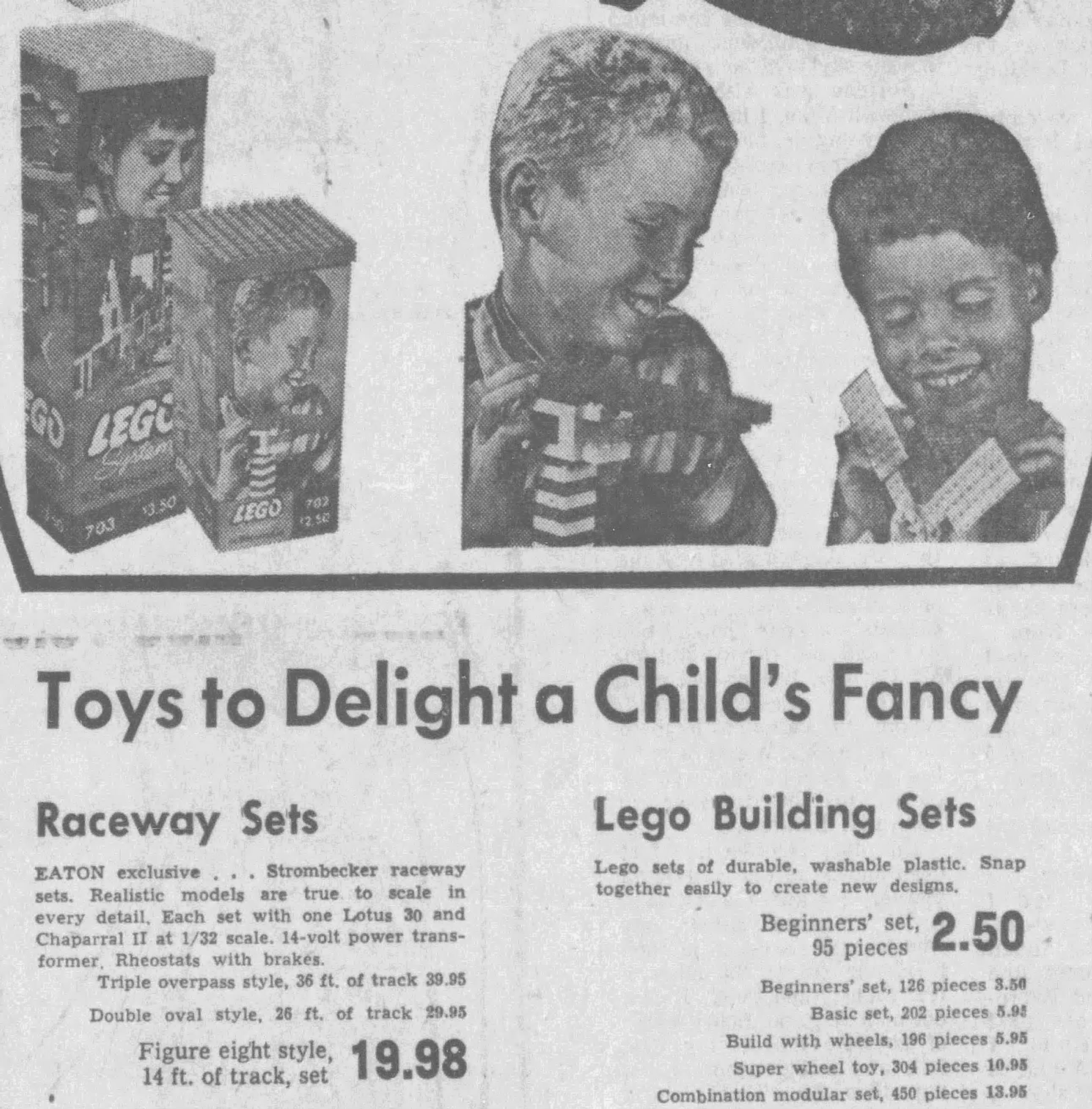
Star Phoenix, November 10th, 1966
First Year Confirmed Available: 1963 (USA & Canada)
1963 Spiegel Christmas Catalog
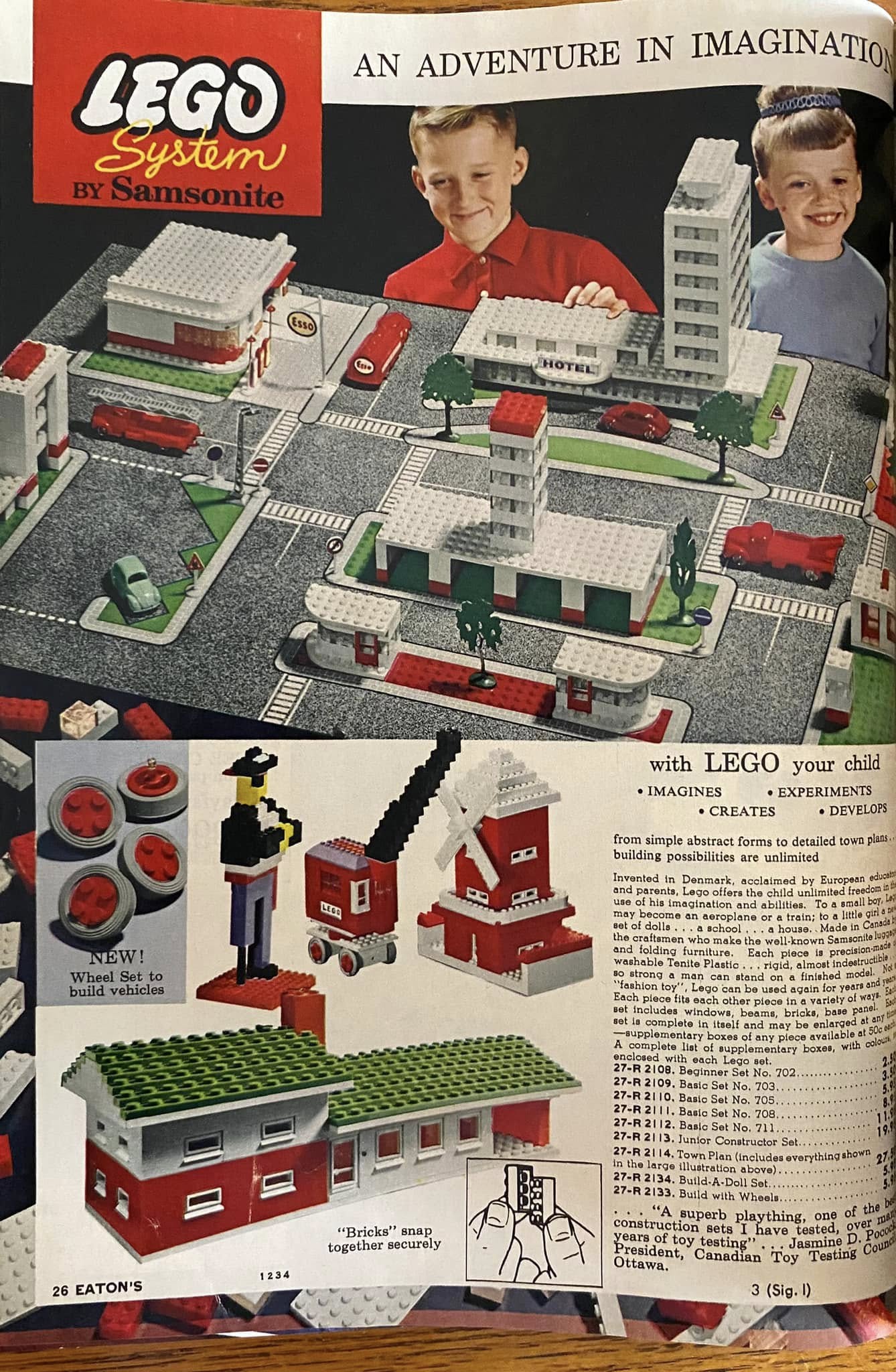
1963 Eaton's Christmas Catalog
1605 (Canister Variant) Exclusive to:
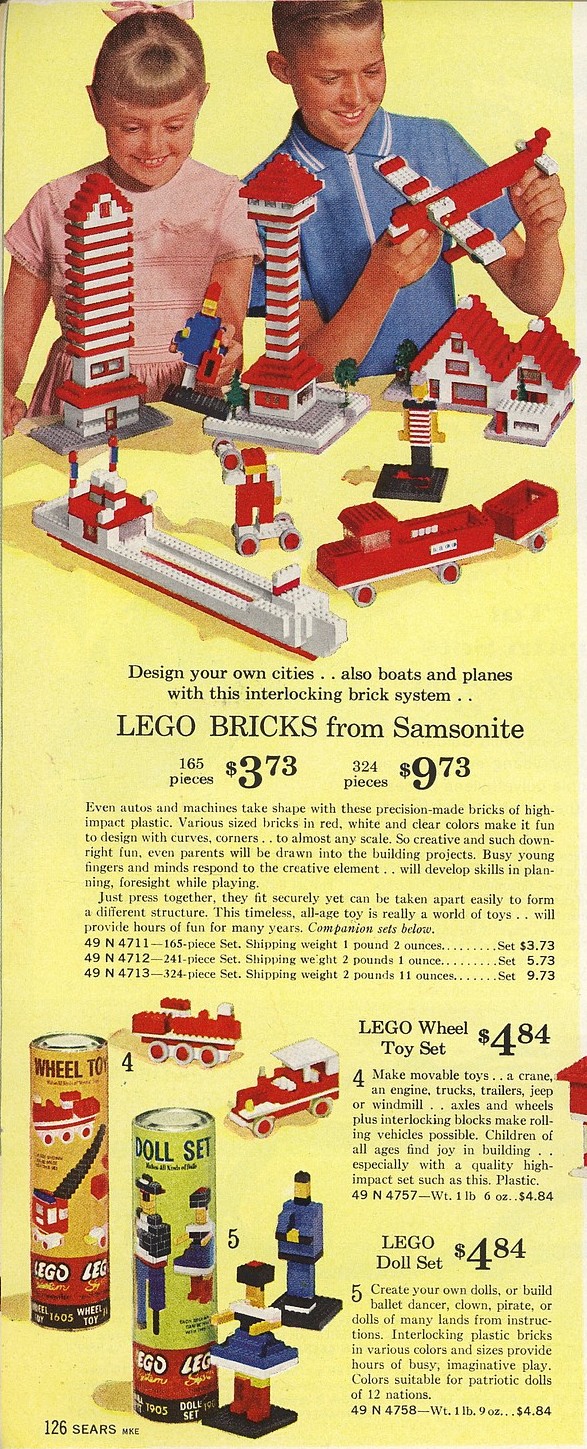
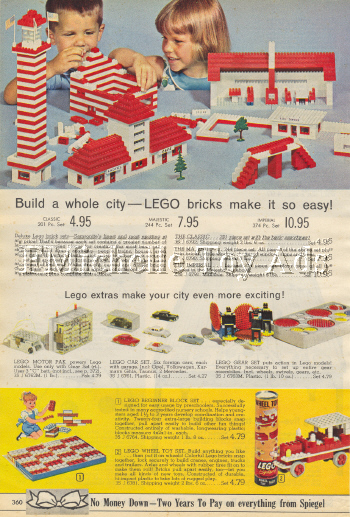
USA Only
Most Likely Retirement Date:
1965 (USA) as the 021 Wheel Set released in late 1965 as the 605's direct successor. This retirement includes the 1605 canister variant.
1970 (Canada) as it consistently appears in Canadian newspapers and Eaton's catalogs into 1970. Yes, really 1970. Samsonite of Canada never released the 021 Wheel Set, and so the 605 Wheel Toy continued production in Canada. It is omitted from the 1971 Eaton's catalog.
1970 Eaton's Christmas Catalog
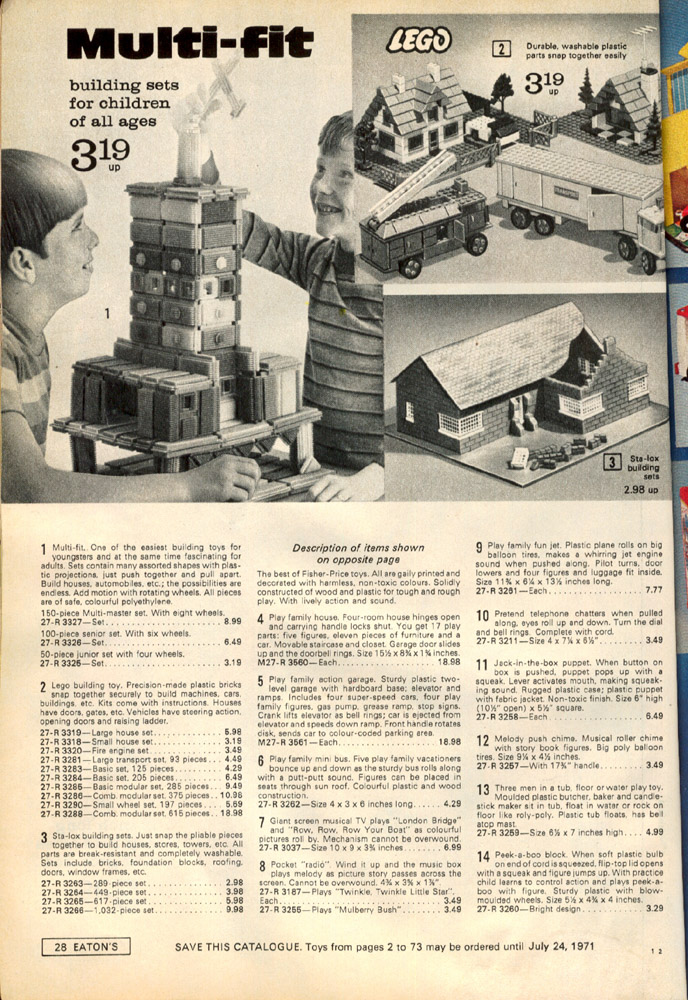
The Province, November 24th, 1970
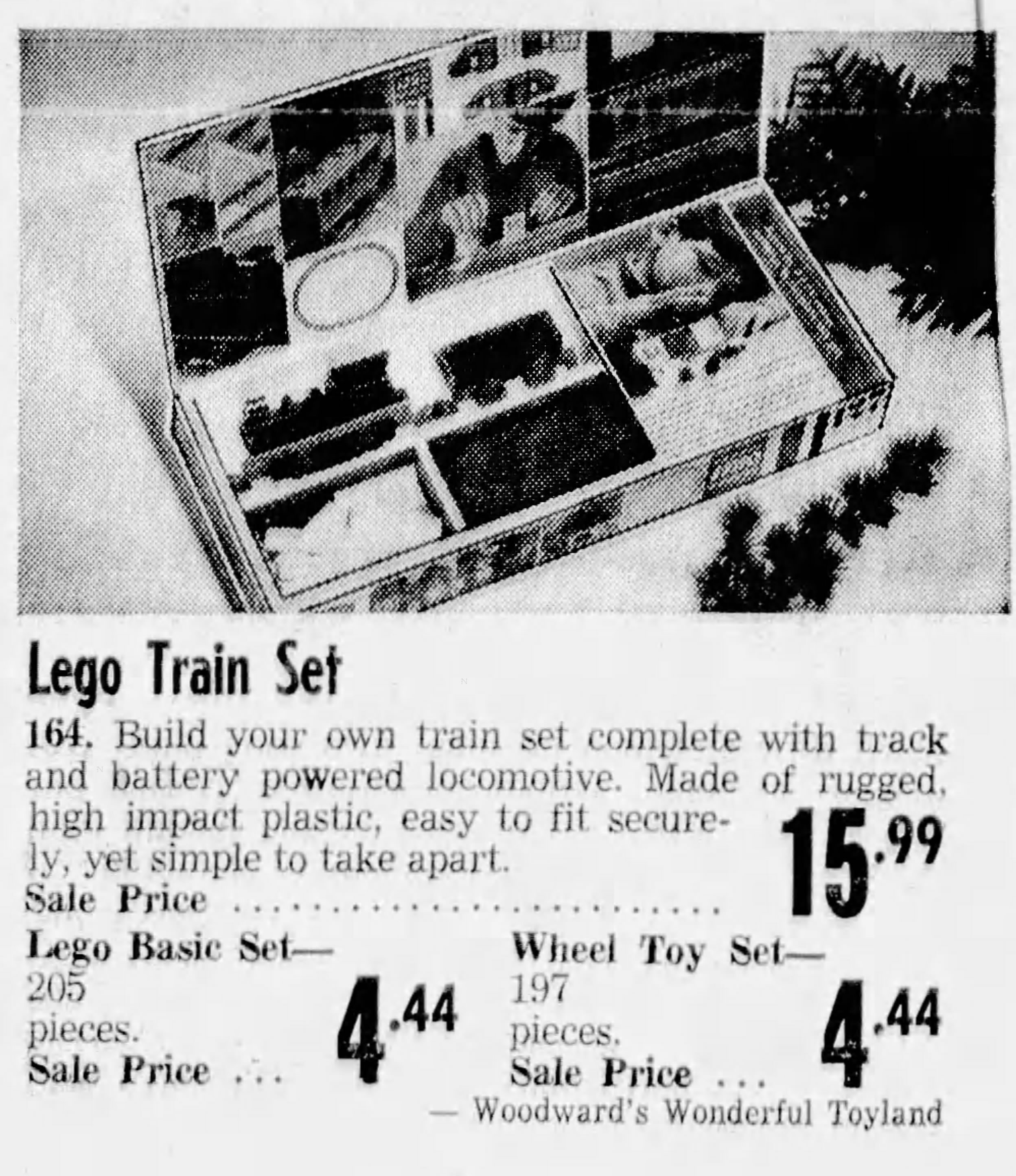
Last Year Seen Available: 1970
Edmonton Journal, November 4th, 1970
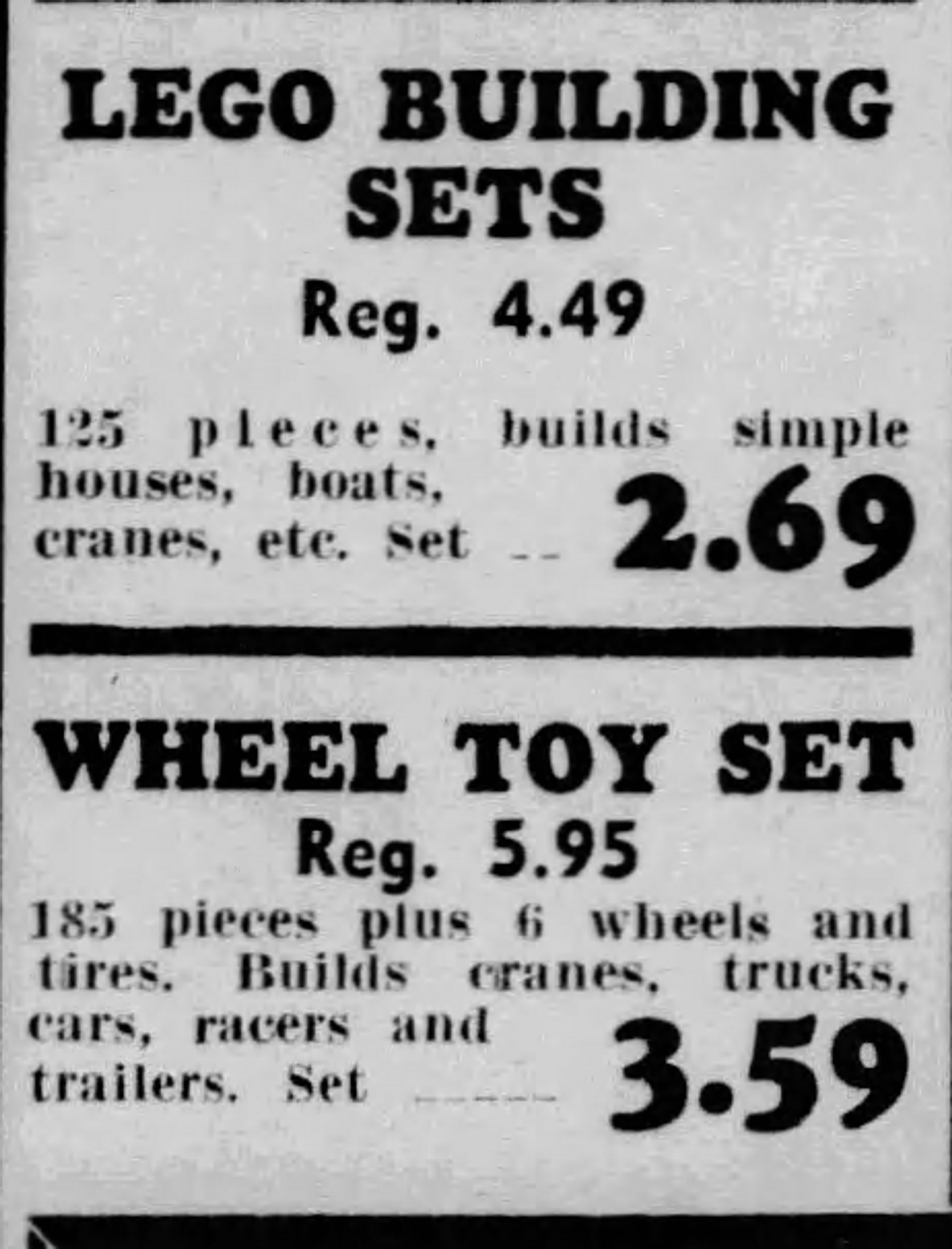
Aliases: Wheel Toy, Build With Wheels, Small Wheels Set
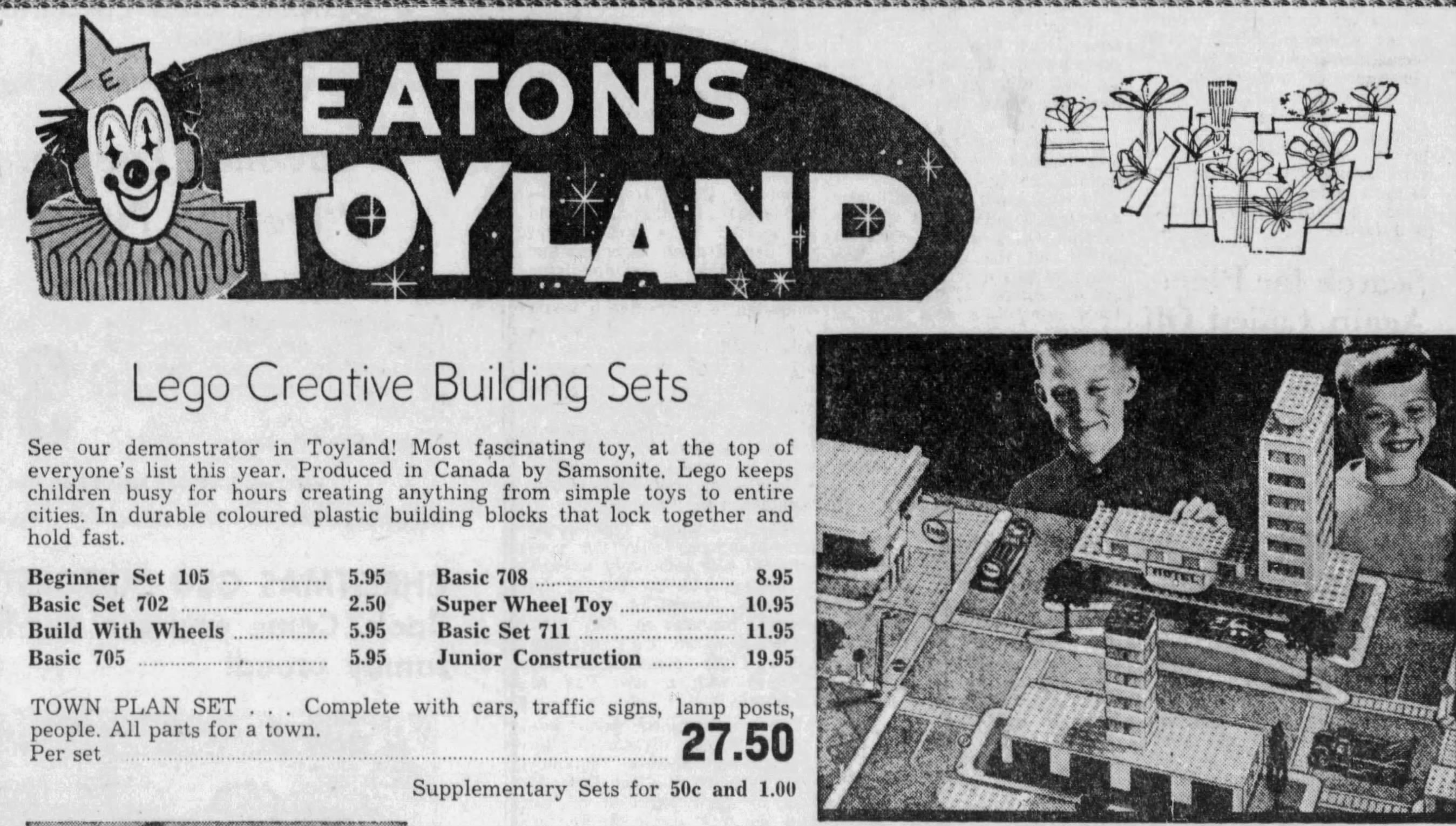
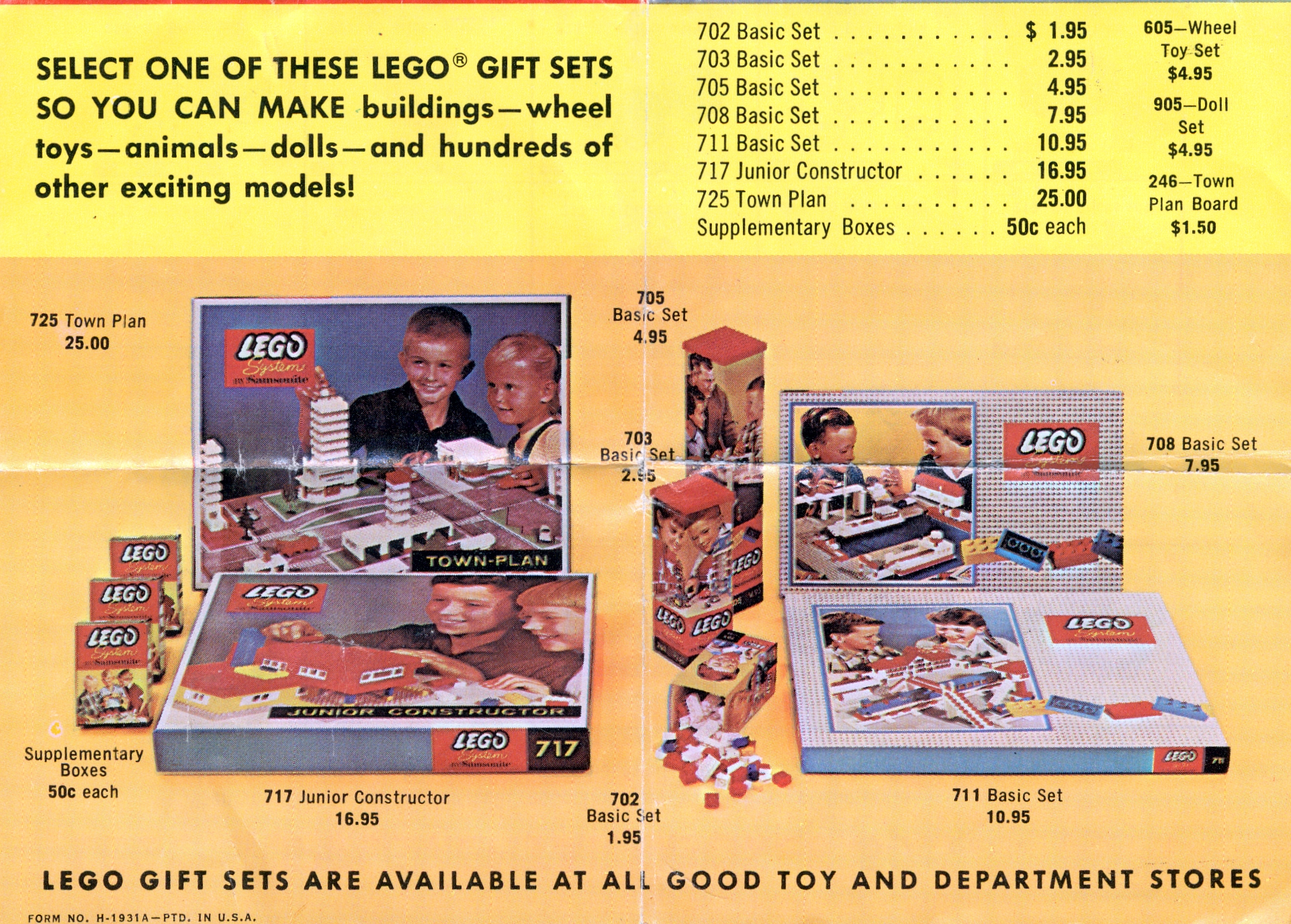
Retail Price(s): $4.95 (USA) / $5.95 (Canada)
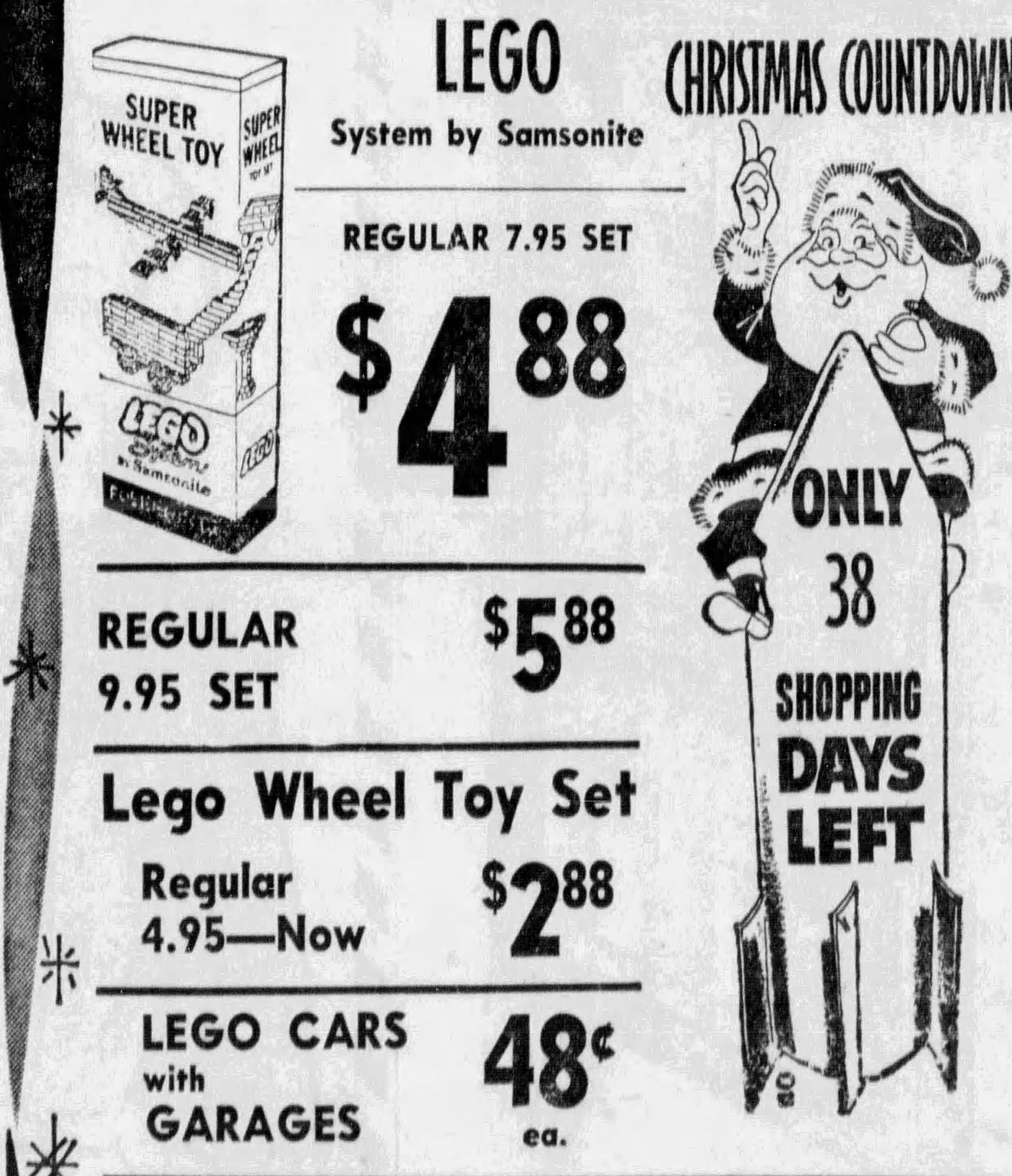
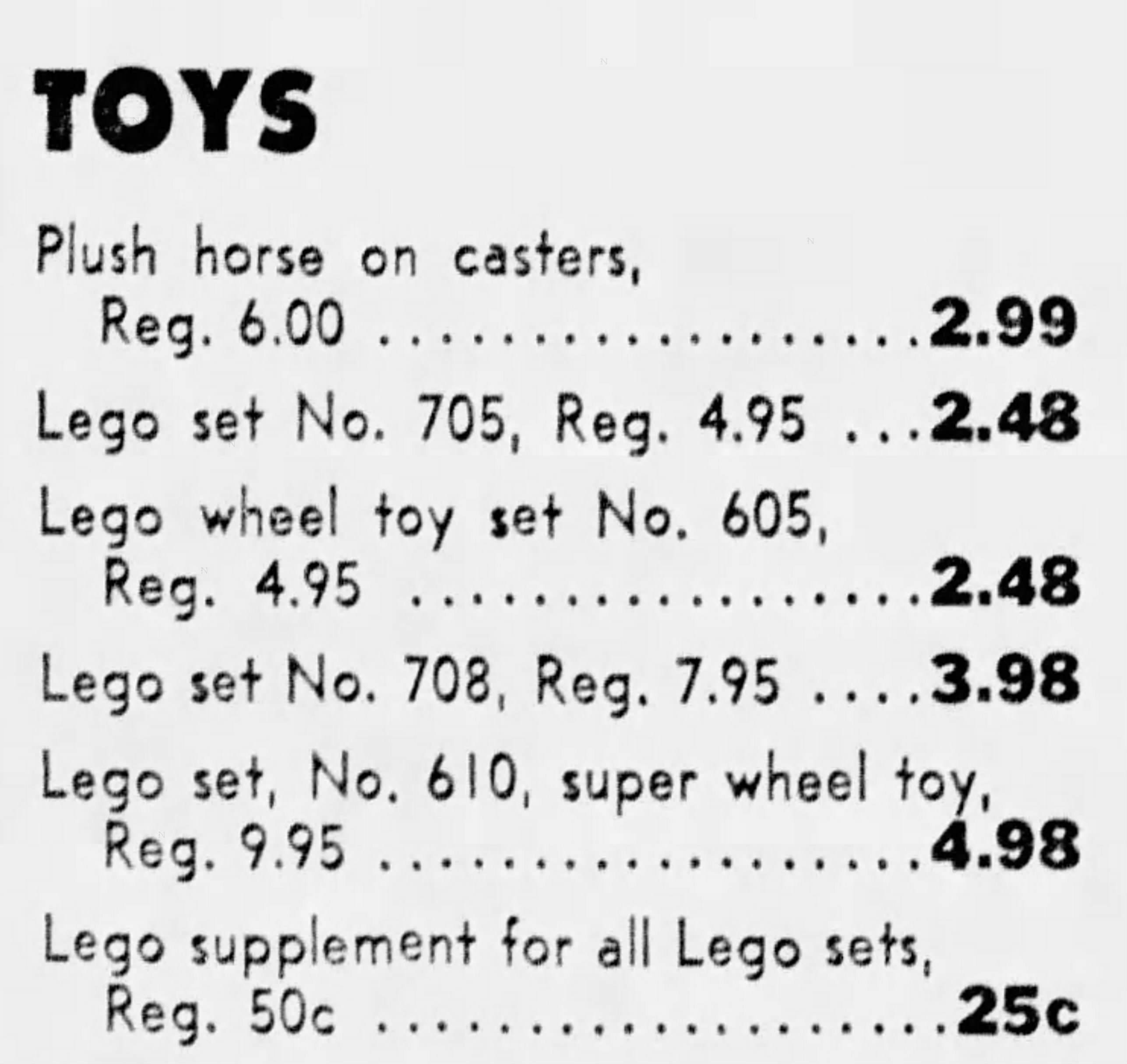
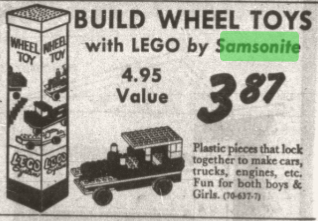
Discounted Example(s): $2.88 (1965), $2.48 (1965), $3.87 (1966)
Rarity Score (Rarity Index):
Tube Version: 3/7
Canister Version: 6/7 (considering one with its lid)
Known Box/Packing Variants
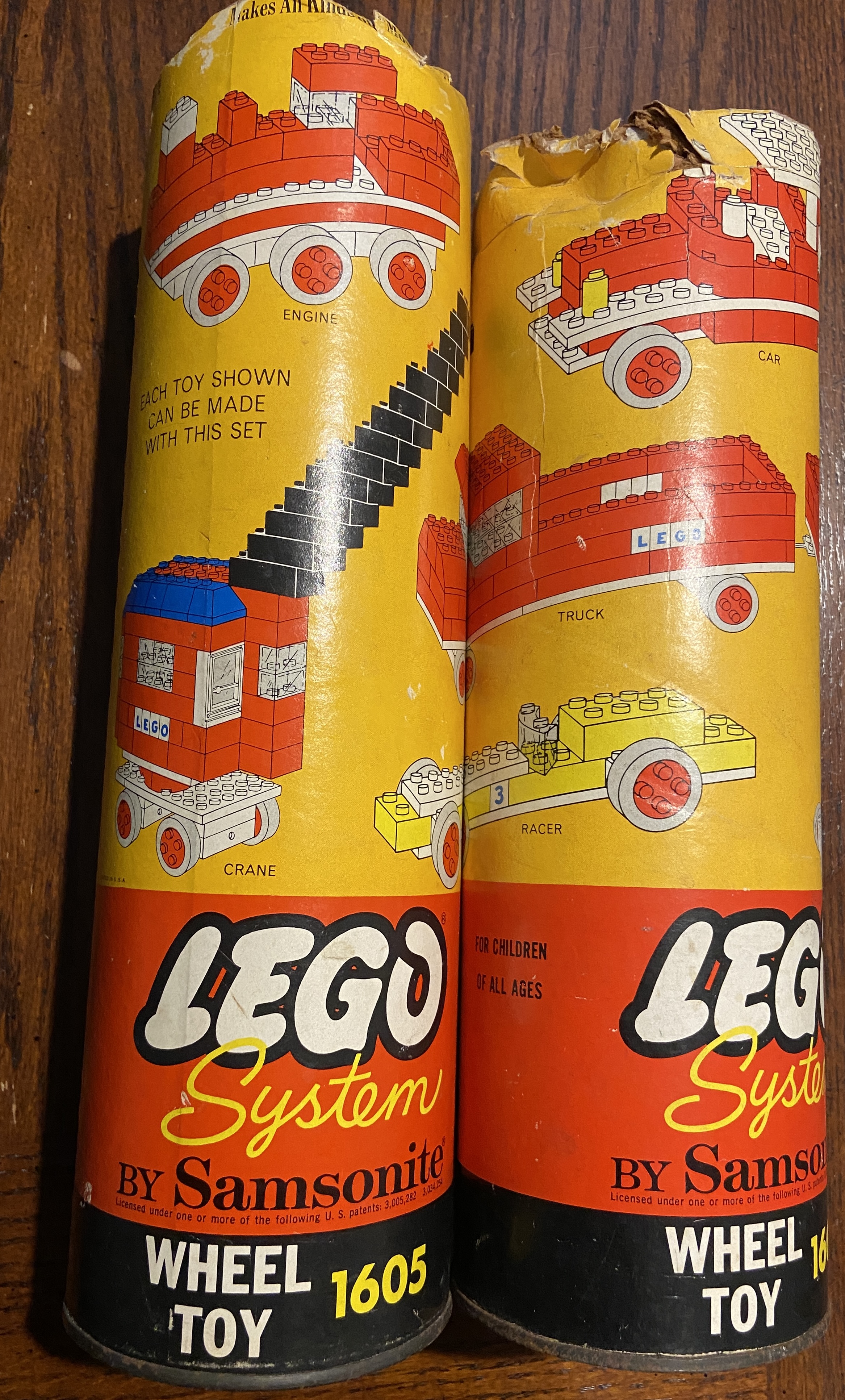
Similar to the 905 Doll Set, the 605 had a canister variant exclusive to Sears and Spiegel. It may have been available at other retailers. The canister variant was available from 1963 to 1965. There are no differences between the 605 and 1605 beyond the packaging.
The Canadian version only differed by having its price below it's set number, the US version did not include a price at all. This is the Canadian Set:
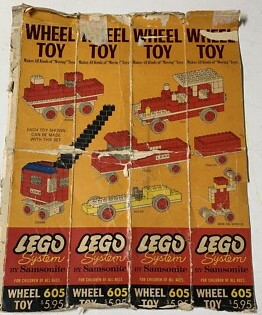
I'd bet, given the long production of the 605 in Canada, there is at least one more version of the box. Canadian examples are very hard to come by, so that's hard to substantiate beyond a hunch.
Box/Overview
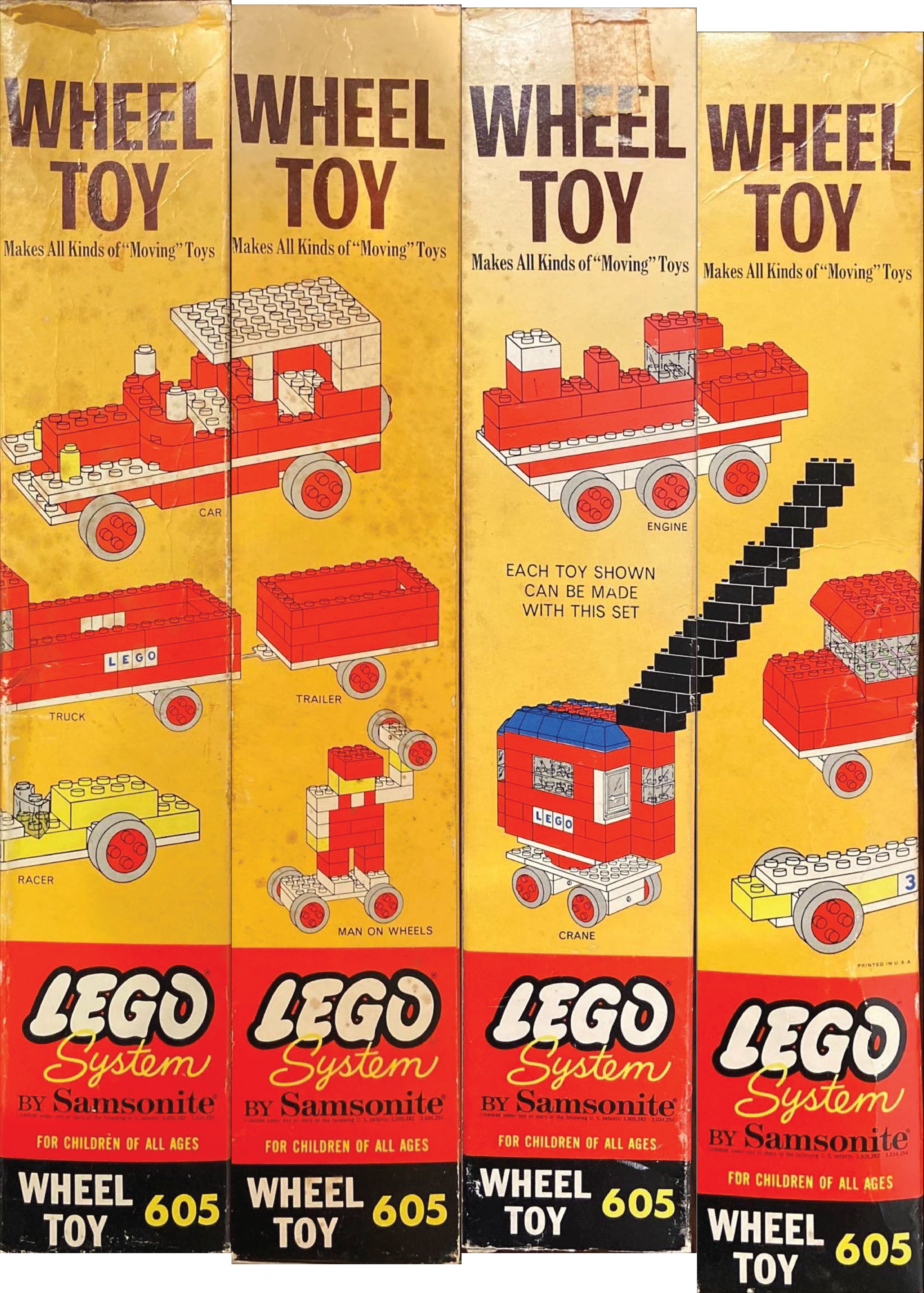
The 605 Wheel Toy came just after the introduction of wheels to the LEGO System in Europe, with 1963 being the debut of them in North America. It marks an interesting departure in set design/marketing for Samsonite, as instead of always using images of a girl and a boy both playing with LEGO/the set, it simply uses isometric renders of the models.
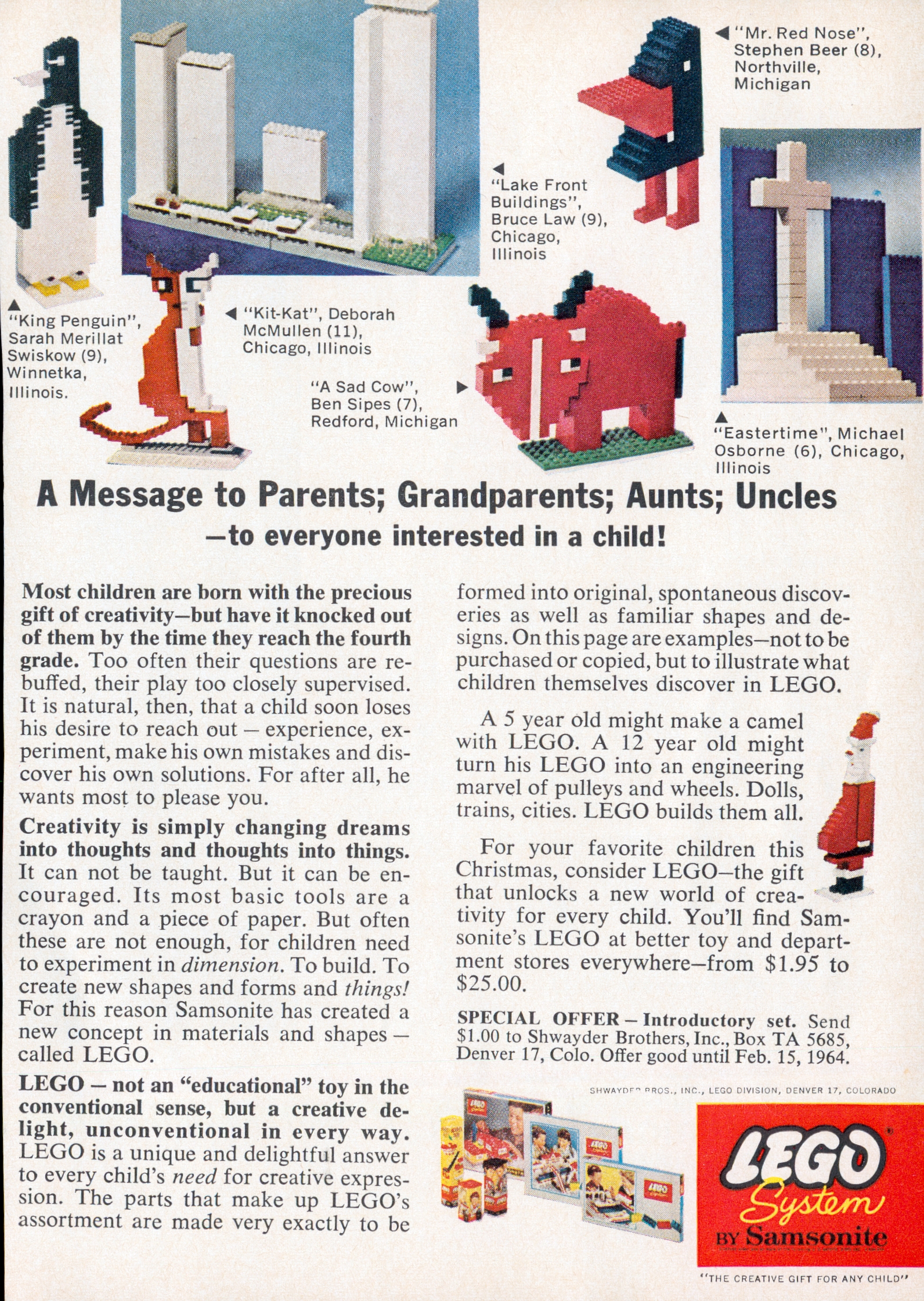
And that decision is interesting because it appears that in marketing the 605 was the first to primarily target boys. Its companion set, the 905 Doll Set, was the first to primarily target girls. This 1963 magazine is a good example of what I mean, as it typically isn't as obvious as "toys for boys" and "toys for girls". Instead, the specific pronoun "he" used in reference to "wheels/pulleys" gives it away. It isn't necessarily Samsonite's unique decision, it is more a reflection of the social attitudes at the time, wherein anything engineering oriented was for boys and girls were designated homemaker toys.
The box seems to speak against the above claim, as it says: "FOR CHILDREN OF ALL AGES", without clarifying a specific gender. However, I believe that is why the above associations are kept from being spelled out outright. It wouldn't make sense to wall off the opposite sex entirely, sales are sales. The Doll Set says the same thing, but it very obviously was not primarily targeting boys in the 1960s.
Its just a very interesting conversation, as while there was a set adjacent to the 605 available in Europe, there was no comparable match for the Doll Set, which I view as advanced insight into Samsonite's unique marketing direction with LEGO as well as reflects their aggressive expansionist mindset of the late 1950s - mid 1960s.
Regardless, the 605 inherits its tube dimensions directly from the 705 Basic Set's tube introduced in 1962. It has a yellow 10x10 baseplate to cap the top and included enough pieces to build any of the models shown on the box. From newspapers as well as the models on the box, it seems all copies contained only six wheels.
It's also interesting to note that the 605/905 did not release with prices on their boxes, at least not in the USA. I see it as the beginning of the shift away from listing the retail price on the box:
Below is the 605's bottom compared with a 702(left), 705, and 905. The Canadian box probably looked very similar except an inclusion of "$5.95":
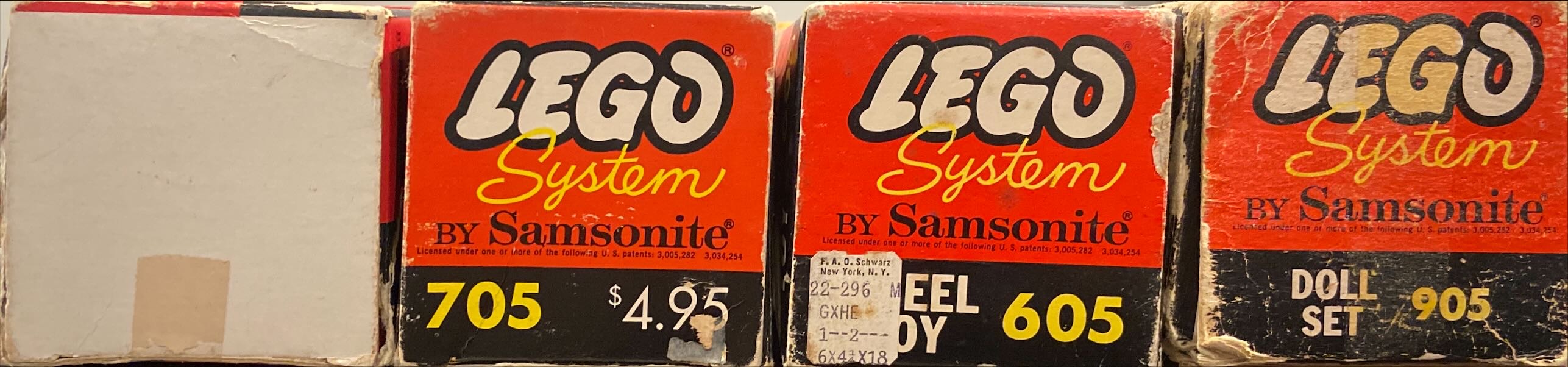
Interestingly, my copy is from FAO Schwarz's New York store. Pretty cool!
Contents
My set contains mainly cellulose parts. It was likely purchased in 1963 and is close to complete (at least as complete as you can consider a Samsonite set):
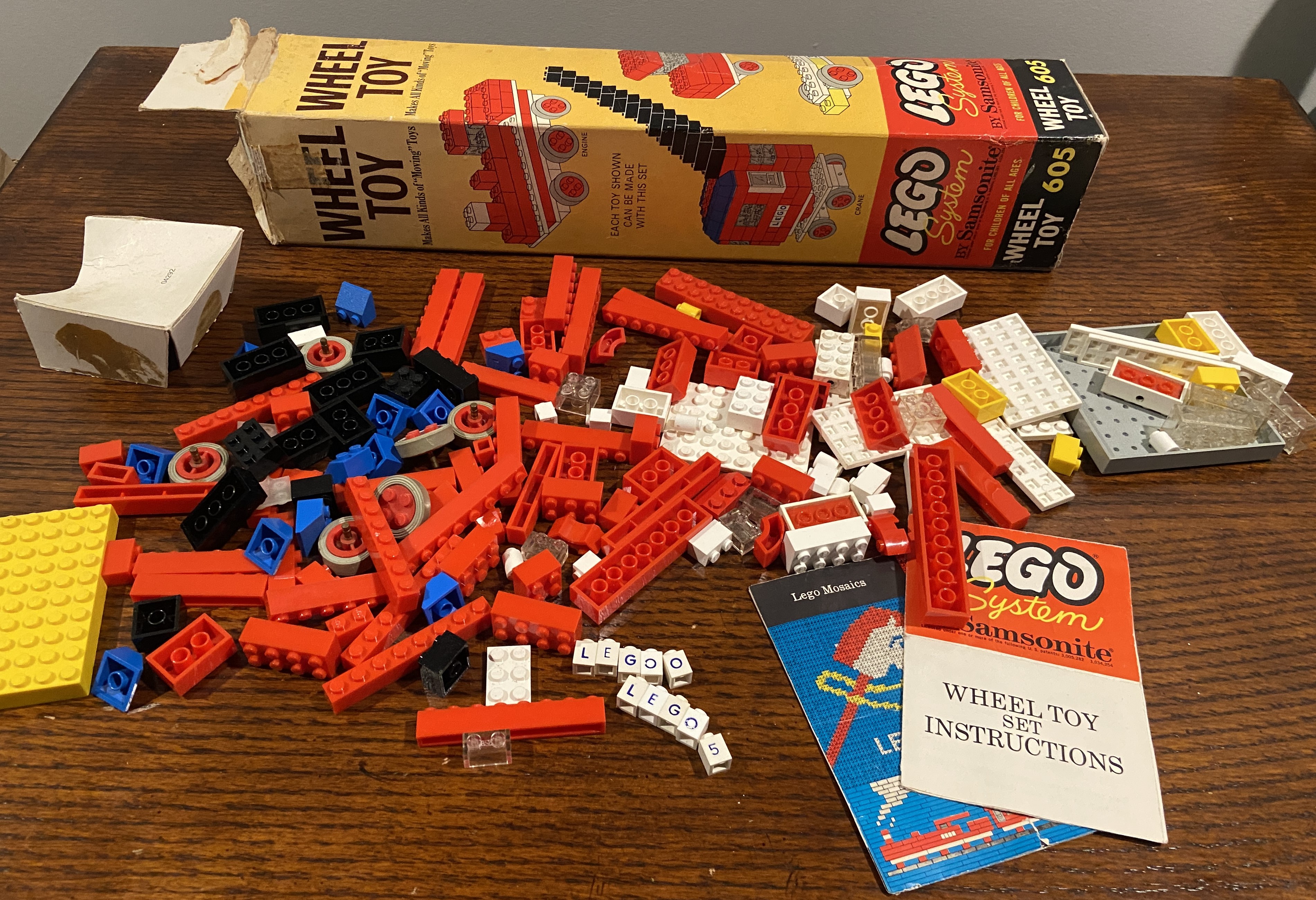
The 605 was uniquely the only retail set (beyond supplements) that contained letter/number bricks, at least until (USA) 1967's 315 European Taxi. The set typically contained enough for two spellings of "LEGO" and two random numbers, though mine uses an extra "O" as an easy substitute for a zero.
I should also acknowledge the left insert in the above image. All three tall box tube sets (705, 605, 905) have inserts like the one above at the bottom of the box. It is most likely to keep the bottom of the box from bulging from the weight of the pieces, but it could also have been a way to make the box seem more full upon first opening. Both are not mutually exclusive ideas.
Historical Examples
There's not many interesting pictures of the 605 from the 1960s, though the prototype 1605 canister should be shown. You can see it below along with a slightly more refined (though still prototype) image of the 1905: