
Patterns with Exclusive/Catalog Sets
___
This is a very weird subject, one that I'm not exactly sure how to categorize. It's not all exclusive sets, nor is it all catalog sets. It's not only identifying patterns but also decoding the numbering logic for sets from 1962-71.
I want to know everything that can possibly be known.
As I've worked on the site, I've come to believe there is a larger algorithm at play when Samsonite or even LEGO themselves designed a set. And I don't mean that as a computer algorithm, but instead a very convenient system to develop a basic assortment of parts and have an even spread, without having to think too much about what parts to include. And then start all over when designing the next set. Which would help consistency, which would cut down packaging times, which cuts down cost, etc. I believe the system evolved overtime as well.
It was rather easy to prove such a system existed for the 1972 Imagination Sets, it consistently applies across the entire line and the parts were already organized by bags and such. But I don't believe that to have been an original idea. I believe that to just be a less veiled use of an earlier system, one that we may yet be able to prove existed.
But for now, we require a little more context. We've already covered elsewhere on the site that 1965 sets were derived directly from the 1961-64 line, and we have some more very interesting parallels to discuss.
1962 Sets vs. 1966+ Sets
While LEGO Samsonite had reached many stores for the release in 1961, LEGO took another year to reach many catalogs. And for that, the Sears catalog sets began in 1962.
What's interesting about Sears is that they almost always carried exclusive sets in their catalogs, with the term "exclusive" being used loosely in some regards, but we'll get there when we get there. Just useful context as we go along.
There were three exclusive sets for 1962 at Sears:
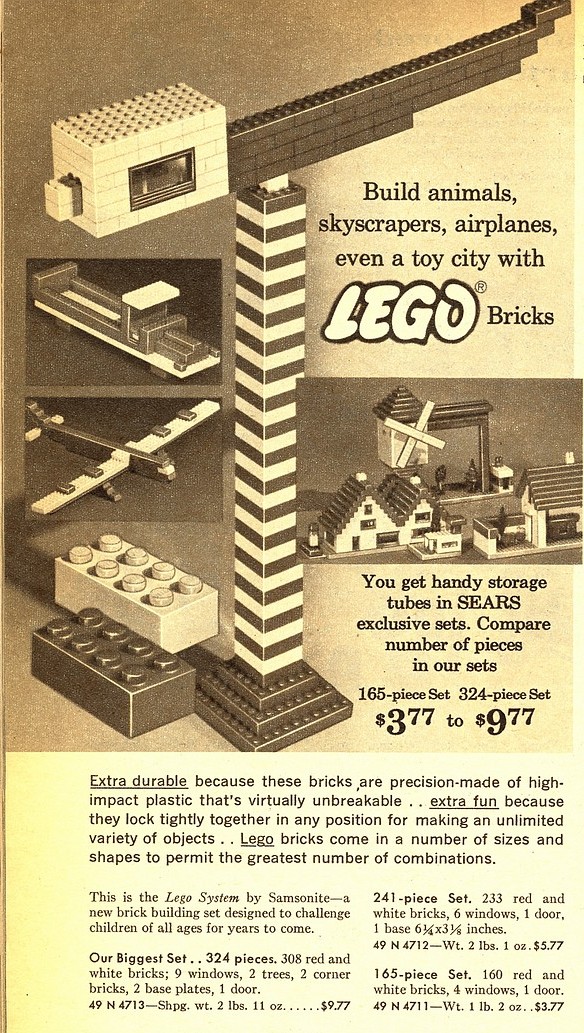
But check this out:
704 - 165 pieces, $3.77
706 - 241 pieces, $5.77
710 - 324 pieces, $9.77
So not only do we have a continuation of previous logic (round up the prices and add that to 700 to get the set number. So 700 + $4, 704), but we also get an inventory, one that has fascinating implications for our future research. But I'm getting ahead of myself.
We of course then have the 1963-64 canister sets (the 1605 Wheel Toy, 1905 Doll Set, and the 1610 Super Wheel Toy), which I'm not too concerned about here. There's not much beyond the surface level going on there, as they're direct rereleases of existing sets.
The first hints of change came in 1965:
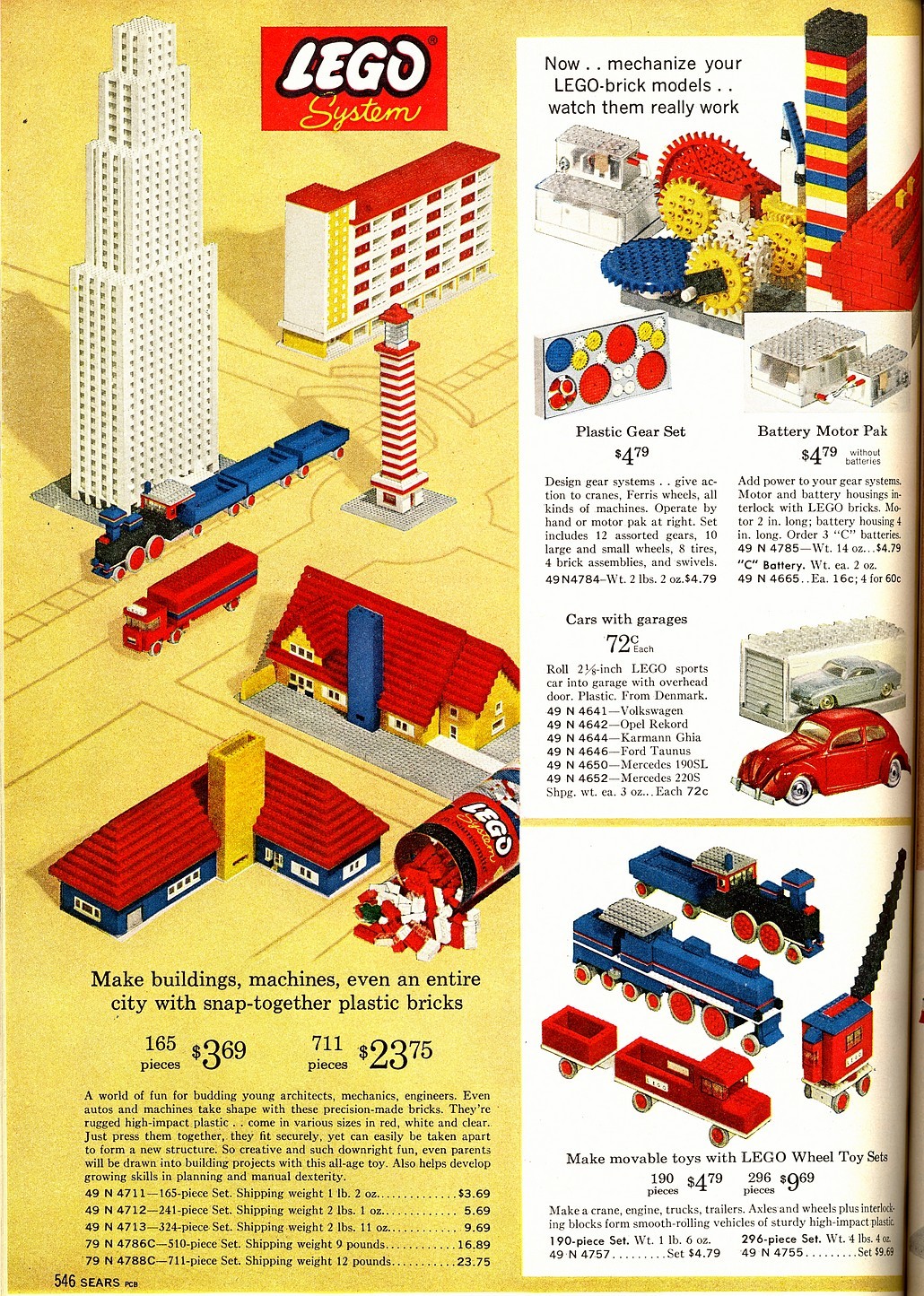
It's not noticeable just by the catalog itself, but the 001 and the 002 for 1965 came in a very unique packaging(think of it as a transition to the plain box versions we see later). This is known as Bricktrains owns an 002 in this style with a Sears stamp:
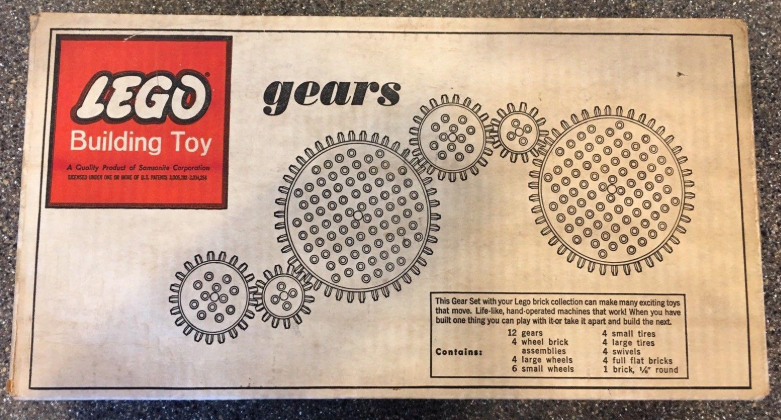
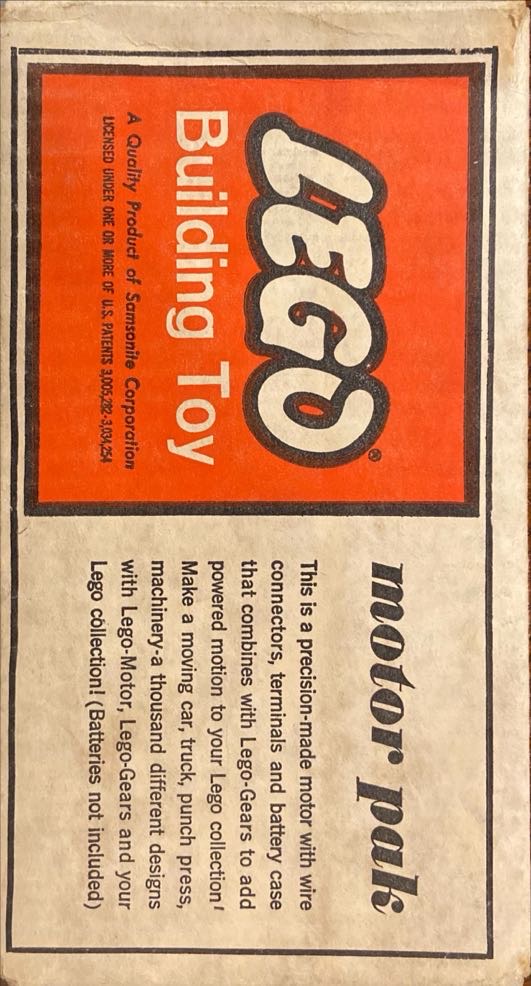
But I'm not aware of any catalog/manufacturer numbers being displayed on these boxes at this point. That's what I'm most interested in here, so we'll move on. But definitely note that this marks the beginning of the plain box era for catalog sets.
The canister sets share something in common with the 1966 sets—the piece counts! But not without some nuance, as usual with Samsonite:
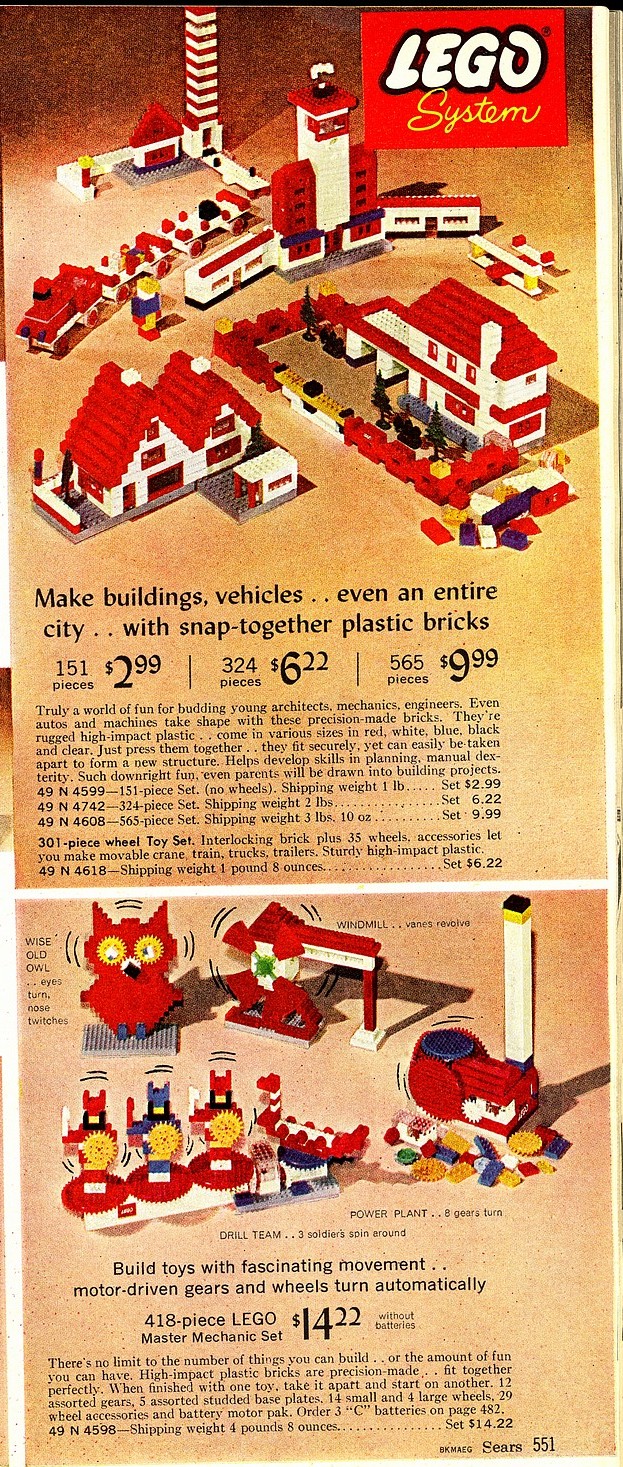
We have the following sets(ignoring the 003 for now):
151-piece set
324-piece set
565-piece set
Compared with the canister sets:
704 - 165 pieces | 151-piece set
706 - 241 pieces |
710 - 324 pieces | 324-piece set
| 565-piece set
What about the gap for the 706?
It's a bit of an oddity, but that gap was filled in 1967 with the Sears exclusive 244 Explorer Set. If two of the three original sets returned for 1966, why didn't the 241-piece set do so?
A possible answer can be found in another question: why doesn't the 565 have a match?
It technically does.
What does 324 and 241 add up to? 565! But there's some caveats to take into account, mainly that the 324 is supposed to have trees (they show in the 324/335/835's instruction sheet), but the 565 doesn't seem to include them.
So is it just coincidence? Maybe.
But the 565 was a very shortlived set, as it was only produced in 1966 and was replaced in 1967 with the 536 Designer Set, which debuted with this instruction sheet:
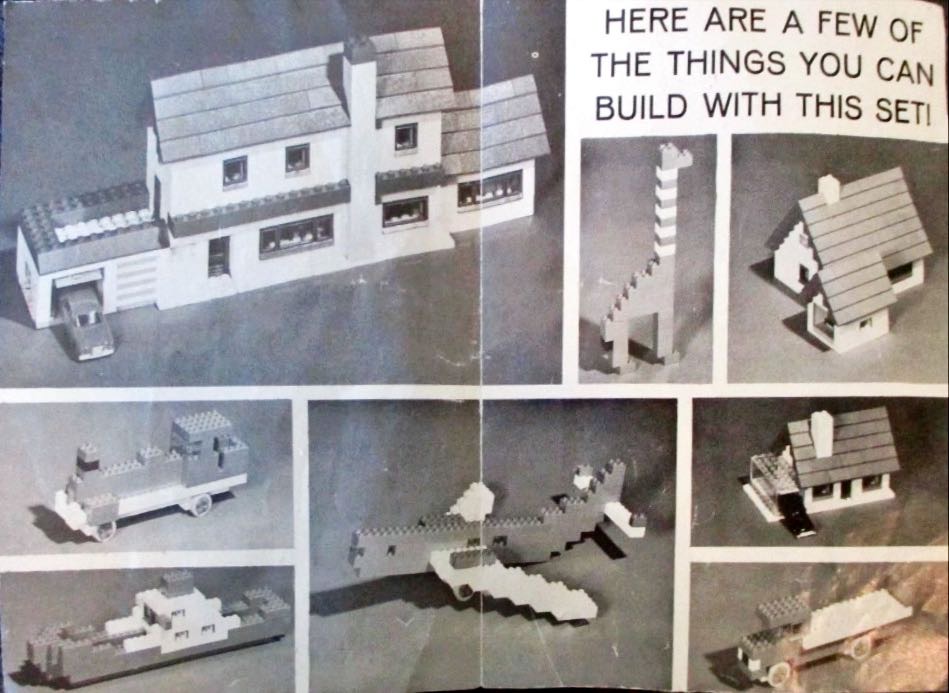
What I find interesting about this is that it shares models from an existing set. They all do.
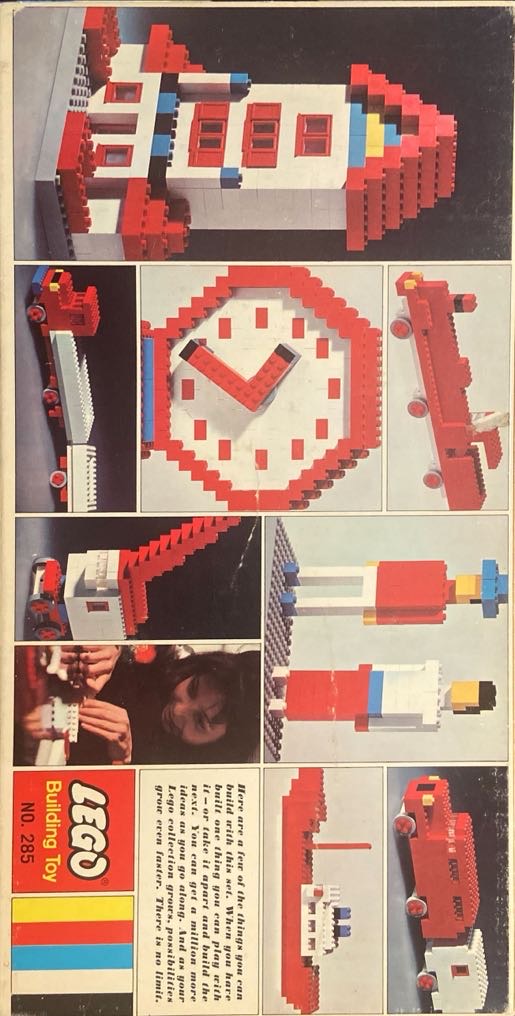
So let's take all the Sears exclusives, and the boxes they resemble (as Samsonite was careful and made unique models for each set in 1965), and see if any patterns emerge. The only one we can't account for is the 151-piece set, as its pamphlet has never been archived.
But the following associations exist:
324/335/835 Instruction Sheet:
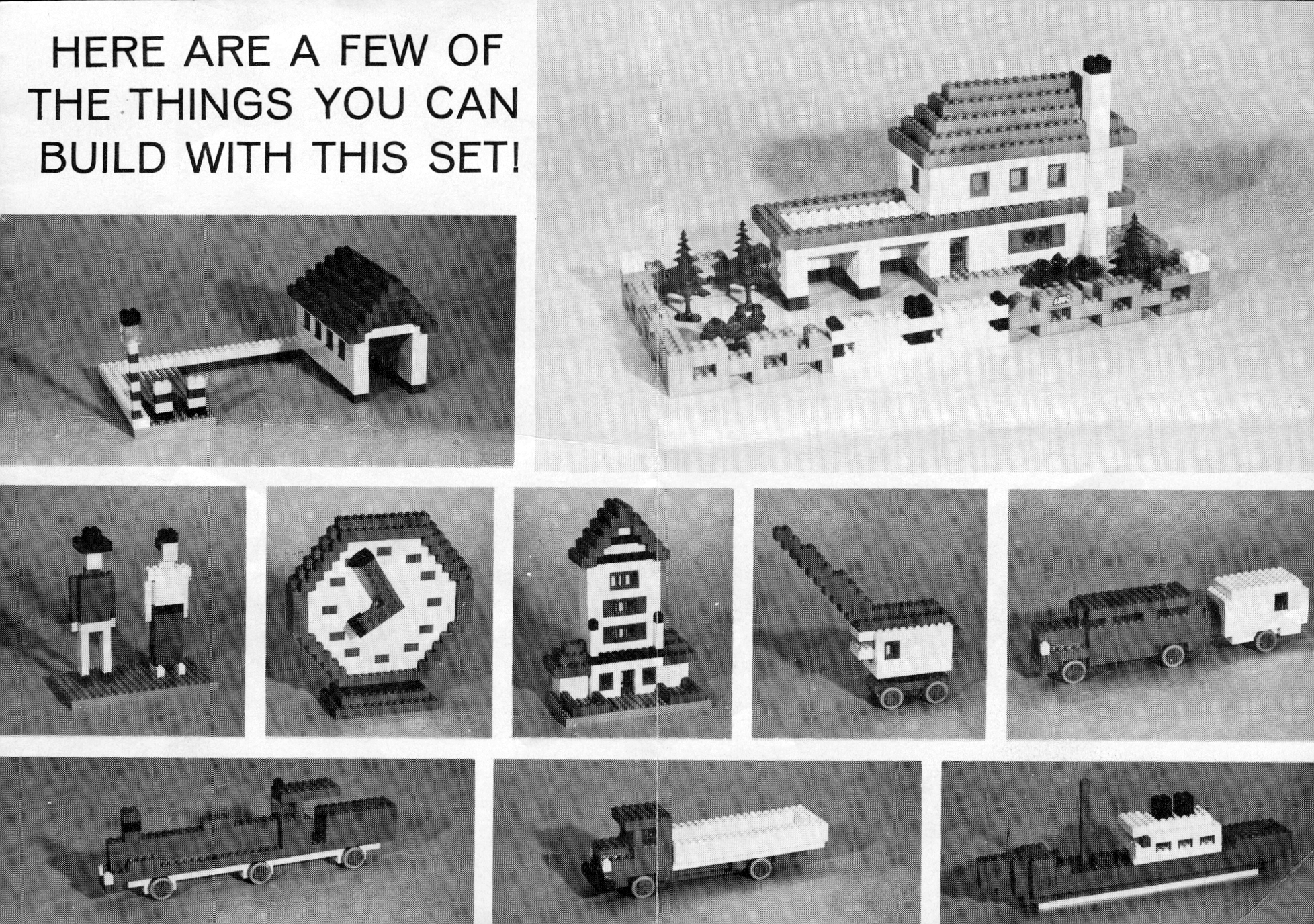
The back of a 285:
565 Instruction Sheet:
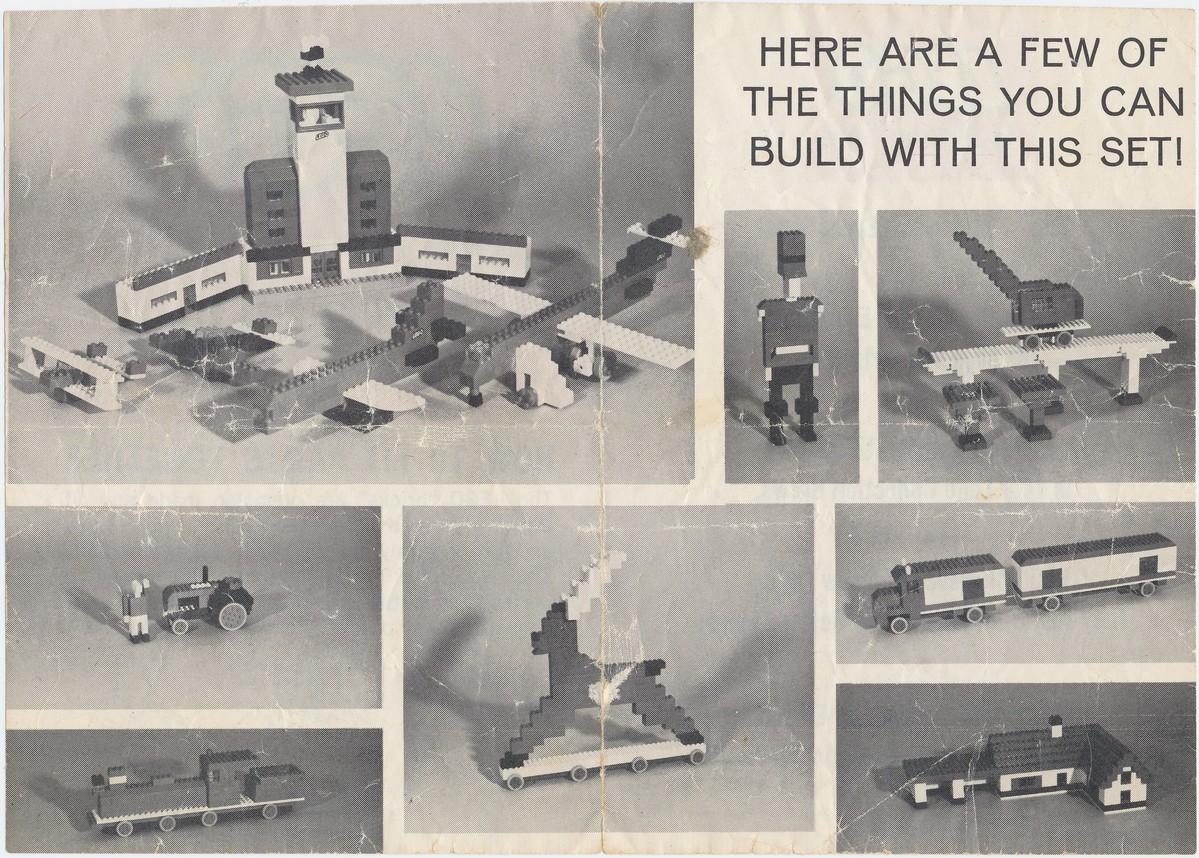
The back of a 450:
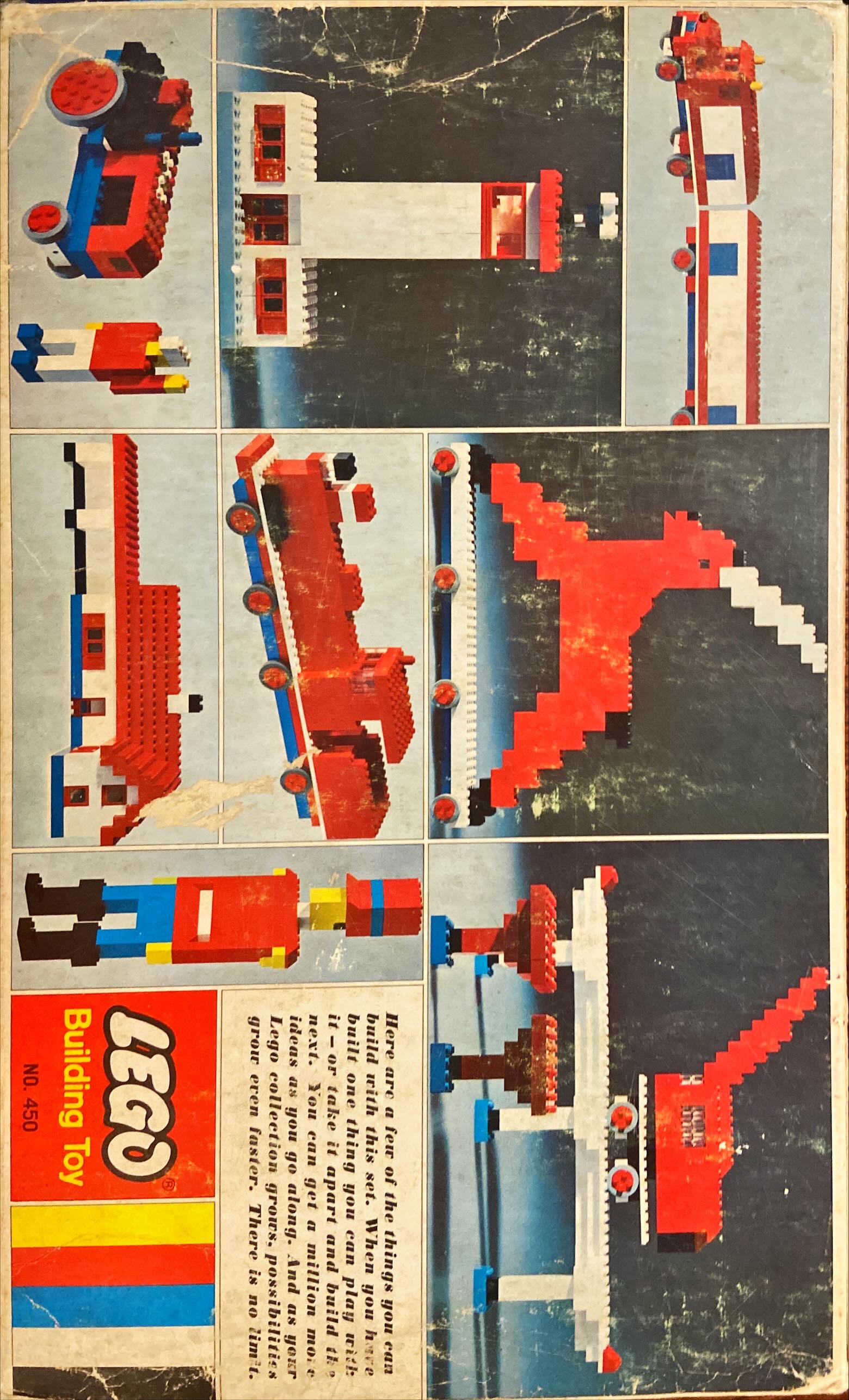
Notice how we always have one model in particular that doesn't appear on the box of the receiving set, and those models have a LEGO logo on them?
We've seen this before, it was essentially the way for Samsonite/LEGO to denote retailer models(regardless of which party actually made them). Which leads into my theory: that these sets were built from the ground up, hence why their assortment here changed. So, noticing that the parts counts are always higher with the Sears sets, my guess is that when creating these Sears sets, Samsonite used a base assortment (i.e. the 450) and included enough pieces to build a selected retailer model, likely based on what is already in the assortment.
That works for 1966 sets, not so much 1967+. Take for example the 536's instructions:
It has something in common with the 244's Instruction Sheet:
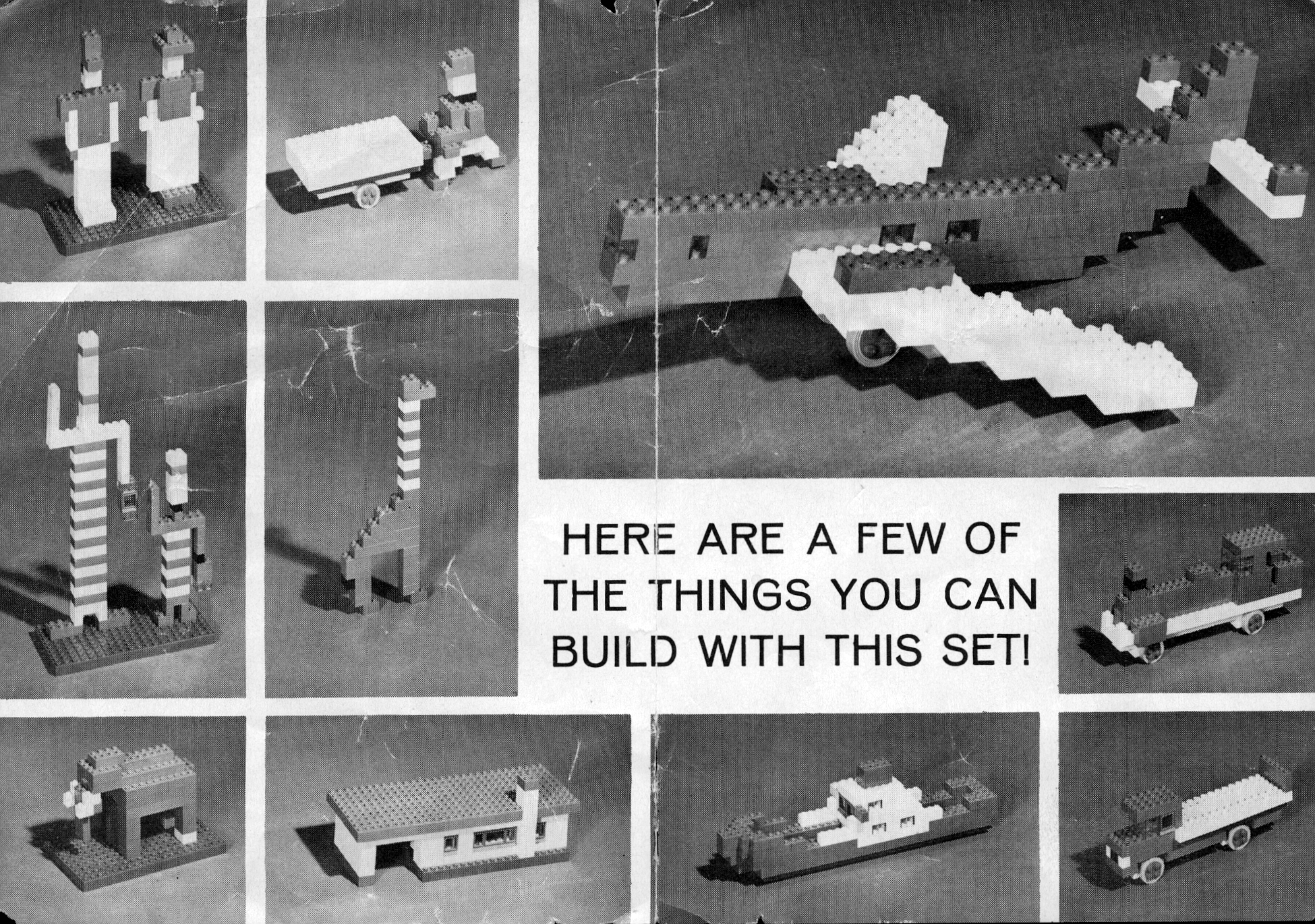
Their models match the back of a 205:
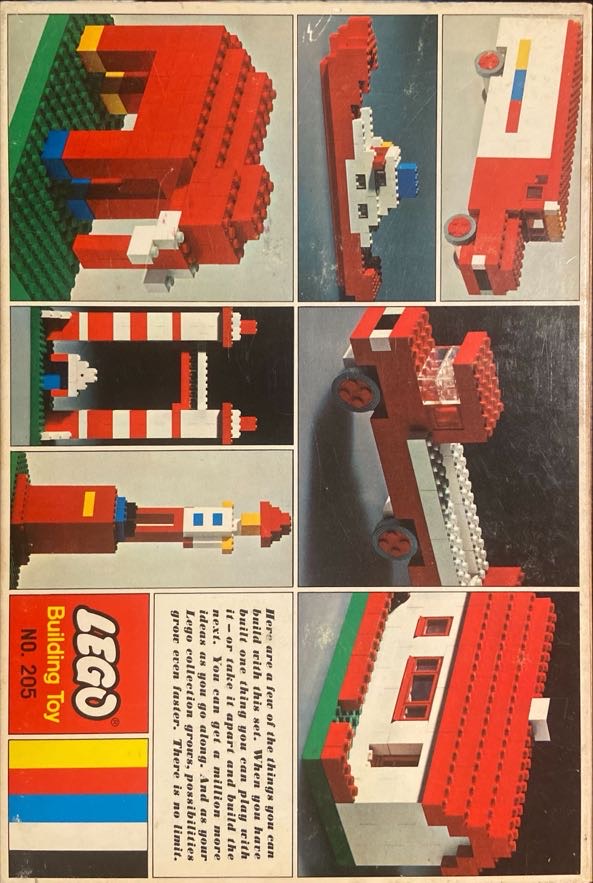
Why?
This article will be continued at a later date.