
166/167 Extras Parts Kits
___
The 166 Vehicle Extra Parts Kit and the 167 House and Garden Extra Parts Kit evidently released as early as 1971 and were not exclusive to anywhere in particular. We will get into how exactly that is known, but for now, we're just concerned with what the sets were to give ourselves the proper context. Then we'll get into the minutiae of proving when, where, why, and how.
While we could split them both into two distinct entries, that would be a waste of time. They share similar designs, sources, and information, so they'll be covered together.
And by similar designs, it's pretty obvious when comparing the boxes. The front first:
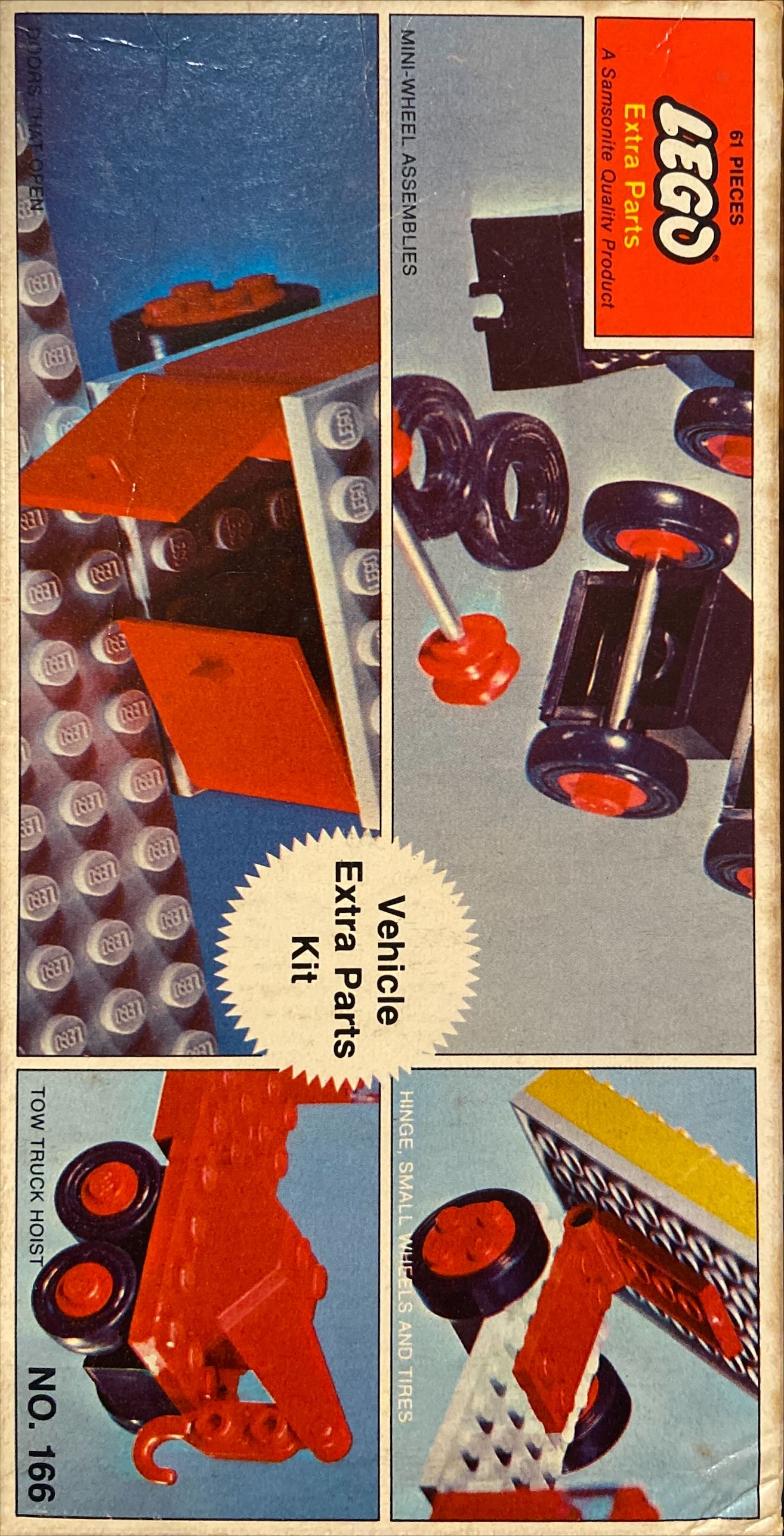
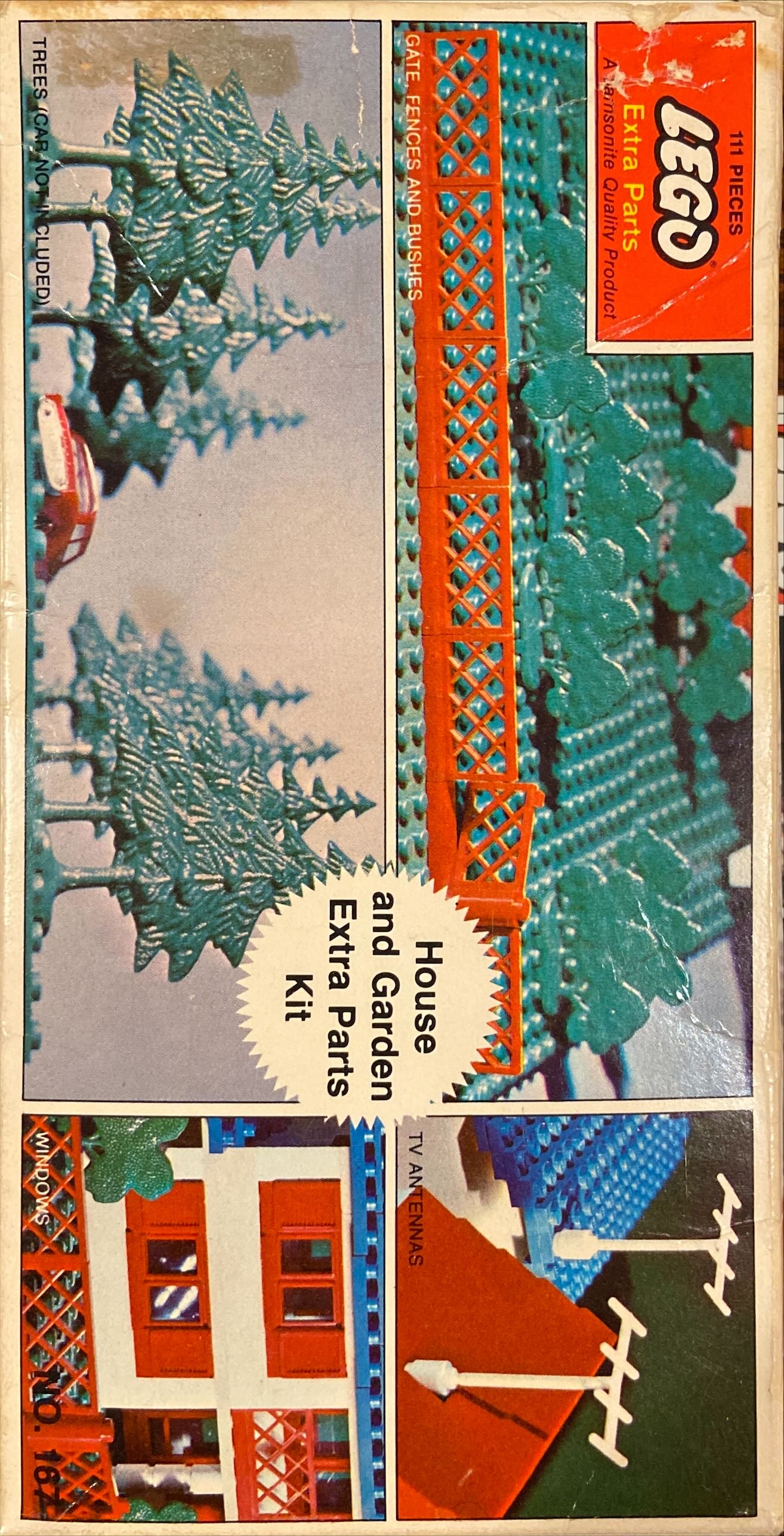
Then the back:
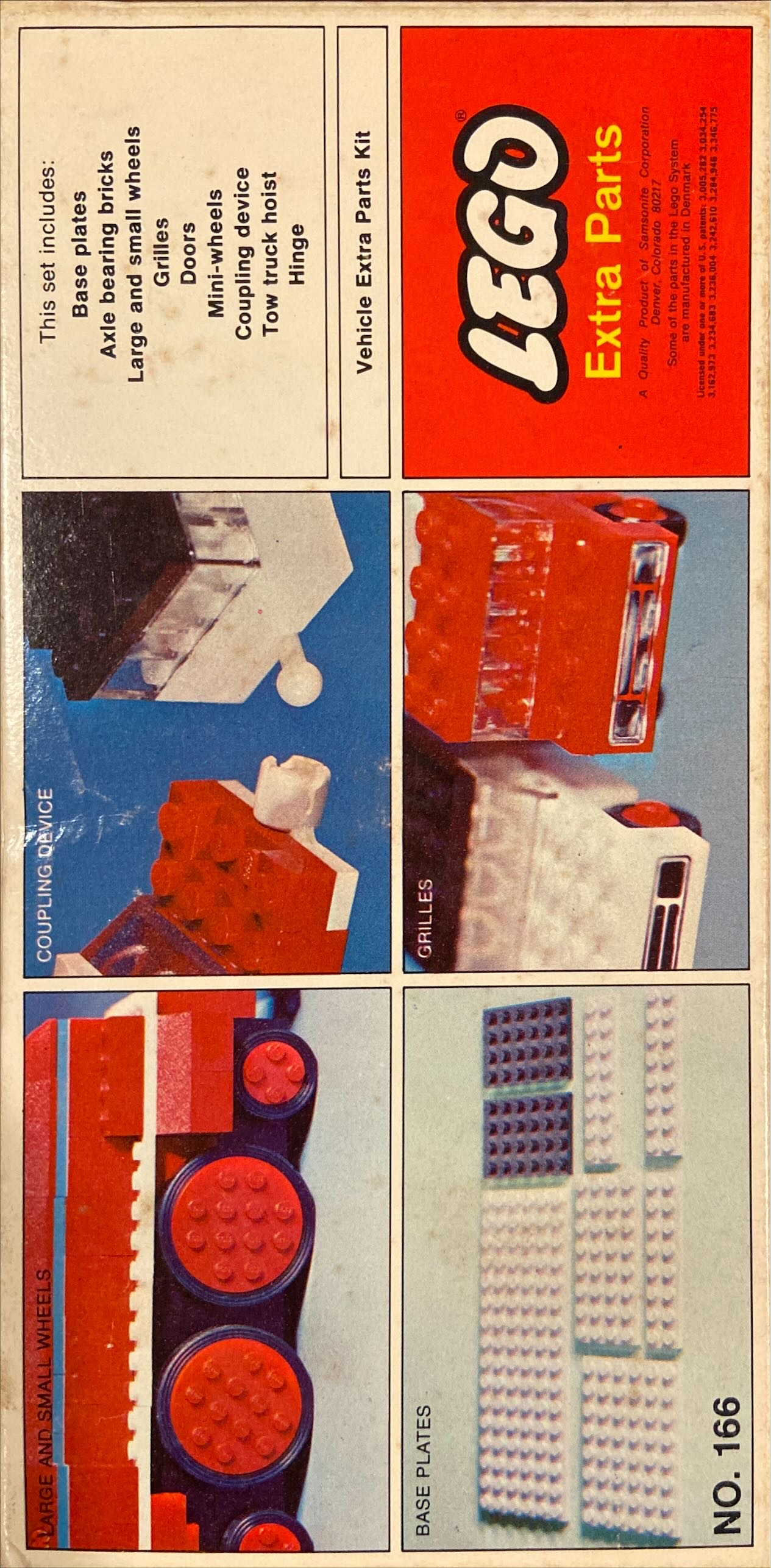
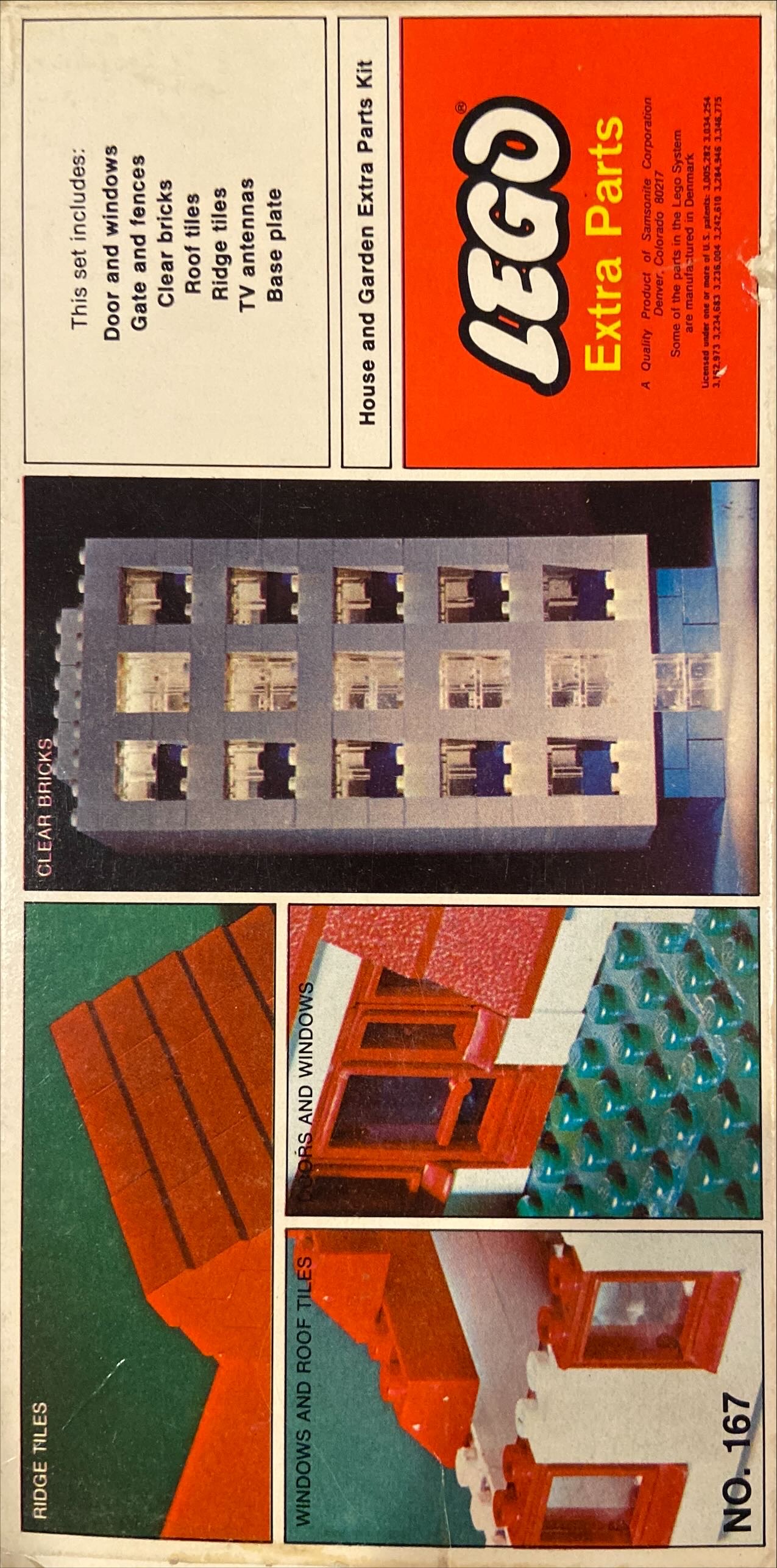
And the sides:
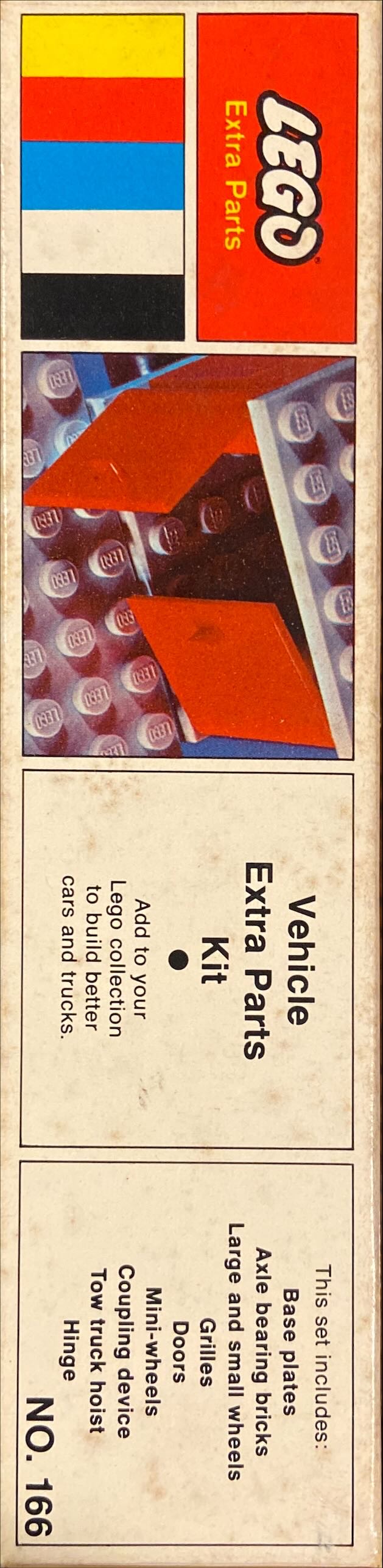
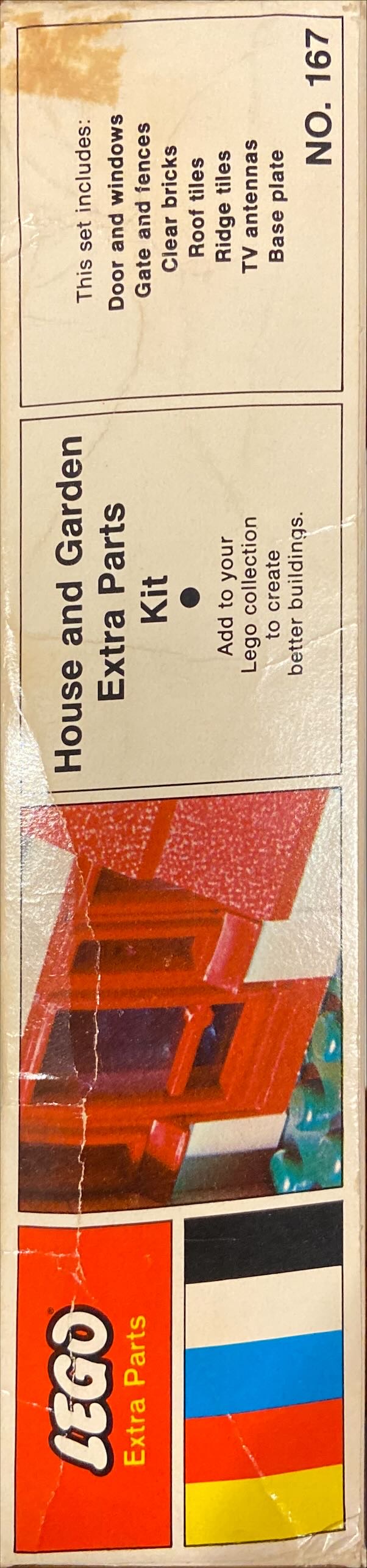
And the tabs:
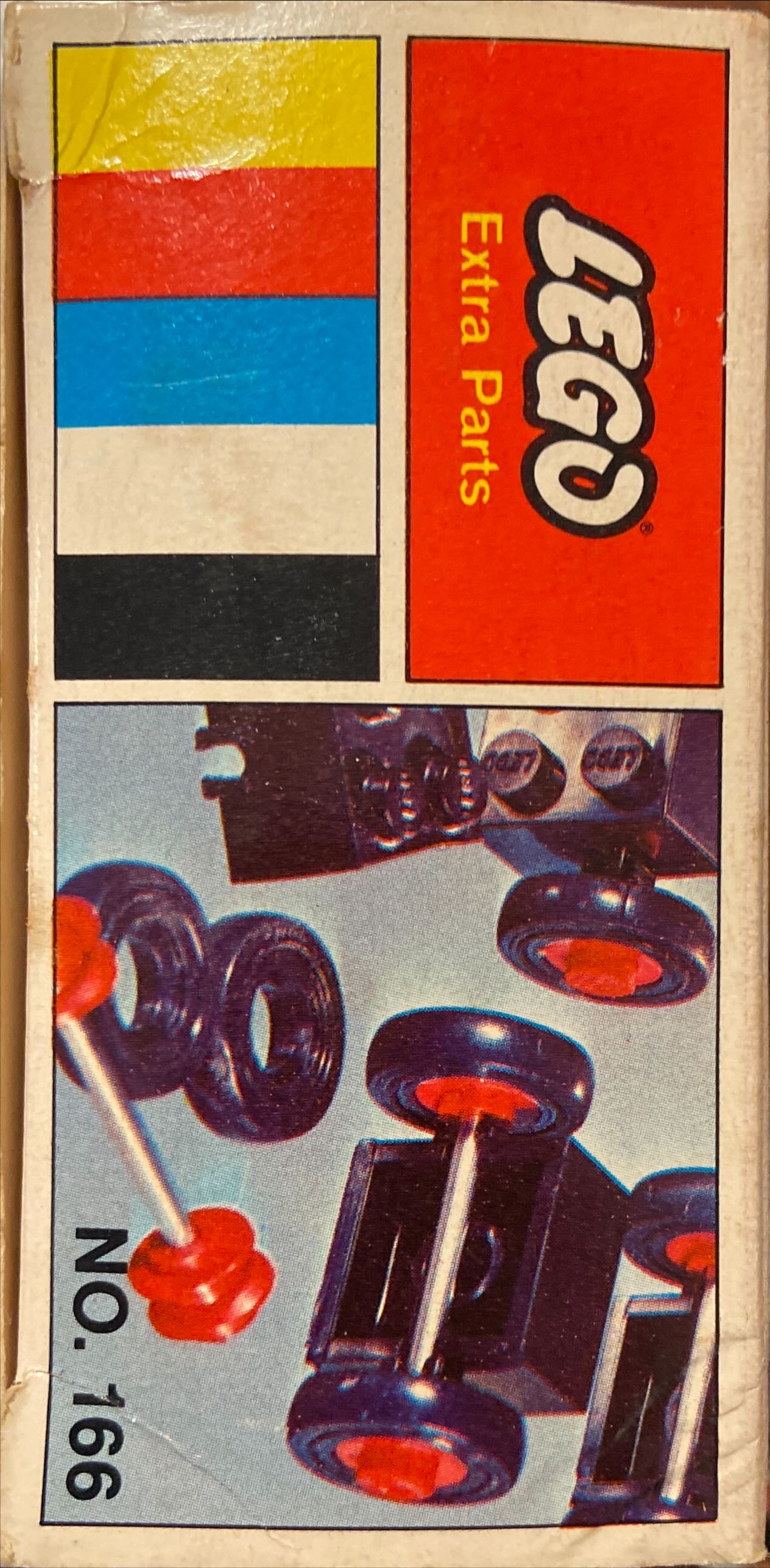
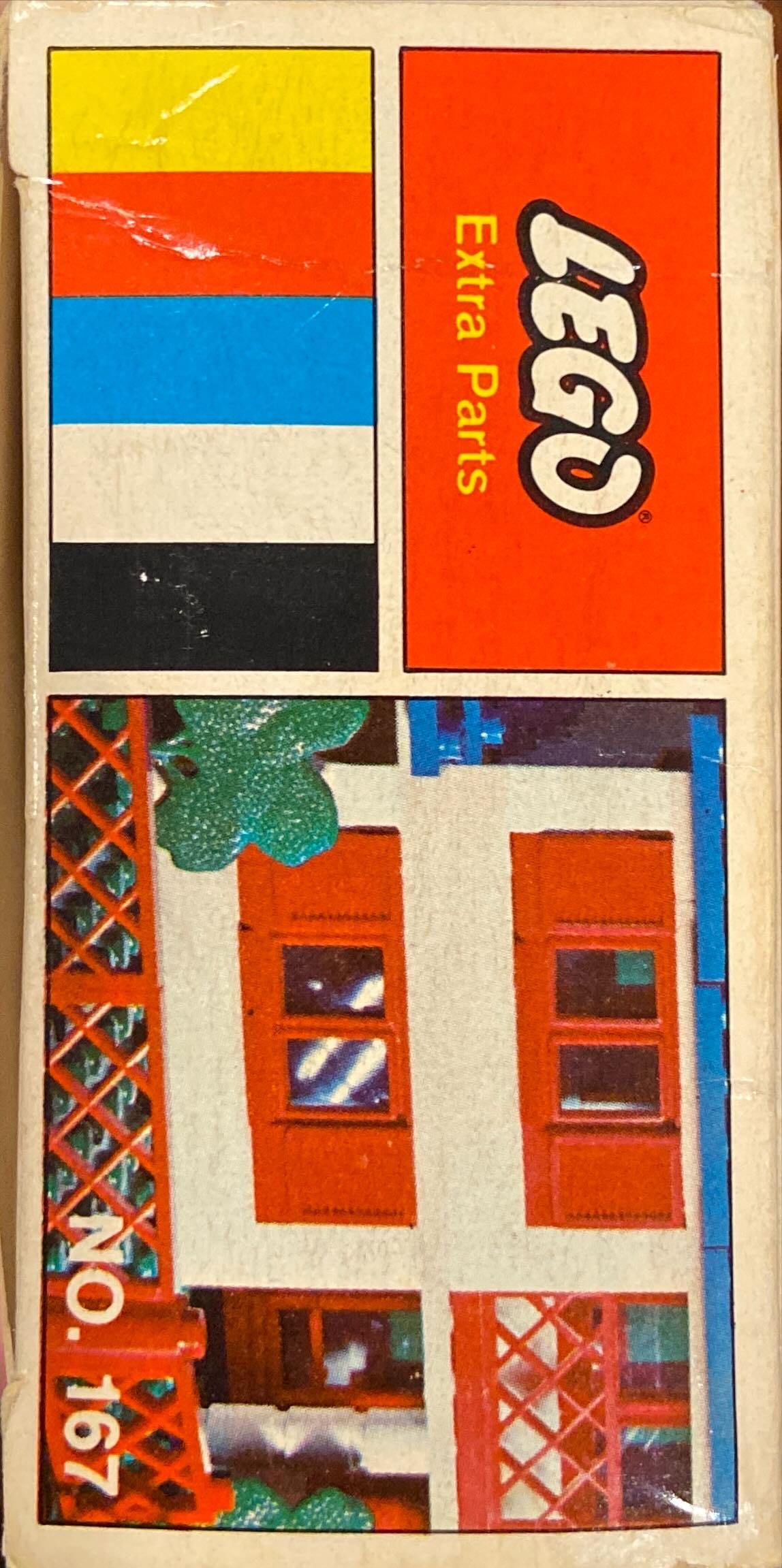
I don't have contents to show for the 166 as I purchased mine as an empty box. I can however show the 167, as mine is nearly complete. The sets may more may not have come with a plastic tray, as seen below:
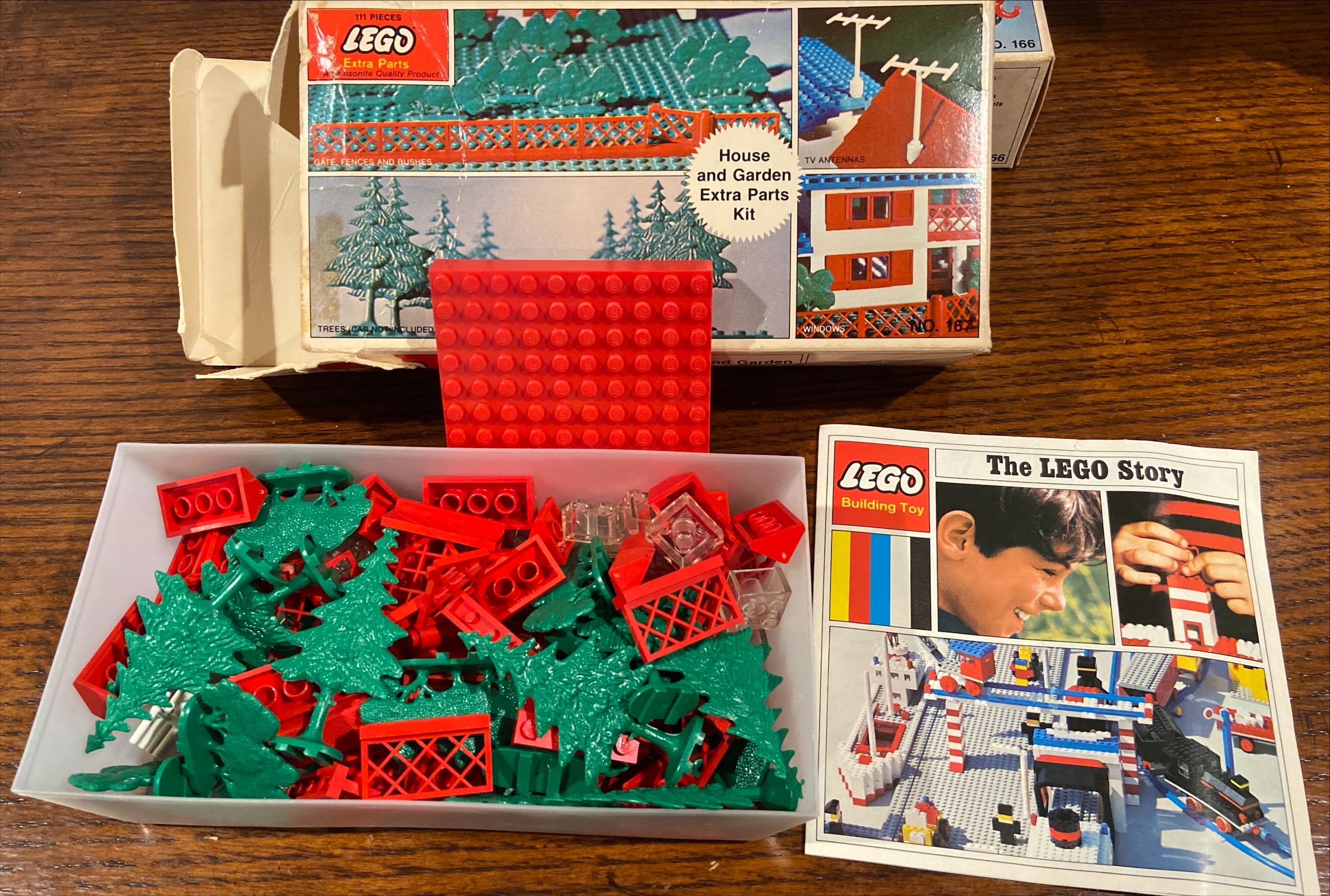
These sets are usually found to include a 10x10 baseplate and a 1970-71 catalog(as seen in the above image) or a 1972 catalog.
However, this raises an important question to address: when were they first available?
As far as I can tell, these were introduced in 1971 as the next refresh of the (US) supplements line. Previous to the 166/167, we had lines in 1961-65, 1966-68, and 1969-1970.
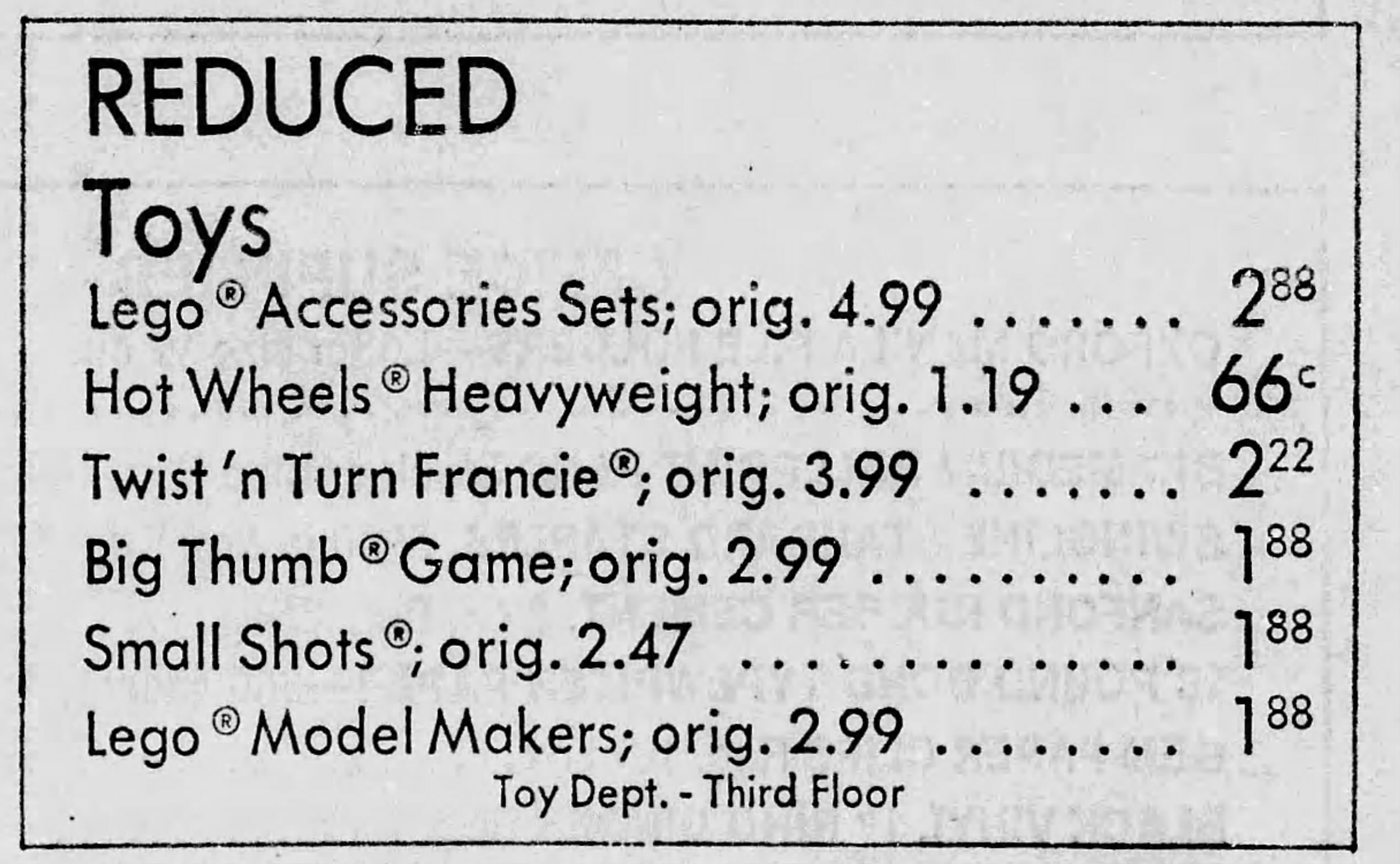
However, as with other supplemental kits, remember that these were not advertised as regular sets were. They're incredibly difficult to track and rarely appeared at all. Many appearances may even have been missed simply because they weren't clearly identified, like this 1971 newspaper wherein it must to be referring to the 166/167, but the original price is a little higher than it should be (~$3 compared to $5) which makes me cautious:
A $3 RRP is much more reasonable, as we have a 1971 source(Hardy Herpolsheimers, it was a department store in Grand Rapids) and a 1972 source(Sears) that both list the sets with correct names and the same price:
.jpg)
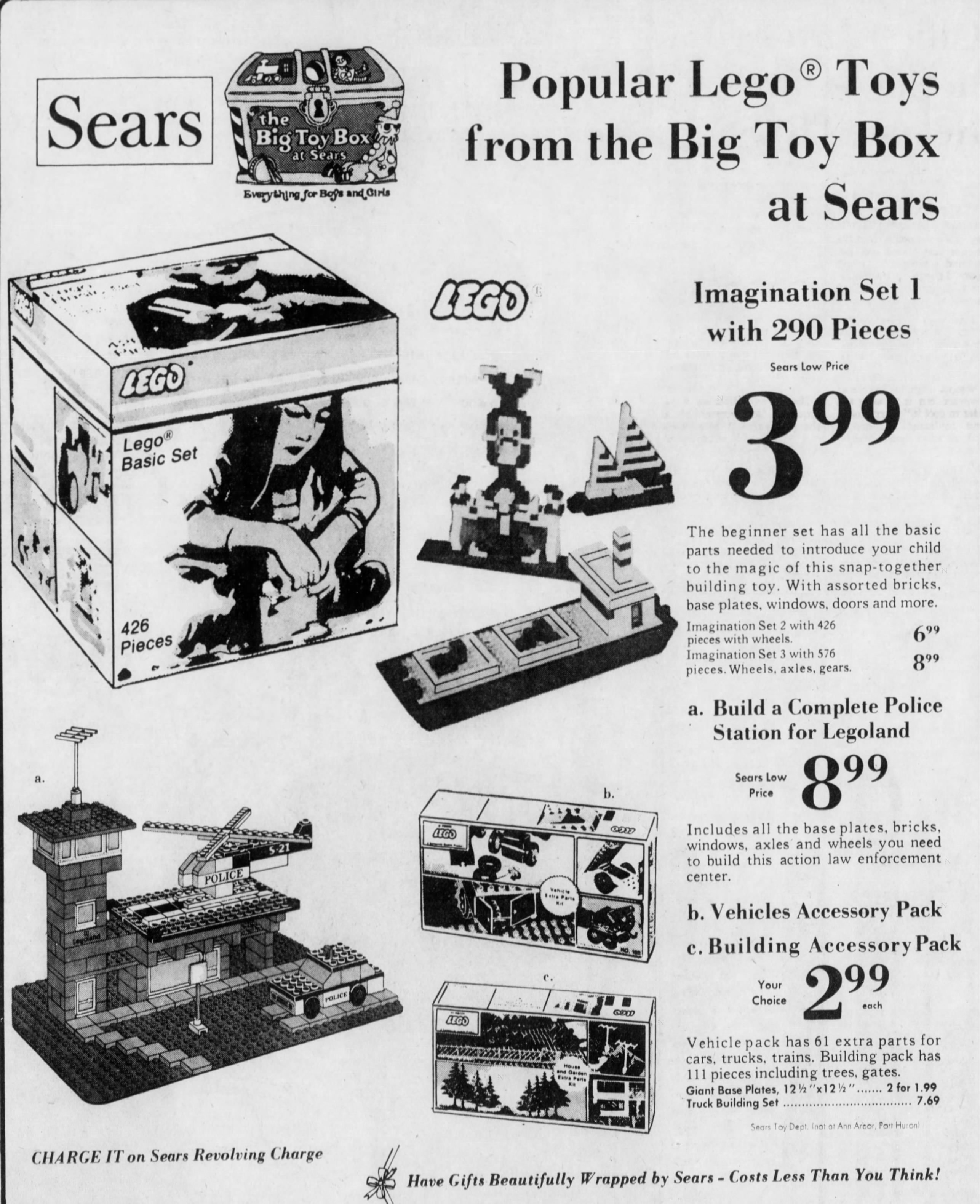
A release date prior to 1972 makes sense, as the box designs are explicitly indicative of 1970-71. The 166/167 sets do not appear in the 1970 Dealer Catalog, so they must belong to 1971.
Canadian supplements were doing their own thing by this time, so obviously the 166/167 sets were US exclusive. We'll talk more about the Canadian supplements in a separate article.
So we have a release date, a general RRP (with an asterisk), and known regional availability... when did the 166/167 retire?
In short, they would not have continued production beyond 1972, As that's when US production stopped. But what's interesting is that Samsonite updated their "catalog number" for 1972 via the 110 and the 111 Accessory Sets:
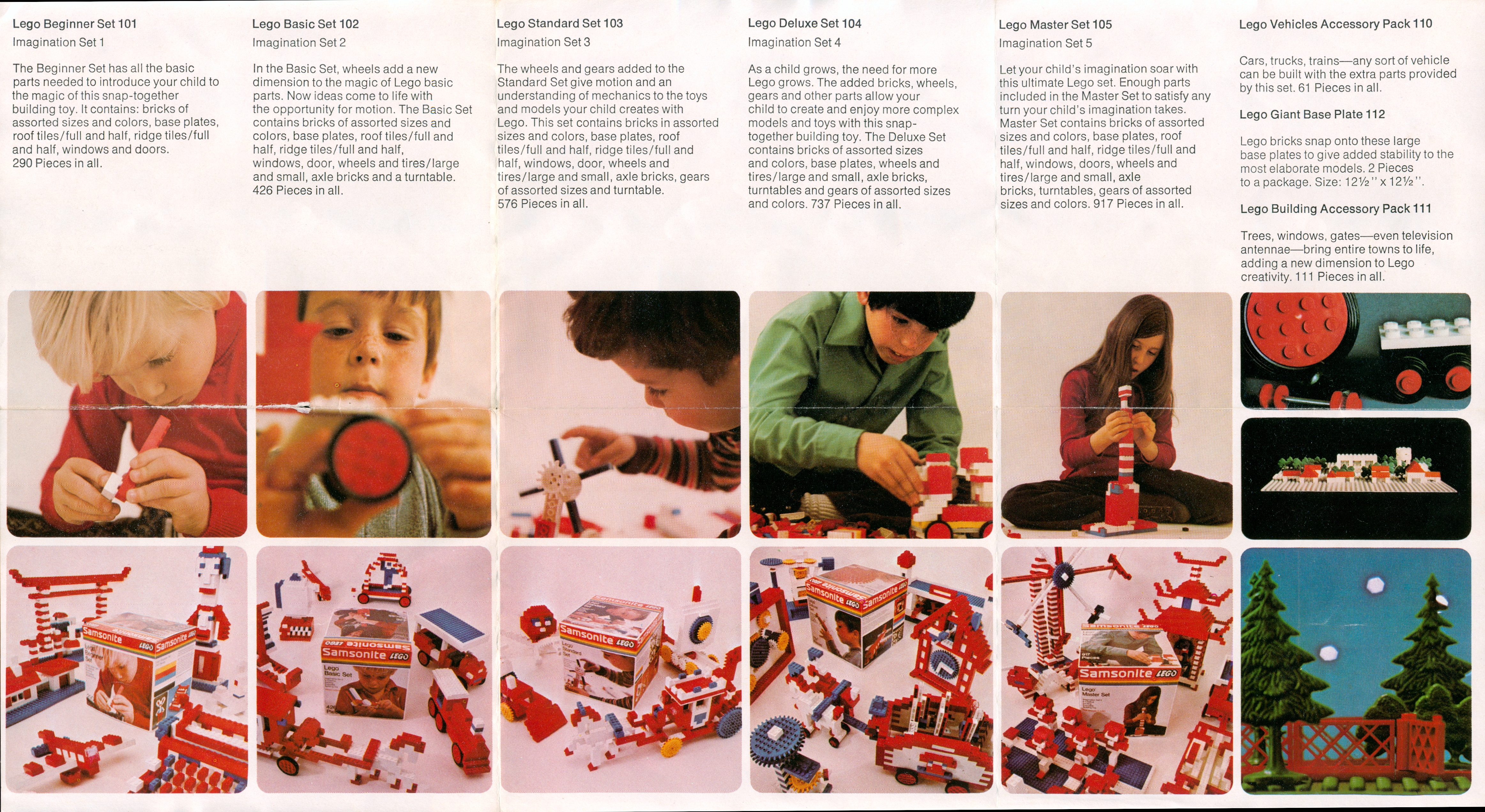
The reason for this change in particular is odd, but I believe an answer can still be extrapolated. By what merit, you may ask? Well, why is it that the 166/167's boxes are not shown(when they already existed for the 1971 season), but instead Samsonite used completely unique photos?
My ideas are still far in the early stages, and I must caution that it may not be anything dramatic or world shattering. It may be as simple as Samsonite intended to change the box design but opted not to. Or that they felt the images of the actual pieces better relayed what was in the box. It's interesting, however, that even the 1972 Dealer Catalog continues the trend of using semi-related images.
Regardless, the above catalog is very important for one point in particular: these sets weren't exclusive to anywhere. They couldn't have been department store exclusives as those kits were never advertised in normal catalogs before(i.e. 066 Governor Set, 223 Adventure Set, 080 Ambassador Set, etc.), there'd be no reason for these to be any different. Also the fact that they appear in the 1972 Dealer Catalog, they wouldn't be there if they were department store exclusives.
Regardless, that is all we know of the 166/167 Extra Parts Kits thus far.
But one more point before we end. I know, I know, I love to talk.
Why were the 166/167 sets so distinct?
It's a legitimate question.
The 166/167 and the 40x40 baseplates were the extras line for 1971-72. So we went from 144 different supplements in 1961-65, 14 in 1966-68, and ~15 (depending on what you count as a supplement) in 1969-70, why now only three for 1971-72?
It's a little difficult to demonstrate this empirically, but let's look at the supplements line in 1970:
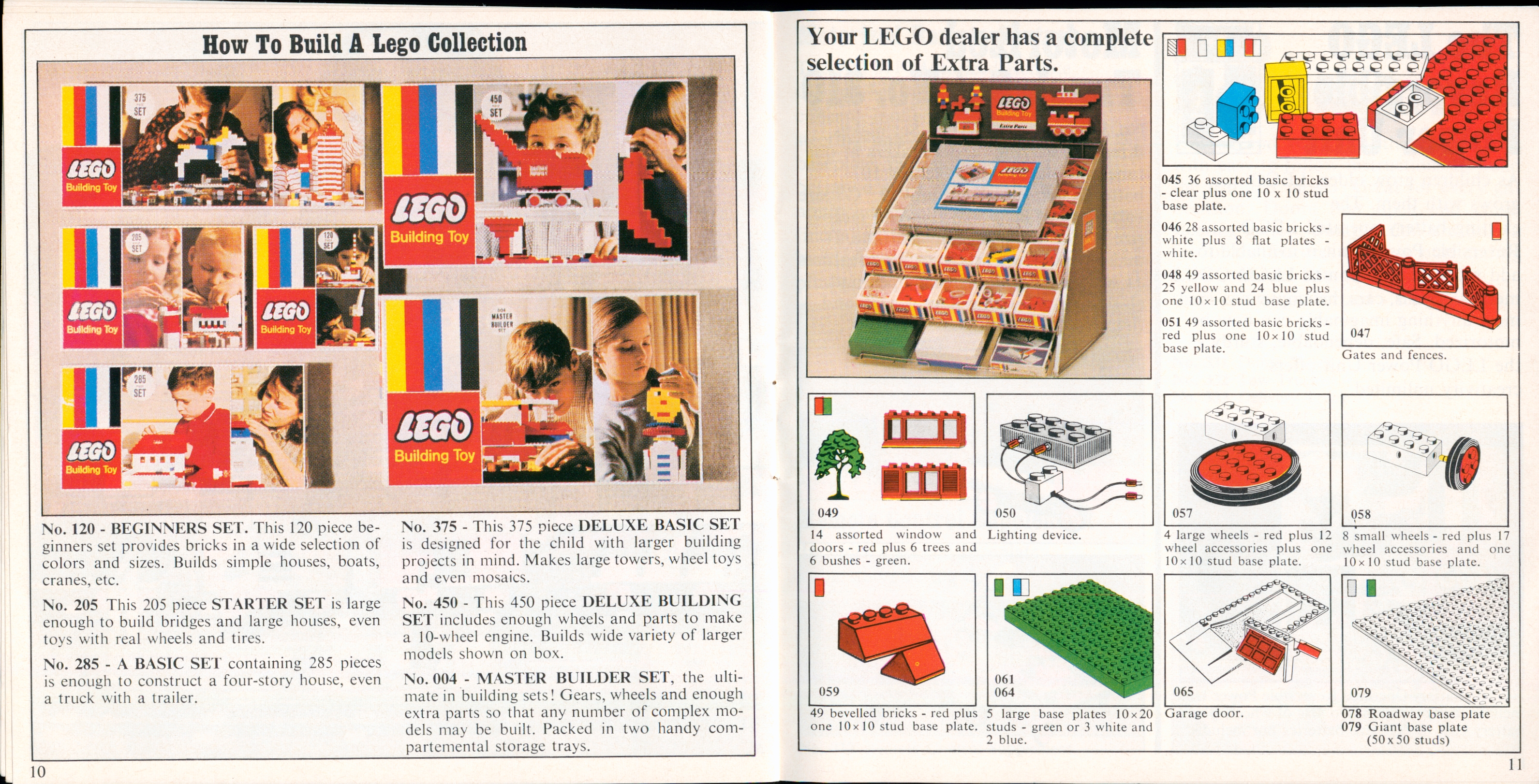
Specialty packs were evidently combined into two themed packs—one for "House and Garden" with trees, roof slopes, fences, and clear bricks. The "Vehicle" box was given plates and wheels(along with other mini-wheel Model Maker elements that were introduced to the US in 1970). Of course don't expect their inventories to line up one to one, but that comparison accounts for nearly all the specialty supplements shown.
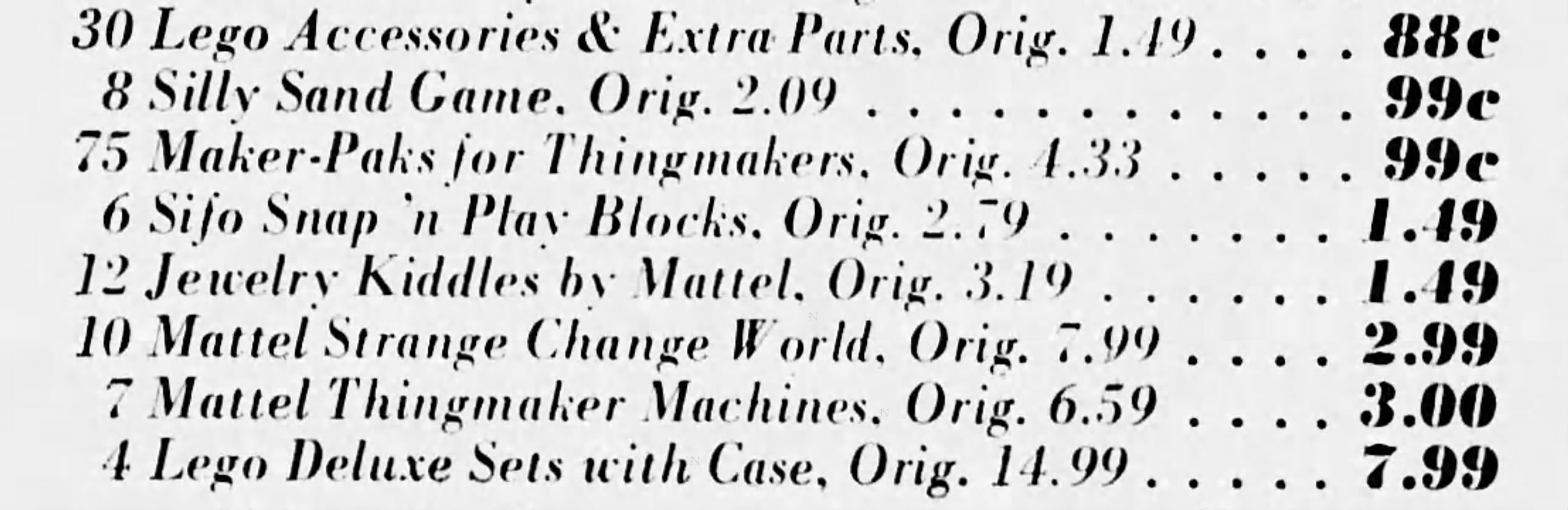
Thus, given also the knowledge we have about the supplements line getting restructured every few years(the trees one especially), it's pretty easy to see what happened. Stores struggled with Samsonite's supplements line (such as in this 1970 newspaper where a store had thirty at half price), so much so that stores were no longer using the above counter display(hence why boxes got a hang tag in 1969).
And Samsonite didn't see the inherent problem. Supplements were successful in Europe and elsewhere, they continued production in Canada in particular until at least the late 1970s. They're an important part of a product line, especially one like Samsonite's in which there are not too many specialty pieces in regular sets. So it was never that combining supplements into a much larger package made them any more appealing to the average buyer—they hadn't done the work to encourage parents to spend the money.
This was also a pattern that started with the 348 Mini-Wheel Car and Truck Set in 1970 and continued with the 349 Mini-Wheel Construction Set in 1971, wherein they'd take multiple models that sold as individual sets everywhere else in the world (including Canada), and instead released them as one combined set.
So in my mind, the 166/167 packs are excellent examples of how Samsonite approached the LEGO System. This is obviously part of a much larger conversation, but I'll touch on it here.
You'll see the citation online that a former higherup at Samsonite later remarked that Samsonite sold LEGO like they did luggage and that's why they failed. While that is a good way to conceptualize a complex issue, it simplifies too much. What does it really mean to sell LEGO like luggage?
Instead, from my view on the outside looking in, apart from the thousands of newspapers, catalogs, promotions, reports, numbers, and announcements I've reviewed these last few months, the reason Samsonite couldn't do LEGO justice is right here. They opted for cheaper, simplified production that convinced a retailer to stock it on their shelves. They assumed a consumer who bought LEGO would want more LEGO.
In engineering, there are two different approaches historically: empirical and scientific. The empirical approach means that you rely on observations and experiences alone while the scientific approach concerns itself with theory and specific properties of the system. That's how I see the difference between Samsonite's LEGO and the rest of the world, wherein Samsonite largely stuck to the empirical side of things and relied heavily on what they observed and reacted accordingly, rather than admitting flaws and taking the time to learn the theory behind them.