
Part Errors / Non-Production Elements
___
Samsonite's LEGO production often gets the reputation that it was careless and poor quality. I feel this is a little quick and unfair of a judgement based on cherrypicked examples, as well as hindsight knowing the result of the agreement, so today we will be going through everything as objective as possible. It is true that Samsonite's production quality varied, but very few of the below examples apply across the entire 1961-72 period.
The majority of Samsonite parts that reached retail are perfectly fine beyond inconsistent logo styles (which is purely cosmetic and not indicative of poor quality), but there are two common exceptions: logo orientation inconsistencies and surface defects.
Surface Defects
You'll see many discussions about Samsonite's LEGO production talk about worn molds being used. This claim stems almost exclusively from Samsonite's 1970s-era LEGO pieces, as they'll appear as below:
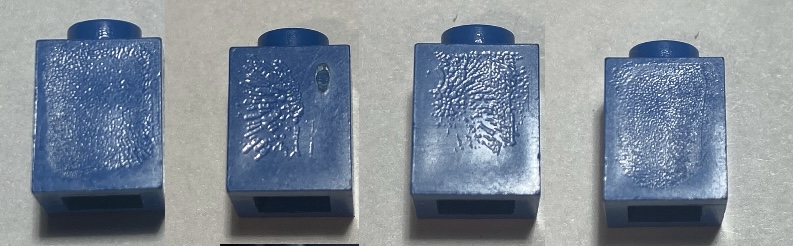
This is generally not a feature of worn molds however. It is a result of an incorrect molding process. I am not a plastics engineer, so I can't confidently say how these exact defects were produced, but many resources online can be found describing this exact feature and suggesting settings to tweak. Plastic molding is much more complicated than the condition of the mold (temperature, speed, contamination, etc.), and Loveland's workforce was largely unskilled laborers.
Find any number of these "worn mold" bricks in your own collection. You'll notice that the bad surfaces are always opposite of the molding pip. The 1x1 example above is also demonstrative of this despite being affected on all four sides, as the defect cascades in the direction that plastic flows through the mold, but there are examples in many different types of bricks:
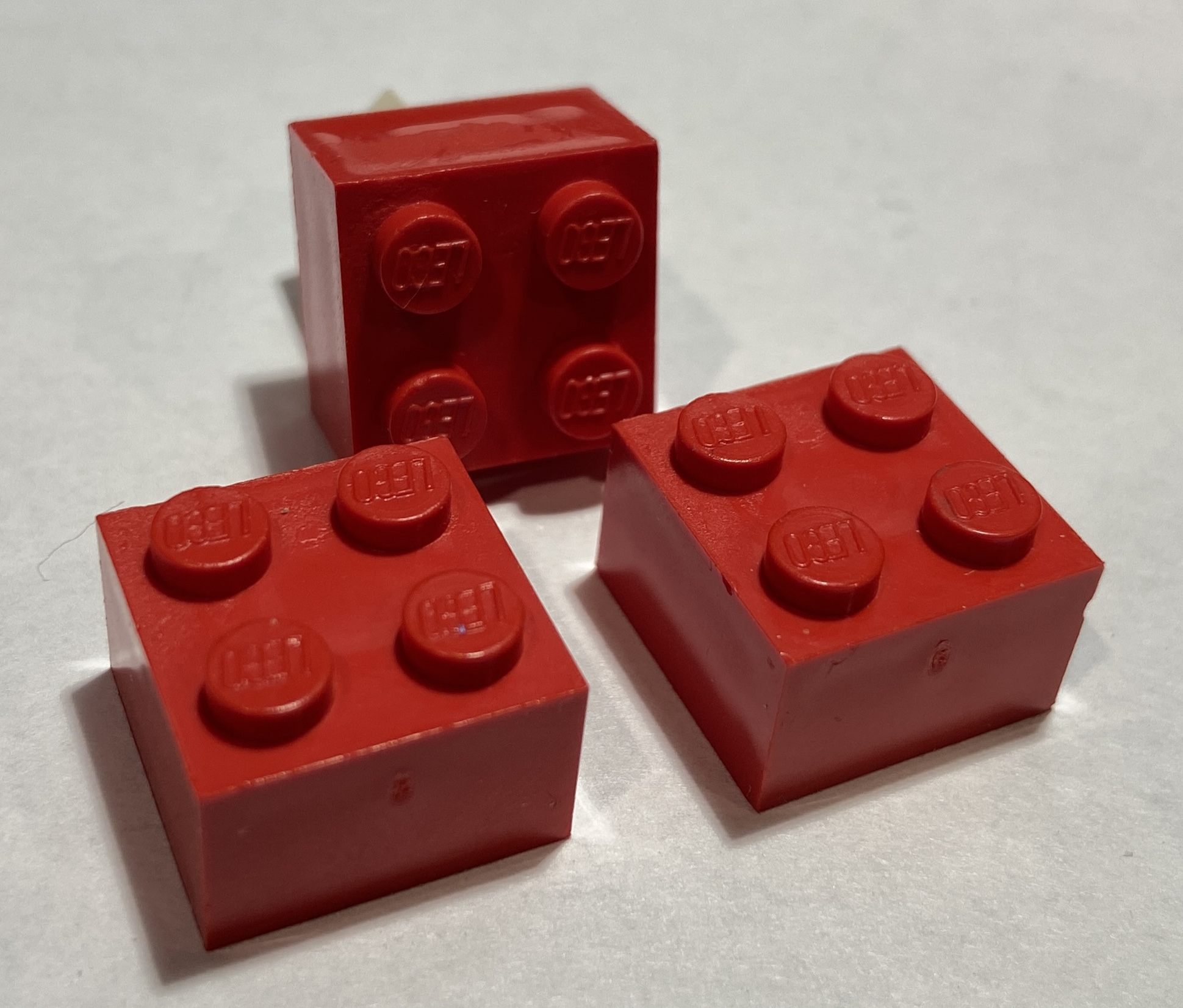
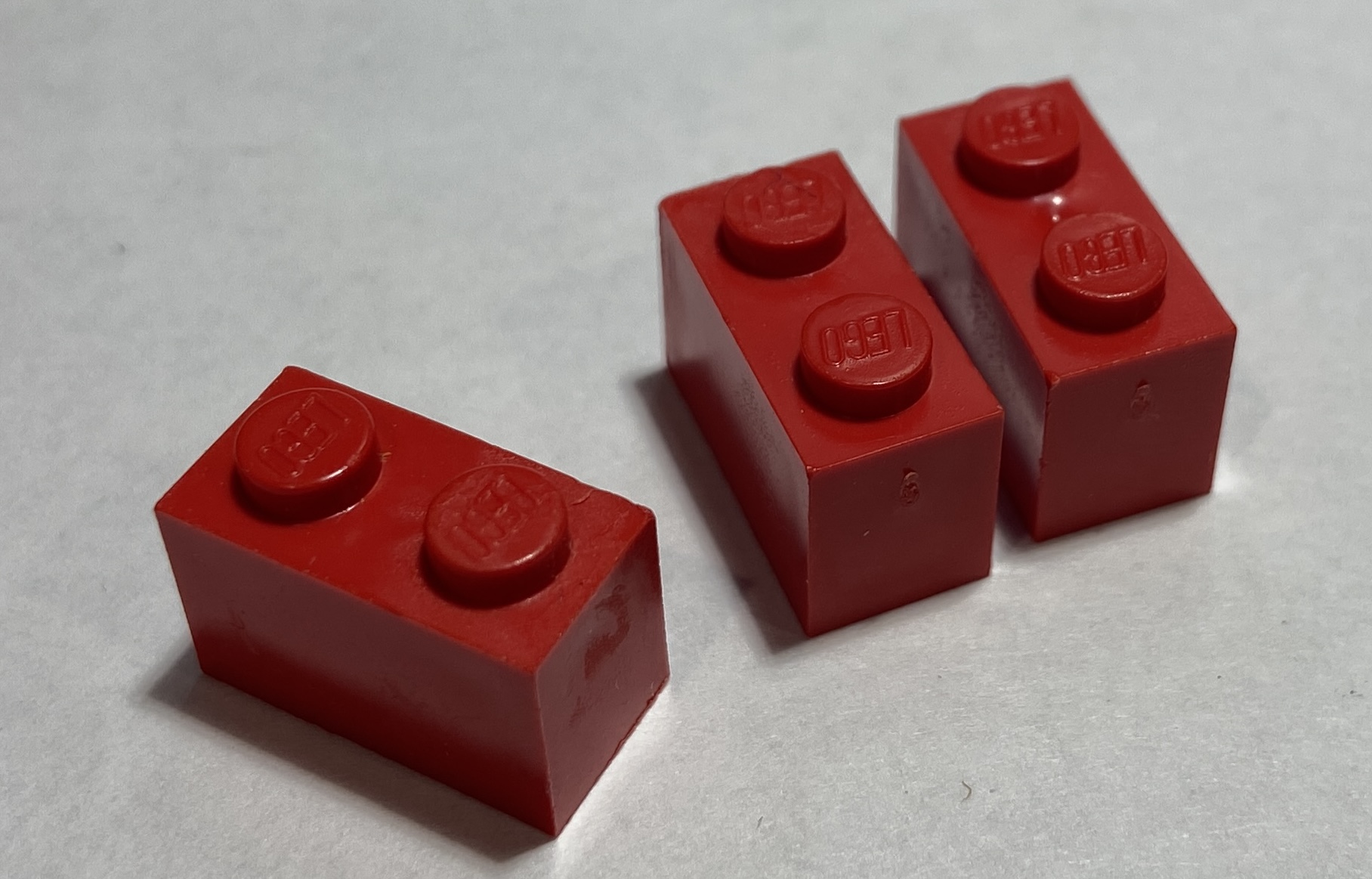
That isn't to imply Samsonite never produced pieces from a mold with defects, but the vast majority of cited examples are a result of incorrect calibration, not a worn mold. Besides, according to at least one source, Samsonite's molds were periodically inspected by TLG themselves.
According to A Toy is Born by Marvin Kaye, published in 1973, "Close cooperation exists between Samsonite's unusual factory in Loveland...and the Danish mother firm. Lego bricks must be produced accurately...and periodically the licensor in Billund examines Samsonite's molds to make sure the clutch power of the bricks is satisfactory."
The more likely explanation was that production of LEGO was increasingly rushed in the 1970s as Samsonite introduced more and more of their own plastic toys but did not hire many additional employees. Thus less time to calibrate/tweak molding machines. Not to mention the toy division 1971-72 had lost significant amounts of money, which would explain why suddenly these corners would be cut when it wasn't an issue prior. If true, it wouldn't haven been necessarily a deliberate attempt to lower the quality, it would've simply been an ultimatum the workers faced to meet quotas.
Logo Orientation Inconsistencies
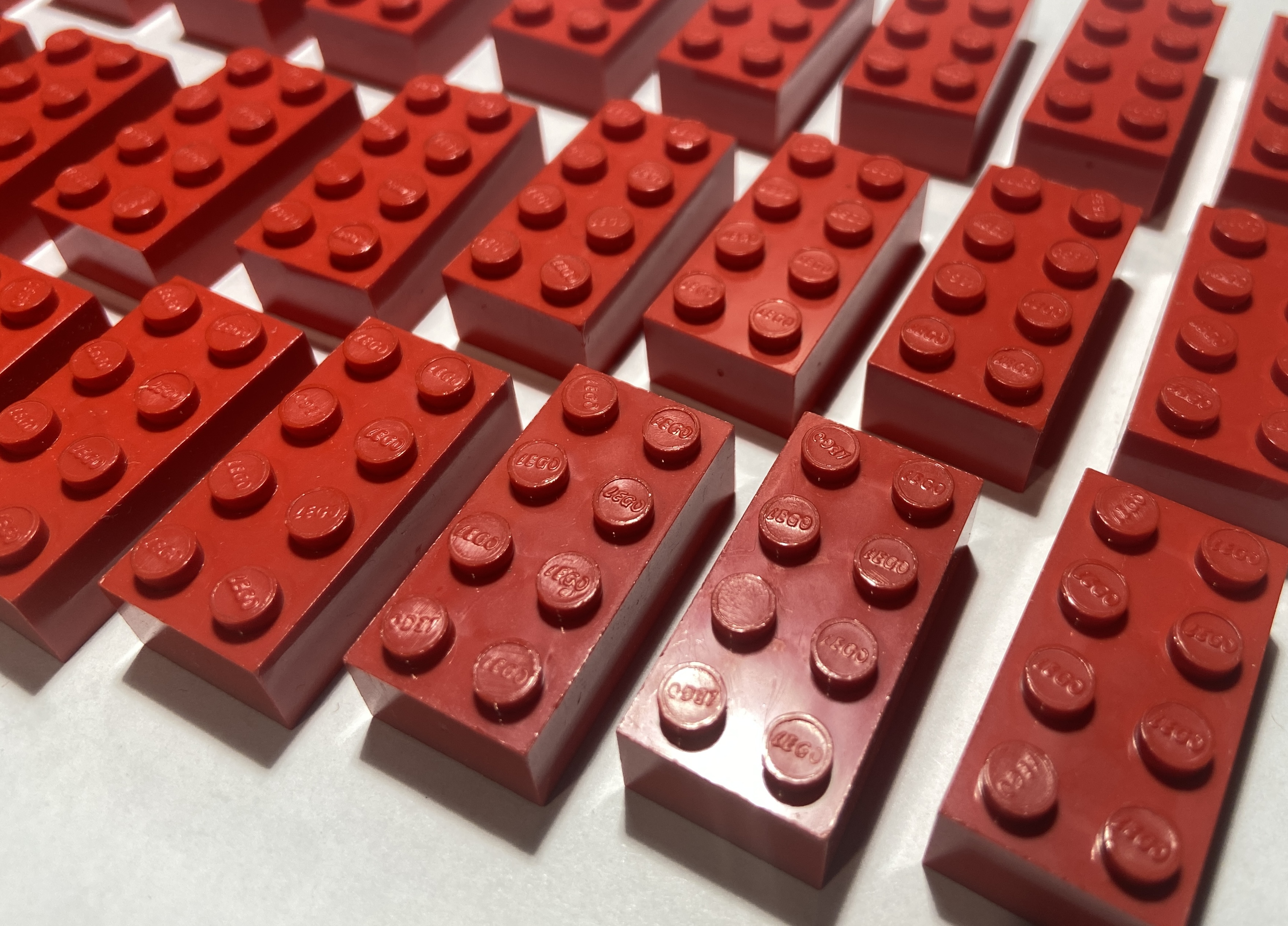
Vastly more problematic than different logo styles used for different bricks are individual parts being produced with studs not all aligned. These are somewhat common depending on the era of the collection, and logo orientations vary immensely across examples.
The below examples all come from one set, likely from 1967. I'm not sure the exact distribution window, but to my knowledge they are usually not found outside of the 1965-68 window.
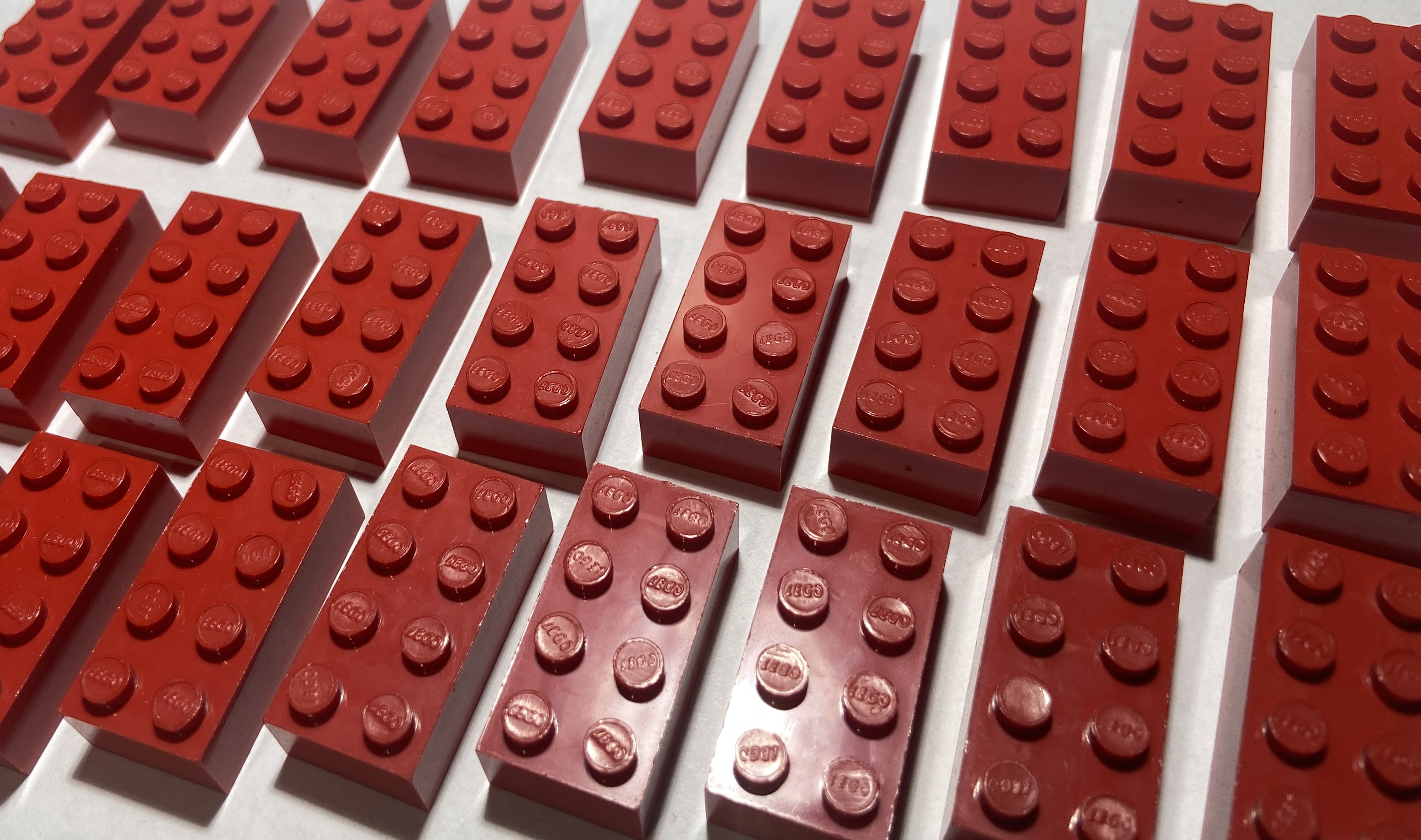
These are most likely a result of retooling, in which the threads for the studs (as the studs were separate from the brick mold itself) were not consistently threaded, meaning that any stud could potentially land anywhere when fully seated. That's a quess on my part, as only 2x4 bricks are affected, and these bricks uniquely come from an unmarked mold. Most examples are decently consistent, implying either some threads were left alone or an attempt was made to align the threads properly, but regardless here we are.
One brick in the set also featured a stud without any LEGO logo:
Which brings me to...
Double Logo Bricks
These I don't exactly know how they happened. They are most commonly found in cellulose acetate and molded in red. Based on this and the logo style, I suspect they could've been produced anytime between 1963-66 and probably were only available for one season:
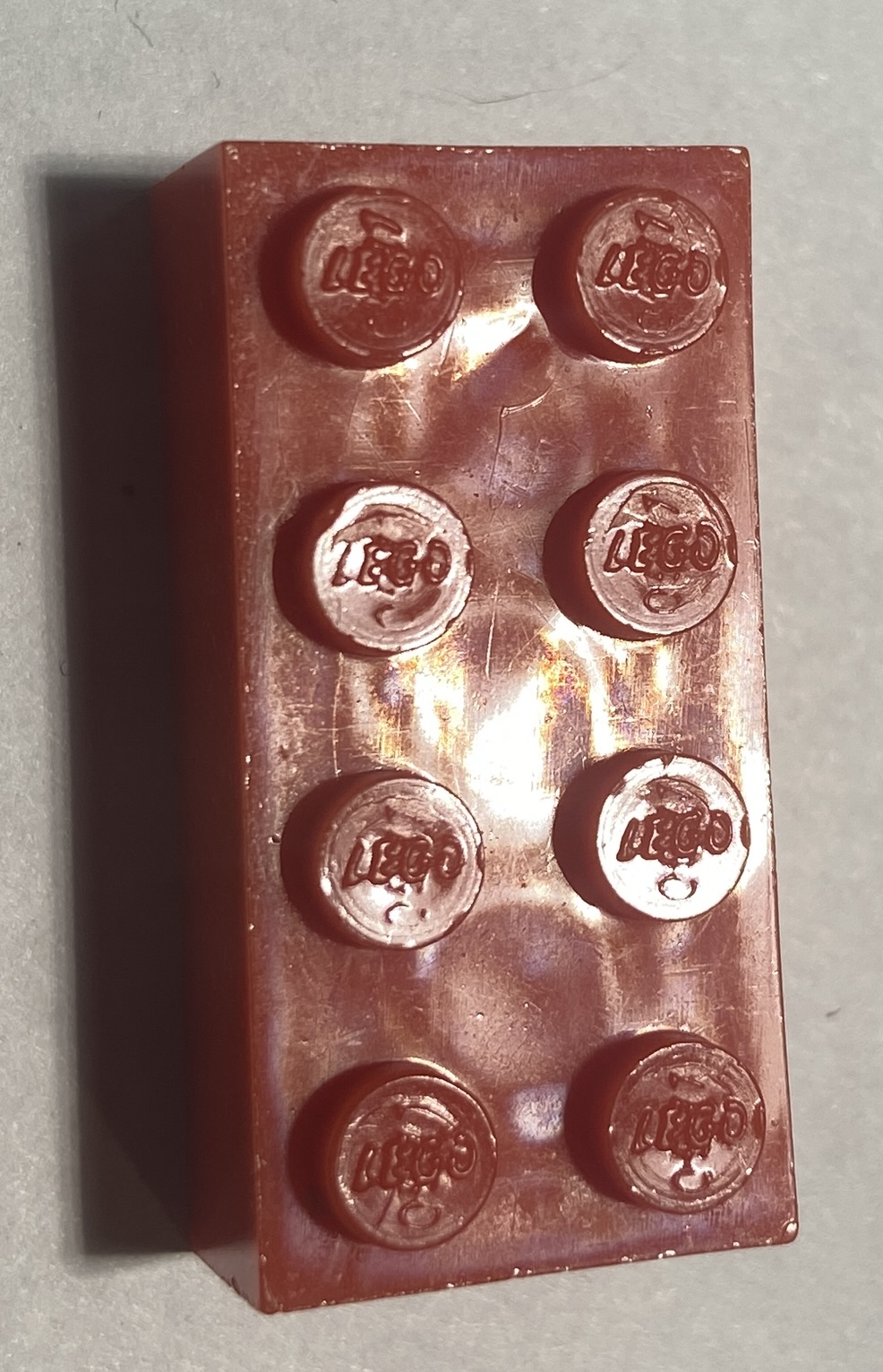
They are also fairly common depending on the age of the collection.
Short Shots
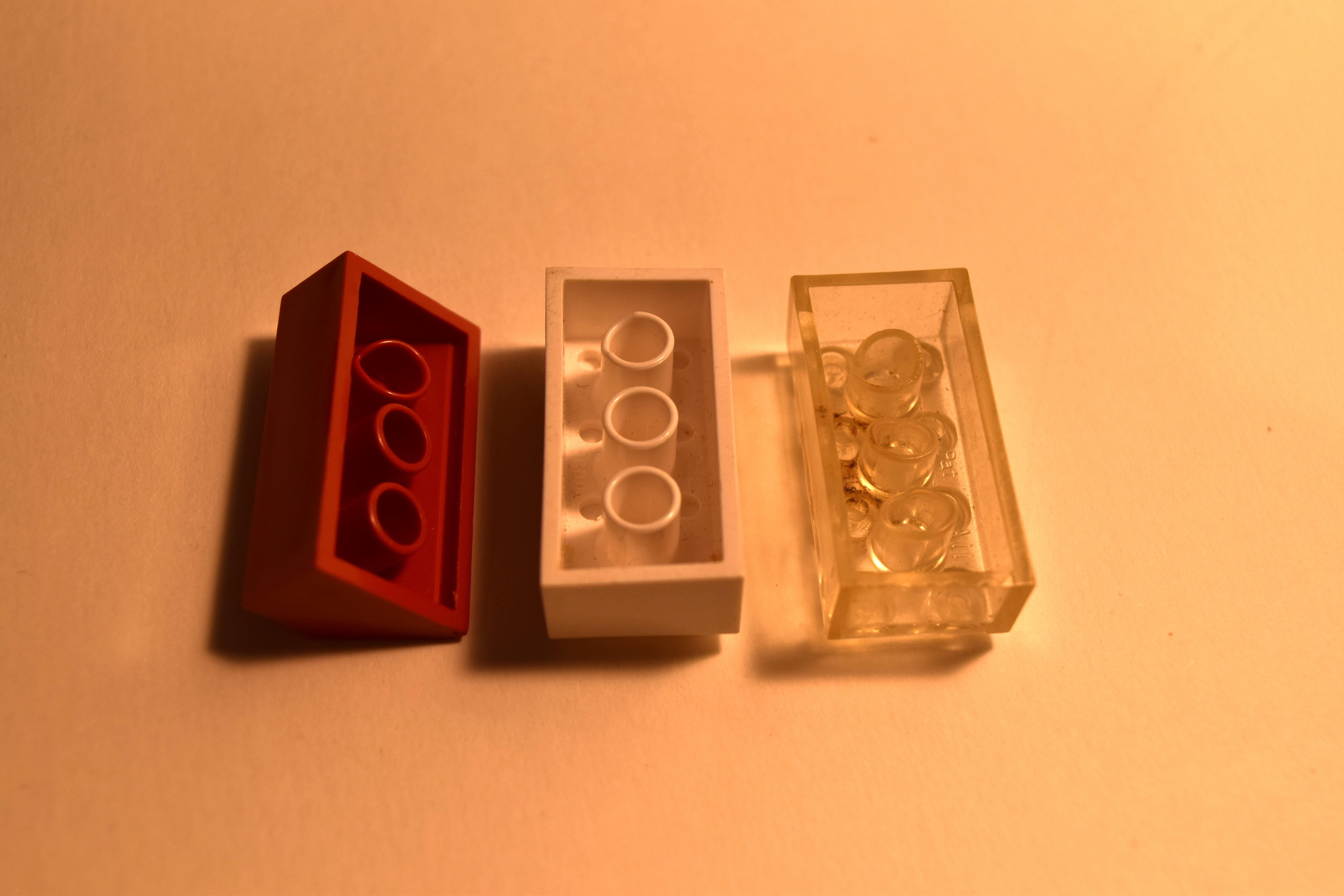
Getting more into the universal part errors, common in the plastic molding process are what are called 'short-shots', in which not enough plastic was able to fill the entire mold before hardening. It's different for every piece, as it depends entirely on where the injection port is.
The most common are the ones missing part of their inner tubes:
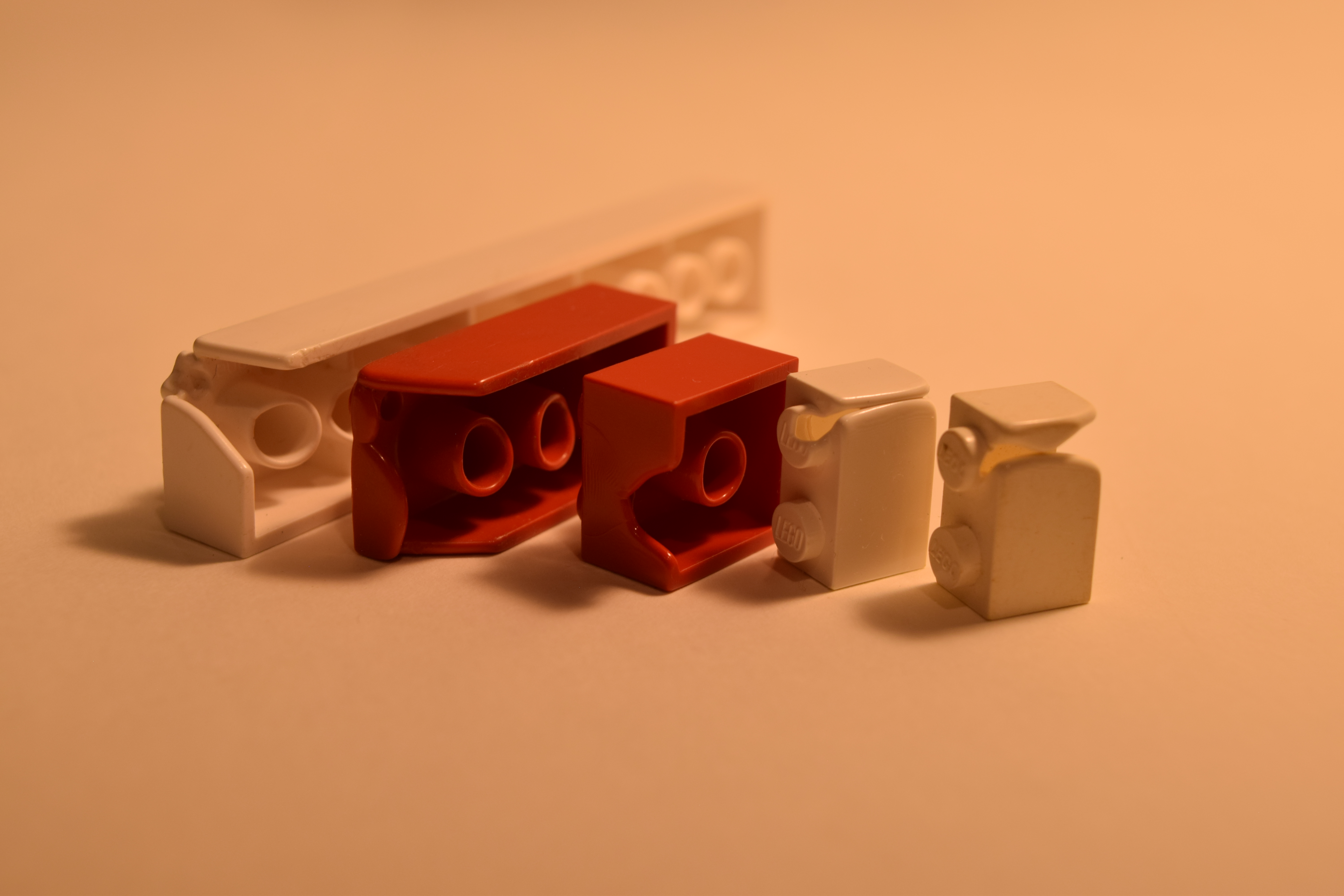
Some short shots do not fill the entire brick, leaving a melted sort of appearance on one end. The brick on the far right is actually a European short shot from the same era, demonstrating this problem was not exclusive to Samsonite's production:
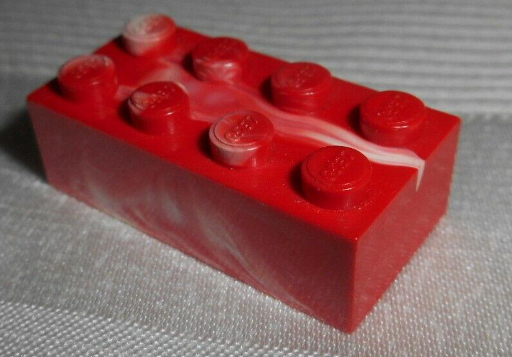
There were also marbled bricks, when two colors of pellets were mixed together in the same molds. These were generally not available at retail and instead were taken home by plant workers:
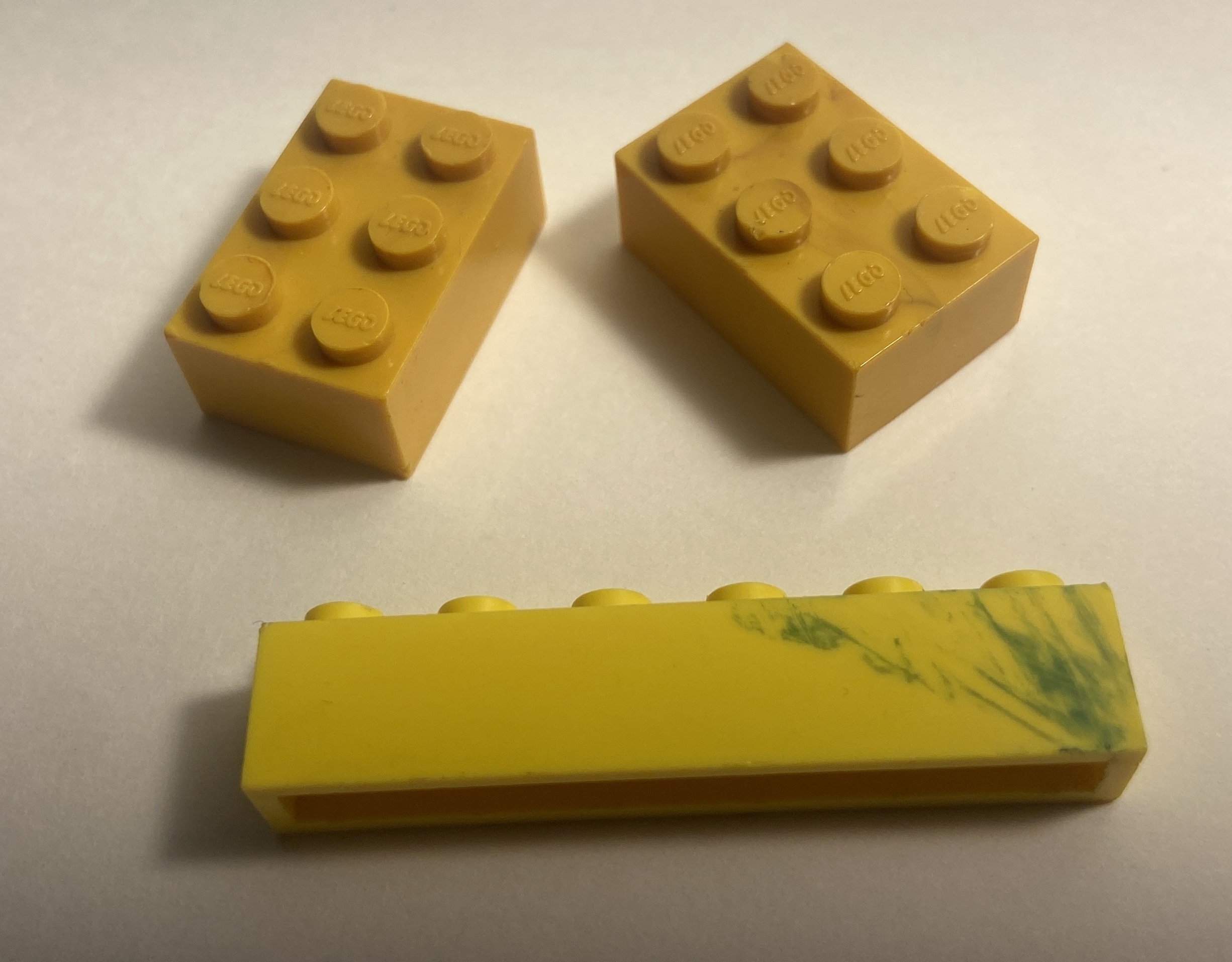
There can be several different types. Below is an almost normal yellow 1x6, but with a bit of blue pushed to the end. Then there are two 'golden' 2x3 Samsonite bricks, a mixture between yellow and a little black that formed a new color rather than marbling. I feel those were more deliberate:
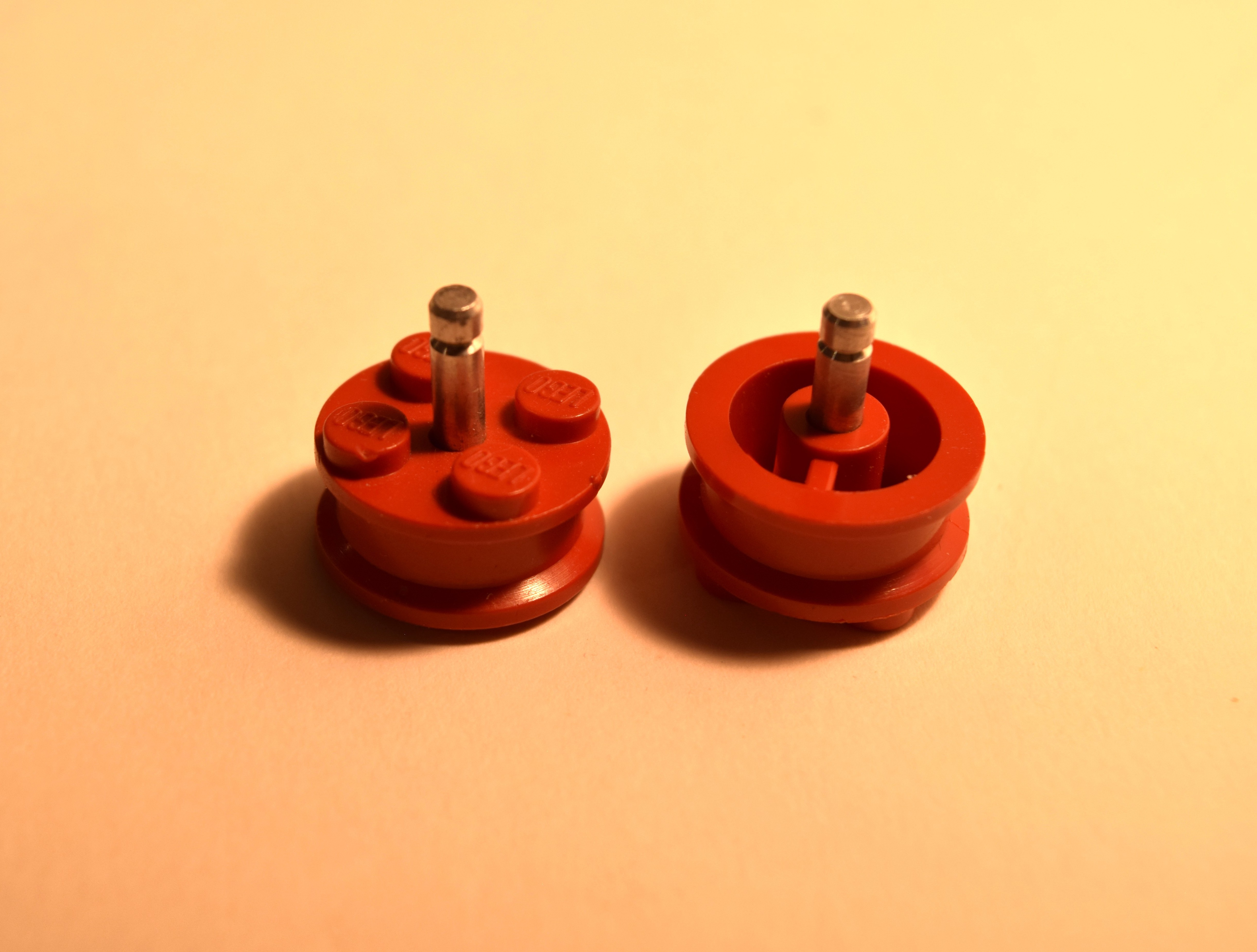
Then there are things that are a little more bizarre... such as this wheel with the axle inserted the wrong direction:
I have several examples of each of these on hand as I've been purchasing large lots of LEGO Samsonite over several years. In my experience, without accounting for pieces with logos oriented the wrong way, much less than 10% of all parts produced exhibit the above problems. I'd venture to guess only ~5% of parts sold at retail were impacted, but that's just my anecdotal experience.
Another thing I want to mention is that most of the above pieces are generally not valuable. The red/white marbled brick is quite nice, and people do collect them, but a short shot or random logo brick is not worth much. Again, my own opinion.
One thing I want to reiterate is that some of these aren't necessarily "errors", but instead non-production elements.
One of the most common anecdotes from the children of Samsonite LEGO plant workers was that their parent would come home with special marbled LEGO bricks or factory seconds. It makes sense, as otherwise they'd have been thrown out. So many of these were never intended for the consumer, and close to sixty years later it's really hard to discern a non-production element from an error that was never caught.
There are genuine things to mention, such as the first two examples in this article, but I feel they are blown out of proportion as they can usually be narrowed down to a specific production window. And when two pieces have different logo styles, that isn't immediately indicative of poor quality. The 1x6 bricks are an excellent example, as they deliberately organized the two different styles so as to be uniform.