
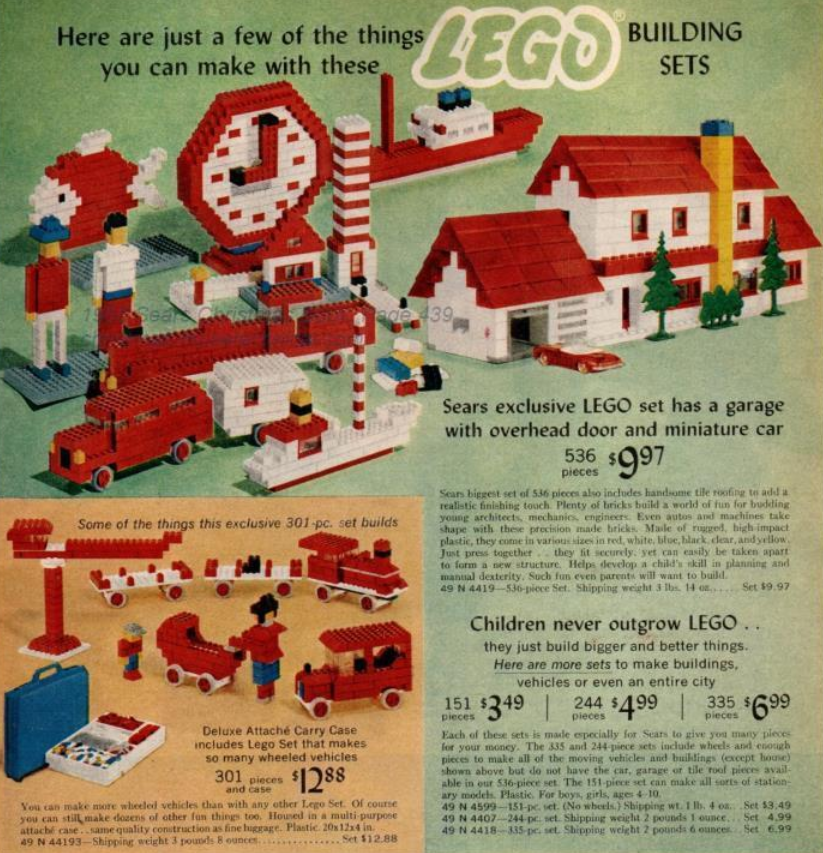
151 151-Piece Set
General Information
The following information has been collected from original newspapers, catalogs, and magazines, some of which are freely available for reference below. The rest can be found in the site’s gallery. No aggregate catalogs (BrickLink, Brickset, etc.) were used.
Instructions: Partial example
Advertised Part Count(s): 151 pieces
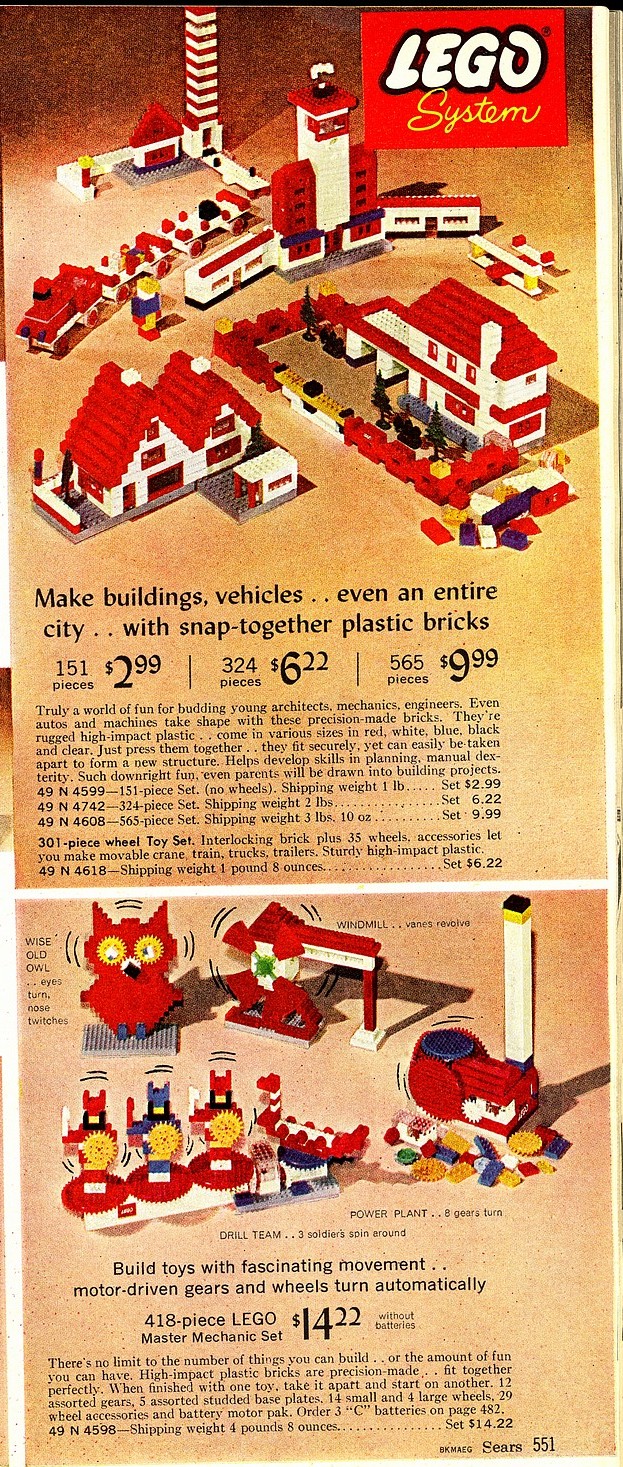
First Year Confirmed Available: 1966 (USA)
Sears Exclusive, USA Only.
Most Likely Retirement Date: 1970
The 151 continuously appears in Sears catalogs from 1966-70, but is missing from the 1971 Sears catalog.
Last Year Seen Available: 1970
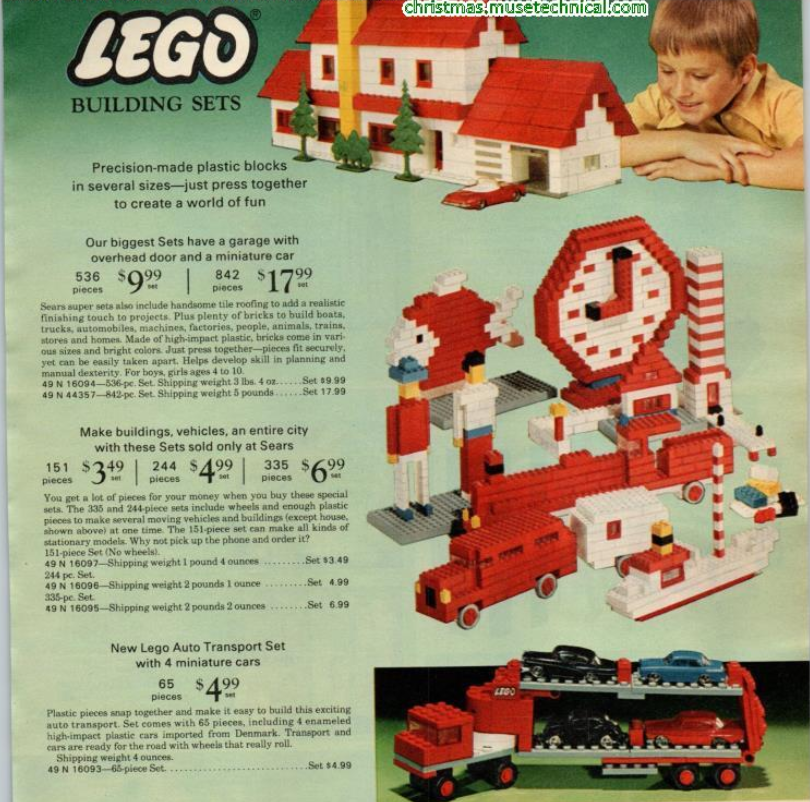
Aliases: 151-piece set, 49-4599, 49-16097, 461511 (assumed manufacturers number)
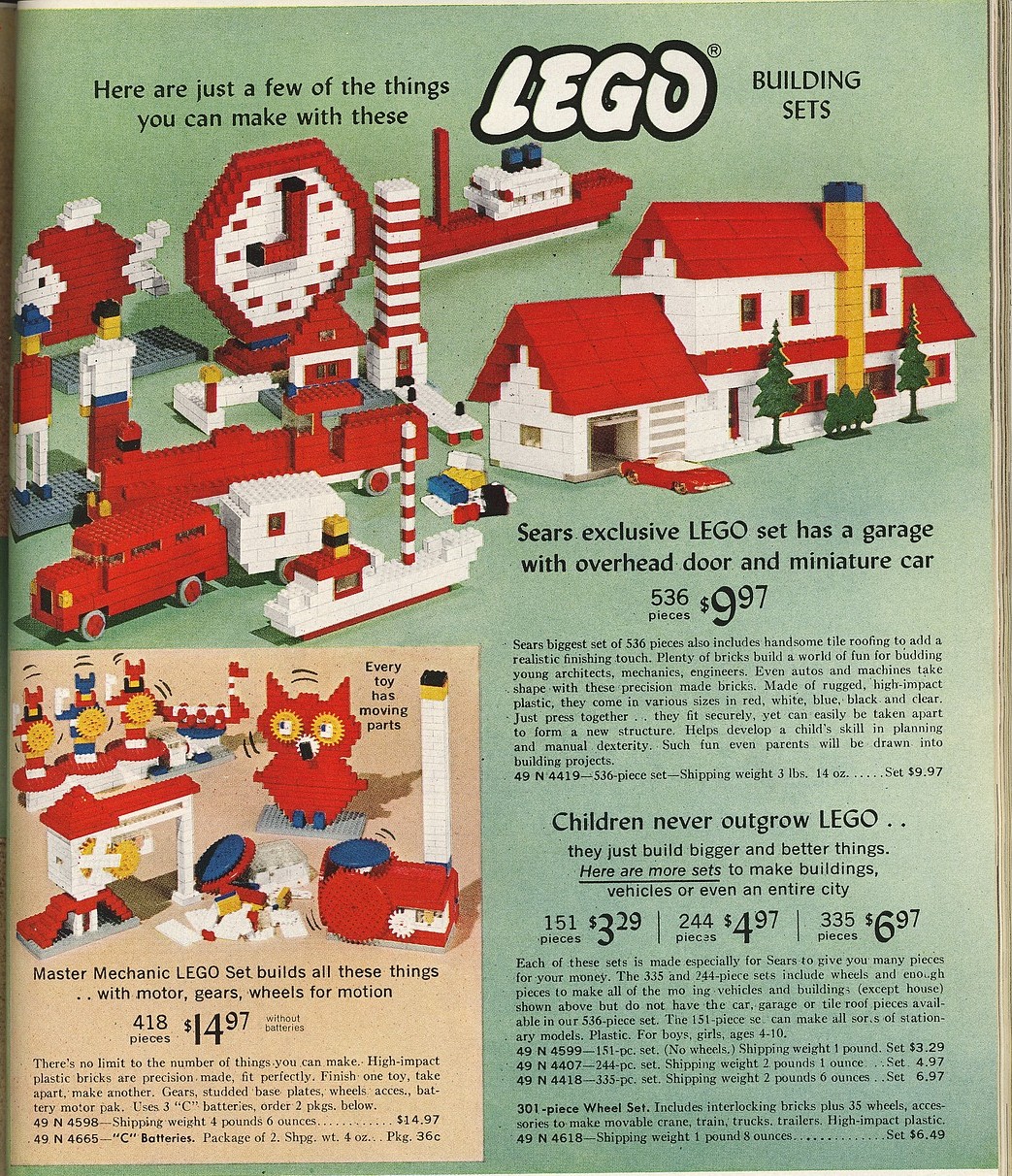
Retail Price(s): $2.99 - $3.49 (USA)
Rarity Score (Index): 7/7
Known Box/Packing Variants
There are likely a few versions of the outer shipping box (i.e. with or without the manufacturer number 461511 or red printing), but the 151 never had a colorful box as it was retired in 1970, the year before the 835 Advanced Builders Set evidently got a colorful box.
There should exist, however, at least a 1970 version of the 151's plain box stamped with the updated catalog number 49-16097.
The 151's box is notoriously difficult to find and not many have surfaced, hence the 7/7 rarity score.
Box/Overview
As mentioned above, the 151 is very elusive, which honestly baffles me. It is the only Sears exclusive that was not replaced/updated after 1966. In 1966, all sets except the 151 were replaced with new versions, all except the 151. It makes regular appearances until its final appearance in 1970, which is confusing. There are more examples available of the other two 1966 sets that were only produced for one year.
One should wonder: why is this set so difficult to track if it was produced for so long?
My thought is that there are a number of factors working against the set. Similar to the 042 Jumbo Brick Pull Toy (which also has a severe lack of surviving boxes), the 151's small box provides very little storage value. It would make sense that if a collection consisted of the 151 and a larger set, that the larger set would store all the pieces and the 151's plain box would be discarded.
While that's an idea that makes sense, I still feel there is something I'm missing about this set. It seems to have sold decently, otherwise it would not have survived the 1967 restructuring of the Sears line (the only set to not be updated/changed between the 1966-67 season), nor have sold all the way into 1970.
The set used the same box as the 120 Basic Set, though the 151's drawer likely wouldn't have had any identifying numbers on it.
Contents
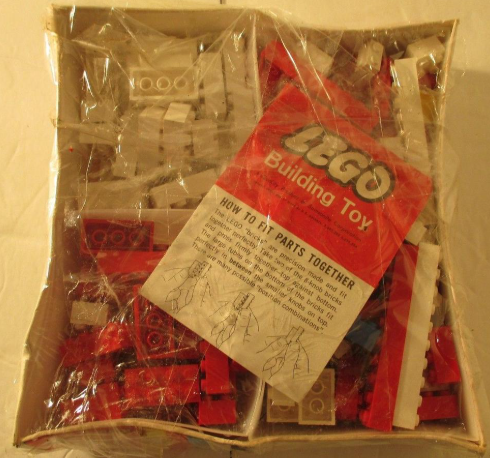
The set's contents were just basic pieces. Below is a (sealed?) example of the 151, identified via the size and presence of the pamphlet, a pamphlet only included with catalog sets:
Sears exclusive pamphlets are most commonly able to be identified via the lack of yellow printing in "Building Toy".