101, 102, 103, 104, 105 Imagination "Cube" Sets
General Information
*The following information has been collected from original newspapers, catalogs, and magazines, some of which are freely available for reference below. The rest can be found in the site’s gallery. No aggregate catalogs (BrickLink, Brickset, etc.) were used.
While we could split them into five distinct entries, that would be a waste of time. They share similar designs, sources, and information, so they'll be covered together.
Advertised Part Count(s):
101 Beginner Set - 290 pieces
102 Basic Set - 426 pieces
103 Standard Set - 576 pieces
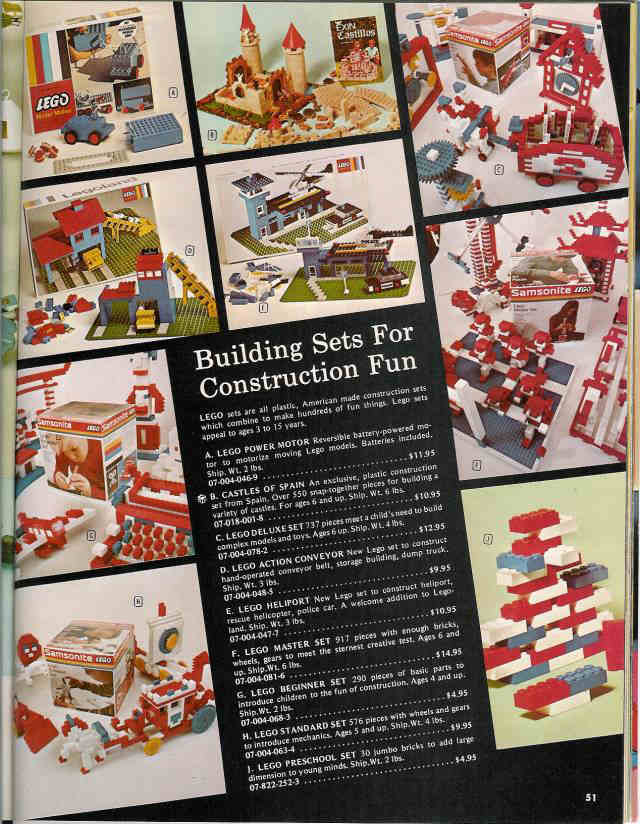
104 Deluxe Set - 737 pieces
105 Master Set - 917 pieces
First Year Confirmed Available: 1972
All five Imagination Sets first appear available in 1972.
USA Only.
Most Likely Retirement Date: 1972
Production would not have continued beyond the 1972 season, as the last season Samsonite had the license for was 1972.
Last Year Seen Available: 1973
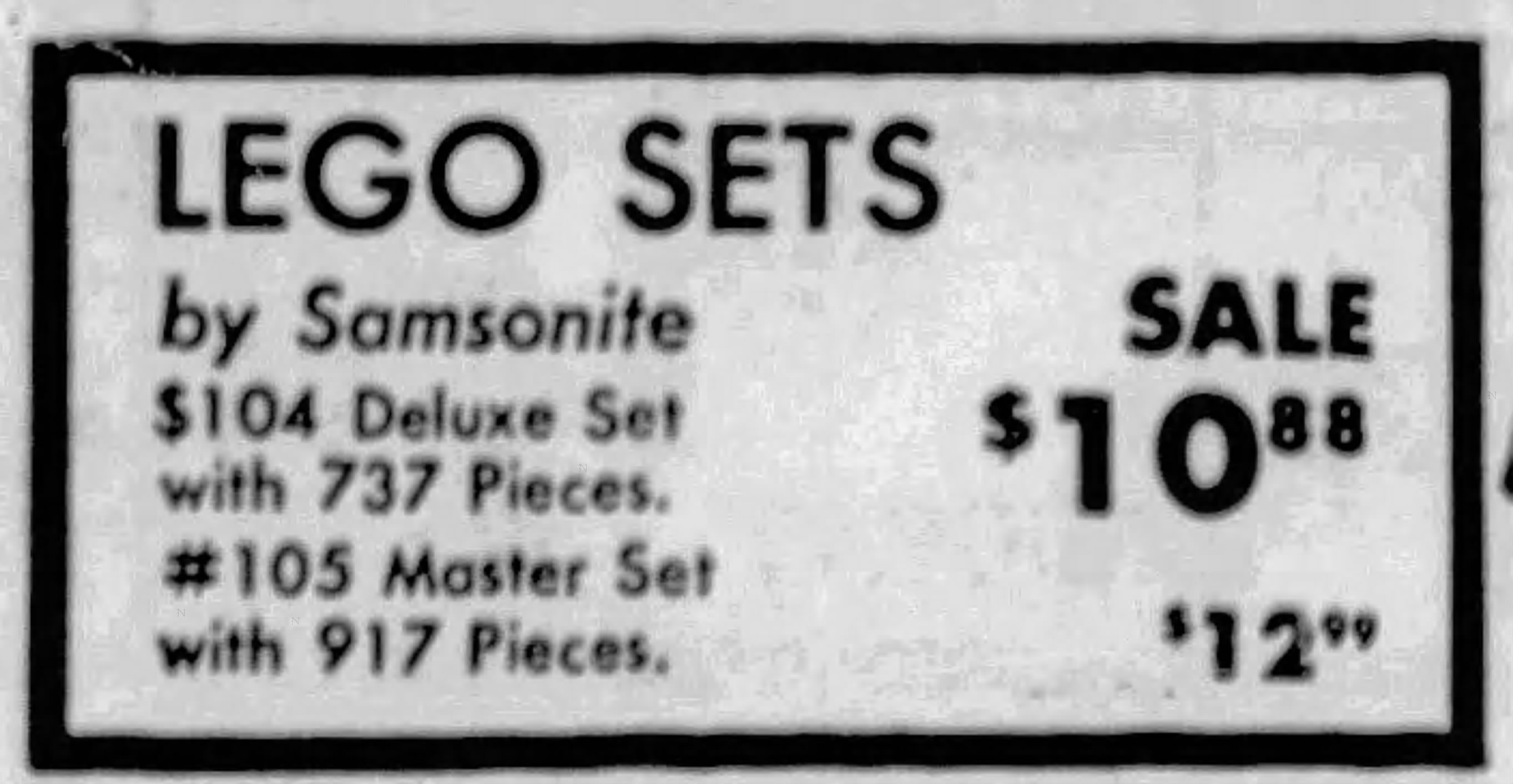
The Peninsula Times Tribune, November 22nd, 1973
Aliases:
As names for these were wildly inconsistent and generalized across all sources, it would be unhelpful to list them all out as we normally do. Instead of being a list of contemporary aliases, it would be a long list of synonyms or incredibly general terms like "Large Lego Set".
Instead, we had two main aliases:
"Set number + Imagination Set" (i.e. 101 Imagination Set)
Or the designations: 101 Beginner Set, 102 Basic Set, 103 Standard Set, 104 Deluxe Set, 105 Master Set
Retail Price(s):
101 Beginner Set - $4.99
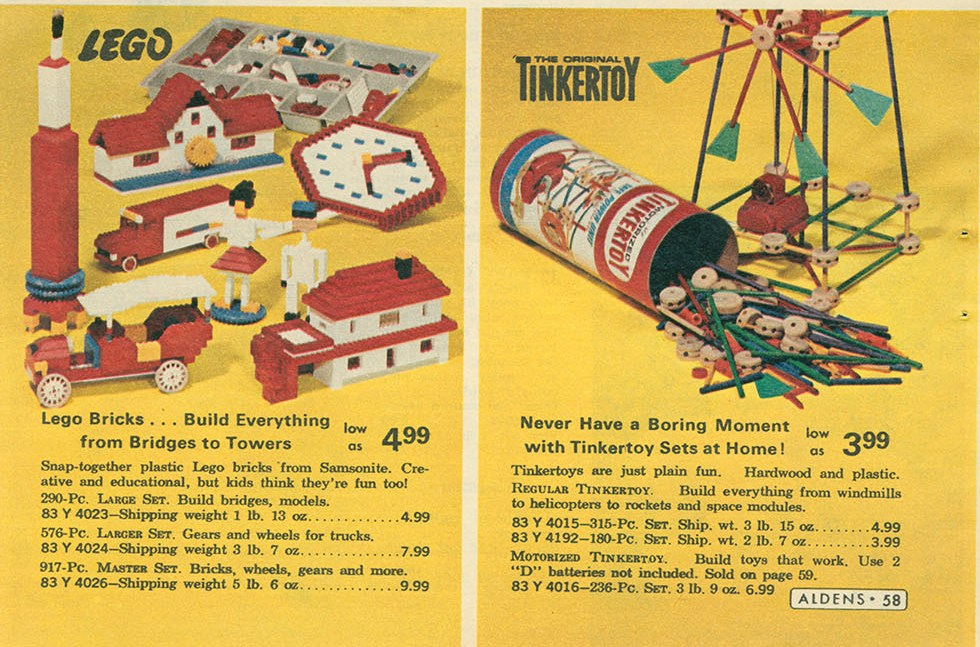
102 Basic Set - $5.98
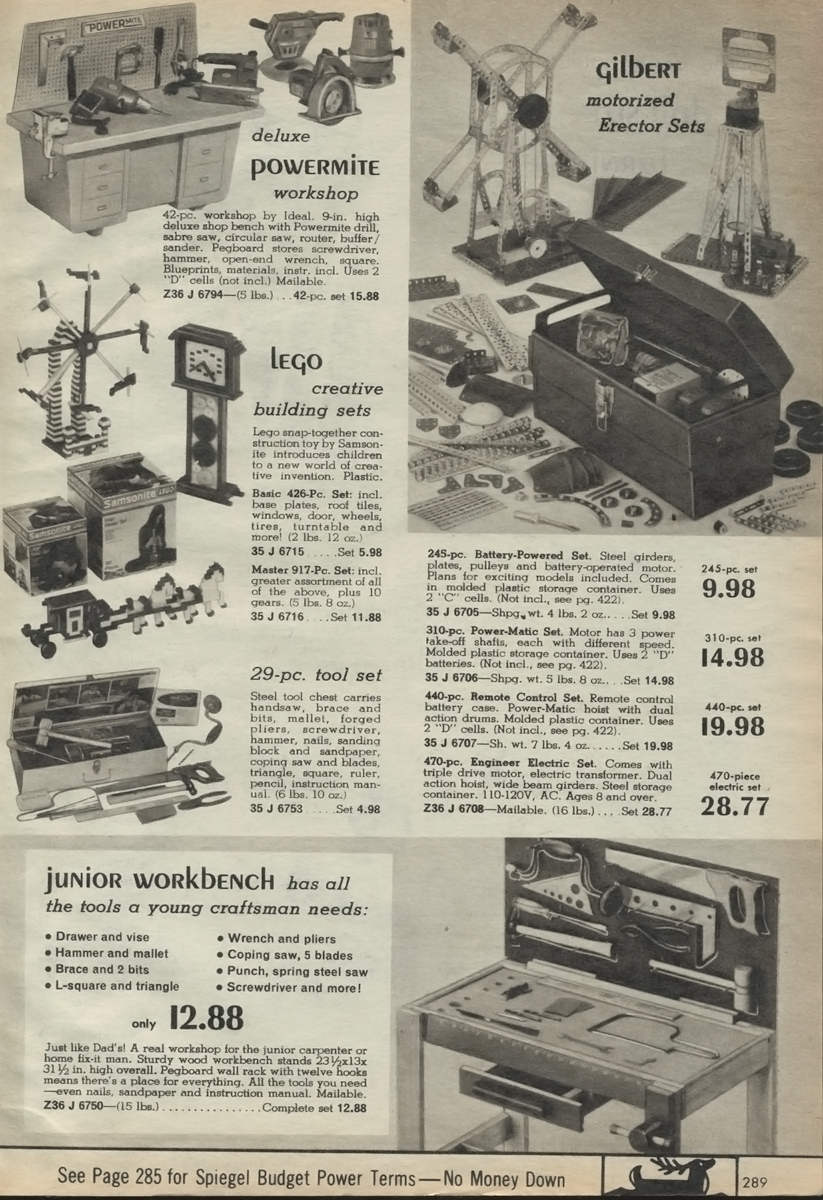
103 Standard Set - $7.99-$9.95
104 Deluxe Set - $12.95
105 Master Set - $11.88-$14.95
Rarity Score(Rarity Index): 3/7
Some sets are rarer than others (especially if you're looking for specific variants), but generally this score applies.
Known Box/Packing Variants
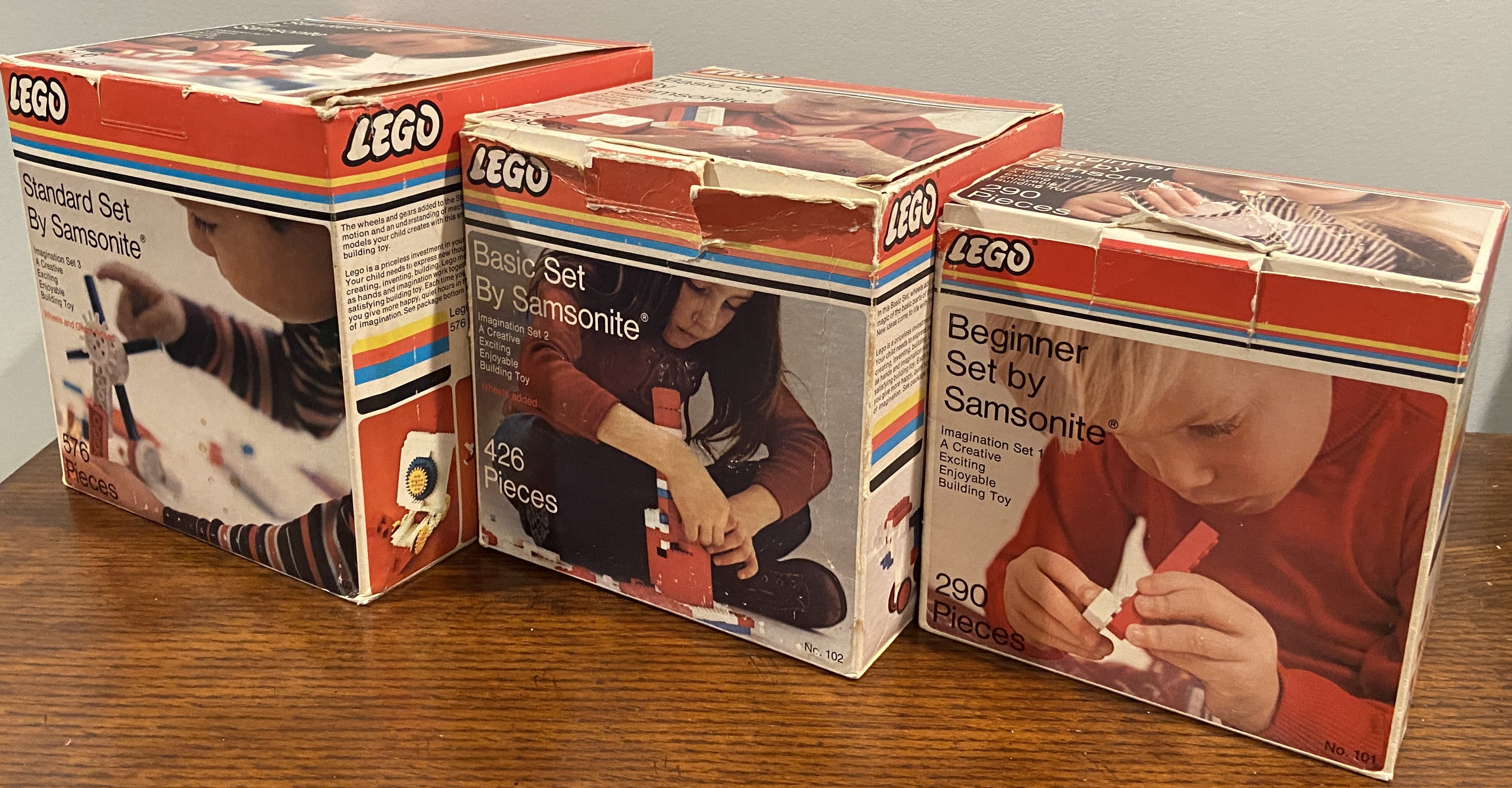
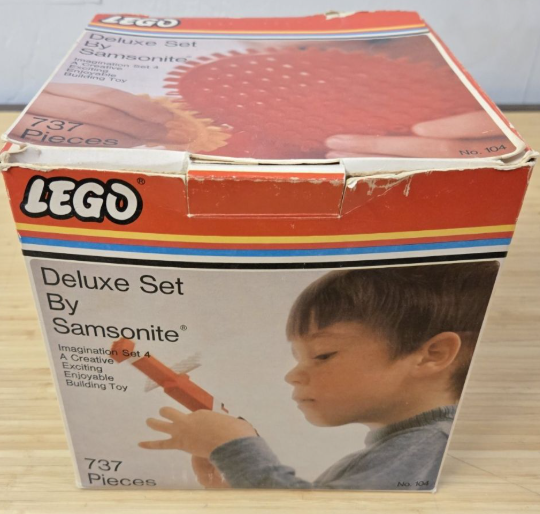
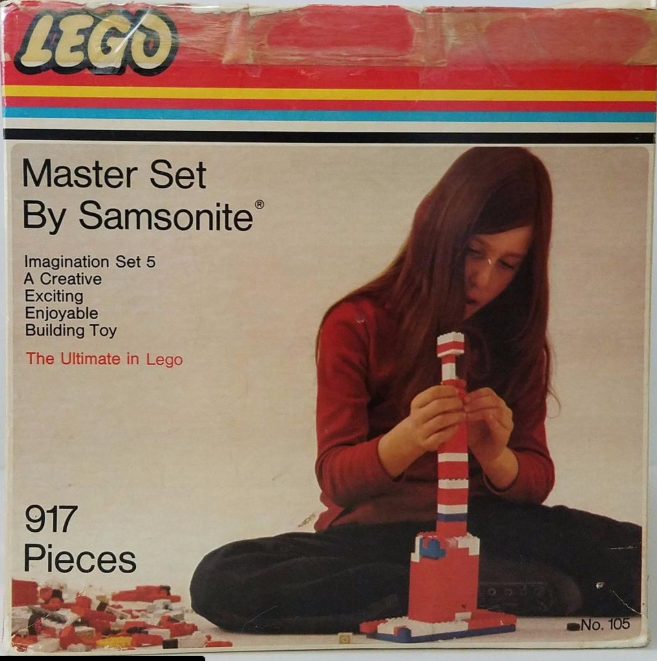
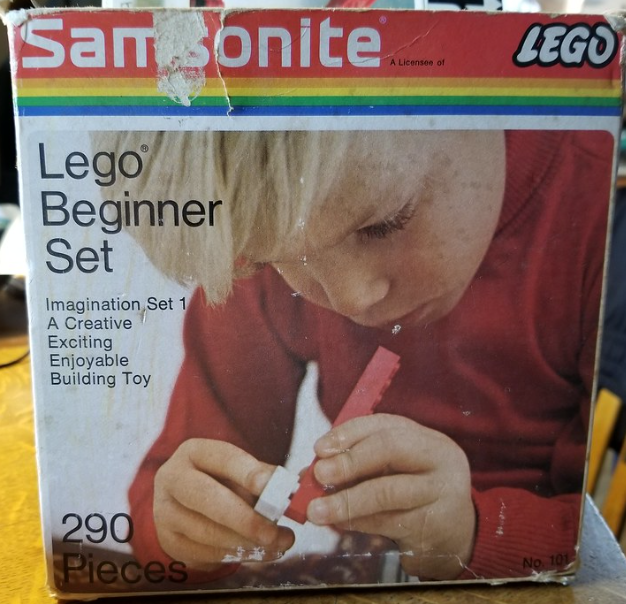
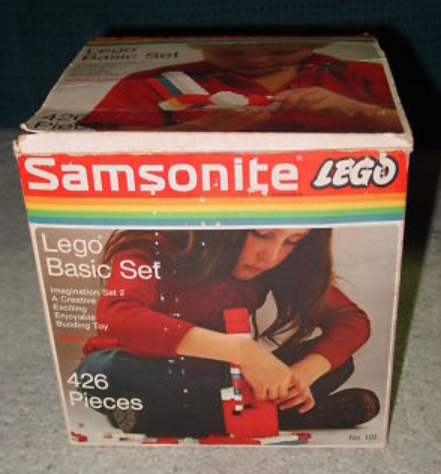
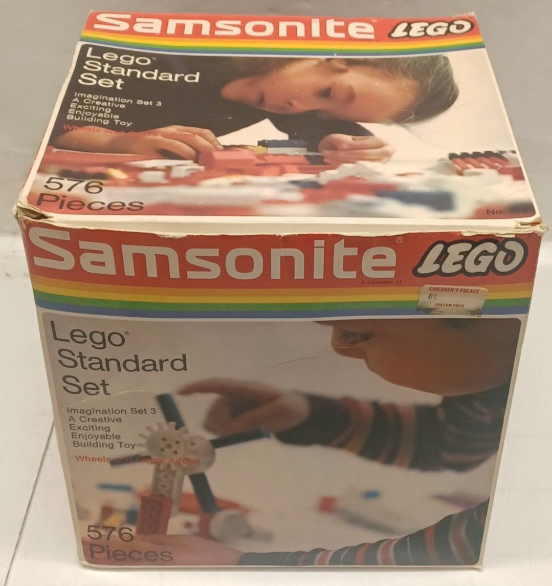
There are two main variants when it comes to the 1972 Imagination Sets: one with a LEGO rainbow bars and a small Samsonite logo and another variant with a large Samsonite logo.
It's one of the few examples I can think of wherein a box design changed mid season, especially so drastically. I've written an entire article on the subject (Why Do 1972 Cube Sets Have Two Different Boxes?), but we'll recap that later on here.
For now, just be aware that the small Samsonite logo variant appeared first. It is also the more common version to find in the wild:
Then there are also Samsonite logo versions of those boxes(which are a little harder to come by):
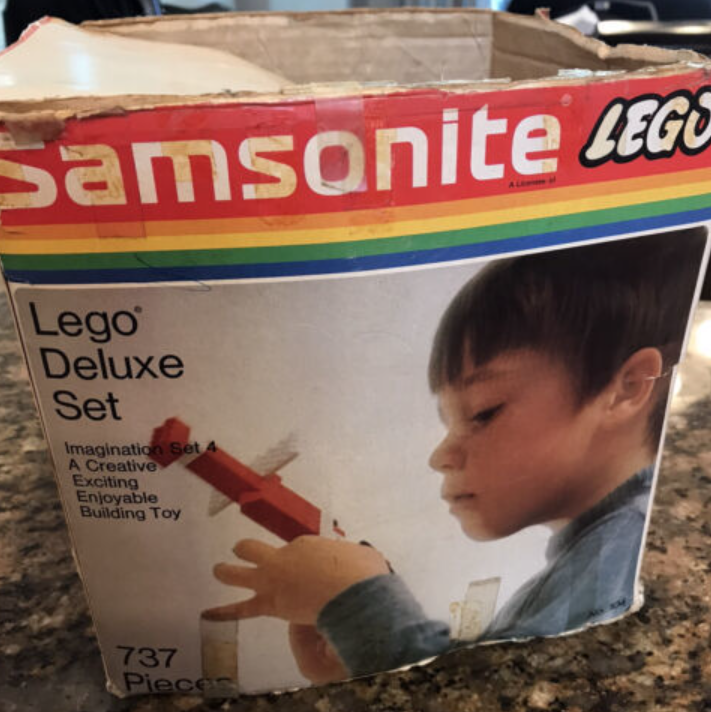
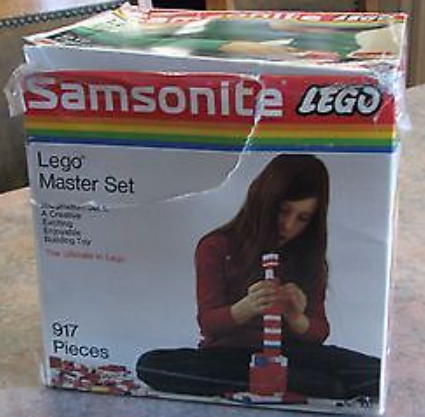
Box/Overview
The 1972 Imagination Sets, while seemingly not the most interesting in terms of their assortment, have quite a healthy variety of information, mystery, and nuance that make them quite a joy to dig into. After all, it isn't necessarily about the bricks within (though these sets even have interesting asides about those), but more so the story that they have to tell.
We know that at some point before the 1972 season, Samsonite was made aware they were losing the license to produce LEGO in the United States. They were evidently allowed to sell off their remaining inventory (because obviously LEGO would not want to deal with Samsonite's outdated/subpar parts inventory), and so the Imagination Sets were born as a means to do so.
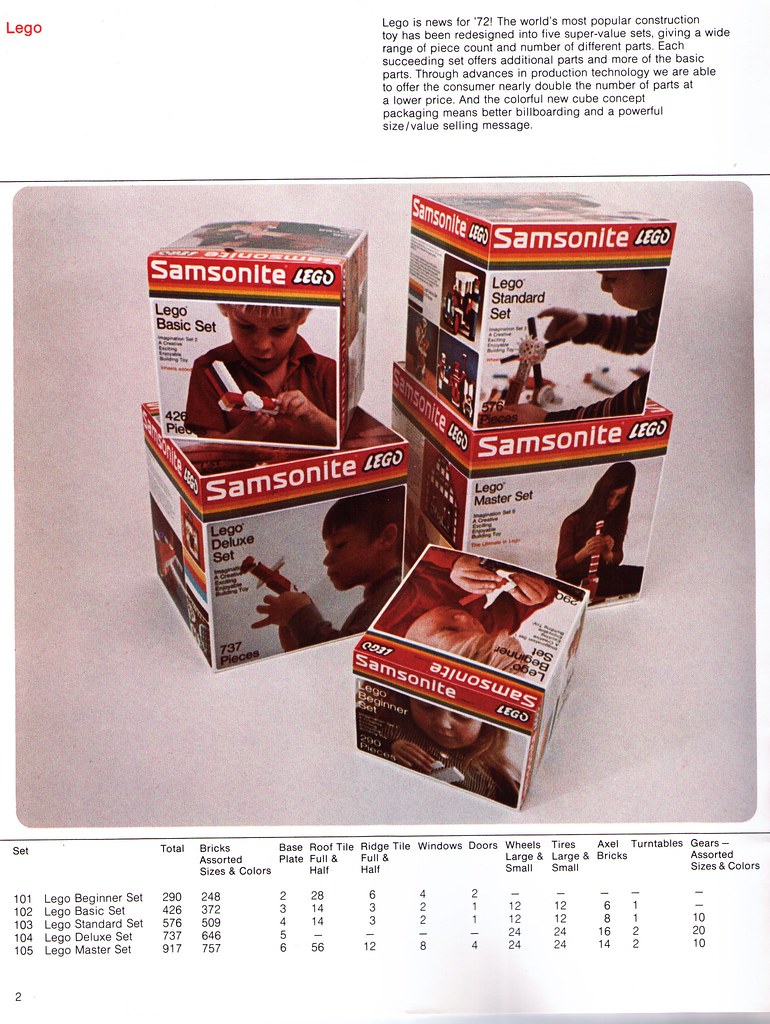
They were marketed to dealers as being the result of some sort of breakthrough in production. Via the 1972 Dealer Catalog, Samsonite wrote "Due to advances in production technology we are able to offer the consumer nearly double the parts at a lower price. And the colorful new cube concept packaging means better billboarding and a powerful size/value selling message."
In retrospect, we understand the subtext at play here. Samsonite's marketing team felt the need to explain why these kits existed at bargain prices. They obviously wouldn't come out of the gate with "hey, we're losing the license to produce this"—they didn't even announce the discontinuation of toys out of the Loveland plant until December 1972, after fulfillment for the 1972 season had ended. And the new box design was to facilitate packaging the sets as cheaply as possible, as the previous drawer/sleeve boxes were far too small to fit the large assortments these sets offered.

For the sake of simplicity, let's compare two of the boxes to give you a good idea as to how they were designed. Let's use the 102 Basic Set and the 103 Standard Set.
The box "front" (assuming it was intended to be the front) repeats twice on the box. It features a picture of a child playing with a model constructed from parts of the set:
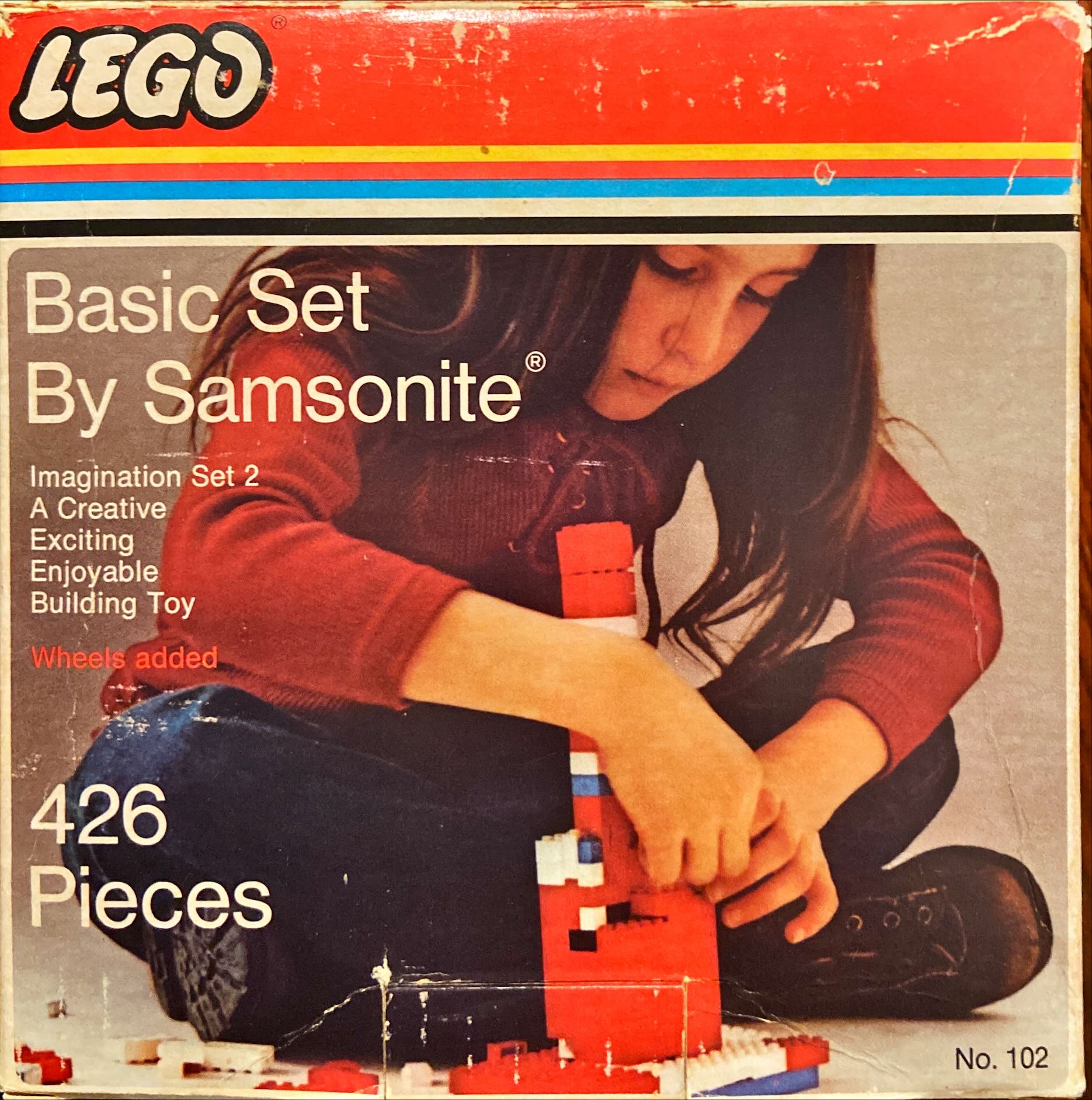
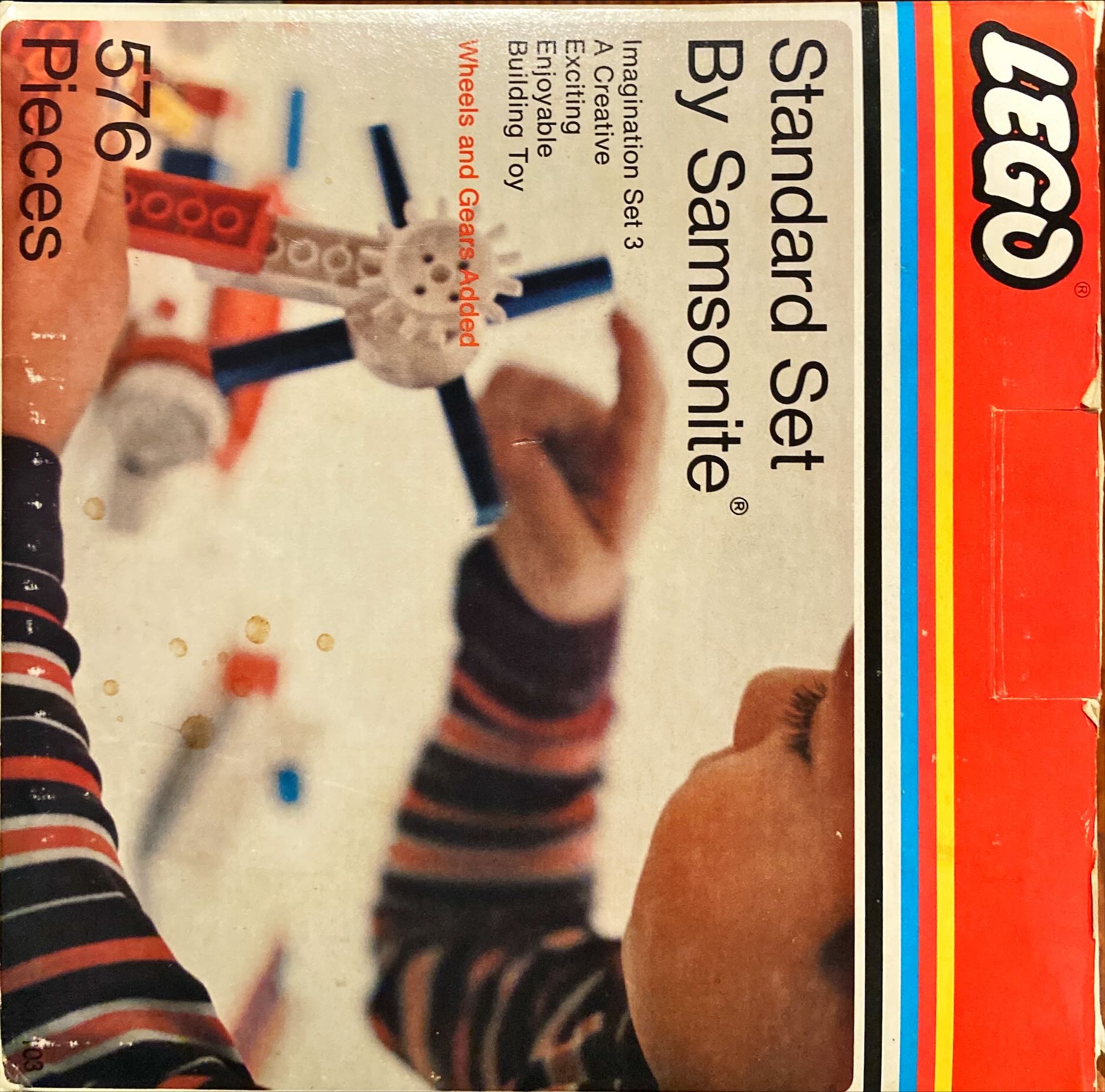
The sides feature models, a brief blanket statement, and an image of the special thing the set offers (i.e. here we have wheels for the 102, which on the front it says specifically "Wheels Added" or the gears for the 103, when its front says "Wheels and Gears Added"):
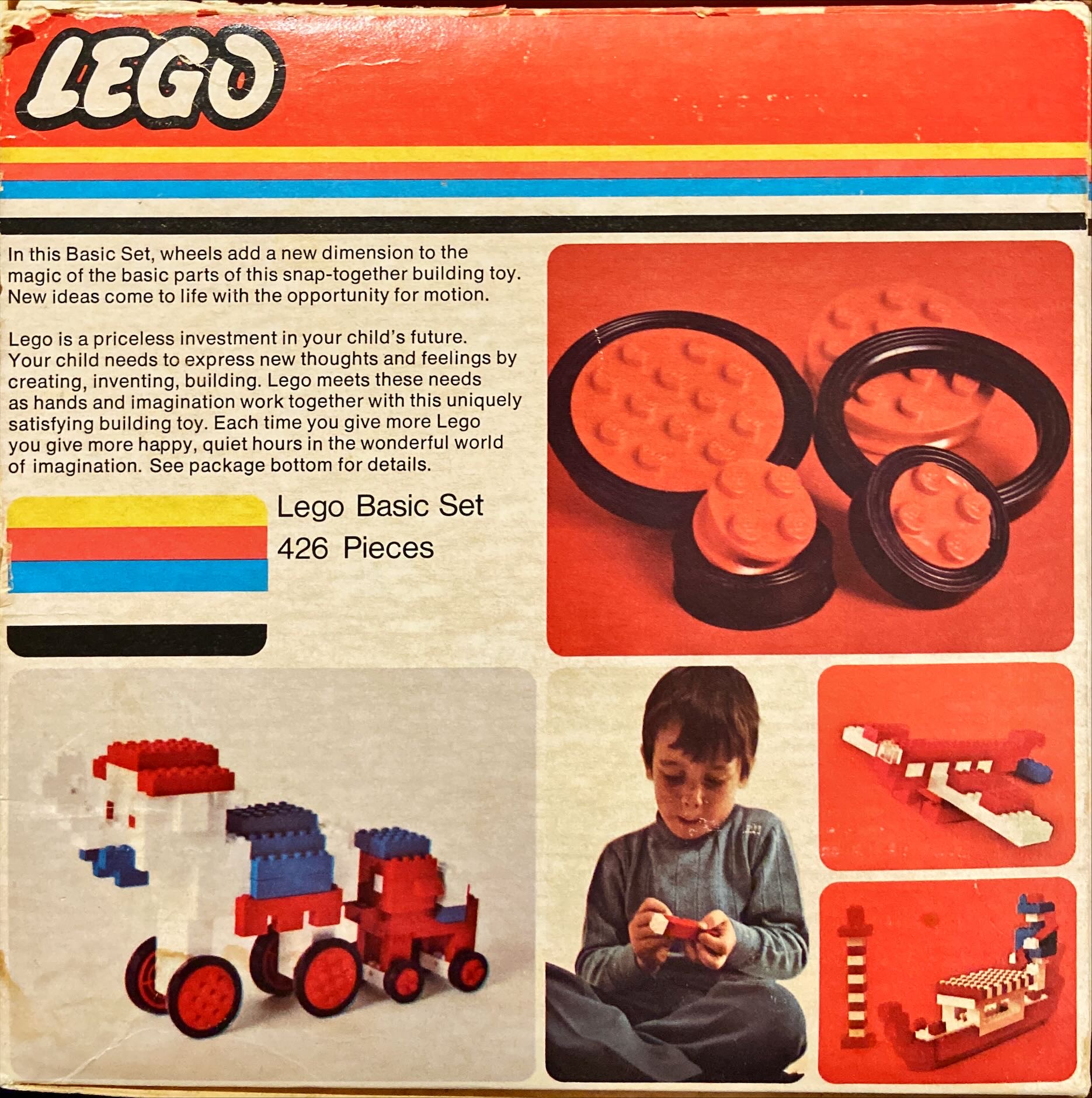
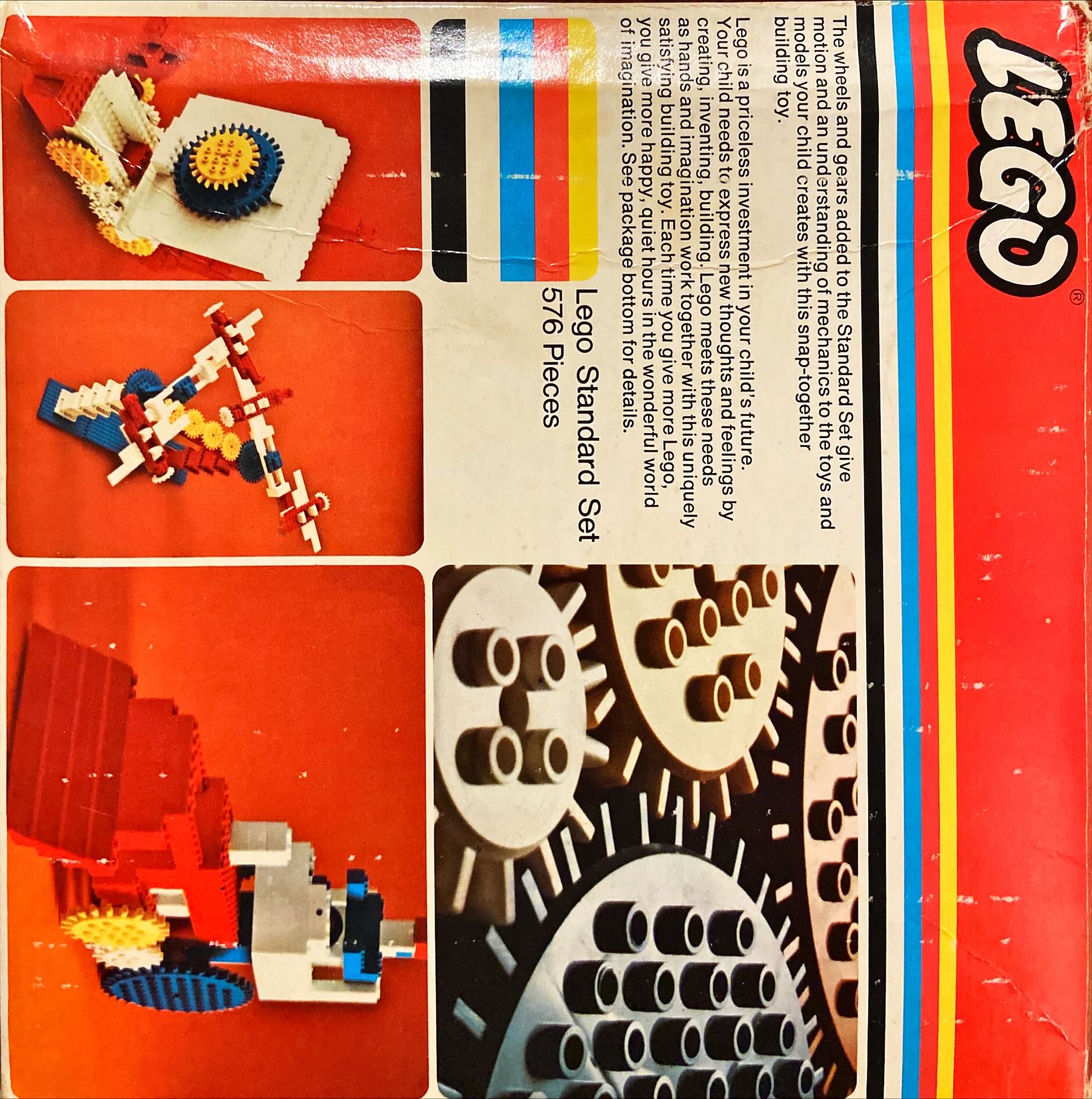
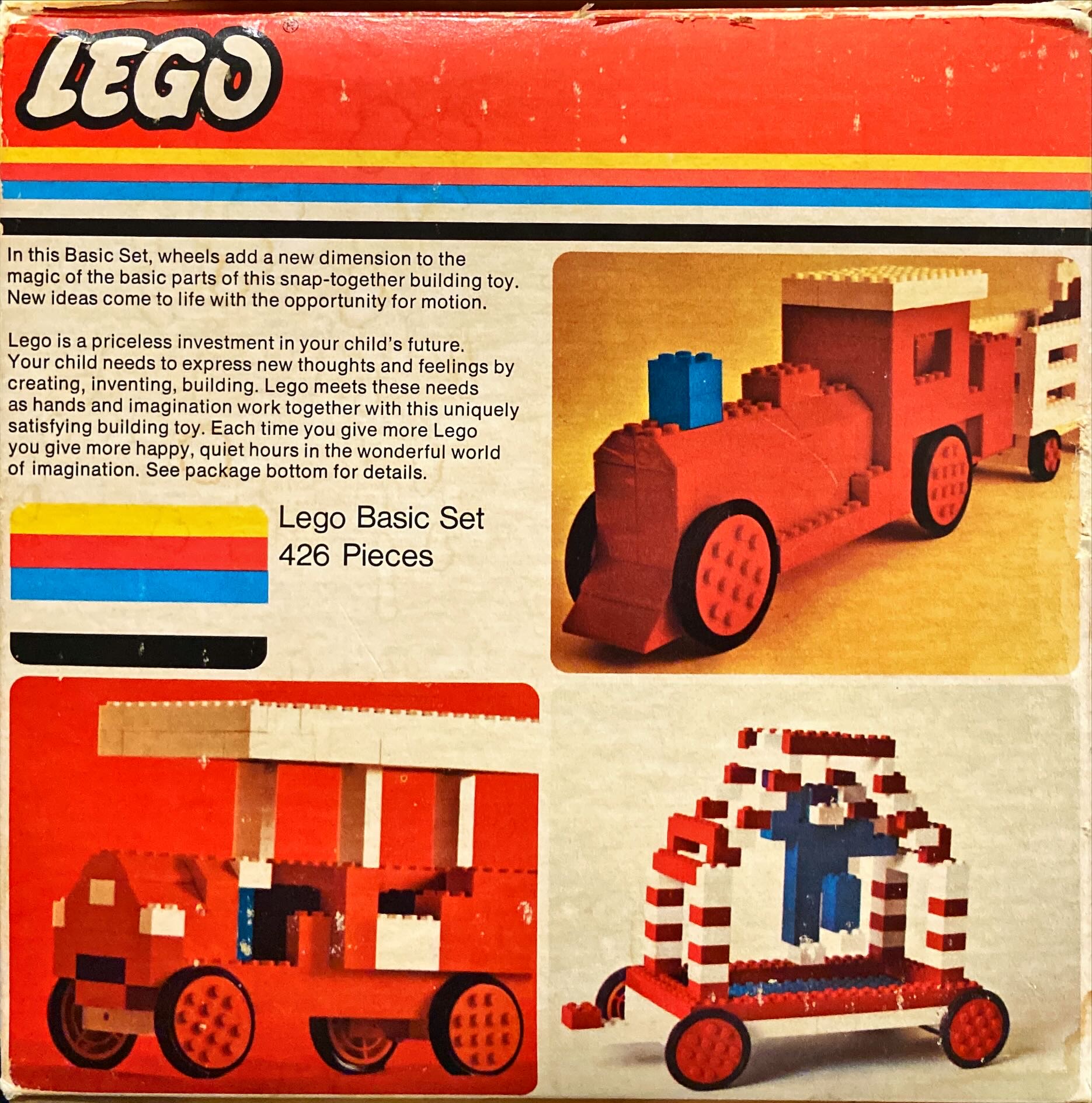
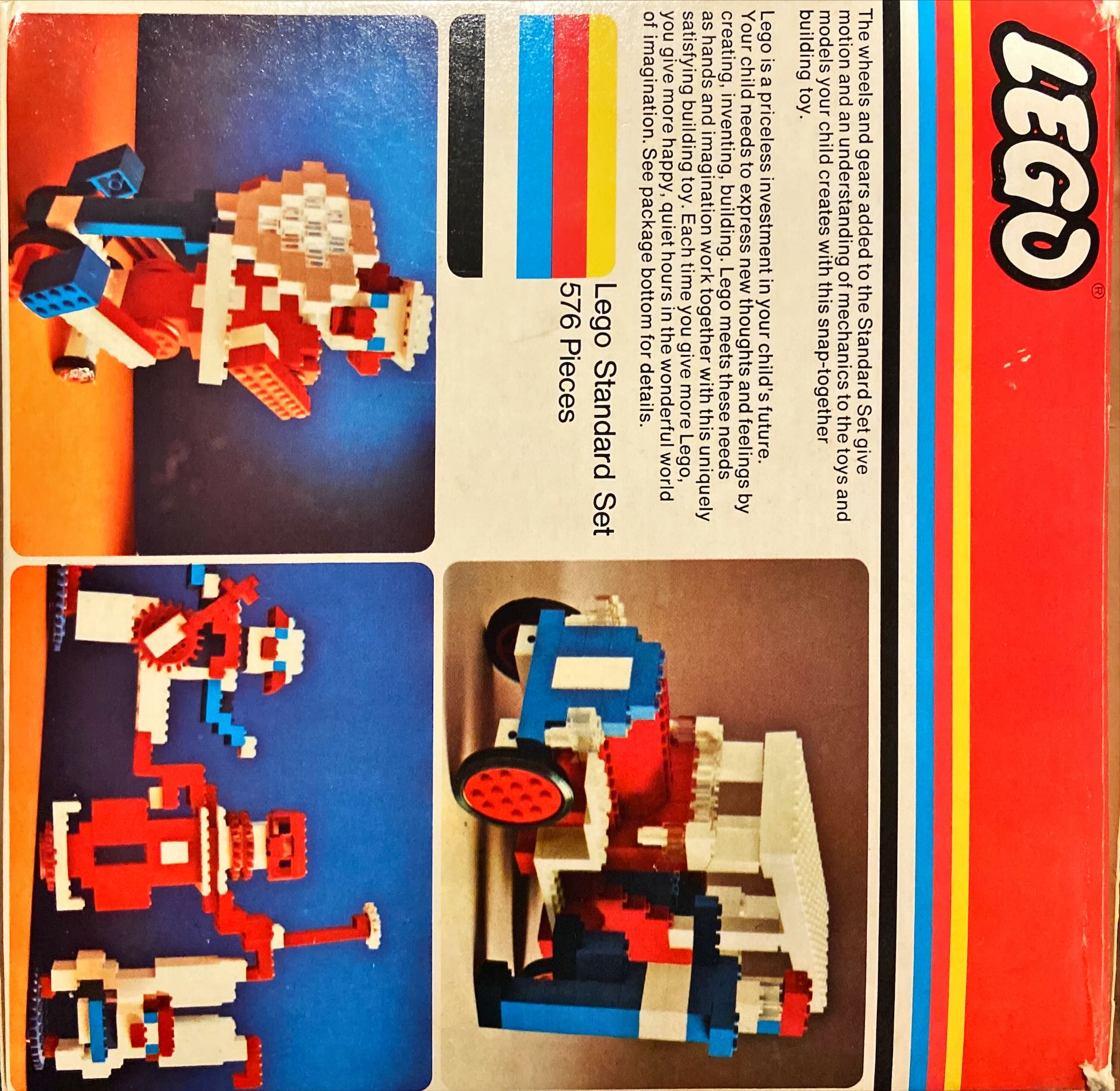
The box top continues the design seen on the box front:
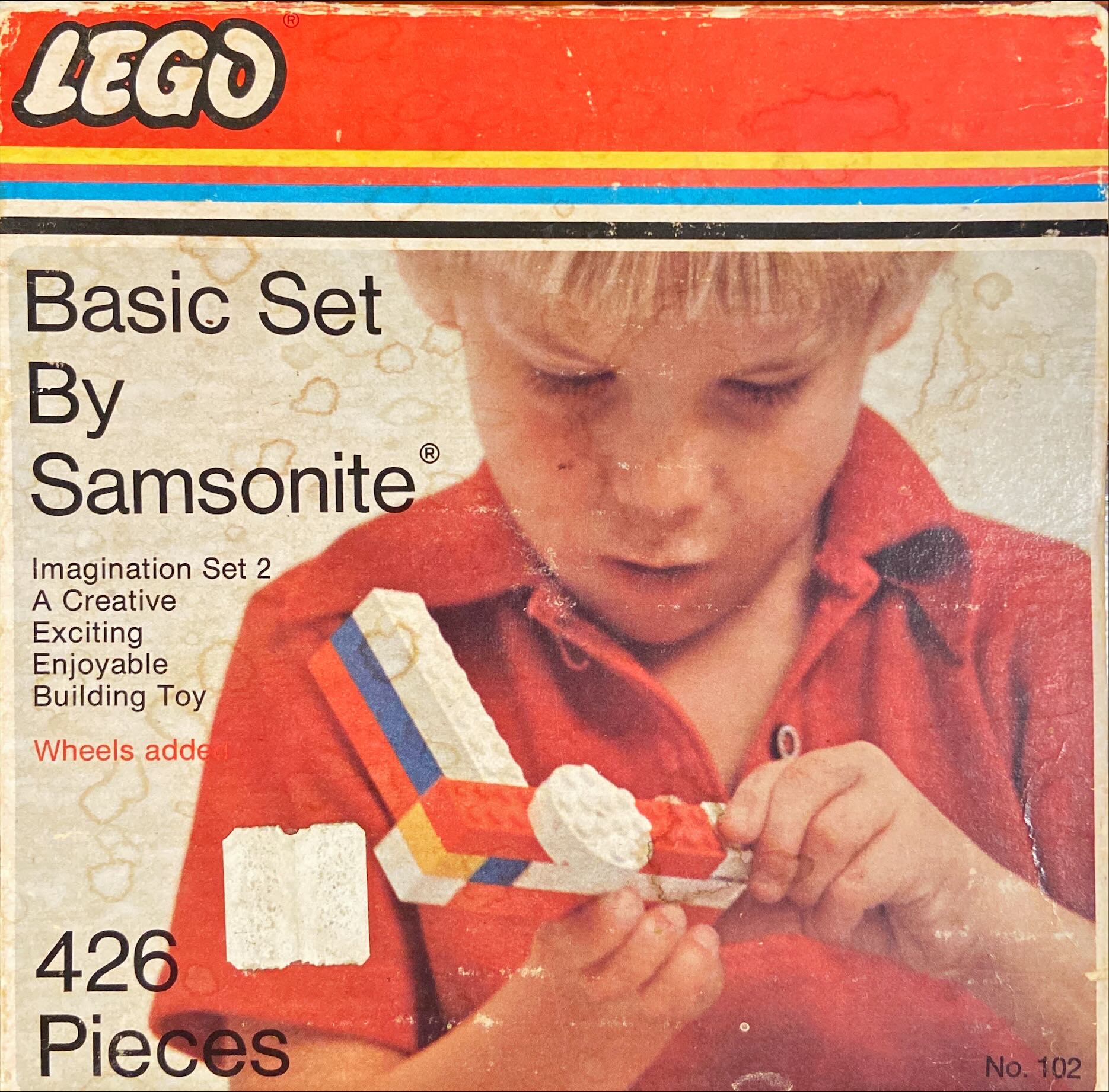
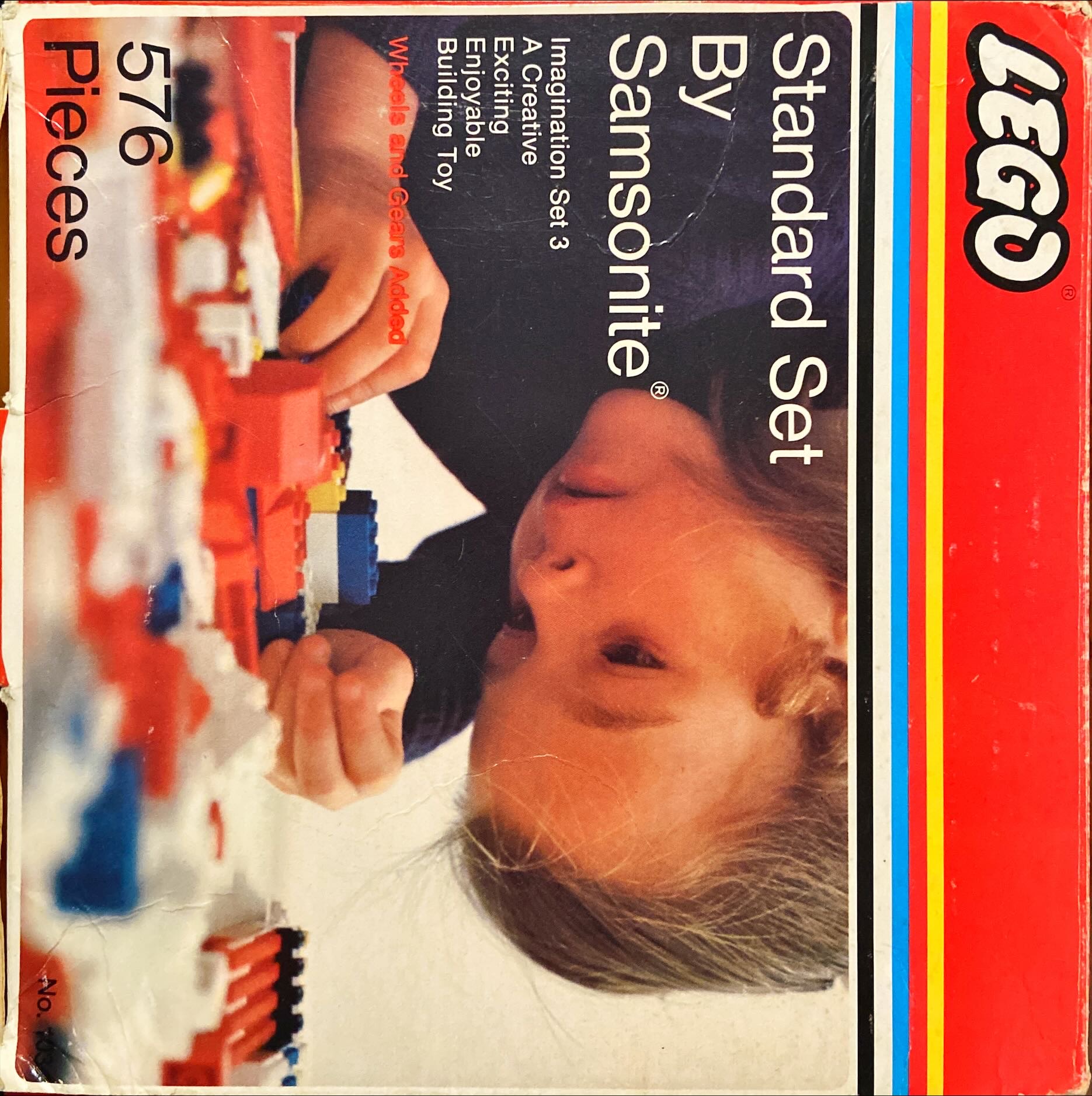
And the bottom of the box lists an inventory of the set along with more mumbo jumbo text from Samsonite about LEGO. It's important to note it is a very rare thing for Samsonite to include an inventory like this (only ever otherwise seen with the 001 Gears from 1965):
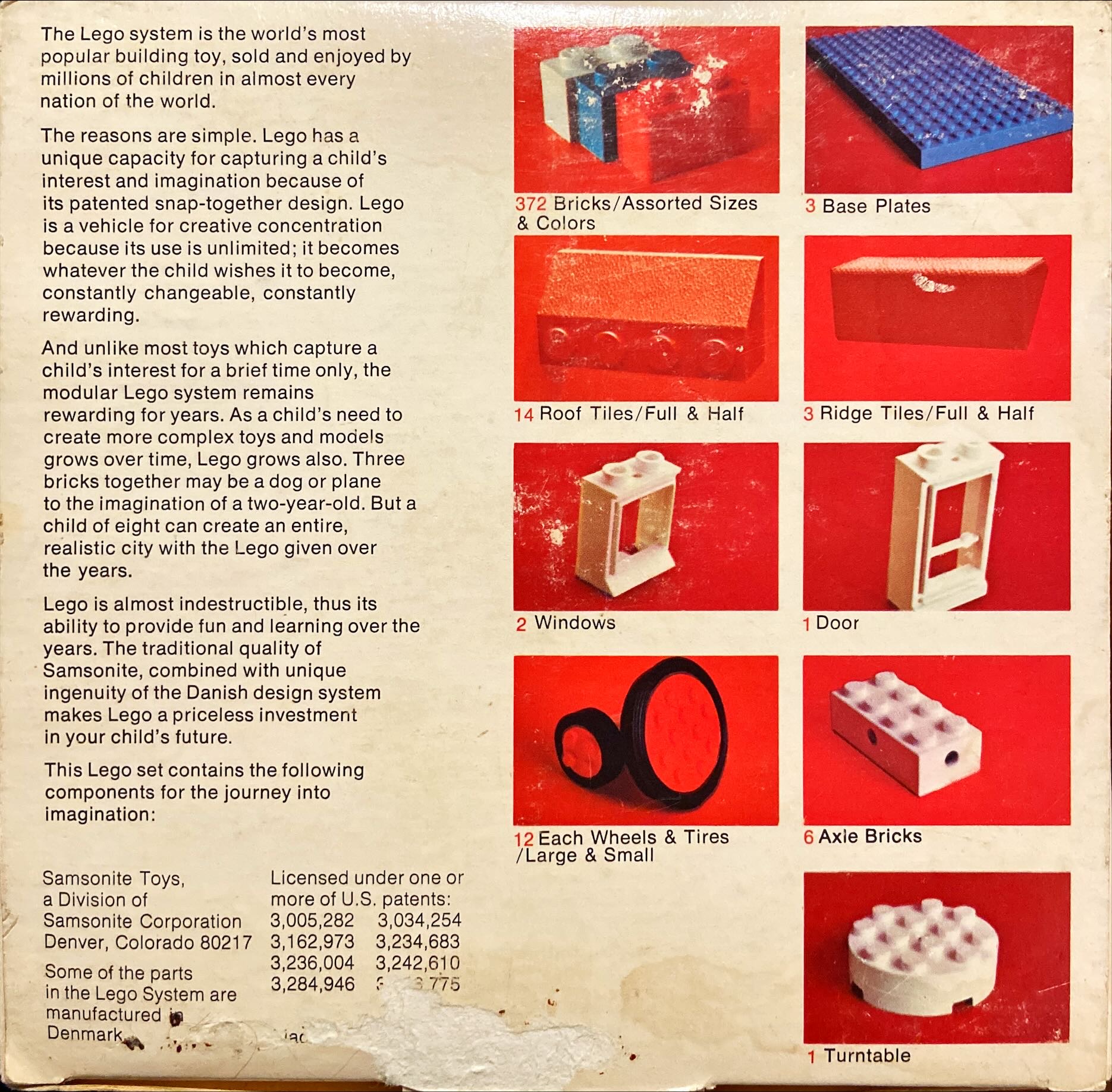
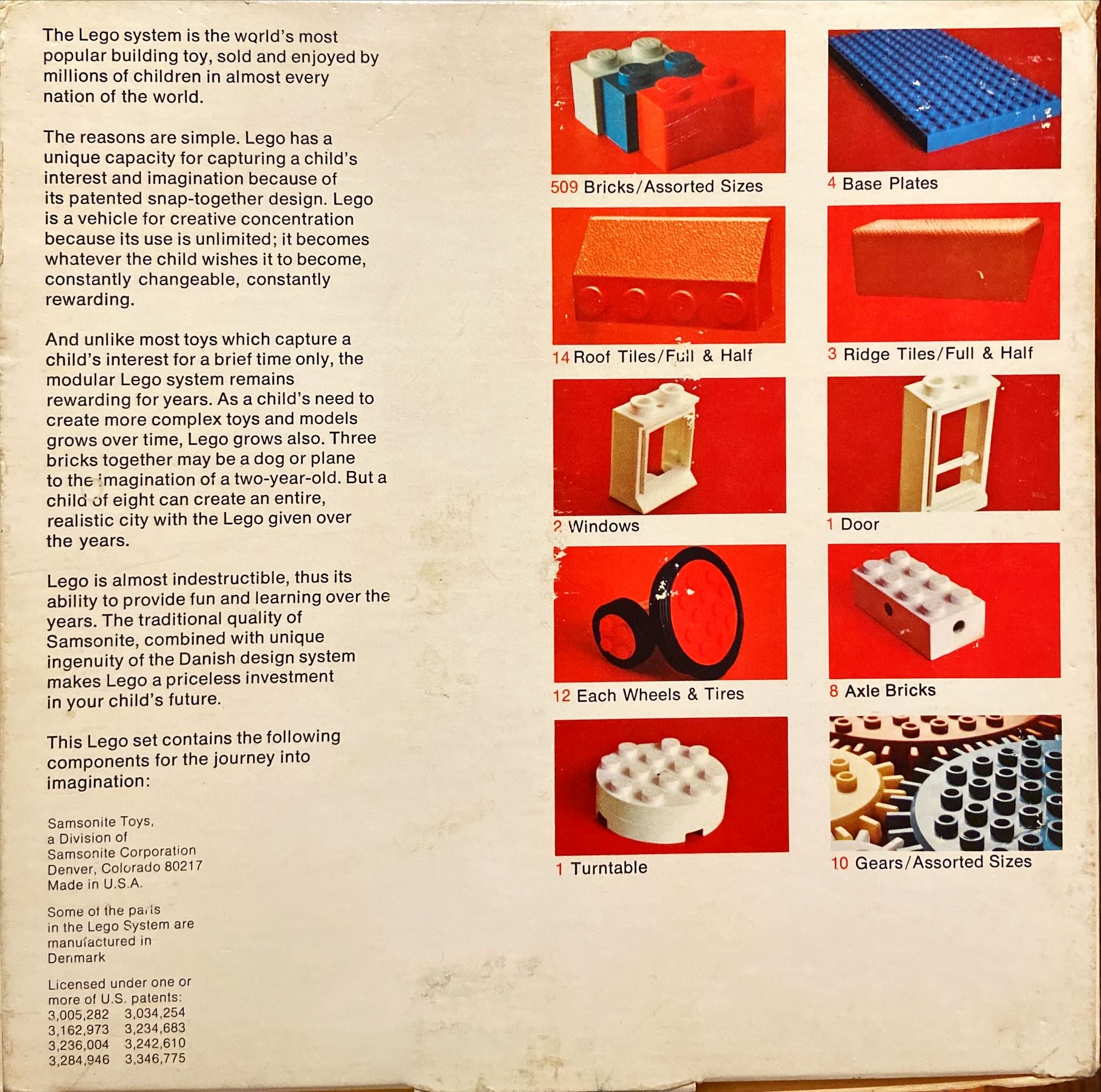
Contents
The inventory above was actually somewhat consistent, though with some caveats. I've also prepared an article about that too (Orgin of Imagination Set Inventories), though that is not my original work but instead an old post from the now defunct Brickset Forum.
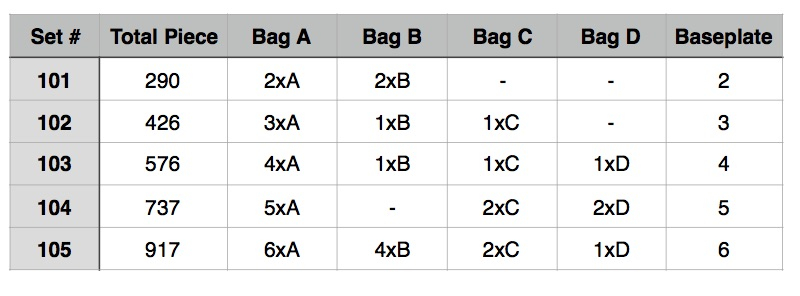
The short and sweet of it is that these sets packaged each category of parts into specific bags. So instead of each set having a specific count of each part, they had some combination of bags. It was a system that applied to all sets released in the US in 1972, including Sears exclusives and the Kraft/Del Monte promotions. This is how it worked.
Bag A would have 124 basic bricks. 2x4s, 2x2s, 1x2s, and 1x8s bricks in red, white, blue, and clear with white 2x8 plates. White is the most common color followed by red. A limited number of elements are in blue and clear is the least common only a couple of parts and that color. Bag A likely has a large degree of variation in part variety/color:

Bag B are where the slope, window and door elements were packaged. It would have 14 2x4 and 2x2 single slopes, two 2x4 double slopes, one 2x2 double slope, two windows and one door. The slope bricks were all in red while the windows and doors were all in white with no glass.

Bag C has the wheels, tires and some of the axle bricks. It would have 12 wheels and 12 tires in a mix of large and small sizes, six axle bricks and one white turntable. It's possible these bags could have been made in single, double or even triple varieties.

Bag D holds the gears and other miscellaneous parts. The bag has 10 Samsonite gears: four white, four yellow and two blue. There are two additional axle bricks and 13 basic elements (white 2x4 plates and white 1x1 round bricks).

The baseplates were always blue and always equal to the number of A bags.
And so when you put that all together, you get nearly perfect part counts for each set, as seen in this table:
Historical Examples
While usually this section is used for prototypes and the like, I think it is important to cover exactly why these sets have two distinct box variants in the same production season. And it isn't something that is known outright, instead it is inferred from an overwhelming preponderance of evidence.
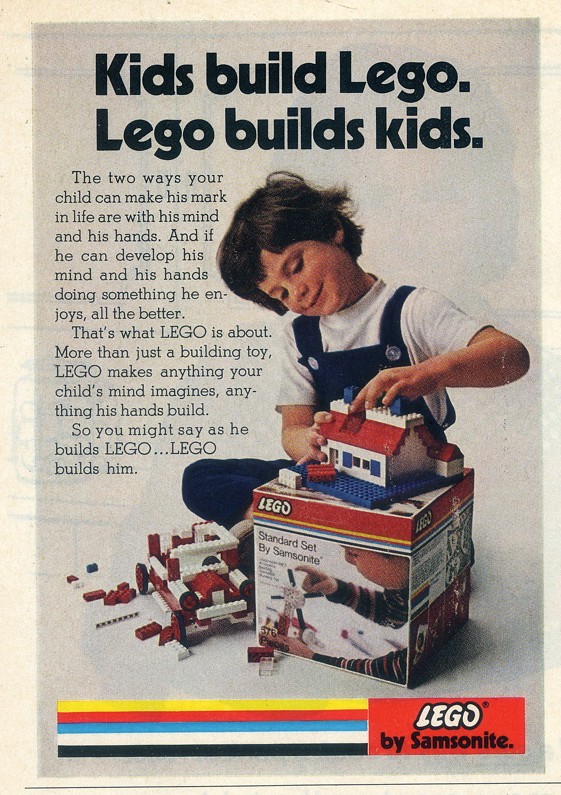
Firstly, how is it we know the small Samsonite logo version came first? The first dateable appearance of the sets was in the August issue of Good Housekeeping, featuring the small Samsonite logo version (and is a finalized box, which is important):
It also makes sense from a design perspective. Samsonite did not traditionally make their logo more pronounced than LEGO's, going so far as to reduce their name to fine print on boxes starting in 1965 and moving it to the back of the box in 1967. They also, while producing their own sets/box arts, did not deviate heavily from LEGO's own designs/formats. It would not make sense for Samsonite to boldly create a version with a large Samsonite logo and a design much more akin to other toys they were producing, only then revert back to LEGO's format in the same season. There'd be no sales numbers to attribute that decision to, it'd have to be some sort of internal decision.
Hence why I suggest the small logo variant came first. It is not only the earliest one we can find, but it also makes sense from LEGO's own perspective. It's very easy to see the sequence of events:
-
Samsonite loses the license sometime before the 1972 season and must sell off the rest of their inventory, as obviously LEGO would not want it.
-
Samsonite designs and begins production of the large LEGO logo box for basic sets.
-
Some point during production, LEGO requests Samsonite to change the box. Instead of the normal LEGO design, to prevent consumer confusion, it should have Samsonite's name front and center and be more inline designwise with the rest of Samsonite's toy line instead of LEGO's.
Why would LEGO do that? Because Samsonite's parts were not produced with the same quality as was found in Europe. Samsonite used molds that were well beyond their expiration, there'd be a mix of logos/part styles within sets(just general inconsistency), etc.
It's much more likely LEGO wanted to differentiate their own imports (which were shown earlier to be for sale by 1972) from Samsonite's offerings and requested the change themselves. Because the opposite scenario would be for LEGO to want to be front and center on Samsonite's bulk boxes. Or for Samsonite to spend money in redesigning an entire line within one season, which goes against Samsonite's own past behavior.
Why would Samsonite have respected LEGO's wishes and changed the box art? It would not make sense to "tempt" LEGO into a suit, thus Samsonite would pretty much have their hands tied.
And that's an important thing to keep in mind. Just because you are losing the license to produce something does not mean you are no longer beholden to the rights holder. They would still have final say in everything you do, and because Samsonite was in financial dire straits by 1972, it wouldn't make sense for Samsonite to suddenly decide to trailblaze and risk litigation for something they'd never sold well.